Nostradamus
 76
76

Nostradamus
Mario Reading’s "Nostradamus" approaches its subject not as a divinatory oracle, but as a historical artifact and a linguistic puzzle. Reading’s particular strength lies in his rigorous dissection of the quatrains, demonstrating how their very vagueness has facilitated centuries of projection. He effectively highlights how interpretations often serve the interpreter's present moment rather than the seer's original intent. For instance, his discussion of how prophecies were applied to Napoleon Bonaparte in the 19th century offers a clear illustration of this phenomenon. However, the book occasionally gets bogged down in exhaustive textual analysis, which, while thorough, can sometimes obscure the broader narrative of Nostradamus's influence. The sheer volume of quatrains discussed might also feel overwhelming to the casual reader. Nevertheless, Reading provides a crucial counterpoint to mystical sensationalism, grounding the study of Nostradamus in historical and textual scholarship. It is an essential read for anyone serious about understanding the enduring legacy of the prophetic quatrains.
📝 Description
76
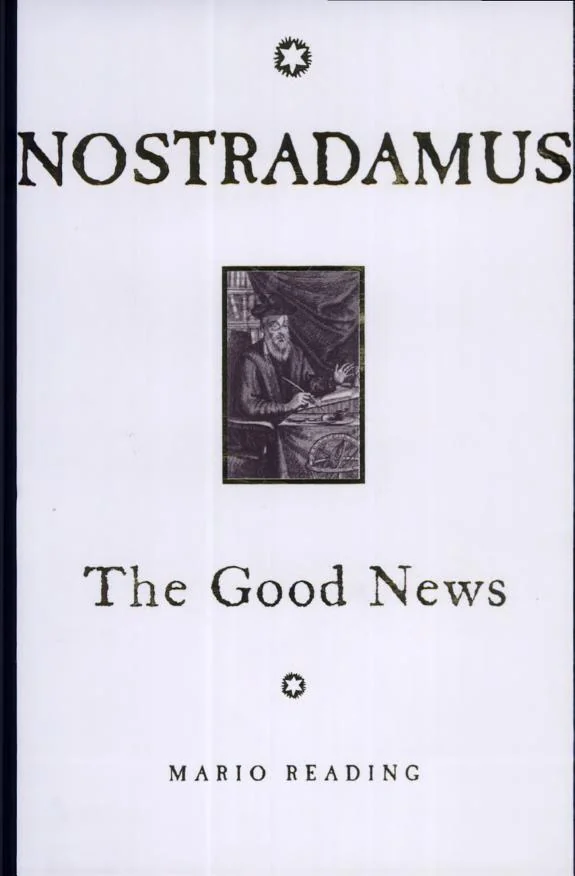
Mario Reading's 2009 book examines the quatrains attributed to Michel de Nostredame.
Mario Reading's "Nostradamus" offers a scholarly analysis of the prophecies of the 16th-century French astrologer. The book dissects the structure, language, and historical readings of Nostradamus's quatrains, which are often written in a coded, poetic style. Reading aims to clarify the seer's pronouncements, moving past sensational claims to examine the circumstances of their creation and later understanding.
The work places Nostradamus within the intellectual climate of the Renaissance, a time of developing humanism alongside continued belief in astrology and divine messages. It recognizes the common practice of divination and the political unease of the 1500s, which likely increased the demand for prophetic texts. The book also touches on interpretations from later centuries, including Enlightenment skepticism and subsequent occult revivals.
Reading's analysis centers on the linguistic vagueness of the quatrains, which permits diverse readings, the astrological basis of Nostradamus's outlook, and historical events that have been connected to specific prophecies after the fact. The book considers how "Nostradamus studies" evolved, showing how interpretations changed according to the concerns of each period, from the French Revolution to the Second World War.
This book engages with the tradition of prophetic literature and divination that flourished in early modern Europe. It examines how figures like Nostradamus, an astrologer and physician, operated within a cultural milieu where celestial observation and mystical insight held significant weight. The work situates these practices within the broader context of Renaissance intellectual life, where religious, political, and occult beliefs often intertwined, and traces how such traditions were later reinterpreted through different historical lenses.
💡 Why Read This Book?
• Understand the historical context of 16th-century prophecy by examining Nostradamus's life and times, including the astrological influences prevalent during the Renaissance. • Analyze the linguistic construction of the quatrains, learning how Reading deconstructs their ambiguity and poetic devices to reveal layers of meaning beyond literal prediction. • Grasp the evolution of prophetic interpretation, seeing how figures like Napoleon Bonaparte were retrospectively linked to Nostradamus's verses across different historical periods.
⭐ Reader Reviews
Honest opinions from readers who have explored this book.
❓ Frequently Asked Questions
When was Nostradamus's book of prophecies first published?
The first edition of Michel de Nostredame's "Propheties" was published in 1555. Mario Reading's analysis in his 2010 book explores the historical context and subsequent interpretations of these original prophecies.
What is the primary language of Nostradamus's prophecies?
The prophecies are primarily written in a form of French, but they are notoriously obscure, employing a mix of languages including Latin, Greek, and Occitan, alongside neologisms and astrological jargon.
Did Nostradamus predict specific historical events?
While many claim his quatrains predict specific events like the rise of Napoleon or the French Revolution, Reading's work suggests these are often post-hoc interpretations due to the ambiguous nature of the verses.
What was the historical context of Nostradamus's work?
Nostradamus lived during the French Renaissance (16th century), a period of significant scientific, artistic, and religious change, but also one where astrology and prophecy were widely accepted and influential.
How does Mario Reading approach the study of Nostradamus?
Reading treats Nostradamus as a subject of historical and literary analysis, focusing on textual deconstruction and the history of interpretation rather than validating the prophetic claims themselves.
Are there any famous interpretations of Nostradamus's prophecies?
Yes, numerous interpretations exist, often linking the quatrains to major historical figures and events. The book by Mario Reading critically examines many of these historical interpretations.
🔮 Key Themes & Symbolism
Linguistic Ambiguity
The core of Reading's thesis revolves around the deliberate and inherent ambiguity within Nostradamus's quatrains. Composed in a blend of French, Latin, Greek, and Occitan, often with neologisms and astrological terms, the verses resist straightforward translation. This linguistic fluidity is presented not as a flaw, but as the primary mechanism enabling the prophecies to be 'fulfilled' by countless historical events across centuries. Reading demonstrates how specific word choices and grammatical structures allow for multiple, often contradictory, readings, making the prophecies adaptable to any era's anxieties and triumphs.
The History of Interpretation
Beyond the text itself, Reading meticulously charts the reception history of Nostradamus's work. He shows how interpretations shifted dramatically from the 16th century through to the 20th century. The book highlights how figures like Napoleon Bonaparte and Adolf Hitler became focal points for later interpreters seeking to align prophecies with their own historical narratives. This theme underscores the idea that the 'meaning' of Nostradamus is not fixed but is a product of the cultural and political preoccupations of those who read him.
Renaissance Esotericism
Reading situates Nostradamus within the broader intellectual range of the Renaissance. This era, while fostering humanism, also maintained a strong belief in astrology, alchemy, and divination. The book explains how Nostradamus, a physician by training, operated within this framework, using astrological calculations to inform his prophetic visions. Understanding this context is crucial to appreciating the quatrains not as random pronouncements, but as products of a worldview where celestial patterns were believed to hold keys to earthly events.
Prophecy as Social Phenomenon
The work explores why the prophecies of Nostradamus have held such enduring appeal. Reading suggests that the verses tap into a fundamental human desire for certainty and order in the face of an uncertain future. The quatrains provide a framework for understanding chaos, offering a sense of preordained destiny that can be both comforting and alarming. This theme addresses the social and psychological functions of prophecy, particularly during times of upheaval, as seen in the various eras that have claimed Nostradamus's foresight.
💬 Memorable Quotes
Direct passages from the work, attributed to the author.
“Interpretations of Nostradamus have often been shaped by the interpreter's own historical context.”
— This emphasizes the book's focus on the history of reception, suggesting that the meaning derived from the quatrains is less about Nostradamus's original intent and more about the needs and biases of subsequent generations.
“Nostradamus was a physician and astrologer in 16th-century France.”
— This factual statement anchors the seer within his historical and professional milieu, underscoring Reading's approach of analyzing the prophecies through the lens of Renaissance intellectual and medical practices.
“The prophecies are written in a deliberately obscure language.”
— This observation points to the linguistic challenges presented by the quatrains, a key area of analysis in Reading's work, where he explores how the mix of languages and cryptic phrasing contributes to the prophecies' adaptability.
“Many historical figures have been linked to Nostradamus's predictions.”
— This statement reflects the phenomenon of 'Nostradamus sightings' throughout history, where events and leaders from the French Revolution to World War II have been claimed as foreseen by the seer.
💡 Key Ideas
Editorial paraphrase of the work's core concepts — not direct quotes.
The quatrains are so vague that they can be applied to almost any event.
This paraphrased concept highlights Reading's central argument: the enduring power of Nostradamus's prophecies lies not in their specific predictive accuracy, but in their linguistic flexibility, allowing them to be retroactively matched with historical occurrences.
🌙 Esoteric Significance
Tradition
Nostradamus's work is situated within the broad currents of Western esotericism, particularly the tradition of divinatory astrology and prophecy that permeated the Renaissance. While not strictly Hermetic, Kabbalistic, or Gnostic in a formal sense, his methods drew upon astrological lore and symbolic language common in these traditions. His prophecies represent a unique synthesis, aiming to codify future events through cryptic verse, influenced by earlier prophetic texts and astrological treatises. Reading's analysis positions Nostradamus as a historical figure whose writings became a touchstone for later esoteric movements seeking predictive frameworks.
Symbolism
Key symbols in Nostradamus's prophecies, as explored in Reading's analysis, include celestial bodies (stars, moon, sun) representing astrological influences and cosmic timing, and animals (e.g., lions, eagles) often symbolizing nations, leaders, or forces. Water and fire frequently appear as elemental forces signifying destruction, purification, or transformation. These symbols, drawn from classical and biblical traditions, are deployed within the quatrains to create layered meanings that interpreters have variously decoded as specific historical portents or archetypal forces.
Modern Relevance
The enduring appeal of Nostradamus's prophecies continues to resonate in contemporary culture, particularly within circles interested in conspiracy theories, alternative history, and predictive methodologies. Modern esoteric practitioners and amateur enthusiasts still engage with the quatrains, often through the lens of numerology or synchronicity. Reading's scholarly approach provides a critical framework for understanding this continued fascination, separating historical analysis from unverified claims and offering a more grounded perspective on the phenomenon's psychological and cultural roots.
👥 Who Should Read This Book
• Students of Renaissance history and culture seeking to understand the intellectual climate that produced figures like Nostradamus. • Scholars of comparative religion and esotericism interested in the historical development and interpretation of prophetic literature across centuries. • Critical readers of occult phenomena who wish to approach the subject with a robust understanding of textual analysis and historical context, rather than purely speculative claims.
📜 Historical Context
Mario Reading's "Nostradamus" emerges from a critical engagement with the enduring fascination surrounding Michel de Nostredame, a figure whose prophetic verses first appeared in print in 1555. Nostradamus lived during the French Renaissance, a period characterized by both intellectual ferment and deep-seated anxieties, making the demand for prognostications high. Astrology was not a fringe belief but an accepted practice among scholars and royalty. Reading places Nostradamus within this milieu, noting his background as a physician and scholar. The book implicitly engages with the long tradition of skeptical inquiry that arose after the Enlightenment, contrasting with earlier, more credulous interpretations. While not directly engaging in polemics with specific contemporaries of Nostradamus, Reading's work implicitly critiques later occultists and popularizers who have amplified the prophecies without rigorous historical analysis. The reception of Nostradamus has been a continuous historical event, with significant waves of interpretation occurring around major political upheavals like the French Revolution and the World Wars, topics Reading addresses.
📔 Journal Prompts
The linguistic ambiguity of the quatrains and its role in interpretation.
Nostradamus's position within Renaissance astrological practices.
The historical evolution of interpreting specific quatrains.
The social and psychological appeal of prophecy.
Comparing the textual analysis of the quatrains with later historical claims.
🗂️ Glossary
Quatrain
A stanza of four lines, typically rhyming. Nostradamus's prophecies are predominantly composed of these four-line verses, often written in a cryptic and allegorical style.
Michel de Nostredame
The full name of the 16th-century French astrologer and physician, commonly known as Nostradamus, famed for his book of prophecies.
Renaissance
The period in European history, roughly from the 14th to the 17th century, marked by a revival of classical learning and the arts, and significant intellectual and scientific advancements.
Astrology
The study of the movements and relative positions of celestial bodies interpreted as having an influence on human affairs and the natural world.
Divination
The practice of seeking knowledge of the future or the unknown by supernatural means. Nostradamus's work is a form of literary divination.
Esotericism
Belief systems and practices that are esoteric, meaning they are intended for or likely to be understood by only a small number of people with a specialized knowledge or interest.
Reception History
The study of how a particular work (literary, artistic, philosophical) has been understood, interpreted, and used by different audiences throughout time.
🔮 Readers Also Liked
Browse all →









More by Mario Reading
All books →




More Free Occult Philosophy Books
View all →