Das innere Kind aus jungscher Sicht: Archetypen und Individuation verstehen
 75
75

Das innere Kind aus jungscher Sicht: Archetypen und Individuation verstehen
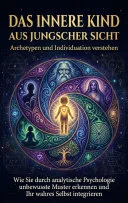
Sabine Böhm's work, "Das innere Kind aus jungscher Sicht: Archetypen und Individuation verstehen," offers a rigorous exploration of the child archetype within the Jungian framework. Böhm steers clear of facile "inner child healing" tropes, instead grounding the concept firmly in Jung's theory of individuation. A significant strength is the detailed examination of the child archetype's interplay with the Persona and the Shadow, providing a nuanced understanding of psychic dynamics. The book falters slightly in its accessibility; readers new to Jungian terminology might find certain sections dense without prior familiarity. However, the explication of how unintegrated childhood complexes obstruct the path to the Self is particularly illuminating. The work's rigorous application of Jungian principles to the inner child archetype makes it a valuable, albeit demanding, contribution to psychological literature.
📝 Description
75
Sabine Böhm's 2023 book reinterprets the inner child not as trauma but as a core Jungian archetype.
This book examines Carl Jung's concept of the inner child, viewing it as a potent archetype rather than simply a metaphor for past trauma. Böhm positions this archetype as vital to the Jungian process of individuation, the path toward psychological wholeness. The work details how the inner child archetype interacts with other fundamental psychic structures, including the Persona, the Shadow, and the Self. It provides a framework for understanding their dynamic interplay within the psyche.
The text is aimed at individuals engaged in serious psychological and spiritual exploration, particularly those familiar with or interested in depth psychology and Jungian analysis. It appeals to readers seeking a deeper comprehension of archetypal psychology beyond popular interpretations. Those interested in how early life experiences manifest in adult psychological patterns, and how integrating these aspects contributes to personal development, will find value here. Böhm critically analyzes the inner child as a distinct archetype, differentiating it from contemporary self-help notions and detailing its relationship with other Jungian constructs.
Carl Jung's theories on archetypes, including the child archetype, emerged in the mid-20th century, expanding psychoanalytic thought. His work on the collective unconscious, particularly in texts like 'Archetypes of the Collective Unconscious' (1934), offered a distinct framework from Freudian concepts. Böhm's work situates itself within this tradition of depth psychology, focusing on the symbolic language of the psyche and its role in achieving psychological integration. It connects these ideas to personal development and spiritual growth.
💡 Why Read This Book?
• Understand the inner child not as a simplistic victim, but as a complex archetype interacting with the Persona and Shadow, as detailed in the book's analysis of Jungian psychic structures. • Grasp the inner child's role within the broader process of individuation, a core concept in Jung's work since the mid-20th century, offering a path to psychological wholeness. • Learn how repressed childhood aspects, explored through Jungian theory, can be integrated into adult life, a process Böhm elucidates through archetypal psychology.
⭐ Reader Reviews
Honest opinions from readers who have explored this book.
❓ Frequently Asked Questions
What is the primary difference between Jung's inner child and modern self-help approaches?
Jung's concept of the inner child is an archetype, a fundamental psychic structure, integral to individuation. Modern self-help often views it as a damaged aspect of the personality to be healed from past trauma.
How does the inner child archetype relate to the Self in Jungian psychology?
The inner child archetype, when integrated, contributes to the development of the Self, which represents the totality and ultimate goal of the individuation process according to Jung.
When did Carl Jung begin discussing archetypes like the child archetype?
Carl Jung developed his theories on archetypes throughout the first half of the 20th century, with key publications like "Archetypes of the Collective Unconscious" appearing in 1934.
Can understanding the inner child archetype help with adult relationships?
Yes, by integrating repressed childhood aspects symbolized by the inner child, individuals can achieve greater emotional maturity, leading to healthier and more balanced adult relationships.
What is 'individuation' according to Jungian psychology?
Individuation is the lifelong psychological process of differentiating oneself from the collective unconscious and becoming a whole, integrated individual, with the Self as its central organizing principle.
Is this book suitable for beginners in Jungian psychology?
The book assumes some familiarity with Jungian concepts. While it explains interactions between archetypes, readers new to Jung might benefit from introductory texts before engaging with this deeper analysis.
🔮 Key Themes & Symbolism
The Child Archetype as Psyche Structure
This work posits the inner child not as a mere memory, but as a potent archetype, a fundamental component of the collective unconscious. Böhm details how this archetype, distinct from simplistic self-help portrayals, functions as a vital psychic agent. It serves as a conduit to unconscious layers, influencing the individuation process by embodying potential, vulnerability, and the raw beginnings of the Self. Understanding its archetypal nature is key to unlocking deeper psychological layers.
Interplay with Persona and Shadow
The book meticulously maps the interactions between the inner child, the Persona (the social mask), and the Shadow (the repressed aspects of the self). Böhm illustrates how a poorly integrated child archetype can lead to a rigid Persona or a projected Shadow. Conversely, acknowledging and engaging with the child archetype can help to soften the Persona and reclaim disowned aspects of the Shadow, fostering a more authentic self-expression.
Individuation and Wholeness
Central to the text is the concept of individuation, the lifelong journey toward psychological wholeness. The inner child archetype is presented as a critical catalyst and component of this process. Böhm argues that integrating the experiences and energies of the inner child is essential for moving towards the Self, the archetype of totality and the ultimate goal of psychological development in Jungian thought.
Impact of Early Life Dynamics
The work examines how unacknowledged or repressed aspects of childhood experiences, symbolized by the inner child, profoundly shape adult consciousness and behavior. Böhm explores the psychological mechanisms through which these dynamics manifest, affecting relationships, self-perception, and the capacity for personal growth. The book offers a framework for recognizing and addressing these influences for greater psychological integration.
💬 Memorable Quotes
Direct passages from the work, attributed to the author.
“The child archetype is the living root of the personality.”
— This interpretation suggests that the inner child is not a static remnant of the past, but a dynamic, foundational element from which the entire personality grows and develops.
“Individuation requires conscious engagement with the naive impulses of the child.”
— This concept highlights that psychological growth, or individuation, necessitates acknowledging and working with the uninhibited, instinctual energies often associated with childhood.
“The Persona can become a prison if it denies the inner child's existence.”
— This suggests that an overly rigid or false social facade (Persona) prevents authentic connection with one's deeper self, symbolized by the inner child, leading to psychological confinement.
“The Shadow often conceals the most vital aspects of the neglected inner child.”
— This interpretation posits that the parts of ourselves we reject and push into the Shadow may paradoxically contain the unexpressed potential and vitality of our inner child.
“Integrating the child archetype is key to realizing the Self.”
— This statement emphasizes that wholeness, or the realization of the Self, is intrinsically linked to the process of acknowledging, understanding, and integrating the archetype of the child.
🌙 Esoteric Significance
Tradition
This work situates itself firmly within the analytical psychology tradition founded by Carl Jung, which itself draws from Hermetic, Gnostic, and alchemical symbolism. While not strictly esoteric in the occult sense, Jungian psychology explores the symbolic language of the unconscious, akin to esoteric systems. Böhm's approach treats the inner child not merely as psychological residue but as an archetypal force, aligning with esoteric traditions that view inner figures as potent spiritual or psychic entities.
Symbolism
Key symbols explored include the 'child' itself, representing innocence, potential, and the primordial state of the psyche; the 'shadow,' often concealing the wounded or neglected child aspects; and the 'Self,' the ultimate goal of integration, often envisioned in alchemical texts as a divine child or homunculus. These symbols function as archetypal imagery pointing towards the process of psychic transformation and wholeness.
Modern Relevance
Böhm's work remains relevant to contemporary thinkers and practitioners exploring archetypal psychology, depth psychology, and integral psychology. It informs modern therapeutic approaches that incorporate Jungian concepts, and speaks to spiritual traditions seeking to understand inner development through symbolic language. Thinkers and schools focusing on the integration of fragmented self-aspects and the pursuit of psychological wholeness continue to draw upon Jung's foundational ideas as presented here.
👥 Who Should Read This Book
• Students of Jungian psychology and archetypal theory seeking a deeper understanding of the child archetype's function in individuation. • Therapists and counselors interested in integrating Jungian concepts into their practice, particularly regarding early life influences and psychic integration. • Individuals on a path of self-discovery and personal growth who wish to explore the symbolic language of their own psyche beyond superficial self-help.
📜 Historical Context
Sabine Böhm's "Das innere Kind aus jungscher Sicht" emerges from the fertile ground of mid-20th century depth psychology, specifically the expansion and application of Carl Jung's theories. Jung himself, having broken from Sigmund Freud's emphasis on repressed sexuality, proposed a richer range of archetypes in works like "Archetypes of the Collective Unconscious" (1934). Böhm's book builds upon this foundation, exploring the child archetype's role in individuation, a concept Jung developed throughout his career. This work engages with Jungian analytical psychology, a school of thought that offered a distinct alternative to behaviorism and humanistic psychology gaining traction concurrently. While Jung's ideas were widely discussed and debated, particularly by contemporaries like Erich Neumann and Marie-Louise von Franz, Böhm's specific focus on the child archetype within the individuation matrix offers a refined perspective within this broader intellectual current.
📔 Journal Prompts
The child archetype's interaction with your Persona.
Integrating the neglected aspects of the inner child.
The inner child as a root of personality development.
Conscious engagement with naive child impulses.
The Shadow concealing vital child energies.
🗂️ Glossary
Inner Child
In Jungian psychology, this refers to the child archetype, a fundamental psychic structure representing aspects of innocence, potential, and early experiences that continue to influence the adult psyche.
Archetype
Universal, archaic patterns and images that derive from the collective unconscious and are the psychic counterpart of instinct. Examples include the Mother, the Hero, the Shadow, and the Child.
Individuation
Carl Jung's term for the lifelong psychological process of differentiation of the self, involving the integration of unconscious elements into the conscious mind to achieve wholeness.
Persona
The social mask or role an individual adopts to interact with the world; the way one presents oneself to others, which can obscure the true self.
Shadow
The unconscious or repressed aspects of the personality that the conscious ego does not identify in itself. It contains both negative and potentially positive qualities.
Self
The archetype of wholeness and the central organizing principle of the psyche in Jungian psychology; the ultimate goal of individuation.
Collective Unconscious
A layer of the unconscious mind that is inherited and shared by all humanity, containing archetypes and primordial images.














![Tales of Mystery and Imagination [46 stories]](/img/thumb/tales-of-mystery-and-imagination-46-stories-edgar-allan-poe-013369.webp)