The essentials of Buddhist philosophy

 72
72

The essentials of Buddhist philosophy
The 1956 compilation "The Essentials of Buddhist Philosophy" offers a sturdy, if somewhat dated, entry point into the subject. Its strength lies in the breadth of topics covered by its esteemed contributors, presenting a wide-ranging survey of Buddhist thought. The historical context provided by the original publication date is significant, reflecting a mid-20th-century academic engagement with Eastern traditions. However, the prose can occasionally feel dense, characteristic of academic writing from its era, and some sections might benefit from more contemporary interpretive frameworks. A particularly striking aspect is the detailed exposition of Yogacara philosophy, which, while informative, requires significant reader concentration. Ultimately, it serves as a valuable historical document of Buddhist scholarship, best approached by those prepared for its academic style.
📝 Description
72
First published in 1956, this book offers a systematic introduction to Buddhist philosophy.
This work systematically unpacks the intellectual traditions that underpin Buddhism, moving beyond simplistic notions of meditation to examine its rich philosophical landscape. It aims to present a coherent overview of Buddhist thought for those unfamiliar with its intricacies. The book is designed for students of comparative religion, philosophy enthusiasts, and individuals seeking a structured understanding of Buddhist thought. It caters to readers who appreciate academic rigor and a systematic approach to complex philosophical systems. Those interested in the historical development of philosophical ideas within a religious context will find it particularly valuable.
"The Essentials of Buddhist Philosophy" emerged in 1956 during a period of growing Western interest in Eastern religions. While figures like D.T. Suzuki popularized Zen, this compilation by Takakusu, Moore, and Tsit provided a more academic and broad survey. Its scholars aimed to establish a serious academic foundation for studying Buddhist thought globally.
This book addresses the philosophical underpinnings of Buddhist traditions, including concepts like karma and rebirth. It elucidates the nature of consciousness as understood within various schools, offering a framework for Buddhist ethics and soteriology. The work navigates the intellectual currents that shaped Buddhist thought, providing a scholarly entry point into its contemplative practices and metaphysical ideas.
💡 Why Read This Book?
• Learn about the Four Noble Truths, a foundational teaching articulated by the Buddha, which provides a framework for understanding suffering and its cessation, as presented in the text. • Grasp the concept of anatta (non-self), a core philosophical doctrine differentiating Buddhist thought, and its implications for personal identity and liberation. • Understand the historical academic reception of Buddhist philosophy in the mid-20th century through the contributors' perspectives, offering insight into the era's intellectual landscape.
⭐ Reader Reviews
Honest opinions from readers who have explored this book.
❓ Frequently Asked Questions
When was "The Essentials of Buddhist Philosophy" first published?
The book "The Essentials of Buddhist Philosophy" was first published in 1956, reflecting mid-20th century scholarship on the subject.
Who are the main authors of "The Essentials of Buddhist Philosophy"?
The primary contributors to "The Essentials of Buddhist Philosophy" are Junjirō Takakusu, Charles A. Moore, and Chan Wing Tsit.
What are some key concepts discussed in the book?
The book covers core Buddhist concepts such as the Four Noble Truths, the Eightfold Path, anicca (impermanence), dukkha (suffering), and anatta (non-self).
Is "The Essentials of Buddhist Philosophy" suitable for beginners?
While it provides an introduction, the book's academic tone and depth may be more suited for those with some prior interest or academic background in philosophy or religion.
What is the historical significance of this book?
Its 1956 publication marks a period of growing Western academic interest in Eastern philosophies, offering a structured overview during that era.
Does the book focus on a specific school of Buddhism?
The work aims for a broader overview, discussing principles found across various Buddhist traditions, rather than focusing exclusively on one school.
🔮 Key Themes & Symbolism
The Nature of Reality
The text systematically explores Buddhist cosmology and metaphysics, detailing concepts like emptiness (sunyata) and interdependent origination (pratityasamutpada). It challenges conventional perceptions of existence, positing that phenomena lack inherent, independent being. This philosophical stance is crucial for understanding the path to liberation, as it dismantles the illusion of a permanent, substantial self and world, a cornerstone in many esoteric traditions seeking to transcend material illusion.
The Path to Liberation
Central to the work is the exposition of the soteriological aims of Buddhism, primarily through the Four Noble Truths and the Eightfold Path. These are presented not merely as ethical guidelines but as a comprehensive philosophical framework for overcoming suffering (dukkha) and achieving enlightenment. The book explains how understanding concepts like anatta (non-self) and anicca (impermanence) are integral to this transformative process, aligning with esoteric quests for spiritual freedom.
Mind and Consciousness
A significant portion of the book, particularly sections drawing from Yogacara philosophy, scrutinizes the workings of the mind and consciousness. It examines the nature of perception, thought processes, and the construction of experience. This deep dive into the subjective realm offers insights relevant to esoteric practices focused on mental discipline, awareness cultivation, and the potential for consciousness to shape reality.
Doctrinal Development
The compilation traces the evolution of Buddhist philosophical thought across different schools and historical periods. By presenting diverse interpretations and scholastic traditions, it highlights the dynamic nature of Buddhist doctrine. This historical perspective is valuable for understanding how core principles were adapted and debated, providing context for later developments in esoteric interpretations of these teachings.
💬 Memorable Quotes
Direct passages from the work, attributed to the author.
“The Four Noble Truths form the bedrock of Buddhist doctrine.”
— This statement emphasizes the foundational importance of the Four Noble Truths, which address the nature of suffering, its cause, its cessation, and the path to achieve that cessation.
“Anatta challenges the notion of a permanent, unchanging self.”
— This highlights the doctrine of non-self, a key philosophical concept that refutes the existence of an enduring soul or ego, central to Buddhist liberation.
“Impermanence (anicca) is a universal characteristic of all conditioned phenomena.”
— This captures the Buddhist understanding that all composite things are subject to change and decay, a fundamental observation about existence.
“Interdependent origination explains the interconnectedness of all phenomena.”
— This refers to the concept that all things arise in dependence upon other things, emphasizing a web of causality rather than isolated events.
“The Eightfold Path provides a practical guide to ethical conduct and mental discipline.”
— This highlights the practical, actionable aspect of the Eightfold Path, which outlines the steps for spiritual development and the cessation of suffering.
🌙 Esoteric Significance
Tradition
While "The Essentials of Buddhist Philosophy" is primarily an academic text on Buddhist philosophy, its exploration of consciousness, the nature of reality, and liberation aligns with the aims of many esoteric traditions. It can be seen as a foundational text for those interested in the philosophical underpinnings of meditative and contemplative practices found in Western esotericism, such as Theosophy, which often incorporated Eastern concepts.
Symbolism
The book explicates concepts that function symbolically within Buddhist and esoteric thought. The Dharma Wheel, representing the Buddha's teachings and the path to enlightenment, symbolizes the cyclical nature of existence and the potential for liberation. The lotus flower, though not explicitly detailed in this philosophical overview, is a pervasive symbol of purity and spiritual awakening arising from the mud of worldly existence, a concept explored through the doctrine of non-attachment.
Modern Relevance
Contemporary mindfulness movements, transpersonal psychology, and integrated spiritual practices draw heavily on the philosophical concepts discussed in this book. Thinkers and practitioners exploring consciousness studies, non-dual philosophies, and contemplative science often reference the Buddhist ideas of emptiness, impermanence, and the nature of mind presented here. It provides a philosophical bedrock for modern explorations into altered states of consciousness and the mind-body connection.
👥 Who Should Read This Book
• Students of comparative religion seeking a structured academic introduction to Buddhist philosophical traditions. • Philosophy enthusiasts interested in non-Western metaphysical systems and the nature of consciousness. • Practitioners of meditation and mindfulness looking to understand the deeper philosophical context of their practices.
📜 Historical Context
Published in 1956, "The Essentials of Buddhist Philosophy" emerged during a period of intensified global intellectual exchange. Western scholars were increasingly engaging with Eastern philosophical traditions, partly fueled by post-war shifts and the work of figures like D.T. Suzuki, who popularized Zen Buddhism. This book, compiled by leading scholars Junjirō Takakusu, Charles A. Moore, and Chan Wing Tsit, aimed to provide a rigorous, academic overview of Buddhist thought, moving beyond popular interpretations. It represented a significant effort to systematize and present these complex doctrines within Western academic discourse, contrasting with the more devotional or introspective approaches often encountered. The era also saw ongoing dialogues between Buddhist philosophy and Western philosophical movements, though direct engagement with specific contemporary Western philosophers within this particular text is less pronounced than its focus on internal Buddhist scholarship.
📔 Journal Prompts
The concept of anatta and its implications for personal identity.
Reflecting on the Four Noble Truths as a framework for understanding life's challenges.
The nature of impermanence (anicca) and its effect on attachment.
Interdependent origination (pratityasamutpada) as a lens for viewing relationships.
The role of consciousness in constructing reality, as explored in Yogacara philosophy.
🗂️ Glossary
Anicca
The Buddhist concept of impermanence, signifying that all conditioned things are in a constant state of flux and change.
Anatta
The doctrine of non-self, asserting that there is no permanent, unchanging soul or ego entity within living beings.
Dukkha
Often translated as suffering, dissatisfaction, or unease, representing a fundamental aspect of conditioned existence in Buddhism.
Eightfold Path
The Noble Eightfold Path, a core teaching of Buddhism, comprising right understanding, thought, speech, action, livelihood, effort, mindfulness, and concentration.
Four Noble Truths
The foundational teachings of Buddhism concerning suffering (dukkha), its origin, its cessation, and the path leading to its cessation.
Sunyata
Emptiness; the concept that phenomena lack inherent existence or independent self-nature, a key tenet in Mahayana Buddhism.
Yogacara
A major school of Mahayana Buddhist philosophy, also known as 'mind-only' or 'consciousness-only' Buddhism, emphasizing the role of consciousness.
🔮 Readers Also Liked
Browse all →









More by Junjirō Takakusu, Charles A. Moore, Chan Wing Tsit
All books →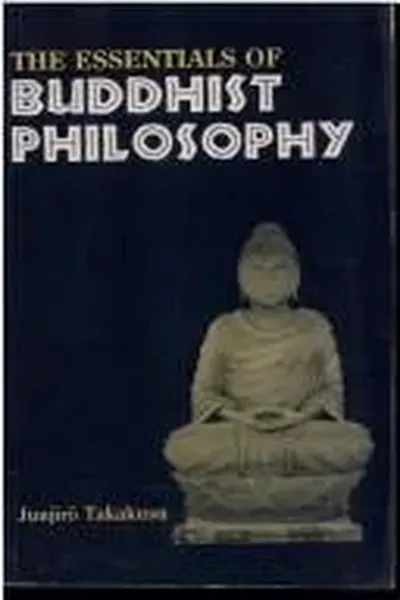
More Free Occult Philosophy Books
View all →