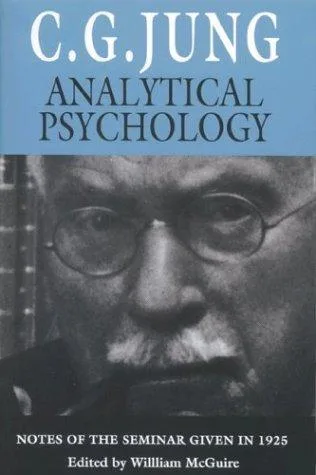
Analytical Psychology
 72
72

Analytical Psychology
Jung’s "Analytical Psychology" offers a dense but rewarding exploration of the psyche’s architecture. The treatment of the collective unconscious, particularly its manifestation through archetypes like the Shadow, provides a compelling framework for understanding internal conflict. Jung’s insistence on the symbolic meaning inherent in dreams and myths moves beyond mere pathology, positing a teleological drive towards wholeness. However, the sheer breadth of Jung’s erudition can occasionally make the text feel sprawling; connecting his ideas on alchemy to contemporary psychological states, for instance, demands considerable reader effort. A specific strength lies in his discussion of the 'Self' as the organizing principle of the psyche, a concept that offers a more integrated view than purely ego-centric models. The work is a foundational text for anyone interested in depth psychology, though its complexity requires dedicated engagement. It remains a vital resource for exploring the unconscious.
📝 Description
72
### What It Is Analytical Psychology presents a system of psychological thought developed by Swiss psychiatrist Carl Gustav Jung. It diverges from Freudian psychoanalysis by emphasizing the collective unconscious, archetypes, and individuation as core components of human psyche development. The work explores the symbolic language of dreams, myths, and art as expressions of deeper psychic realities.
### Who It's For This text is for individuals seeking to understand the deeper currents of the human psyche beyond personal history. It appeals to those interested in the symbolic dimensions of life, the process of self-realization, and the universal patterns that shape human experience. It is particularly relevant for students of psychology, philosophy, and comparative religion.
### Historical Context Jung's 'Analytical Psychology' emerged in the early 20th century, a period of intense intellectual ferment in Europe. Following his break with Sigmund Freud in 1913 over theoretical differences, Jung began formulating his distinct psychological framework. This era saw rapid advancements in physics, anthropology, and philosophy, all of which influenced Jung's thinking. His work stood in contrast to the increasingly mechanistic views of science, seeking to integrate the spiritual and symbolic dimensions of human experience. The reception was varied, with some embracing his ideas and others dismissing them as unscientific.
### Key Concepts The central tenets of Analytical Psychology include the concept of the collective unconscious, a shared reservoir of ancestral memories and instincts. Archetypes, such as the Persona, Shadow, Anima/Animus, and the Self, are universal patterns that shape individual and collective behavior. Individuation, the lifelong process of psychological differentiation, is the primary goal, leading to the integration of conscious and unconscious aspects of the personality. Jung also explored synchronicity, meaningful coincidences that suggest an underlying order in the universe.
💡 Why Read This Book?
• Gain an understanding of archetypes like the Shadow, which offers a unique lens for self-reflection beyond simple personal flaws. • Explore the concept of individuation, a lifelong process Jung outlined for achieving psychological wholeness that differs from societal expectations. • Grasp the significance of synchronicity, a concept that invites contemplation of meaningful coincidences and potential underlying universal patterns.
⭐ Reader Reviews
Honest opinions from readers who have explored this book.
❓ Frequently Asked Questions
What is the primary difference between Jungian Analytical Psychology and Freudian Psychoanalysis?
Jungian Analytical Psychology emphasizes the collective unconscious and archetypes, viewing the psyche as striving towards individuation. Freudian Psychoanalysis, conversely, focuses more on repressed sexual drives and the individual unconscious's personal history.
What is the collective unconscious according to Carl Jung?
The collective unconscious is a theoretical layer of the unconscious mind shared by all humanity, containing inherited archetypes and primal images derived from our ancestral past.
Can you explain the concept of individuation in Analytical Psychology?
Individuation is the lifelong psychological process of differentiating one's self from others and the collective, integrating conscious and unconscious elements to achieve a unified personality.
What are archetypes in Jung's Analytical Psychology?
Archetypes are universal, archaic patterns and images that derive from the collective unconscious and are the psychic counterpart of instinct. Examples include the Mother, the Hero, and the Wise Old Man.
How does Jung view the interpretation of dreams?
Jung saw dreams as a direct expression of the unconscious, offering compensatory messages to the conscious mind and providing vital clues for the process of individuation.
When was Analytical Psychology first developed and published?
Carl Jung began developing the core concepts of Analytical Psychology in the early 20th century, with key works appearing after his split from Freud in 1913. The first consolidated publication of 'Analytical Psychology' as a distinct school of thought is often associated with his later writings and lectures.
🔮 Key Themes & Symbolism
The Collective Unconscious
This foundational concept posits a psychic layer shared by all humanity, inherited from our ancestors. It's not a personal repository of forgotten memories but a universal structure containing primal patterns and predispositions. Jung believed it manifests through myths, fairy tales, and dreams across cultures, providing a common ground for human experience and a source of profound symbolic imagery that shapes our individual lives.
Archetypes and Their Manifestations
Archetypes are universal, archaic patterns and images that derive from the collective unconscious. Figures like the Shadow (our darker, unacknowledged aspects), the Anima/Animus (the contrasexual soul-image), and the Self (the totality of the psyche) act as organizing principles. Their appearance in dreams, fantasies, and cultural narratives offers insight into the psyche's dynamics and the path towards integration.
Individuation: The Path to Wholeness
Individuation is the central process in Analytical Psychology, describing the lifelong journey of psychological differentiation and integration. It involves confronting and integrating various aspects of the personality, particularly the unconscious elements, to become a complete, unique individual. This process is not about perfection but about achieving psychic wholeness and realizing one's true potential.
Synchronicity and Meaningful Coincidence
Jung's concept of synchronicity describes events that are meaningfully related but lack a causal connection. It suggests an acausal connecting principle in the universe, where inner psychic states correspond with outer physical events. This phenomenon points to a deeper, interconnected reality that transcends ordinary cause and effect, offering profound insights into the nature of consciousness and the cosmos.
💬 Memorable Quotes
“One must be something to be able to love.”
— This statement emphasizes that genuine love and connection require a developed sense of self. One must first establish their own psychic integrity and identity before being capable of offering authentic love to another.
“The shoe that fits one man pinches another.”
— This aphorism highlights the subjective nature of truth and experience. What is beneficial or suitable for one individual may be entirely inappropriate or even harmful for another, underscoring the need for personalized psychological approaches.
“The most dangerous thing is the illusion of the conscious person.”
— Jung suggests that an over-identification with the conscious ego and a denial of unconscious contents can be perilous. This illusion prevents individuals from accessing deeper truths and hinders the process of individuation.
“I have never helped a patient who has not been able to help himself.”
— This reflects Jung's belief in the patient's inherent capacity for healing and self-discovery. The therapist's role is to facilitate this process, not to impose solutions, empowering the individual's own inner resources.
“Meaning is not a state but a process.”
— This suggests that meaning in life is not a fixed destination or a static discovery, but rather something that unfolds and is actively created through one's experiences, struggles, and engagement with the world.
🌙 Esoteric Significance
Tradition
Analytical Psychology, while rooted in empirical observation, deeply engages with esoteric traditions. Jung's exploration of archetypes and the collective unconscious draws parallels with Gnostic concepts of divine patterns and universal consciousness. His interest in alchemy reflects Hermetic principles of transformation and the 'as above, so below' axiom. The emphasis on individuation as a path to psychological wholeness echoes mystical quests for union with the divine or the realization of the true Self.
Symbolism
Key symbols in Jungian thought include the Mandala, representing psychic totality and order, often appearing in dreams and mandalas drawn by patients. The Shadow symbolizes the repressed, darker aspects of the personality, essential to acknowledge for integration. The Anima (in men) and Animus (in women) represent the contrasexual element, bridging the personal and collective unconscious, and are crucial for relational dynamics and self-understanding.
Modern Relevance
Jung's work continues to influence contemporary depth psychology, transpersonal psychology, and various spiritual and self-help movements. Thinkers like Robert Moore and James Hillman have expanded on Jungian concepts, applying them to modern life, mythology, and ecological concerns. Practices such as dream analysis, active imagination, and the study of archetypal patterns remain vital tools for personal growth and understanding the psyche's deeper dimensions.
👥 Who Should Read This Book
• Individuals interested in depth psychology and the unconscious mind, seeking to understand the roots of human behavior beyond surface-level explanations. • Students of comparative religion and mythology, looking to explore the universal symbolic language that connects diverse spiritual traditions. • Those on a path of personal development and self-discovery, aiming to achieve greater psychological integration and understand their unique life journey.
📜 Historical Context
Carl Gustav Jung's Analytical Psychology emerged in the early 20th century, a period marked by profound shifts in scientific and philosophical thought. Following his significant collaboration and subsequent break with Sigmund Freud in 1913, Jung began to articulate his distinct theories. His work offered a counterpoint to the prevailing mechanistic worldview, seeking to integrate the spiritual, symbolic, and mythological dimensions of human experience. While Freud focused primarily on repressed sexuality and the personal unconscious, Jung expanded the scope to include the collective unconscious and its archetypal patterns. This era also saw the rise of figures like Alfred Adler, whose Individual Psychology offered another alternative to Freudianism. Jung's engagement with alchemy, Gnosticism, and Eastern philosophies provided a rich substratum for his psychological theories, setting him apart from his contemporaries and often placing his ideas on the fringes of mainstream academic psychology.
📔 Journal Prompts
The Persona's masks and the Shadow's hidden depths: where do they overlap in your daily experience?
Reflecting on recurring dream imagery: what archetypal patterns might they represent?
The process of individuation: how have external expectations diverged from your inner sense of self?
Synchronistic events: document a recent coincidence that held personal meaning.
The archetype of the Self: explore its presence or absence in your current life narrative.
🗂️ Glossary
Collective Unconscious
A theoretically inherited part of the unconscious mind, common to all humanity, containing archetypes and primal psychic patterns.
Archetype
Universal, archaic patterns and images that derive from the collective unconscious and are the psychic counterpart of instinct.
Individuation
The lifelong psychological process of differentiation, integrating conscious and unconscious elements to achieve a unified personality and selfhood.
Shadow
The unconscious or repressed aspects of the personality, often negative traits that the ego rejects but are essential for wholeness.
Anima/Animus
The unconscious contrasexual aspect of the psyche: the Anima is the feminine image in the male unconscious, and the Animus is the masculine image in the female unconscious.
Synchronicity
Meaningful coincidence; the simultaneous occurrence of events that appear meaningfully related but lack a direct causal connection.
Self
The archetype of wholeness and the central organizing principle of the psyche, encompassing both conscious and unconscious elements.