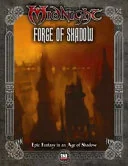
Midnight: Forge of shadow : a sourcebook for Steel Hill
 71
71

Midnight: Forge of shadow : a sourcebook for Steel Hill
The approach to shadow mechanics in Midnight: Forge of Shadow is commendable, offering a departure from generic 'dark magic' tropes. Its strength lies in the detailed lore surrounding the Umbral Plane, providing a tangible framework for its influence rather than an abstract threat. The section on Void Sigils, in particular, presents intriguing possibilities for in-game ritualistic play. However, the book's primary limitation is its tight integration with the Steel Hill system; without prior familiarity, its mechanics can feel opaque. A particularly evocative passage describes the 'Whispering Fissures'—rifts that bleed shadow energy into the material world, a concept that vividly illustrates the book's thematic focus. While dense, it's an essential addition for Steel Hill devotees.
📝 Description
71
Published in 2003, Midnight: Forge of Shadow expands the Steel Hill setting with shadow-infused lore.
This sourcebook details the shadow-infused lore and mechanics of the Steel Hill setting. It expands upon entities, locations, and esoteric principles that define the darker aspects of Steel Hill's reality. Game Masters and players receive tools to integrate these elements into campaigns, focusing on the connection between the material world and shadowy dimensions.
The book is for enthusiasts of the Steel Hill role-playing game who want to engage more deeply with its occult elements. Players interested in shadow entities, occult rituals, and the psychological effects of encroaching darkness will find specific content here. Game Masters can use it to build adventures that explore themes of corruption, forbidden knowledge, and the spaces between worlds.
Midnight: Forge of Shadow emerged during a time of increasing interest in dark fantasy and occult themes in tabletop role-playing games. It contributes to this trend by examining shadow elements within a specific game world, offering a contrast to lighter themes.
The book engages with the concept of parallel planes of existence, specifically a 'shadow' dimension influencing the material world. It presents this influence through specific entities and practices, such as 'Shade Wraiths' and 'Shadow Weaving.' The use of 'Void Sigils' suggests a focus on symbolic magic and the manipulation of unseen energies. This aligns with traditions that explore the hidden forces shaping reality and the potential for mortals to interact with or be corrupted by them.
💡 Why Read This Book?
• Understand the mechanics of the Umbral Plane, learning how its energies manifest and can be manipulated, a core concept introduced in 2003. • Explore the lore of specific shadow entities like Shade Wraiths, gaining insights into their nature and impact within the Steel Hill setting. • Learn about esoteric practices such as Shadow Weaving and the function of Void Sigils, offering unique gameplay and narrative tools.
⭐ Reader Reviews
Honest opinions from readers who have explored this book.
❓ Frequently Asked Questions
What is the primary purpose of Midnight: Forge of Shadow for the Steel Hill RPG?
This sourcebook serves to expand the Steel Hill role-playing game by detailing the lore, entities, and mechanics associated with its shadow dimensions, primarily the Umbral Plane, which was first explored in the 2003 publication.
Who are the main types of entities detailed in this book?
The book details creatures intrinsically linked to the shadow realms, such as Shade Wraiths and Gloom Hounds, which are described as direct manifestations of the Umbral Plane's influence.
What is 'Shadow Weaving' as presented in Midnight: Forge of Shadow?
Shadow Weaving is an esoteric practice detailed in the sourcebook that allows practitioners to interact with and manipulate the energies of the Umbral Plane within the Steel Hill setting.
Are there specific symbols mentioned that relate to shadow magic?
Yes, the book discusses 'Void Sigils,' which are potent symbols designed for the manipulation of shadow energies, offering a visual and conceptual anchor for these dark arts.
Is Midnight: Forge of Shadow usable outside of the Steel Hill RPG?
While the book is designed as a sourcebook for Steel Hill, its detailed lore on shadow planes, entities, and esoteric concepts could be adapted by Game Masters for other dark fantasy or occult settings.
When was Midnight: Forge of Shadow first published?
Midnight: Forge of Shadow was first published in 2003, positioning it within a period of growing interest in darker, more complex fantasy role-playing settings.
🔮 Key Themes & Symbolism
The Umbral Plane's Influence
This theme focuses on the encroaching darkness from the Umbral Plane, a key concept in the 2003 publication. The book details how this extradimensional space bleeds into the material world of Steel Hill, manifesting through 'Whispering Fissures' and corrupting ambient energies. It explores the psychological and physical toll this influence takes on inhabitants, presenting a pervasive, environmental threat that shapes the setting's atmosphere and challenges.
Manifestations of Shadow
Central to the sourcebook is the cataloging of entities born from or intrinsically tied to shadow. Creatures like Shade Wraiths and Gloom Hounds are not merely monsters but personifications of the Umbral Plane's malevolent essence. Their descriptions and behaviors are designed to reflect the alien, often corrupting nature of this other realm, offering distinct antagonists for players to encounter and understand within the Steel Hill narrative.
Esoteric Practices and Symbols
Midnight: Forge of Shadow examines the forbidden arts employed to interact with or resist the shadow. 'Shadow Combining' is presented as a dangerous discipline, requiring intricate knowledge and will. Complementing this are 'Void Sigils,' specific glyphs and symbols that serve as focal points for channeling or warding off shadow energies, offering players concrete tools and narrative hooks for occult endeavors.
Liminal Spaces and Corruption
The book emphasizes the nature of thresholds and corrupted places where the veil between worlds is thin. 'Whispering Fissures' and other locations detailed in the sourcebook act as points of entry for shadow influence. This theme explores how these liminal spaces become hotbeds of paranormal activity and corruption, affecting both the environment and those who dare to tread within them.
💬 Memorable Quotes
Direct passages from the work, attributed to the author.
“Shade Wraiths are the traces of souls lost to the void, forever seeking substance.”
— This interpretation defines Shade Wraiths not just as monsters, but as remnants of fallen consciousness, emphasizing their tragic origin and predatory nature within the Steel Hill lore.
“Void Sigils are keys to doors best left unopened.”
— This aphorism warns of the dangerous power contained within the sigils, suggesting that their use, while potent, carries inherent risks and potential for catastrophic consequences.
“Gloom Hounds track not scent, but despair.”
— This evocative phrase describes the hunting method of Gloom Hounds, implying they are attuned to negative emotions and psychic residue, making them formidable trackers of the emotionally vulnerable.
“Shadow Combining demands a sacrifice of clarity for a gain of power.”
— This statement expresses the core trade-off in the practice of Shadow Combining, illustrating that wielding shadow energy comes at the cost of one's mental or spiritual integrity.
💡 Key Ideas
Editorial paraphrase of the work's core concepts — not direct quotes.
The Umbral Plane is not merely a place, but a state of being that infects reality.
This paraphrased concept highlights the book's view of the shadow dimension as an active, corrupting force rather than a passive location, suggesting its influence is pervasive and insidious.
🌙 Esoteric Significance
Tradition
This work draws heavily from Western esoteric traditions, particularly those concerned with shadow work, liminality, and the manipulation of unseen forces, akin to certain Hermetic and Gnostic concepts of material corruption and spiritual descent. It frames the 'Umbral Plane' as an existential threat and a source of power, a concept explored in various occult philosophies concerning the astral or elemental planes, albeit specific to the Steel Hill setting.
Symbolism
Key symbols include 'Void Sigils,' which function as arcane diagrams for channeling shadow energy, reminiscent of sigil magic found in traditions like chaos magic or grimoire-based practices. The 'Whispering Fissures' act as symbolic representations of weakened boundaries between realities, a motif common in lore concerning planar travel or spiritual invasion. The entities themselves, like Shade Wraiths, embody the concept of spiritual dissolution and existential dread.
Modern Relevance
Contemporary practitioners of occult role-playing games, particularly those focused on dark fantasy, cosmic horror, or psychological thrillers, find value in Midnight: Forge of Shadow. Game designers interested in creating mechanics for corruption, shadow magic, or planar incursions can draw inspiration from its detailed lore. The book's approach to integrating esoteric concepts into a playable system remains relevant for those exploring the intersection of metaphysics and interactive storytelling.
👥 Who Should Read This Book
• Game Masters of Steel Hill seeking to introduce deeper, darker themes and mechanics into their campaigns, utilizing the detailed lore of the Umbral Plane. • Players interested in exploring the occult and shadow-infused aspects of role-playing, particularly those drawn to lore about entities like Shade Wraiths and practices like Shadow Combining. • RPG enthusiasts interested in the evolution of dark fantasy settings and the specific contributions made by niche sourcebooks published around 2003.
📜 Historical Context
Published in 2003, Midnight: Forge of Shadow arrived during a fertile period for dark fantasy and occult themes in tabletop role-playing games. This era saw designers moving beyond classic heroic archetypes to explore morally ambiguous worlds and cosmic horror, influenced by authors like H.P. Lovecraft and games like Ravenloft. The early 2000s also saw a trend towards detailed sourcebooks that fleshed out specific aspects of game settings, offering players deeper immersion. While not directly engaging with a specific contemporary scholar or academic debate, the work taps into a broader cultural fascination with the occult and the darker corners of imagination, which was also reflected in popular fiction and film of the time. Its focus on specific shadow mechanics and lore within the Steel Hill context positions it as a specialized contribution to the growing library of niche RPG expansions.
📔 Journal Prompts
The nature of Void Sigils and their potential applications.
Reflections on the Umbral Plane's influence as described.
The psychological impact of encountering Shade Wraiths.
Considerations regarding the practice of Shadow Combining.
The significance of Gloom Hounds and their tracking methods.
🗂️ Glossary
Umbral Plane
An extradimensional area of shadow and darkness that exerts influence over the material world in the Steel Hill setting, serving as the source for many malevolent entities and energies.
Shade Wraith
An entity originating from the Umbral Plane, often described as the spectral remnant of a soul consumed by shadow, seeking to manifest or corrupt living beings.
Gloom Hound
A creature associated with the Umbral Plane, characterized by its ability to track not physical scents but emotional or spiritual distress, embodying predatory despair.
Shadow Combining
An esoteric discipline detailed in the sourcebook that involves the manipulation of Umbral Plane energies, often requiring significant risk or sacrifice from the practitioner.
Void Sigil
A specific arcane symbol or glyph used to focus, channel, or ward off the energies of the Umbral Plane, serving as a tool in shadow-related rituals.
Whispering Fissures
Rifts or tears in reality where the Umbral Plane bleeds into the material world, often acting as conduits for shadow energy and paranormal phenomena.
Steel Hill
The primary game setting for which Midnight: Forge of Shadow serves as a sourcebook, characterized by its blend of gritty reality and encroaching supernatural and shadow-based threats.
This book appears in 1 collection
🔮 Readers Also Liked
Browse all →








From the “Spellcraft” Collection
View all →


More Free Occult Philosophy Books
View all →