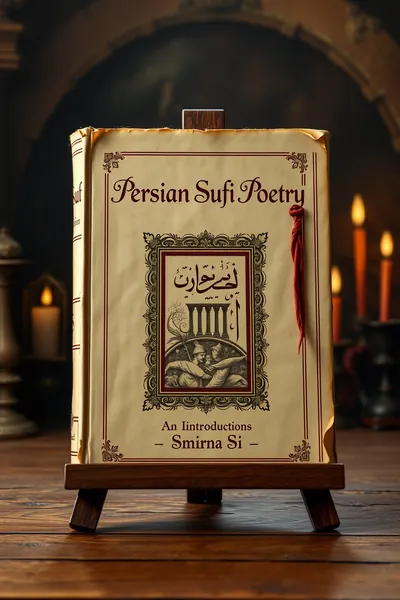
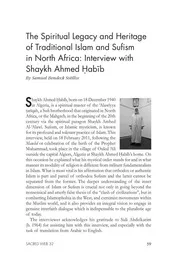
The spiritual legacy and heritage of traditional Islam and Sufism in North Africa
 73
73

The spiritual legacy and heritage of traditional Islam and Sufism in North Africa



Smirna Si's "The Spiritual Legacy and Heritage of Traditional Islam and Sufism" is a luminous exploration of a rich and often misunderstood spiritual lineage. Drawing directly from the wisdom of Shaykh Ahmed Habib, Si masterfully translates the esoteric nuances of North African Sufism into accessible yet profound prose. This work is invaluable for its authentic portrayal of contemplative practices, its emphasis on inner purification, and its deep respect for the unbroken chain of spiritual transmission. It’s a vital resource for scholars of comparative mysticism, practitioners seeking authentic guidance, and anyone yearning to connect with the soul of Islamic spiritual heritage. A truly enlightening read.
📝 Description
73
Smirna Si's 2017 book examines North African Islamic spirituality and Sufi traditions.
Smirna Si's work focuses on the spiritual heritage of traditional Islam and Sufism in North Africa. The book draws on interviews with Shaykh Ahmed Habib to illuminate aspects of Islamic mysticism. It discusses the path to divine proximity, subtle energies, and the symbolic language of dreams. The practices of remembrance, central to Sufi devotion, are also detailed.
This book speaks to readers interested in ancestral spiritual currents and the evolution of faith. It connects the contemplative traditions of the region with contemporary life. The author aims to provide an understanding of enduring spiritual legacies and the pursuit of inner meaning.
This book engages with the esoteric dimensions of Islam, specifically within the Sufi orders of North Africa. It examines contemplative practices, mystical experiences, and symbolic interpretations that go beyond exoteric religious observance. The focus on internal spiritual development and direct experience of the divine places it within the broader tradition of Islamic mysticism, which has a long history in the region.
💡 Why Read This Book?
Uncover the mystical heart of Islam through the ancient Sufi traditions of North Africa. This book offers direct access to the wisdom of Shaykh Ahmed Habib, revealing esoteric knowledge and contemplative practices essential for spiritual seekers. Ideal for those drawn to the depths of mysticism, the beauty of Islamic spirituality, and the enduring power of tradition.
⭐ Reader Reviews
Honest opinions from readers who have explored this book.
❓ Frequently Asked Questions
What is Sufism?
Sufism, or Tasawwuf, is the mystical dimension of Islam, focusing on the purification of the heart, direct experience of God, and the pursuit of divine love through asceticism, meditation, and remembrance (dhikr).
Who was Shaykh Ahmed Habib?
Shaykh Ahmed Habib is a highly respected contemporary spiritual guide within the North African Sufi tradition, known for his profound wisdom, deep spiritual insight, and authentic transmission of knowledge.
What makes North African Sufism unique?
North African Sufism is characterized by its deep roots in local cultures, its integration of diverse spiritual lineages, and its emphasis on devotional practices deeply intertwined with the natural landscape and ancestral heritage.
Is this book for beginners or advanced practitioners?
The book is accessible to both beginners seeking an introduction to Islamic mysticism and advanced practitioners looking for deeper insights and authentic perspectives on Sufi traditions.
What kind of spiritual practices are discussed?
The book delves into practices such as dhikr (remembrance of God), muraqaba (meditation), tawakkul (trust in God), qalb (heart purification), and the importance of the spiritual guide (shaykh).
🔮 Key Themes & Symbolism
The Inner Journey of the Heart
This theme studies the Sufi concept of the 'qalb' – the spiritual heart as the locus of divine awareness and the primary instrument of spiritual perception. It explores the rigorous disciplines and contemplative techniques employed to purify the heart from worldly attachments, egoic illusions, and negative states, thus opening it to the direct experience of divine presence and unveiling the subtle realities of existence. The journey inward is presented not as an escape, but as the fundamental pathway to true spiritual realization and a profound connection with the Divine.
The Role of the Spiritual Guide (Shaykh)
Central to the heritage of traditional Islam and Sufism in North Africa is the indispensable role of the spiritual guide, or Shaykh. This theme illuminates the concept of the unbroken chain of spiritual transmission (silsila) and the Shaykh's function as a living embodiment of the tradition, a clear source of wisdom, and a compassionate mentor. The book emphasizes the necessity of guidance in working through the subtle terrains of the spiritual path, discerning divine inspiration from egoic whispers, and receiving the initiatory blessings that propel the aspirant towards higher states of consciousness and nearness to God.
Symbolism and Sacred Cosmology
This theme unpacks the wide range of symbolism that underpins North African Islamic mysticism. It explores how seemingly mundane elements of creation, from the desert sands to the celestial bodies, are imbued with profound spiritual meaning, serving as divine signs pointing towards the Creator. The book investigates the esoteric interpretations of Quranic verses, prophetic traditions, and the intricate cosmology that reveals the interconnectedness of all existence and the divine order governing the universe. Understanding this symbolic language is presented as a key to unlocking deeper spiritual insights and appreciating the divine artistry woven into the fabric of reality.
💬 Memorable Quotes
Direct passages from the work, attributed to the author.
“The path is not found in books, but in the living presence.”
— This emphasizes the Sufi reliance on experiential knowledge and the guidance of a living spiritual master over purely intellectual pursuit of spiritual truths.
“Dhikr is the breath of the soul.”
— This metaphor illustrates the vital, life-sustaining importance of the remembrance of God in Sufism, portraying it as an essential spiritual sustenance.
“Every grain of sand whispers His name.”
— This evokes a sense of universal divine presence, suggesting that all of creation, even the smallest elements, testifies to the existence and glory of God.
“The true journey is inward.”
— This succinctly captures the essence of Sufi practice, pointing to the internal range of the self as the primary arena for spiritual transformation and discovery.
💡 Key Ideas
Editorial paraphrase of the work's core concepts — not direct quotes.
The heart is the mirror reflecting the Divine.
This quote highlights the Sufi belief that the human heart, when purified, becomes capable of reflecting the Divine Light, signifying a direct and intimate connection with God.
🌙 Esoteric Significance
Tradition
This work studies the esoteric dimensions of Sunni Islam, specifically focusing on Sufism (Tasawwuf) as practiced in North Africa. It illuminates the lineage of spiritual transmission, the inner dimensions of Islamic theology and practice, and the pursuit of direct experiential knowledge of God, often referred to as Gnosis (Ma'rifa). The esoteric significance lies in its unveiling of the hidden meanings within the Quran and Sunnah, and the cultivation of inner states leading to divine union.
Symbolism
The symbolism within this tradition is rich and many-sided, drawing from Quranic verses, prophetic sayings, and the natural world. Key symbols include the 'heart' (qalb) as the seat of divine awareness, 'light' (nur) representing divine manifestation, 'journey' (safar) for the spiritual path, and various animals and natural phenomena imbued with spiritual significance. These symbols are not mere decorative elements but potent keys to understanding the subtle energies and cosmic order, guiding the aspirant towards higher states of consciousness.
Modern Relevance
In an age often characterized by materialism and spiritual disconnection, the esoteric wisdom of North African Islam and Sufism offers a potent antidote. It provides timeless principles for cultivating inner peace, developing resilience, fostering compassion, and seeking authentic meaning. The emphasis on purification of the heart, ethical conduct, and the remembrance of God remains profoundly relevant for individuals working through the complexities of modern life, offering a pathway to holistic well-being and a deeper connection to oneself and the Divine.
👥 Who Should Read This Book
This book is a treasure for a diverse audience. **Beginners** seeking an authentic and accessible introduction to the mystical heart of Islam will find a warm and guiding voice. **Scholars** of religion, mysticism, and Islamic studies will appreciate the nuanced exploration of a specific regional tradition and its historical lineage. **Spiritual seekers** yearning for deeper contemplative practices, insights into esoteric knowledge, and a connection to living spiritual lineages will find profound resonance. **Practitioners** of meditation and mindfulness will discover complementary techniques and a rich philosophical framework for their own inner work.
📜 Historical Context
North Africa has been a crucible of Islamic thought and practice for over a millennium. Following the Arab conquests in the 7th century, Islam deeply integrated with existing Berber cultures, fostering unique interpretations and spiritual expressions. Sufism, arriving with early mystics and scholars, flourished, establishing numerous orders (tariqas) that became central to the religious and social fabric of regions like Morocco, Algeria, Tunisia, and Libya. This era saw the rise of influential Sufi saints and scholars whose teachings and practices continue to resonate. The confluence of Islamic jurisprudence, local traditions, and the vibrant mystical currents created a distinct spiritual heritage, characterized by profound devotion, intellectual rigor, and a deep connection to the land, shaping a worldview that continues to influence contemporary spiritual life in the region and beyond.
📔 Journal Prompts
Reflect on a time you felt a profound sense of presence. How did your heart respond?
What does the concept of 'inner journey' mean to you in your daily life?
Consider the symbolism of light in your own spiritual understanding. How does it manifest?
How can the practice of 'remembrance' (dhikr) be integrated into your current routine?
If you were to seek spiritual guidance, what qualities would you look for in a mentor?
🗂️ Glossary
Tasawwuf
The Arabic term for Sufism, referring to the mystical dimension of Islam focused on inner purification, divine love, and direct experience of God.
Dhikr
The remembrance of God, often practiced through chanting divine names, verses, or phrases, central to Sufi devotional practice.
Shaykh
A spiritual guide or master in Sufism, who leads disciples on the spiritual path and possesses authentic spiritual knowledge and authority.
Silsila
The spiritual chain or lineage of transmission in Sufism, connecting contemporary masters to the Prophet Muhammad through an unbroken line of spiritual teachers.
Qalb
The Arabic word for 'heart,' understood in Sufism as the spiritual center of a human being, the locus of divine awareness and spiritual perception.
This book appears in 2 collections
🔮 Readers Also Liked
Browse all →








More by Smirna Si
All books →


From the “Christian Mysticism” Collection
View all →![Science Without Bounds [A Synthesis Of Science, Religion And Mysticism].pdf (PDFy mirror)](/img/thumb/science-without-bounds-a-synthesis-of-science-religion-and-mysticism-pdf-pdfy-mirror.webp)








More Free Mysticism & Contemplation Books
View all →