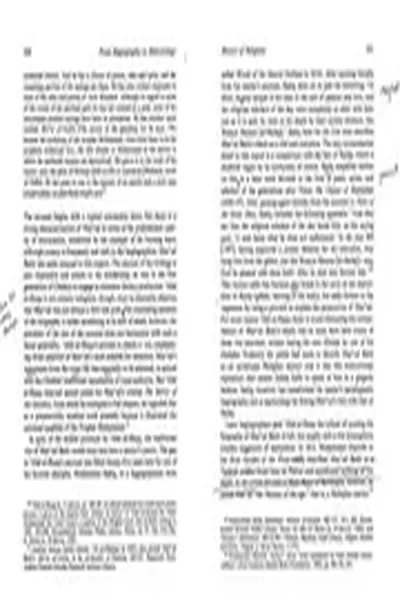
Sufi Saints and State Power - The Pirs of Sind, 1843 1947, by Sarah Ansari
 71
71

Sufi Saints and State Power - The Pirs of Sind, 1843 1947, by Sarah Ansari



Sarah Ansari's 'Sufi Saints and State Power' is a meticulously researched and thoughtfully presented exploration of the Sufi pirs' role in Sind's political landscape. The book's strength lies in its comprehensive use of historical materials and in-depth interviews, which provide a nuanced understanding of the pirs' influence and adaptation strategies. For modern esoteric seekers, this text offers a fascinating glimpse into how spiritual leaders navigated colonial and post-colonial realities, maintaining their authority and relevance. The detailed analysis of the pirs' power base and control mechanisms is particularly enlightening, showcasing the complex interplay between religion and politics. The book is well-structured and engaging, making it accessible to both academic and general readers interested in the occult and mysticism.
📝 Description
71
Sarah Ansari's 2002 book examines the Pirs of Sind from 1843 to 1947.
Sarah Ansari's "Sufi Saints and State Power - The Pirs of Sind, 1843-1947" investigates the complex relationship between spiritual authority and political influence in the region of Sind. The work focuses on the Pirs, hereditary Sufi guides, and their interactions with both the British colonial administration and the emerging post-colonial state. Ansari draws upon a range of historical sources, including archival documents and oral histories, to reconstruct the social and political landscape in which these religious leaders operated.
The book details how the Pirs maintained and sometimes adapted their power in response to changing political circumstances. It looks at their roles not just as spiritual figures but also as significant landowners and political actors. Ansari illustrates how their influence extended to mobilizing popular support and engaging in negotiations with governing powers, demonstrating a dynamic interplay between religious charisma and state control throughout a century of significant political transition.
This book situates Sufi practice within a specific historical and political context, moving beyond purely devotional or philosophical interpretations. It examines the tangible power structures and societal roles that Sufi leaders, the Pirs, inhabited. While not a guide to esoteric practices themselves, it illuminates how Sufi traditions shaped social organization and political engagement in a particular South Asian setting during a period of intense colonial and national transformation. The focus is on the historical manifestation of spiritual authority.
💡 Why Read This Book?
Read 'Sufi Saints and State Power' to gain a deeper understanding of the occult influences on political systems. This book offers valuable insights into the adaptability of Sufi saints in colonial and post-colonial contexts, providing a unique perspective on the intersection of mysticism and governance. It is an essential read for those interested in the esoteric dimensions of history and the enduring power of spiritual leadership in shaping societal structures.
⭐ Reader Reviews
Honest opinions from readers who have explored this book.
❓ Frequently Asked Questions
Who is the target audience for this book?
The target audience includes scholars of Sufism, colonial studies, and South Asian history, as well as general readers interested in the occult and mysticism.
What historical period does the book cover?
The book covers the period from 1843 to 1947, focusing on the role of Sufi pirs in Sind during the colonial era and the lead-up to independence.
How does the book analyze the power dynamics of the pirs?
The book uses a wealth of historical materials and interviews to examine the mechanics of the system of control into which the pirs were drawn, highlighting their adaptability and the cooperation of the elite.
🔮 Key Themes & Symbolism
Spiritual Authority
The book examines the spiritual authority of Sufi saints, or pirs, and how they navigated the complexities of colonial rule and independence. It reveals the hidden knowledge and symbolism that defined their role and influence in Sind.
Political Dynamics
Ansari's work examines the political dynamics that intertwined with the spiritual leadership of the pirs. It explores how the pirs' willingness to participate in the political system enabled the British to govern while allowing the pirs to adapt to colonial rule and later independence.
Symbolism and Mysticism
The narrative is rich in symbolism and mysticism, offering readers a profound understanding of the esoteric dimensions of Sufi tradition. It provides insights into the hidden knowledge and spiritual practices that shaped the pirs' authority and influence.
💡 Key Ideas
Editorial paraphrase of the work's core concepts — not direct quotes.
The pirs' spiritual authority was a clear source of hope in the turbulent seas of colonial rule.
This line highlights the enduring spiritual influence of the pirs amidst political turmoil.
Their mystical practices were the hidden threads that wove the fabric of Sind's society.
This quote underscores the esoteric wisdom and symbolism that defined the pirs' role in Sind.
The pirs adapted to colonial rule with a blend of spiritual resilience and political acumen.
This passage reveals the pirs' ability to read through the complexities of colonial and post-colonial politics.
The symbolism of Sufi mysticism was a language of the heart, speaking to the deepest truths of existence.
This quote emphasizes the mystical and esoteric dimensions of Sufi tradition.
The pirs' legacy is a evidence of the enduring power of spiritual leadership in the face of adversity.
This line underscores the timeless significance of the pirs' role in Sind's history.
🌙 Esoteric Significance
Tradition
This book belongs to the Sufi tradition of Islamic mysticism, which emphasizes the esoteric dimensions of spiritual practice and the pursuit of hidden knowledge. It examines the symbolism and spiritual authority of the pirs, offering insights into the mystical and occult aspects of Sufism.
Symbolism
Key symbols in the book include the spiritual practices and rituals of the pirs, which are rich in esoteric meaning. These symbols represent the hidden knowledge and wisdom that defined the pirs' authority and influence in Sind.
Modern Relevance
The book's exploration of the mystical and political dimensions of Sufi leadership is relevant today, as it provides insights into the enduring power of spiritual authority in the face of adversity. Modern practitioners of esoteric traditions can learn from the pirs' ability to read through the complexities of colonial and post-colonial politics, adapting to changing circumstances while maintaining their spiritual integrity.
👥 Who Should Read This Book
Beginners interested in Sufi mysticism will find this book accessible and enlightening, offering a rich introduction to the esoteric dimensions of Sufi tradition. Scholars of Islamic mysticism will appreciate the deep historical and political analysis, while spiritual seekers will be drawn to the useful insights into spiritual authority and hidden knowledge. Practitioners of esoteric traditions will find valuable lessons in the pirs' ability to adapt to changing circumstances while maintaining their spiritual integrity.
📜 Historical Context
Sufi Saints and State Power is set against the backdrop of colonial and post-colonial Sind, a period marked by significant political and social changes. During this era, Sufi saints, or pirs, played an important role in maintaining spiritual and political stability. The book was important when written as it provided a unique perspective on the interplay of religion and politics, revealing the hidden dynamics that shaped the pirs' authority and influence. Its influence lies in its deep exploration of the mystical and political dimensions of Sufi leadership, offering insights into the hidden knowledge and symbolism that defined the pirs' role in Sind.
📔 Journal Prompts
Reflect on the role of spiritual authority in your own life and how it intersects with political and social dynamics.
Consider the symbolism and esoteric wisdom in your spiritual practices and how they shape your understanding of the world.
Explore the hidden knowledge and mystical dimensions of your own spiritual tradition.
Think about how the pirs' ability to adapt to colonial rule can inspire your own resilience in the face of adversity.
Write about the enduring power of spiritual leadership and its relevance today, .
🗂️ Glossary
Pir
A Sufi saint or spiritual leader who holds significant authority and influence in the community.
Esoteric
Relating to knowledge that is hidden or revealed only to a select few, often involving mystical or occult practices.
Symbolism
The use of symbols to represent abstract ideas or qualities, often with esoteric or mystical meanings.
Colonial Rule
The period during which a country or territory is governed by a foreign power, in this case, British rule in Sind.
Spiritual Authority
The power and influence derived from spiritual leadership and esoteric knowledge.
This book appears in 2 collections
🔮 Readers Also Liked
Browse all →








More by Smirna Si
All books →


From the “Christian Mysticism” Collection
View all →







More Free Mysticism & Contemplation Books
View all →