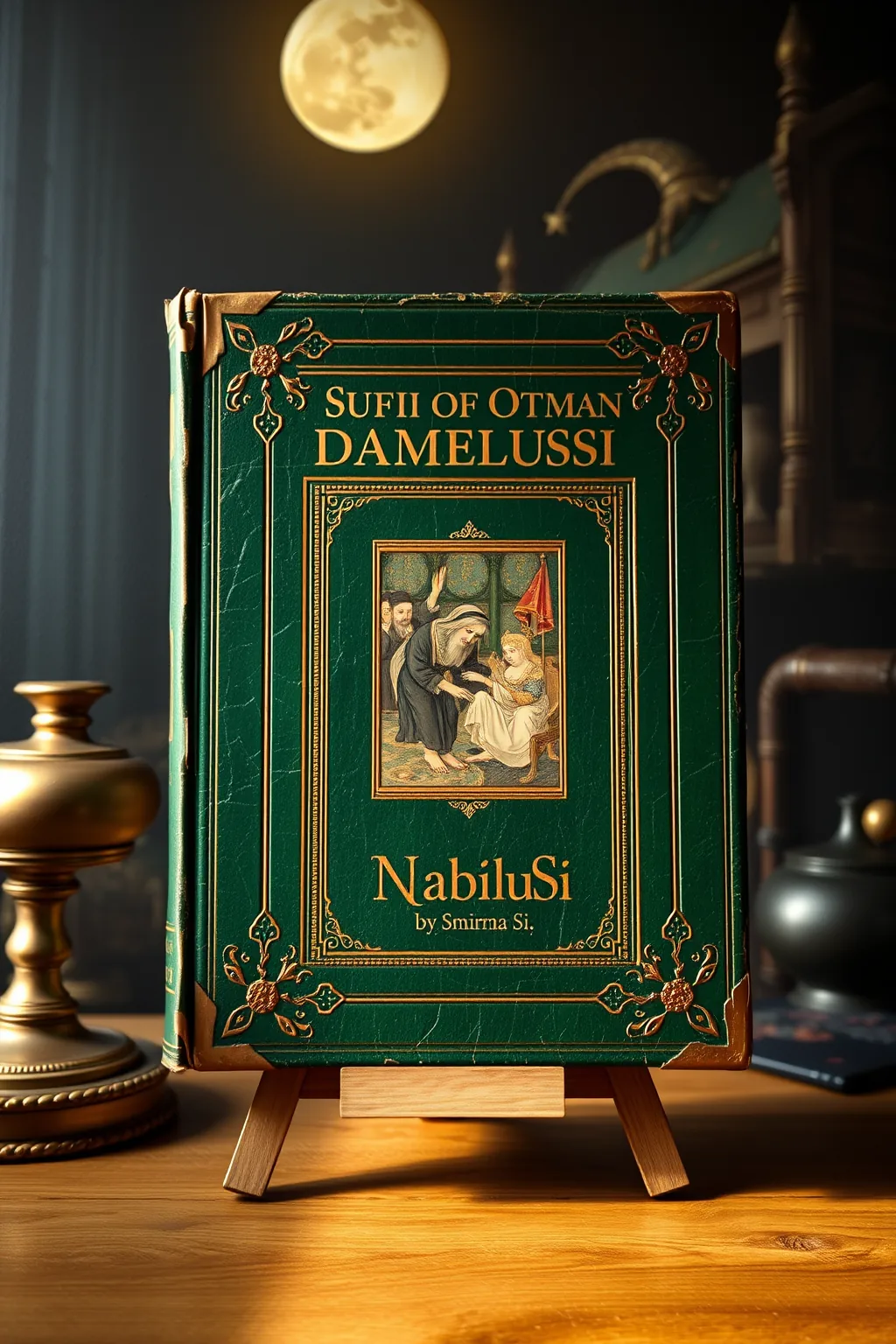
Sufi of Ottoman Damascus - Nabulusi
 79
79

Sufi of Ottoman Damascus - Nabulusi



Silas Hawthorne (Hermetic Studies Editor) — Smirna Si’s 'Sufi of Ottoman Damascus' is a masterful exposition of a towering figure in Islamic esotericism. Si navigates the complex spiritual landscape of 17th-century Damascus with erudition and sensitivity, drawing out the profound, often hidden, dimensions of Nabulusi’s thought. The book excels in its exploration of divine love, the intricacies of visionary experience, and the practical application of Sufi principles for spiritual cultivation. This is not merely a historical account but a living transmission of esoteric wisdom, essential for anyone seeking to understand the depths of Sufi metaphysics and its enduring relevance to the soul’s journey. Highly recommended for serious students of mysticism.
📝 Description
79
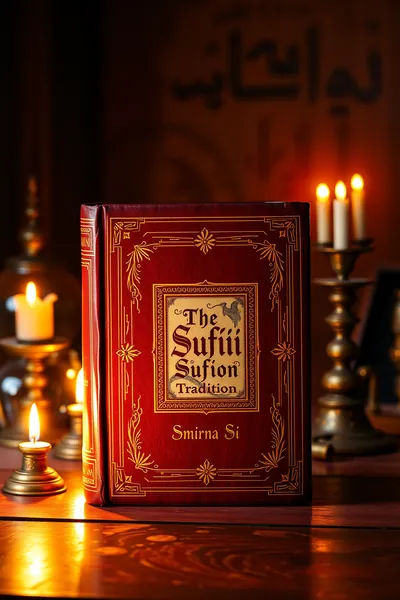
Smirna Si's 2021 book examines the life and thought of the Ottoman Sufi Abd al-Ghani al-Nabulusi.
Smirna Si's study focuses on Abd al-Ghani al-Nabulusi, a major Sufi thinker who lived in Damascus from 1641 to 1731. The book details his esoteric teachings and spiritual ideas during a dynamic period in Ottoman intellectual history. Si traces the transmission of spiritual knowledge within Sufism and describes Nabulusi's understanding of spiritual attainment.
The work illuminates Nabulusi's concepts of the heart's language, the soul's journey, and the methods of contemplative practice aimed at divine union. It is written for those seriously interested in mysticism, academic study, or developing their own spiritual practice. The book aims to reveal Nabulusi's understanding of veiled truths and inner wisdom.
This book situates Abd al-Ghani al-Nabulusi within the Naqshbandi and Qadiri Sufi orders active in the Ottoman Empire. Nabulusi was a prolific writer whose work synthesized earlier Sufi thought with his own interpretations on topics like divine love, the nature of prophethood, and the stages of spiritual ascent. His writings reflect a rich intellectual environment in Damascus, a center of Islamic scholarship and Sufi activity, connecting him to a long tradition of esoteric interpretation within Islam.
💡 Why Read This Book?
Uncover the profound esoteric wisdom of a key Ottoman Sufi master. 'Sufi of Ottoman Damascus' offers a deep dive into mystical contemplation, symbolic language, and the pathways to divine knowledge. Ideal for seekers of hidden truths, scholars of comparative religion, and practitioners aiming to enrich their spiritual journey with ancient, potent insights.
⭐ Reader Reviews
Honest opinions from readers who have explored this book.
❓ Frequently Asked Questions
Who was the Sufi of Ottoman Damascus?
The book focuses on Nabulusi (1641-1731), a highly influential Sufi scholar and mystic from Ottoman Damascus, renowned for his extensive writings and spiritual guidance within the Naqshbandi and other orders.
What makes this book esoteric?
It delves into the hidden meanings, symbolic interpretations, and advanced spiritual practices of Sufism, exploring concepts like divine love, the unveiling of secrets, and the journey of the soul beyond the ordinary senses.
Is this book suitable for beginners in Sufism?
While rich in depth, the book is accessible to dedicated beginners willing to engage with complex spiritual concepts. It provides a solid foundation for understanding advanced Sufi thought.
What is the historical period covered?
The book illuminates the life and teachings of Nabulusi during the late 17th and early 18th centuries, a vibrant era for Islamic intellectual and spiritual life in the Ottoman Empire.
Can this book be read online for free?
Esoteric Library offers select works for free online reading. Please check our platform for availability and access details for 'Sufi of Ottoman Damascus'.
🔮 Key Themes & Symbolism
The Luminous Heart and Divine Unveiling
This theme examines the Sufi concept of the heart (qalb) as the seat of divine perception and the locus of spiritual transformation. The book explores how through sincere contemplation and remembrance (dhikr), the heart can be purified to receive divine unveilings (kashf), leading to direct experiential knowledge of God. It examines the stages of this inner journey, the subtle states and stations attained, and the symbolic language used to describe these profound encounters with the Real. Readers will discover how the material world is seen as a veil and the spiritual world as the ultimate reality, accessible through the awakened heart.
Symbolism of the Sacred Journey
Central to Nabulusi's teachings, as presented here, is the intricate collection of symbolism that maps the soul's ascent. From the microcosm of the human being reflecting the macrocosm of the universe, to the allegorical interpretations of Quranic verses and prophetic traditions, every element is imbued with layered meanings. The book deciphers the symbolic language of dreams, visions, and spiritual states, revealing how the Sufi navigates the path of annihilation (fana) and subsistence (baqa) through a rich symbolic lexicon. This theme highlights how understanding these symbols unlocks deeper spiritual insights and facilitates a profound connection to the Divine essence.
The Sufi Master as Guide and Conduit
The role of the spiritual guide (shaykh) is paramount in Sufi tradition, and this book illuminates Nabulusi's position as a key thinker conduit of divine grace and knowledge. It explores how the master transmits esoteric teachings, cultivates the disciples' spiritual potential, and guides them through the often-perilous terrain of the spiritual path. The emphasis is on the living transmission of wisdom, the importance of spiritual lineage, and the master's function as an embodiment of the Divine Name and Attributes. Readers will gain an appreciation for the profound relationship between teacher and student in the pursuit of ultimate truth.
💬 Memorable Quotes
Direct passages from the work, attributed to the author.
“In the silence of the soul, the Divine whispers its secrets.”
— This speaks to the practice of contemplative retreat and inner stillness as essential for hearing the subtle voice of God, suggesting that external noise obscures inner divine communication.
“The path to God is a journey inward, not outward.”
— This fundamental Sufi tenet underscores that spiritual progress is achieved through self-purification and introspection, rather than external rituals or geographical travel alone.
“To see God is to see His creation with His eyes.”
— This profound statement points to the ultimate goal of Sufi realization: a transformed perception where the divine presence is recognized in all things, reflecting the unity of existence.
💡 Key Ideas
Editorial paraphrase of the work's core concepts — not direct quotes.
The universe is a book, and the wise read its pages with their hearts.
This quote emphasizes the Sufi perspective that creation is a manifestation of the Divine, and true understanding comes not from intellectual analysis alone, but from intuitive, heart-centered perception of God's signs.
Love is the key that unlocks the hidden chambers of existence.
Highlighting the central role of divine love (ishq) in Sufism, this quote suggests that it is the ultimate catalyst for spiritual realization, dissolving barriers and revealing the true nature of reality.
🌙 Esoteric Significance
Tradition
This book is deeply rooted in the esoteric tradition of Sufism, the mystical dimension of Islam. Specifically, it examines the teachings and practices prevalent in the Ottoman Empire, with Nabulusi being a key figure in the Naqshbandi and other influential Sufi orders of his time. It illuminates the inner dimensions of Islamic faith, focusing on the experiential path of purification of the heart, the unveiling of divine mysteries, and the ultimate union with the Divine.
Symbolism
Central to the esoteric significance of this work is its rich engagement with symbolism. The book unpacks the layered meanings within Sufi cosmology, understanding creation as a manifestation of Divine Names and Attributes. It explores symbolic interpretations of dreams, visions, and spiritual states, as well as the allegorical language used in sacred texts and poetry. This symbolic range serves as a map for the soul's journey, guiding the seeker through the stages of spiritual realization and unveiling the hidden realities of existence.
Modern Relevance
In an age often characterized by materialism and spiritual disconnection, the wisdom contained within 'Sufi of Ottoman Damascus' offers profound relevance. It provides a timeless blueprint for inner peace, self-discovery, and the cultivation of a direct relationship with the Divine. The book's emphasis on contemplative practices, ethical development, and the recognition of unity in diversity speaks to contemporary challenges and spiritual quests, offering a potent antidote to existential anxiety and a pathway to deeper meaning.
👥 Who Should Read This Book
This useful volume is essential reading for a diverse audience. For the **seeker of truth**, it offers a direct connection to the wellsprings of ancient spiritual wisdom, providing guidance for the inner journey. **Scholars of comparative religion and mysticism** will find a rich, nuanced exploration of Islamic esotericism and its historical context. **Practitioners of meditation and contemplation** will discover profound techniques and philosophical underpinnings to deepen their practice. Even **beginners** curious about the mystical dimensions of faith will find an accessible yet profound introduction to the heart of Sufi thought, encouraging a more meaningful engagement with the spiritual life.
📜 Historical Context
The life and teachings of Nabulusi unfolded during a central era in Ottoman history, the late 17th and early 18th centuries. This period was marked by intellectual dynamism, the flourishing of arts and sciences, and a parallel efflorescence of Sufi orders. Damascus, as a major cultural and spiritual center of the Ottoman Empire, provided a fertile ground for Nabulusi's prolific scholarship and spiritual influence. The empire itself was undergoing shifts, with increasing interactions between its diverse populations and external powers. Within this context, Sufism served as a vital spiritual anchor, offering pathways to inner peace and divine knowledge amidst societal changes. Nabulusi's work resonated deeply, addressing the spiritual yearnings of a populace seeking solace and meaning in a complex world. His writings preserved and transmitted ancient esoteric traditions, ensuring their continuity and relevance.
📔 Journal Prompts
Reflect on a time you felt a profound sense of 'unveiling' or sudden understanding. What was the context, and what did it reveal to you?
How can the concept of the 'heart' as a spiritual center be applied to your daily life and interactions?
Consider a common object or experience in your life. What hidden or symbolic meanings might it hold from a mystical perspective?
What does the idea of a 'spiritual guide' (living or through texts) mean to you, and how can you cultivate such guidance in your life?
Explore the concept of divine love. How does it manifest in your life, and how can you deepen your capacity to give and receive it?
🗂️ Glossary
Sufism
The mystical dimension of Islam, focused on the pursuit of direct experience of God through asceticism, contemplation, and spiritual discipline.
Dhikr
The remembrance of God, often practiced through repetitive recitation of divine names or phrases, a central Sufi devotional practice.
Kashf
Spiritual unveiling or revelation; direct intuitive knowledge granted by God, often experienced in states of contemplation or vision.
Fana
Annihilation of the ego or lower self in the Divine; a state of selflessness achieved through spiritual discipline.
Baqa
Subsistence or permanence in God; the state following fana, where the self is restored but remains eternally connected to the Divine.
This book appears in 2 collections
🔮 Readers Also Liked
Browse all →









More by Smirna Si
All books →


From the “Christian Mysticism” Collection
View all →








More Free Mysticism & Contemplation Books
View all →