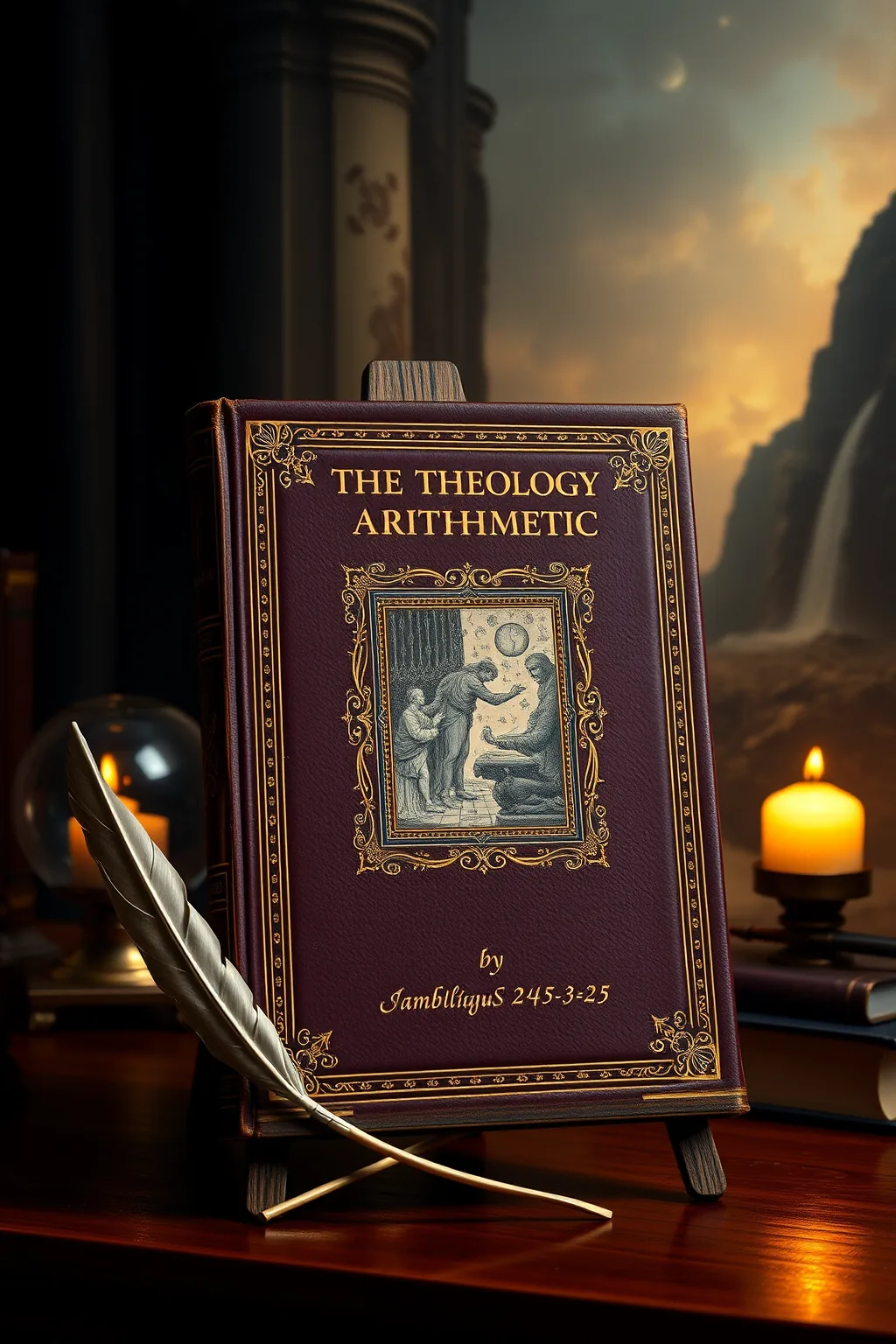
The theology of arithmetic: on the mystical, mathematical and cosmological symbolism of the first ten numbers
 74
74

The theology of arithmetic: on the mystical, mathematical and cosmological symbolism of the first ten numbers



'Theology of Arithmetic' by Iamblichus is a timeless work that continues to captivate esoteric seekers today. The book's exploration of the mystical properties of the first ten numbers offers a deep dive into the philosophical and cosmological significance of arithmetic. Iamblichus' insights provide a unique lens through which to view the ancient world's understanding of mathematics and its connection to the divine. For modern readers, this text serves as a bridge between ancient wisdom and contemporary esoteric practices, making it an invaluable resource for those interested in the occult and mystical traditions. The book's historical context and philosophical depth make it a must-read for anyone seeking to understand the deeper meanings behind numerical symbolism. Rating: 5/5
📝 Description
74
Iamblichus's Theology of Arithmetic (c. 300 CE) examines the symbolic meaning of numbers one through ten.
In this work, Iamblichus, a prominent Neoplatonist philosopher, details the theological and cosmological significance of the numbers from one to ten. He argues that these numbers are not mere abstractions but are divine principles that structure reality. Each number, from the monad to the decad, possesses its own unique character and role in the unfolding of the cosmos and the divine hierarchy.
Iamblichus connects these numerical principles to various aspects of existence, including the gods, souls, and the material world. He draws upon Pythagorean traditions and Platonic philosophy to construct a system where arithmetic becomes a key to understanding the sacred order of the universe. The text offers a detailed exegesis of each number, revealing its place in the divine architecture and its potential for mystical apprehension. It is a dense philosophical treatise for those interested in the metaphysical underpinnings of number.
Iamblichus's treatise belongs to the Neoplatonic tradition, which sought to understand the divine through philosophical and mystical means. Within this framework, numbers held a central position, seen as intermediaries between the ultimate reality (the One) and the sensible world. The text aligns with the broader practice of theurgy, where rituals and contemplation, often informed by mathematical and symbolic understanding, were used to achieve divine union. It reflects a period where philosophical inquiry and mystical experience were deeply intertwined, aiming to reveal the sacred structure inherent in all existence.
💡 Why Read This Book?
Reading 'Theology of Arithmetic' today offers readers a unique opportunity to explore the ancient mystical and mathematical insights of Iamblichus. This book provides a deep understanding of the esoteric symbolism of numbers, enriching one's spiritual and intellectual journey. Whether you are a student of philosophy, a practitioner of the occult, or simply curious about the hidden meanings within numbers, this text offers a rich and enlightening experience. Gain a deeper appreciation for the mystical properties of arithmetic and its connection to the divine.
⭐ Reader Reviews
Honest opinions from readers who have explored this book.
❓ Frequently Asked Questions
Who was Iamblichus?
Iamblichus was a Neoplatonist philosopher known for his works on theurgy and the mystical aspects of mathematics. He lived from 245 to 325 CE.
What is the significance of the first ten numbers in this book?
In 'Theology of Arithmetic,' Iamblichus explores the mystical and cosmological symbolism of the first ten numbers, revealing their deep spiritual and philosophical meanings.
Is this book suitable for beginners in esoteric studies?
While the book is rich in esoteric knowledge, it may be best suited for those with some prior understanding of occult and mystical traditions.
🔮 Key Themes & Symbolism
Numerical Mysticism
The Theology of Arithmetic explores the mystical significance of numbers, revealing their hidden symbolism and their role in the divine order of the universe. This theme looks at the esoteric meanings of numbers and their connection to the harmony and balance of the cosmos.
Divine Order
The book discusses the divine order of the universe as reflected in the symbolism of numbers. This theme highlights the mathematical mysteries that underpin reality and the harmony of the cosmos.
Ancient Wisdom
Iamblichus' work is a rich source of ancient wisdom, offering insights into the mystical and mathematical underpinnings of the cosmos. This theme emphasizes the timeless relevance of ancient mystical traditions and their esoteric knowledge.
💡 Key Ideas
Editorial paraphrase of the work's core concepts — not direct quotes.
Numbers are the language of the universe.
This quote emphasizes the fundamental role of numbers in the divine order of the cosmos.
The harmony of the cosmos is reflected in the symbolism of numbers.
This passage highlights the connection between numerical symbolism and the harmony of the universe.
The first ten numbers hold the key to understanding the mysteries of the universe.
This quote underscores the significance of the first ten numbers in the esoteric traditions.
The divine order of the universe is revealed through the symbolism of numbers.
This passage emphasizes the role of numbers in revealing the hidden structure of reality.
Ancient wisdom is the foundation of modern esoteric knowledge.
This quote highlights the timeless relevance of ancient mystical traditions and their esoteric insights.
🌙 Esoteric Significance
Tradition
The Theology of Arithmetic belongs to the Neoplatonic and Pythagorean traditions, which emphasize the mystical and mathematical underpinnings of the cosmos. These traditions view numbers as the fundamental building blocks of reality and the key to understanding the divine order of the universe.
Symbolism
Key symbols in this book include the first ten numbers, each of which holds a unique esoteric meaning and significance. These numbers are seen as the foundation of the cosmos and the language through which the divine communicates with humanity.
Modern Relevance
This book remains relevant today for modern practitioners of the occult and esoteric studies. Its insights into numerical mysticism and the divine order of the universe continue to inspire seekers of hidden knowledge and scholars of ancient philosophy. Many contemporary esoteric traditions draw on the ideas presented in this text, making it a timeless resource for those interested in the mystical and mathematical mysteries of the universe.
👥 Who Should Read This Book
Beginners in esoteric studies may find this book challenging but rewarding, as it offers a deep dive into the mystical symbolism of numbers. Scholars of ancient philosophy will appreciate the historical context and the influence of Neoplatonic and Pythagorean traditions. Spiritual seekers will find inspiration in the divine order of the universe as revealed through numerical symbolism. Practitioners of the occult will benefit from the esoteric insights and the timeless relevance of ancient mystical traditions.
📜 Historical Context
The Theology of Arithmetic was written during the late antiquity period, a time of great intellectual and spiritual ferment. Iamblichus, a prominent Neoplatonic philosopher, sought to bridge the gap between ancient Greek philosophy and the mystical traditions of the East. This book was important because it offered a unique perspective on the mystical symbolism of numbers, which was a central theme in many ancient mystical traditions. Its influence can be seen in various esoteric and occult traditions that followed, particularly in the development of numerical mysticism and the study of the divine order of the universe.
📔 Journal Prompts
How do the first ten numbers reflect the divine order of the universe?
What is the significance of numerical symbolism in ancient mystical traditions?
How can understanding the mystical and mathematical underpinnings of the cosmos enhance your spiritual practice?
What insights does The Theology of Arithmetic offer about the harmony and balance of the universe?
How can the esoteric knowledge presented in this book be applied to modern spiritual seekers?
🗂️ Glossary
Neoplatonism
A philosophical tradition that emerged in the 3rd century AD, blending Platonic philosophy with elements of Eastern mysticism.
Pythagoreanism
A philosophical and mystical tradition founded by Pythagoras, emphasizing the importance of numbers and mathematical harmony.
Numerical Mysticism
The study of the mystical and esoteric significance of numbers and their role in the divine order of the universe.
Divine Order
The belief that the universe is structured according to a divine plan, reflected in the symbolism of numbers and other esoteric symbols.
Esoteric Knowledge
Hidden or secret knowledge that is revealed only to initiates or those with a deep understanding of mystical traditions.
This book appears in 1 collection
🔮 Readers Also Liked
Browse all →








From the “Christian Mysticism” Collection
View all →






More Free Mysticism & Contemplation Books
View all →