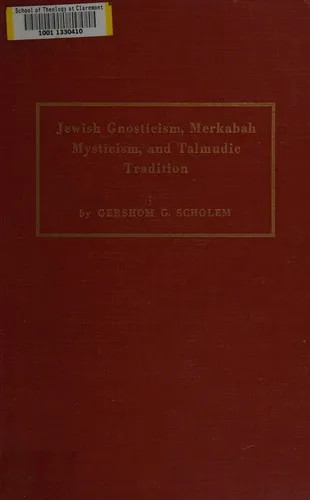
Jewish gnosticism, Markavah mysticism and Talmudic tradition

 83
83

Jewish gnosticism, Markavah mysticism and Talmudic tradition
Gershom Scholem's examination of Jewish Gnosticism, Merkabah mysticism, and Talmudic tradition remains a formidable academic achievement. His ability to connect disparate threads of ancient Jewish thought is unparalleled, particularly in his meticulous tracing of the Merkabah visions. One strength is Scholem's precise disambiguation of early Jewish mysticism from later, often sensationalized, Gnostic sects, firmly rooting these practices within Rabbinic discourse. A limitation, however, lies in the sheer density of the text, which can make it challenging for those without a strong background in Hebrew and Aramaic textual analysis. The chapter detailing the ascent through the heavenly palaces, a core element of Merkabah mysticism, exemplifies both the book's scholarly rigor and its demanding nature. It is an indispensable, albeit challenging, resource for understanding the origins of Jewish esoteric thought.
📝 Description
83
### What It Is This foundational study by Gershom Scholem, first published in 1960, meticulously examines the intersection of Jewish mysticism and early Christian Gnosticism. It offers a scholarly exploration of the Merkabah (Chariot) tradition, tracing its roots within Talmudic Judaism and its complex relationship with nascent Gnostic movements. The work moves beyond superficial categorizations to reveal the intricate theological and cosmological dialogues occurring in antiquity.
### Who It's For This book is essential for scholars of religious history, particularly those focused on late antiquity and the development of mystical traditions. It will also appeal to serious students of Kabbalah, Gnosticism, and the history of Jewish thought who seek rigorous academic analysis. Readers comfortable with dense textual exegesis and historical scholarship will find it particularly rewarding.
### Historical Context Published in 1960, Scholem's work arrived at a pivotal moment for the academic study of Jewish mysticism, following his own groundbreaking contributions that legitimized the field. It engaged with prevailing scholarship on Gnosticism, then heavily influenced by the Nag Hammadi discoveries, and sought to contextualize Jewish mystical expressions within the broader religious landscape of the Roman Empire. The book implicitly challenged earlier, more mythologized interpretations of these traditions, grounding them in specific historical and textual evidence.
### Key Concepts Scholem's analysis hinges on understanding the development of the *Merkabah* visions from early Jewish apocalyptic literature through to the medieval Kabbalah. He scrutinizes the esoteric interpretations found within the Talmud and Midrash, highlighting how these texts served as vessels for mystical speculation. The book also addresses the concept of *Gnosis* as it appeared in Jewish circles, distinguishing it from later, more widely known Gnostic systems while acknowledging points of contact and divergence.
💡 Why Read This Book?
• Gain a nuanced understanding of the *Merkabah* (Chariot) ascent traditions, tracing their origins in early Jewish apocalyptic literature and their development within Rabbinic texts, a focus Scholem details extensively. • Grasp the complex relationship between early Jewish mysticism and Gnosticism, distinguishing authentic historical connections from later misinterpretations, as Scholem meticulously argues. • Explore the esoteric interpretations embedded within the Talmud and Midrash, revealing how these foundational texts served as conduits for profound mystical speculation, a key theme throughout the book.
⭐ Reader Reviews
Honest opinions from readers who have explored this book.
❓ Frequently Asked Questions
What is Merkabah mysticism according to Scholem?
Scholem defines Merkabah mysticism as an early form of Jewish mysticism focused on ecstatic visions of divine chariots and heavenly ascents, drawing heavily on Ezekiel's prophecy and documented in texts like the *Hekhalot* literature.
How does Scholem connect Talmudic tradition to Gnosticism?
Scholem demonstrates how certain esoteric speculations within the Talmud and Midrash, particularly concerning divine ascent and cosmology, share conceptual ground with early Gnostic ideas, while also highlighting their distinct Jewish framework.
When was Gershom Scholem's 'Jewish Gnosticism, Merkabah mysticism and Talmudic tradition' first published?
This seminal work by Gershom Scholem was first published in 1960, establishing critical academic frameworks for understanding these esoteric Jewish movements.
What historical period does Scholem primarily analyze?
Scholem primarily analyzes the period of late antiquity, focusing on the development of Jewish mystical traditions from the Tannaitic era through to the early medieval period.
Are there specific texts Scholem uses to illustrate Merkabah mysticism?
Yes, Scholem frequently references texts such as the *Hekhalot Rabbati* and *Hekhalot Zutarti*, alongside relevant passages from the Talmud and Midrash, to illustrate the practices and theology of Merkabah mysticism.
What distinguishes Scholem's approach to Gnosticism?
Scholem's approach distinguishes between the specific Jewish mystical traditions he labels 'Jewish Gnosticism' and the broader, often dualistic, Gnostic systems that emerged concurrently, emphasizing the unique theological contours of the former.
🔮 Key Themes & Symbolism
Merkabah Ascent Traditions
This theme centers on the ecstatic practices and visionary experiences associated with the divine chariot (Merkabah) and the ascent through heavenly realms. Scholem meticulously traces these traditions from their roots in biblical prophecy, particularly Ezekiel's vision, through their development in early Jewish apocalyptic literature and the *Hekhalot* texts. He demonstrates how these mystical journeys, often undertaken by ascetics seeking direct apprehension of the divine, were encoded within specific liturgical practices and textual traditions that permeated Rabbinic discourse, shaping a unique path to mystical attainment.
Jewish Gnosticism
Scholem engages with the concept of 'Jewish Gnosticism' not as a distinct sect, but as a spectrum of esoteric ideas and practices within Judaism that shared certain affinities with, yet remained fundamentally distinct from, later Hellenistic Gnostic systems. He highlights elements such as the descent and ascent of the soul, the interpretation of divine epiphanies, and cosmological speculations found in texts like the Talmud and Midrash. This exploration aims to delineate the unique contours of Jewish mystical thought, differentiating it from external influences while acknowledging shared intellectual currents of late antiquity.
Talmudic Esotericism
A crucial aspect of Scholem's work involves uncovering the esoteric dimensions embedded within the seemingly legalistic and aggadic corpus of the Talmud and related Rabbinic literature. He argues that these texts, beyond their exoteric functions, served as repositories for mystical teachings and contemplative practices, particularly concerning the divine throne, heavenly palaces, and the nature of prophecy. This perspective challenges simplistic views of the Talmud, revealing its capacity to contain and transmit complex mystical traditions that influenced later Kabbalistic developments.
Cosmology and Divine Throne
The book delves into the intricate cosmological frameworks developed within early Jewish mysticism, with a particular emphasis on the Divine Throne and the heavenly court. Scholem analyzes how mystics envisioned the structure of the cosmos, the angelic hierarchies, and the immediate presence of God seated upon His throne. These speculative explorations were not mere intellectual exercises but formed the backdrop for ecstatic ascent, providing the mystical traveler with a map of the divine realms and the challenges encountered en route to God's immediate presence.
💬 Memorable Quotes
“The Merkabah mysticism... is deeply rooted in the soil of Rabbinic Judaism.”
— This statement emphasizes Scholem's core argument that the visionary and ecstatic practices associated with the divine chariot were not an external import but an integral, organic development within the established framework of Rabbinic legal and interpretive traditions.
“The Gnostic myth is a cosmic drama of salvation.”
— Scholem uses this to characterize the fundamental narrative structure of Gnosticism, contrasting its emphasis on a cosmic fall and redemption with the more immanent, though still transcendent, focus of Jewish mystical traditions.
“The Talmud contains traces of ancient mystical traditions.”
— This highlights Scholem's methodology: finding esoteric teachings and contemplative practices hidden within the vast corpus of Rabbinic literature, suggesting the Talmud served as a repository for mystical knowledge.
“The ascent to the heavenly palaces was a perilous journey.”
— This interpretation points to the dangerous nature of the mystical experience described in Merkabah texts, where the mystic (the *yored merkavah*) faced spiritual obstacles and angelic gatekeepers during their visionary ascent.
“Jewish Gnosticism developed parallel to, but distinct from, Hellenistic Gnosticism.”
— Scholem posits a nuanced relationship, suggesting shared intellectual environments and concepts, but asserting that the Jewish form of Gnosis retained a fundamentally monotheistic and covenantal framework absent in many Hellenistic systems.
🌙 Esoteric Significance
Tradition
This work is central to the study of Kabbalah and Jewish mysticism, positioning Merkabah mysticism as a foundational layer. It fits within the lineage of esoteric Judaism by tracing direct lines of development from early Rabbinic speculation to the more systematized Kabbalistic doctrines that emerged centuries later. Scholem's analysis departs from earlier, more romanticized views by grounding these traditions in rigorous philological and historical scholarship, thereby legitimizing their study within academic and esoteric circles.
Symbolism
Key symbols explored include the Divine Throne, representing God's transcendent presence and the ultimate goal of mystical ascent; the Heavenly Palaces (*Hekhalot*), which serve as stages in the mystic's visionary journey through the celestial realms; and the Chariot (*Merkabah*), symbolizing the divine vehicle and the ecstatic transport of the mystic towards God's immediate presence, often depicted through complex angelic hierarchies.
Modern Relevance
Contemporary scholars of religion and mysticism continue to draw heavily on Scholem's foundational research. His work informs modern discussions on comparative mysticism, the historical Jesus, and the development of esoteric thought in the West. Thinkers and practitioners interested in the psychological dimensions of altered states of consciousness and the historical roots of contemplative practices often revisit his analyses of Merkabah ascent and early Gnostic concepts.
👥 Who Should Read This Book
• Scholars of religious history and comparative mysticism seeking to understand the origins and development of Jewish esoteric traditions. • Students of Kabbalah and Gnosticism needing a rigorous, textually grounded exploration of foundational concepts and historical connections. • Advanced readers of ancient philosophy and theology interested in the intellectual currents of late antiquity and their impact on mystical thought.
📜 Historical Context
Gershom Scholem's "Jewish Gnosticism, Merkabah mysticism and Talmudic tradition," published in 1960, emerged during a period of intense scholarly re-evaluation of Jewish mysticism. Scholem himself had already revolutionized the field with works like "Major Trends in Jewish Mysticism" (1941). This particular study engaged with the ongoing debates surrounding the origins of Gnosticism, particularly in light of the Nag Hammadi discoveries, while also firmly re-establishing the centrality of Rabbinic literature to understanding Jewish esoteric traditions. It implicitly responded to earlier scholarship that often viewed Jewish mysticism as a marginal phenomenon or influenced solely by external sources. Scholem meticulously placed these traditions within the historical and textual landscape of late antiquity, situating them alongside other contemporary religious movements and demonstrating their deep roots within the Talmudic corpus, a perspective that solidified his authority and shaped subsequent academic inquiry.
📔 Journal Prompts
The Merkabah ascent as a perilous journey through the Hekhalot.
Distinguishing Jewish Gnosticism from Hellenistic Gnostic systems.
The role of the Talmud in preserving esoteric knowledge.
Interpreting the symbolism of the Divine Throne in early Jewish mysticism.
The concept of Gnosis within the Rabbinic framework.
🗂️ Glossary
Merkabah
Hebrew for 'chariot.' Refers to the Divine Chariot described in Ezekiel's vision, and by extension, to a major stream of early Jewish mysticism focused on ecstatic ascent and visionary experiences of the divine throne.
Hekhalot
Hebrew for 'palaces.' Refers to a body of early Jewish mystical literature describing the ascent through seven heavenly palaces to reach the divine throne. Also denotes the mystics who engaged in these practices (*yordei merkavah*).
Gnosis
Greek for 'knowledge.' In a religious context, it refers to a salvific knowledge, often esoteric and intuitive, that leads to liberation. Scholem uses it to describe certain speculative trends within Judaism that shared affinities with Hellenistic Gnosticism.
Aggadah
The non-legalistic portions of Rabbinic literature, including legends, folklore, ethical teachings, and sermons. Scholem examines Aggadic texts for their embedded mystical and cosmological speculations.
Talmud
The central text of Rabbinic Judaism, comprising the Mishnah and the Gemara. It is a vast compendium of legal discussions, ethical teachings, and narrative material, which Scholem analyzes for its esoteric content.
Yored Merkabah
Literally 'descender to the chariot.' Refers to the mystics who practiced Merkabah ascent, undertaking visionary journeys through the heavenly realms.
Apocalyptic Literature
A genre of Jewish and early Christian literature characterized by visions, symbolic language, and revelations about the end times and the divine realm. Scholem sees precursors to Merkabah mysticism in this genre.