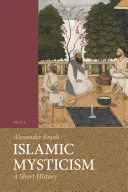
Islamic Mysticism
 75
75

Islamic Mysticism
Alexander Knysh's "Islamic Mysticism" provides a much-needed academic survey of Sufism, moving beyond popular romanticizations. The book's strength lies in its comprehensive historical sweep and its multi-perspectival approach, treating Sufism as a social, artistic, and intellectual phenomenon. Knysh effectively grounds the discussion in scholarly consensus, referencing key developments and figures. A notable strength is the detailed examination of Sufism's institutionalization. However, the sheer breadth of the subject means that certain mystical experiences or specific lineages might feel less deeply explored, a common challenge in such surveys. The discussion of the early development of asceticism, for instance, is informative but necessarily brief. Despite this, Knysh's work serves as an essential, factually grounded introduction to a complex spiritual tradition.
📝 Description
75
Alexander Knysh's 2016 "Islamic Mysticism" surveys Sufism from its beginnings to contemporary forms.
Knysh's "Islamic Mysticism" provides a wide-ranging account of Sufism, tracing its development from early origins to its present-day expressions. The book examines this spiritual tradition not only as a set of beliefs but also as a social institution, a source of art, a path of asceticism and contemplation, and an intellectual system.
The work considers Sufism from multiple viewpoints, showing it as a lived experience that includes ascetic practices, deep contemplation, and the formation of specific intellectual doctrines. It also notes Sufism's function as a social force, impacting communities and influencing social structures. The artistic aspects, such as poetry and music, are discussed, illustrating the tradition's creative output.
Knysh brings together recent academic research for a thorough overview of Islamic mysticism. The narrative follows a chronological path, addressing the evolution of Sufi thought and practice through various periods and places. The book seeks a balanced view, combining historical analysis with an appreciation of Sufism's internal spiritual life and its interactions with wider Islamic society.
This book situates Sufism within the broader history of Islamic thought and practice. While often categorized under mysticism, Knysh's work grounds this tradition in its historical, social, and intellectual contexts. It examines the disciplined practices and contemplative methods that characterize Sufism, differentiating it from more generalized notions of esotericism. The focus remains on the specific manifestations of Islamic spirituality, exploring how its adherents have sought direct experience of the divine through rigorous self discipline and intellectual inquiry within an Islamic framework.
💡 Why Read This Book?
• Gain a structured understanding of Sufism's historical evolution from its origins to the modern era, referencing specific periods and key intellectual shifts as detailed in the book's chronological framework. • Appreciate Sufism as a multifaceted phenomenon, including its roles as a social institution and artistic tradition, as explored in the sections discussing its various expressions. • Grasp the foundational concepts and intellectual traditions within Islamic mysticism, supported by the book's analysis of its ascetic and contemplative practices.
⭐ Reader Reviews
Honest opinions from readers who have explored this book.
❓ Frequently Asked Questions
What is Sufism according to Alexander Knysh?
Alexander Knysh defines Sufism, or Islamic mysticism, as a multifaceted tradition encompassing ascetic and contemplative practices, artistic expression, intellectual doctrines, and its role as a vibrant social institution within Islamic history.
When was Alexander Knysh's 'Islamic Mysticism' first published?
Alexander Knysh's "Islamic Mysticism" was first published on November 15, 2010, making it a relatively recent scholarly synthesis of the subject.
Does the book cover Sufism up to the modern period?
Yes, the book provides a general survey of the rise and development of Islamic mysticism (Sufism) up to the modern period, incorporating contemporary scholarship.
What different perspectives does Knysh use to examine Sufism?
Knysh examines Sufism from various perspectives, including its function as a social institution, its artistic expressions, its ascetic and contemplative practices, and its distinctive intellectual tradition.
Is 'Islamic Mysticism' suitable for beginners?
The book is a comprehensive survey suitable for those seeking a scholarly yet accessible introduction to the history and diverse aspects of Islamic mysticism.
What is the primary focus of Knysh's work on Islamic Mysticism?
The primary focus is a scholarly overview of Sufism's historical development and its multifaceted nature as a spiritual, social, artistic, and intellectual tradition within Islam.
🔮 Key Themes & Symbolism
The Ascetic Path
The work details the rigorous ascetic practices central to Sufism, examining the discipline and self-denial employed by mystics to purify the soul and draw closer to the divine. This focus highlights the practical, experiential dimension of Islamic mysticism, tracing how renunciation of worldly desires became a foundational element for spiritual progress and the attainment of higher states of consciousness.
Sufism as Social Institution
Knysh analyzes how Sufism evolved beyond individual spiritual quests to become a significant social institution within the Islamic world. This includes the establishment of Sufi orders (tariqas), their organizational structures, their role in community life, and their influence on social and political landscapes across different historical periods and geographical regions.
Intellectual and Doctrinal Development
The book explores the rich intellectual tradition of Sufism, documenting the development of its theological concepts, philosophical underpinnings, and mystical doctrines. It showcases how Sufi thinkers synthesized Islamic theology with mystical experiences, creating sophisticated systems of thought that sought to explain the nature of God, the universe, and the human soul's journey.
Artistic Expression in Sufism
A significant aspect covered is Sufism's profound connection to artistic expression. The work discusses how poetry, music, and other art forms served as vehicles for conveying mystical states, divine love, and esoteric knowledge. These artistic outputs are presented not just as aesthetic creations but as integral components of Sufi spiritual practice and communication.
💬 Memorable Quotes
Direct passages from the work, attributed to the author.
“Sufism is examined from a variety of perspectives: as a vibrant social institution, a specific form of artistic expression, an ascetic and contemplative practice, and a distinctive intellectual tradition.”
— This statement expresses the book's core thesis, emphasizing that a full understanding of Islamic mysticism requires appreciating its complex nature beyond simple devotional acts.
“The book takes into account the latest achievements of scholarship on the subject.”
— This highlights the work's commitment to academic rigor and its aim to present a contemporary scholarly perspective on Sufism, integrating recent research findings.
“This is a general survey of the rise and development of Islamic mysticism (Sufism) up to the modern period.”
— This foundational statement clarifies the book's scope, indicating a chronological and comprehensive approach to tracing the historical trajectory of Sufism.
“The work examines Sufism as a contemplative practice.”
— This points to the book's attention to the internal, experiential dimension of Sufism, focusing on the meditative and reflective techniques employed by practitioners.
💡 Key Ideas
Editorial paraphrase of the work's core concepts — not direct quotes.
Islamic Mysticism by Knysh is a comprehensive survey of the interesting and fascinating world of Islamic My
This paraphrased concept from the blurb underscores the book's ambition to offer an exhaustive yet engaging exploration of the subject matter.
🌙 Esoteric Significance
Tradition
While not strictly aligned with Western esoteric traditions like Hermeticism or Kabbalah, "Islamic Mysticism" provides crucial context for understanding a major spiritual lineage within the Abrahamic faiths. Sufism represents a distinct esoteric path within Islam, emphasizing direct experience of the divine. Knysh's work situates this path within its historical and cultural Islamic framework, offering insights relevant to comparative mysticism and the study of esoteric psychology and spiritual development across traditions.
Symbolism
The book explores the detailed symbolism inherent in Sufi thought and practice. Key symbols include the concept of 'fana' (annihilation of the self in God), representing the ultimate goal of mystical union, and the 'heart' (qalb) as the locus of divine knowledge and perception. The intricate geometric patterns often found in Islamic art, frequently associated with Sufi aesthetics, can symbolize divine order and the infinite nature of reality.
Modern Relevance
Contemporary thinkers and practitioners in fields ranging from comparative religion to depth psychology find value in Knysh's work. Modern Sufi movements continue to draw on the historical traditions he outlines, and scholars of spirituality often reference his comprehensive survey for understanding the historical roots of ecstatic states, contemplative practices, and the integration of faith and inner experience that remains relevant today.
👥 Who Should Read This Book
• Students of comparative religion seeking a scholarly overview of a major Abrahamic esoteric tradition. • Researchers in Islamic studies interested in the historical development and diverse expressions of Sufism. • Individuals exploring contemplative and ascetic spiritual practices who wish to understand their roots within a historical Islamic context.
📜 Historical Context
Published in 2010, Alexander Knysh's "Islamic Mysticism" emerged during a period of renewed academic interest in Sufism, following decades of scholarship that had begun to move beyond Orientalist interpretations. The intellectual climate was shaped by ongoing debates regarding the historical origins of Sufism, its relationship with orthodox Islam, and its diverse manifestations across the vast Islamic world. Knysh's work synthesizes recent findings, engaging with scholars who were re-evaluating early ascetic movements and the development of formal Sufi orders. A key contextual element is the scholarly engagement with the legacy of figures like Al-Ghazali and Ibn Arabi, whose ideas profoundly shaped Sufi thought. While not explicitly detailing reception events, the book's comprehensive survey implicitly addresses and builds upon the work of contemporaries and predecessors in the field of Islamic studies, providing a modern scholarly synthesis.
📔 Journal Prompts
The concept of Sufism as a social institution within Islamic history.
The integration of ascetic and contemplative practices in Sufi development.
The role of artistic expression in conveying mystical ideas.
The intellectual traditions and doctrines that shaped Islamic mysticism.
Analyzing the historical rise and evolution of Sufism up to the modern period.
🗂️ Glossary
Sufism
The mystical or esoteric dimension of Islam, focused on seeking direct experience of God and spiritual union through asceticism, contemplation, and love.
Asceticism
A lifestyle characterized by abstinence from sensual pleasures, often for the purpose of pursuing spiritual goals or attaining a higher moral/spiritual state.
Contemplation
Deep reflective thought, often focused on spiritual or divine matters, involving meditation and inward focus to achieve spiritual insight.
Tariqa
A Sufi order or path; a specific school or fraternity within Sufism, often with its own distinct lineage, practices, and spiritual guide.
Fana
An Arabic term in Sufism meaning 'annihilation' or 'dissolution,' referring to the extinction of the ego or lower self in the divine presence.
Baqa
The state of 'subsistence' or 'permanence' in God, following the state of fana, where the mystic maintains their individual consciousness but is fully realized in the divine.
Dhikr
The remembrance of God, a central Sufi devotional practice often involving repetitive chanting of divine names or phrases, either silently or aloud.
![The mystic oracle, or, The complete fortune-teller and dream book / [F.M. Lupton].](/img/thumb/the-mystic-oracle-or-the-complete-fortune-teller-and-dream-book-f-m-lupton.webp)