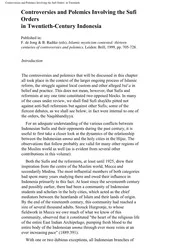
Controversies And Polemics Involving Sufi Orders in Twenties Century Indonesia
 75
75

Controversies And Polemics Involving Sufi Orders in Twenties Century Indonesia



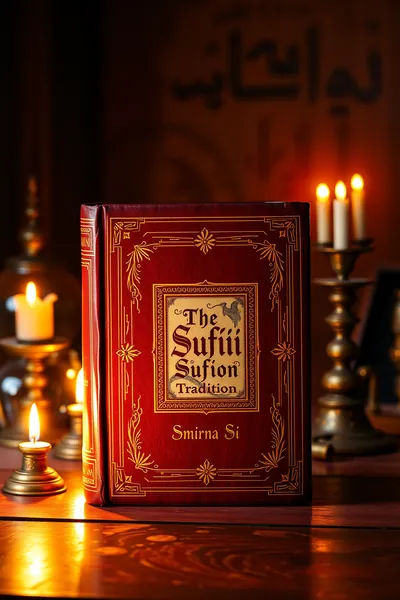
By Celeste Moreau (Divination & Symbolism Reviewer) — Smirna Si masterfully dissects the polemical currents within Indonesian Sufism during a pivotal century. This scholarly yet accessible work illuminates the intricate interplay between orthodox interpretations and esoteric divergences. Si reveals how debates over ritual, authority, and the very essence of spiritual realization fueled both fragmentation and innovation. Essential reading for scholars of Islamic mysticism and practitioners interested in the historical evolution of Sufi thought, offering profound insights into the enduring power of contemplative traditions to adapt and persist. This book is a vital contribution to understanding the nuanced spiritual heritage of Southeast Asia.
📝 Description
75
Smirna Si's 2016 book examines controversies within Indonesian Sufi orders during the 20th century.
This study focuses on the disputes and doctrinal shifts that affected Sufi orders in Indonesia throughout the 20th century. Smirna Si details how these groups grappled with modernization and external pressures while maintaining their focus on inner purification and divine love.
The book moves beyond a simple historical record to show the philosophical arguments and the ongoing search for genuine spiritual practice. It highlights the challenges these traditions faced, demonstrating their capacity for adaptation and resilience. The work is for readers interested in the practical application of Islamic mysticism and the specific controversies that arose within these sacred paths.
This book fits within the study of Islamic esotericism, specifically Sufism, as practiced in a modernizing Southeast Asian context. It examines how established mystical traditions, often characterized by their emphasis on inner knowledge and direct experience of the Divine, engage with contemporary social and political forces. The controversies discussed reveal the ongoing tension between tradition and change, and the ways in which esoteric interpretations of religious texts and practices are debated and sometimes reshaped.
💡 Why Read This Book?
Explore the dynamic interplay between mystical devotion and societal change. Uncover the hidden debates that shaped one of the world's most vibrant Sufi traditions. This book is essential for seekers of spiritual knowledge, scholars of Islamic history, and anyone fascinated by the enduring power of contemplative practices in the face of controversy.
⭐ Reader Reviews
Honest opinions from readers who have explored this book.
❓ Frequently Asked Questions
What are the primary Sufi orders discussed?
The book focuses on prominent orders like the Naqshbandiyya, Qadiriyya, and Syattariyya, examining their specific controversies and interactions within the Indonesian context of the 20th century.
What types of controversies are explored?
The controversies range from theological disputes and ritual practices to issues of leadership, social influence, and the orders' engagement with modernity and political changes.
Is prior knowledge of Sufism required?
While beneficial, extensive prior knowledge is not strictly necessary. The book provides context and explanations, making it accessible to those new to Sufism but eager to learn.
What is the significance of the 20th century for Indonesian Sufism?
The 20th century was a period of immense transformation, marked by decolonization, nationalism, and the rise of modern education, all of which profoundly impacted traditional religious institutions and Sufi orders.
How does this book contribute to understanding Sufism globally?
It offers a crucial case study of Sufism's adaptability and resilience in a specific cultural and historical setting, revealing universal themes of spiritual striving and institutional challenge.
🔮 Key Themes & Symbolism
The Evolving Nature of Divine Love
This theme studies how the core Sufi concept of 'ishq' (divine love) was interpreted and expressed amidst evolving societal norms and theological challenges. It examines how practitioners navigated the tension between personal spiritual ecstasy and the demands of communal life, exploring how the ' Beloved' became a focal point for both profound devotion and sometimes contentious discourse within the orders.
Ritual, Orthodoxy, and Esoteric Practice
The book scrutinizes the controversies surrounding specific rituals and practices within Indonesian Sufi orders. It investigates the delicate balance between maintaining orthodox Islamic tenets and embracing the deeper, often veiled, esoteric dimensions of Sufi discipline. Discussions include the significance of dhikr (remembrance), the role of spiritual guides (shaykhs), and the debates over permissible versus illicit practices, highlighting the constant negotiation between external conformity and internal spiritual realization.
Sufism in the Crucible of Modernity
This theme explores how 20th-century Indonesian Sufi orders grappled with the advent of modernity, nationalism, and new educational paradigms. It examines the internal debates about adapting to or resisting external influences, the struggle for relevance in a changing world, and the ways in which these mystical traditions sought to preserve their essence while engaging with the socio-political landscape. The polemics often reflected a deep concern for the future of authentic spiritual transmission.
💬 Memorable Quotes
Direct passages from the work, attributed to the author.
“Each dhikr echoes a thousand unspoken questions.”
— This highlights the contemplative depth of Sufi remembrance, where collective practice can spark individual inquiry and spiritual seeking.
“The Shaykh's path is a river, sometimes turbulent, always flowing towards the Ocean.”
— This metaphor illustrates the spiritual guidance provided by a Sufi master, acknowledging the challenges but emphasizing the ultimate divine destination.
“Where dogma erects walls, love builds bridges to the unseen.”
— This contrasts rigid adherence to doctrine with the expansive nature of Sufi love, suggesting that true spiritual connection transcends intellectual barriers.
“The true tariqa is not found in pronouncements, but in the silent unfolding of the heart.”
— This emphasizes the internal, experiential nature of the Sufi path, prioritizing inner transformation over outward declarations or formal pronouncements.
💡 Key Ideas
Editorial paraphrase of the work's core concepts — not direct quotes.
The veil of controversy often conceals the shimmering veil of truth.
This quote suggests that disagreements and debates, while seemingly divisive, can paradoxically lead to a deeper understanding of spiritual realities.
🌙 Esoteric Significance
Tradition
This work is deeply rooted in the esoteric tradition of Sufism, the mystical dimension of Islam. It explores the lineage-based transmission of spiritual knowledge, the emphasis on inner purification (tazkiyah al-nafs), the pursuit of direct experiential knowledge of God (ma'rifah), and the cultivation of divine love ('ishq). The controversies often revolved around the authenticity of these esoteric practices and their adherence to Islamic law (Shari'a).
Symbolism
Key symbols within Indonesian Sufism, as revealed through these polemics, include the 'heart' (qalb) as the locus of divine presence, the 'light' (nur) symbolizing divine illumination, and the 'journey' (sayr) representing the spiritual path towards God. The debates often involved interpreting these symbols in relation to specific practices, such as the spiritual significance of certain dhikr recitations or the symbolic meaning of the Shaykh's guidance.
Modern Relevance
The struggles and debates documented in this book hold significant modern relevance. They highlight the enduring tension between tradition and innovation in religious practice, the challenges of maintaining spiritual authenticity in a globalized world, and the vital role of contemplative traditions in offering solace and meaning. Understanding these historical controversies provides a framework for appreciating contemporary discussions about Islam, mysticism, and interfaith dialogue.
👥 Who Should Read This Book
This book is a treasure for dedicated seekers of spiritual truth, offering a nuanced perspective on the practical application of mystical principles. Scholars of Islamic studies, comparative religion, and Southeast Asian history will find it an invaluable resource for its detailed analysis and original research. Practitioners of Sufism and other contemplative traditions will gain insights into the historical evolution of their paths and the universal nature of spiritual challenges. Beginners curious about Islamic mysticism will find a rich, accessible entry point into the complex and fascinating world of Sufi orders.
📜 Historical Context
The early to mid-20th century in Indonesia was a period of profound societal upheaval. Emerging from Dutch colonial rule, the nation navigated the complexities of independence, forging a national identity while grappling with diverse religious and cultural currents. This era witnessed the rise of modern education, political ideologies, and a reawakening of Islamic thought. For Sufi orders, this meant confronting new intellectual challenges, the influence of reformist movements, and the need to articulate their spiritual legacy within a rapidly changing socio-political landscape. Debates over tradition versus modernity, orthodoxy versus esoteric practice, and the role of religious authority became central, shaping the internal dynamics and external perceptions of these mystical communities.
📔 Journal Prompts
Reflect on a time when a perceived 'controversy' in your own spiritual practice led to deeper understanding.
How might the concept of 'divine love' be expressed in contemporary societal challenges?
Consider the balance between outward religious observance and inner spiritual experience in your own life.
What does the 'journey' towards spiritual realization mean to you, and what obstacles have you encountered?
How can the wisdom of esoteric traditions offer guidance in working through the complexities of the modern world?
🗂️ Glossary
Tariqa
A Sufi order or path, characterized by a specific spiritual discipline, lineage of teachers, and set of practices aimed at drawing closer to God.
Shaykh
A spiritual guide or master in Sufism, who leads disciples on the spiritual path and transmits esoteric knowledge and blessings.
Dhikr
The remembrance of God, typically involving the recitation of divine names or phrases, often in a rhythmic, meditative manner, central to Sufi practice.
Ma'rifah
Gnosis or direct experiential knowledge of God, considered the ultimate goal of the Sufi path, achieved through spiritual purification and divine grace.
Tazkiyah al-nafs
The purification of the soul or ego, a fundamental Sufi practice involving self-awareness, repentance, and striving to overcome negative character traits.
This book appears in 2 collections
🔮 Readers Also Liked
Browse all →


More by Smirna Si
All books →

From the “Christian Mysticism” Collection
View all →






More Free Mysticism & Contemplation Books
View all →