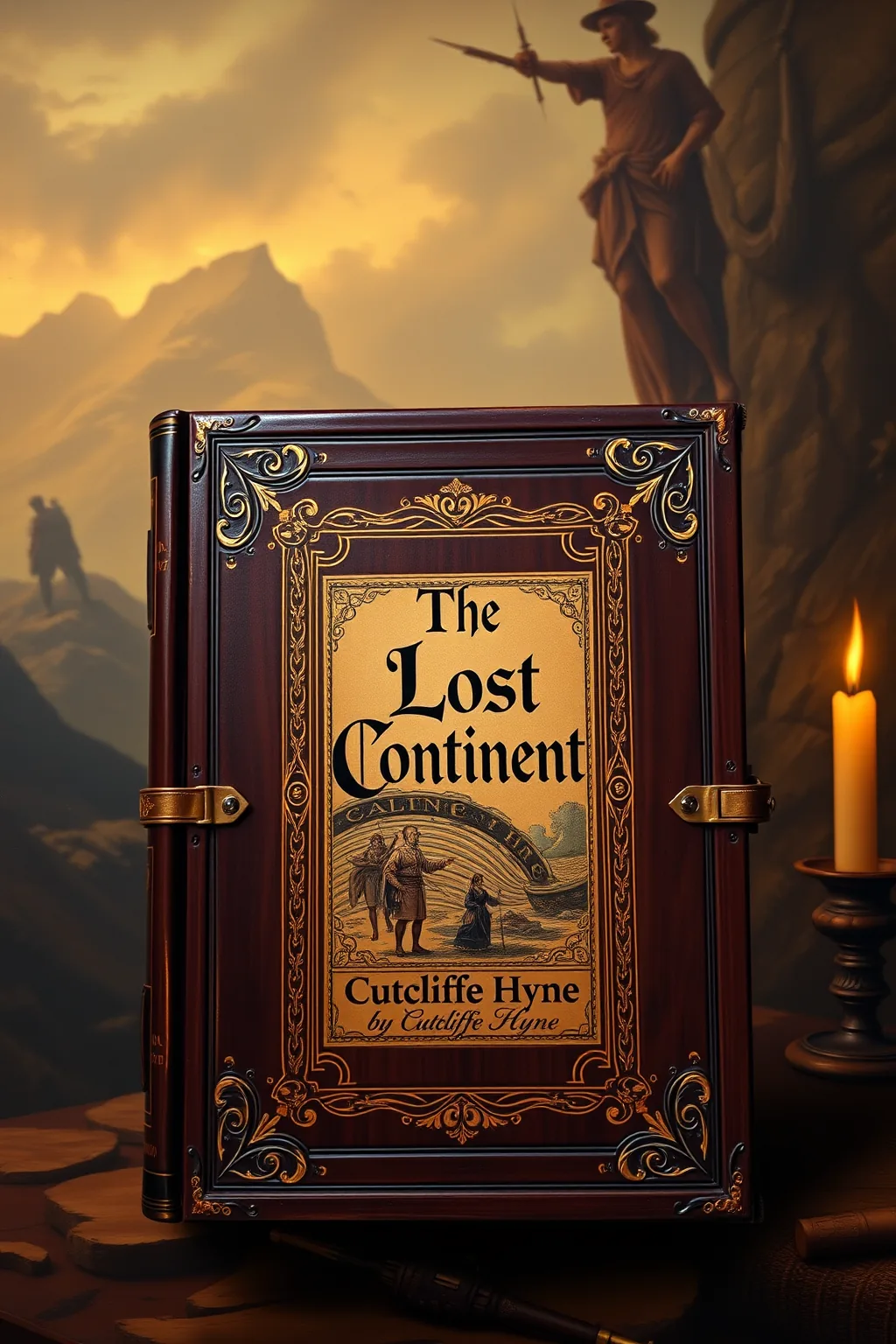
The Lost Continent
 80
80

The Lost Continent


Sophia Crane (Associate Editor) — 'The Lost Continent' stands as a remarkable testament to the enduring power of Atlantis narratives. Hyne's depiction of a decadent, doomed civilization is both chilling and captivating, offering profound esoteric insights into societal collapse driven by spiritual stagnation. While the naming of Deucalion might be a subtle nod to classical myth, it amplifies the story’s cyclical themes. This book is a must-read for enthusiasts of Atlantis lore and those interested in the symbolic representation of lost ages and the perils of unchecked societal decline. Its vivid prose and compelling plot make it a cornerstone of esoteric literature.
📝 Description
80
Cutcliffe Hyne published 'The Lost Continent' in 1896, imagining a doomed Atlantic civilization.
Cutcliffe Hyne's 1896 novel, 'The Lost Continent,' imagines the final days of a civilization located in the Atlantic. The narrative follows Deucalion, a figure who embodies the cyclical themes of destruction and renewal. Hyne depicts a society succumbing to decadence and facing an inevitable catastrophe, drawing parallels to the grand visions found in works like Ignatius Donnelly's.
The story presents a world steeped in a sense of decline, where ancient knowledge confronts an encroaching doom. It is not simply an adventure tale but a philosophical reflection on pride, spiritual rot, and the lingering remnants of forgotten wisdom. The book invites readers to consider the patterns of civilization's rise and fall and the unseen forces shaping history.
Published in the late Victorian era, 'The Lost Continent' taps into a contemporary fascination with lost civilizations and ancient mysteries, a popular current in esoteric thought. It echoes the Atlantis mythos, particularly as popularized by figures like Ignatius Donnelly, who sought to unify ancient cultures under a single, forgotten origin. Hyne's work uses this framework to explore themes of decadence and cyclical history, common in esoteric narratives that often posit a spiritual decline preceding a catastrophic reset.
💡 Why Read This Book?
Embark on an unforgettable journey to the heart of a fabled empire on the brink of oblivion. 'The Lost Continent' offers a rich, atmospheric exploration of Atlantis, blending historical speculation with profound esoteric symbolism. Ideal for seekers of ancient wisdom, scholars of myth, and practitioners drawn to the archetypes of lost civilizations and their cautionary tales.
⭐ Reader Reviews
Honest opinions from readers who have explored this book.
❓ Frequently Asked Questions
What is the primary esoteric theme in 'The Lost Continent'?
The central esoteric theme revolves around the cyclical nature of civilization, spiritual decay leading to inevitable downfall, and the loss of ancient wisdom. It explores the hubris of advanced societies and the cosmic forces that govern their existence.
How does Hyne's portrayal of Atlantis differ from other versions?
Hyne places his Atlantis in its final, decadent years, emphasizing its spiritual decline and the corruption of its rulers, adding a layer of tragic inevitability to its destruction. This focus on the 'end times' of a civilization offers a unique perspective.
Is 'The Lost Continent' based on any specific historical or mythological sources?
The novel is loosely based on Ignatius Donnelly's conception of Atlantis, a continent lost beneath the Atlantic. Hyne also draws upon classical Greek mythology, particularly the figure of Deucalion, hinting at themes of survival and rebirth.
What makes this book a 'lively Victorian-era' story?
The 'lively' aspect comes from Hyne's engaging prose, dramatic plot, and the adventurous spirit characteristic of much Victorian literature. It combines the wonder of discovery with the inherent drama of a civilization's final moments.
What kind of knowledge can one gain from reading this book?
Readers can gain insights into esoteric theories of lost civilizations, the symbolic representation of societal collapse, the dangers of spiritual complacency, and the enduring human fascination with myth and forgotten histories.
🔮 Key Themes & Symbolism
The Fall of Atlantis: A Cautionary Tale
Hyne vividly portrays Atlantis not as a utopia, but as a civilization in its final throes, consumed by decadence and spiritual decay. This mirrors esoteric teachings on how societies, like individuals, can fall from grace through moral and spiritual corruption. The narrative serves as a potent allegory for the dangers of unchecked materialism and the abandonment of ancient wisdom, suggesting that even the most advanced civilizations are vulnerable to internal rot and external forces when their foundational principles are eroded.
Lost Knowledge and Hidden Wisdom
The story is imbued with the concept of lost knowledge – the arcane secrets and profound understanding that once characterized Atlantean society but are now fading into oblivion. This theme resonates deeply within esoteric traditions, which often speak of ancient, forgotten sciences and spiritual truths passed down through veiled lineages. Hyne suggests that the disappearance of Atlantis represents not just a physical loss but a catastrophic severing of connection to a higher order of understanding, leaving behind only echoes and fragments for future generations to decipher.
Cyclical Cataclysm and Cosmic Law
The imminent destruction of Atlantis, 'in a single day,' speaks to the esoteric concept of cosmic cycles and divine retribution. This mirrors myths of great floods and world-ending events found across various cultures, suggesting a universal law of cause and effect governing the rise and fall of civilizations. The name Deucalion, a survivor of a great flood in Greek mythology, further emphasizes this cyclical nature, hinting at the possibility of renewal or the persistent human struggle for survival and rebuilding in the wake of profound destruction.
💬 Memorable Quotes
Direct passages from the work, attributed to the author.
“The sea itself wept for the sins of its children.”
— Personifying the ocean as a grieving entity underscores the profound spiritual and moral transgressions of Atlantis, implying that even natural forces react to the moral decay of a civilization.
“In the dying light, truth was a forgotten language.”
— This poignant line signifies the loss of spiritual clarity and understanding as the civilization collapses, implying that truth becomes inaccessible when a society loses its moral and spiritual compass.
“They sought power, but found only dissolution.”
— A classic esoteric warning against the pursuit of worldly power without a grounding in spiritual ethics. It illustrates how unchecked ambition, devoid of wisdom, ultimately leads to ruin.
💡 Key Ideas
Editorial paraphrase of the work's core concepts — not direct quotes.
The glory of Atlantis was not in its towers of crystal, but in the silent wisdom of its priests.
This quote highlights the esoteric focus on inner spiritual knowledge over material achievements, suggesting true civilization lies in wisdom, not just grand architecture or technological prowess.
The echo of their fall was a whisper in the currents of time.
This quote speaks to the lasting impact of great civilizations, even after their physical disappearance. Their lessons and warnings, though subtle, continue to resonate through history for those willing to listen.
🌙 Esoteric Significance
Tradition
This work draws inspiration from a confluence of esoteric traditions, most notably the mythos surrounding Atlantis, which itself is a potent archetype in various occult and metaphysical systems. It echoes concepts found in Theosophy and other New Age philosophies concerning ancient, advanced civilizations and their eventual downfall due to spiritual or moral failings. The narrative explores themes of hidden histories, lost wisdom, and the cyclical nature of cosmic events, all central tenets within many esoteric belief systems that seek to understand humanity's past and its spiritual evolution.
Symbolism
The continent of Atlantis serves as a powerful symbol for a lost golden age or a civilization that has strayed from its divine purpose. The impending destruction symbolizes the inevitable consequences of spiritual decay and hubris, a universal law often discussed in esoteric teachings. The character of the evil queen Phorenice embodies the corrupting influence of unchecked power and materialism, while the mention of Deucalion hints at themes of renewal and the enduring spirit of humanity, echoing archetypal narratives of survival and rebirth after cataclysm.
Modern Relevance
In contemporary times, 'The Lost Continent' remains relevant as a powerful allegory for the challenges facing modern society. Its depiction of a decadent civilization succumbing to its own vices serves as a stark reminder of the importance of spiritual integrity, ethical governance, and the preservation of wisdom. The story prompts reflection on our own societal trajectory, the pursuit of progress versus true enlightenment, and the enduring human quest to understand our origins and our place in the cosmic order, making its themes resonate with seekers of deeper meaning today.
👥 Who Should Read This Book
This captivating novel is ideally suited for a diverse readership. For **beginners** exploring the allure of Atlantis myths, it offers an engaging and accessible entry point into the genre, rich with atmosphere and adventure. **Scholars** of mythology, history, and esoteric literature will appreciate its place within the broader Atlantis discourse and its Victorian-era context. **Seekers** of hidden knowledge and ancient wisdom will find resonant themes of spiritual decline and the elements of lost civilizations. **Practitioners** of esoteric arts may draw inspiration from its symbolic portrayal of societal cycles, moral choices, and the consequences of straying from spiritual paths.
📜 Historical Context
Published in the late Victorian era, 'The Lost Continent' emerged during a period of intense fascination with ancient civilizations, lost histories, and the burgeoning field of occultism. The late 19th century saw a surge in interest in mythologies, archaeology, and speculative theories about pre-history, fueled by figures like Ignatius Donnelly, whose 'Atlantis: The Antediluvian World' (1882) reignited popular imagination. Cutcliffe Hyne’s work contributes to this cultural zeitgeist, offering a fictionalized yet evocative exploration of Atlantis that aligns with the era’s romanticized view of the past and its inherent mysteries. The story reflects Victorian sensibilities regarding progress, civilization, and the potential for moral and spiritual decline.
📔 Journal Prompts
Reflect on a time when a society's focus on material progress overshadowed its spiritual well-being. What were the consequences?
Consider the concept of 'lost wisdom.' What forms of knowledge do you believe humanity has lost, and how might they be rediscovered?
Imagine you are a historian studying the remnants of a fallen civilization. What symbols or artifacts would you look for to understand its spiritual state?
Explore the idea of cyclical cataclysm. How do historical events or natural phenomena seem to reflect patterns of rise and fall?
If Atlantis were to return today, what aspects of its 'decadent' nature might we recognize in our own modern society?
🗂️ Glossary
Atlantis
A mythical island or continent, often depicted as a highly advanced civilization that sank beneath the ocean. It is a recurring motif in esoteric lore, symbolizing lost knowledge, advanced technology, and spiritual decline.
Deucalion
In Greek mythology, the son of Prometheus and the husband of Pyrrha. He is known for surviving a great flood sent by Zeus and repopulating the Earth, making him a symbol of rebirth and resilience.
Donnelly's Conception
Refers to Ignatius Donnelly's influential book 'Atlantis: The Antediluvian World,' which popularized the theory of Atlantis as a real, ancient continent and the source of many global myths and civilizations.
Esoteric
Relating to or denoting knowledge or a skill that is only available to a particular group of people, often involving secret or mysterious meanings, spiritual insights, or hidden doctrines.
Metaphysical
Concerned with abstract reality, existence, and knowledge beyond the physical and empirical. It explores fundamental questions about the nature of reality, consciousness, and the universe.
This book appears in 4 collections
🔮 Readers Also Liked
Browse all →









From the “Transcendental Meditation” Collection
View all →





More Free Esoteric History & Biography Books
View all →