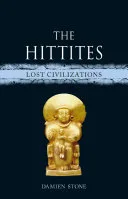
The Hittites
 82
82

The Hittites
Damien Stone's exploration of the Hittites arrives with a commendable directness, cutting through the usual academic fog to present a Bronze Age culture of considerable might and spiritual depth. The author’s strength lies in situating the Hittites not merely as a military force, but as a society deeply connected to its landscape and deities, particularly evident in the discussion of the storm god Tarḫunna. One limitation is the occasional brevity when discussing the succession of rulers; more detail on the political machinations would have been welcome. The description of the rock carvings at Yazilikaya, however, offers a vivid glimpse into their symbolic language. Stone’s work provides a solid foundation for understanding this crucial, yet often overlooked, civilization.
📝 Description
82
### What It Is This volume offers a concise survey of the ancient Hittite civilization, a significant Bronze Age power that dominated Anatolia. It moves beyond the popular image of Hittite warriors to explore their complex societal structures, religious beliefs, and artistic achievements. The book covers their pantheon, notably the sun and storm deities, and examines the surviving rock carvings and architectural remnants that speak to their cultural sophistication. It traces the lineage of Hittite rulers and their reign, providing a grounded overview.
### Who It's For This work is aimed at readers seeking a clear, accessible introduction to a less commonly discussed ancient culture. It suits students of archaeology, ancient history, and comparative mythology. Those interested in the pre-Classical Near East, the development of early state societies, and the intersection of warfare and religion in antiquity will find it informative. It's also for general readers curious about civilizations that shaped the ancient world beyond the familiar Greek and Roman narratives.
### Historical Context The Hittites established a formidable empire in Asia Minor, centered around Hattusa, from approximately 1600 BC to 1178 BC. Their civilization developed concurrently with major Near Eastern powers like Egypt and Mesopotamia, engaging in diplomacy and conflict, famously with Ramesses II at the Battle of Kadesh (c. 1274 BC). Their script, Luwian hieroglyphs and cuneiform, preserved a rich corpus of legal, religious, and administrative texts, offering unique insights into Bronze Age governance and belief systems. The work situates them within this vibrant, interconnected ancient world.
### Key Concepts The book examines the Hittite pantheon, highlighting the prominence of the sun goddess of Arinna and the storm god Tarḫunna. It discusses their intricate legal codes, which show a different approach to justice than Mesopotamian law. The Hittite capital, Hattusa, and its impressive fortifications, including the Lion Gate, are described. Their unique artistic style, particularly the relief carvings at Yazilikaya, is presented as a window into their religious and political ideology, distinct from surrounding cultures.
💡 Why Read This Book?
• Gain an understanding of the Hittite pantheon, focusing on deities like the storm god Tarḫunna, offering insight into Bronze Age Anatolian religious practices distinct from Mesopotamian traditions. • Learn about the Hittite capital, Hattusa, and its impressive defensive structures, providing a concrete example of early urban planning and military architecture in the ancient Near East. • Explore the significance of the Yazilikaya rock carvings, a specific artistic and religious site, revealing Hittite symbolic communication and mythological narratives.
⭐ Reader Reviews
Honest opinions from readers who have explored this book.
❓ Frequently Asked Questions
When did the Hittite civilization flourish?
The Hittite civilization flourished in Anatolia (modern Turkey) from approximately the 17th to the 13th centuries BC, during the Bronze Age, establishing a significant empire.
What were the main deities worshipped by the Hittites?
The Hittites primarily worshipped a pantheon that included the Sun Goddess of Arinna and the Storm God of Hatti, Tarḫunna, reflecting their connection to natural forces and cosmic order.
Where was the Hittite capital city located?
The capital city of the Hittite Empire was Hattusa, a strategically important site in north-central Anatolia, known for its monumental architecture and fortifications.
What notable archaeological sites are associated with the Hittites?
Key archaeological sites include Hattusa, the capital, and Yazilikaya, famous for its extensive rock-cut reliefs depicting deities and royal processions.
How did the Hittites interact with other ancient civilizations?
The Hittites engaged in diplomacy and warfare with major powers of the era, including Egypt (famously at the Battle of Kadesh) and the Kassite Babylonians.
What kind of written records did the Hittites leave behind?
The Hittites used cuneiform script for administrative and religious texts, as well as Luwian hieroglyphs, preserving valuable historical and cultural information.
🔮 Key Themes & Symbolism
Hittite Religious Practices
The work details the Hittite pantheon, with a particular focus on the veneration of the sun and storm deities. The Sun Goddess of Arinna and the storm god Tarḫunna are presented as central figures, reflecting a worldview deeply intertwined with natural phenomena and cosmic order. The book explores how these deities were integrated into state rituals and the daily lives of the Hittite people, offering a glimpse into their spiritual landscape distinct from contemporary Near Eastern traditions.
Anatolian Bronze Age Society
Beyond their military prowess, the Hittites developed a complex Bronze Age society in Asia Minor. This book examines their political structure, legal systems, and urban development, using Hattusa as a primary example. It highlights their interactions with neighboring cultures, including diplomatic treaties and military campaigns like the one culminating in the Battle of Kadesh. The societal organization and administrative practices provide context for their significant regional influence.
Hittite Art and Symbolism
The surviving rock carvings and monumental architecture offer tangible evidence of Hittite artistic expression and symbolic language. The reliefs at Yazilikaya are particularly emphasized, depicting a rich iconography of gods, goddesses, and royal figures. These artistic remnants are interpreted as windows into Hittite mythology, religious beliefs, and the assertion of royal power, showcasing a unique aesthetic that set them apart in the ancient world.
The Hittite Empire's Legacy
Though often overshadowed by later civilizations, the Hittites played a crucial role in the political and cultural landscape of the ancient Near East. Their empire, centered in Anatolia, influenced regional dynamics for centuries. The book underscores their lasting impact through surviving texts, archaeological sites like Hattusa, and their distinct contributions to religious and legal traditions, encouraging a re-evaluation of their historical importance.
💬 Memorable Quotes
“The Hittites flourished in the region of modern Turkey from the seventeenth to thirteenth centuries BC.”
— This factual anchor immediately situates the civilization geographically and temporally, establishing the specific historical period and location for the reader's understanding.
“Religious reverence for the sun and storms.”
— This phrase highlights a core aspect of Hittite spirituality, pointing towards deities associated with fundamental natural forces and indicating a significant area of cultural focus.
“Eclectic rock carvings which survive to this day.”
— This points to the tangible artistic and religious legacy of the Hittites, specifically mentioning the enduring nature of their rock carvings and their diverse stylistic elements.
“The colorful succession of Hittite rulers.”
— This suggests the book delves into the dynastic history of the Hittites, hinting at narratives of leadership, power struggles, and the progression of their monarchy over time.
“Archaeologist Damien Stone explores the rich history of the Hittite civilization.”
— This clarifies the author's background and the book's objective: to provide an informed and scholarly yet accessible exploration of Hittite history.
🌙 Esoteric Significance
Tradition
While not overtly a text within a specific esoteric lineage like Hermeticism or Kabbalah, The Hittites offers foundational knowledge for comparative esoteric studies. Its exploration of ancient Near Eastern mythologies, particularly the nature of storm and sun deities, provides context for later Gnostic and Hermetic cosmologies that often reinterpreted or drew upon older pantheons. The work serves as a source for understanding pre-Abrahamic religious structures that influenced Western esoteric thought.
Symbolism
The sun and storm deities central to Hittite worship carry profound symbolic weight. The sun, representing cosmic order, life-giving power, and divine justice, resonates with solar symbolism found across many esoteric traditions. The storm god, Tarḫunna, embodies untamed natural forces, divine authority, and protection, echoing archetypes of sky-father deities. The rock carvings at Yazilikaya, depicting processions of these gods, function as a symbolic map of the divine realm and its relationship to the Hittite monarchy.
Modern Relevance
Contemporary esoteric practitioners and scholars interested in pre-classical mythologies and ancient Near Eastern religions can draw valuable insights from this work. Those exploring goddess traditions might find the Sun Goddess of Arinna particularly relevant. Additionally, comparative mythologists and researchers of ancient Indo-European cultures can use the information on Hittite deities and rituals to understand broader patterns of religious development that influenced later esoteric systems and archetypal psychology.
👥 Who Should Read This Book
• Students of ancient history and archaeology seeking a foundational understanding of the Hittite civilization beyond common knowledge. • Comparative religion scholars interested in Bronze Age Near Eastern pantheons and their influence on later spiritual traditions. • Readers curious about foundational empires and cultures that shaped the ancient world prior to classical Greece and Rome.
📜 Historical Context
The Hittite civilization rose to prominence in Anatolia during the Bronze Age, establishing a powerful empire that rivaled Egypt and Mesopotamia. Their zenith occurred between the 17th and 13th centuries BC, with their capital at Hattusa. This era was characterized by complex international relations, including the famous treaty between the Hittites and Egyptians following the Battle of Kadesh (circa 1274 BC). While Mesopotamian civilizations like the Akkadians and Babylonians had long established written traditions, the Hittites developed their own unique script, Luwian hieroglyphs, alongside cuneiform, preserving distinct legal and religious texts. Their empire's collapse around 1178 BC marked the end of a major Bronze Age power. Contemporary scholars like James Henry Breasted were meticulously documenting Egyptian and Near Eastern history during the early 20th century, a period when Hittite discoveries began to shed new light on this previously obscure civilization.
📔 Journal Prompts
The sun goddess of Arinna's role in Hittite state religion.
Tarḫunna's attributes as depicted in Hittite art and texts.
The strategic importance of Hattusa and its fortifications.
Interpreting the symbolism within the Yazilikaya rock carvings.
Hittite legal codes compared to Mesopotamian law.
🗂️ Glossary
Hattusa
The capital city of the Hittite Empire, located in north-central Anatolia. It was a major political, religious, and administrative center during the Bronze Age.
Tarḫunna
The chief god of the Hittite pantheon, identified as the Storm God of Hatti. He was a powerful deity associated with weather, kingship, and protection.
Sun Goddess of Arinna
A principal deity in the Hittite pantheon, often identified with the sun. She was a major goddess associated with kingship, justice, and the state.
Luwian Hieroglyphs
A hieroglyphic writing system used in ancient Anatolia, particularly by the Hittites and later Neo-Hittite states, for monumental inscriptions and some administrative purposes.
Battle of Kadesh
A major battle fought between the Hittite Empire under Muwatalli II and the New Kingdom of Egypt under Ramesses II around 1274 BC. It resulted in a peace treaty.
Yazilikaya
An important rock sanctuary near Hattusa, featuring extensive rock reliefs that depict Hittite gods, goddesses, and royal figures, serving as a significant source of Hittite iconography.
Bronze Age
A prehistoric period characterized by the widespread use of bronze for tools and weapons. In the Near East, it generally spans from the 3rd millennium BC to the early 1st millennium BC.