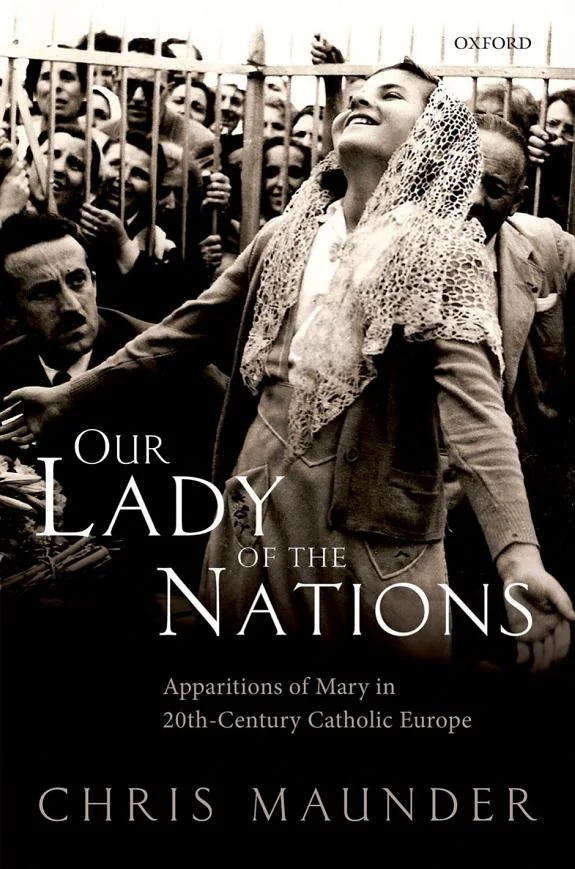
Our Lady of the Nations
 72
72

Our Lady of the Nations
Chris Maunder's 'Our Lady of the Nations' provides a sober, scholarly lens on the proliferation of Marian apparitions in the 20th century. Its strength lies in its methodical deconstruction of these events, moving beyond hagiography to consider their theological interpretation by key figures such as Karl Rahner. The book commendably addresses the sensitive roles of child and female visionaries, acknowledging evolving societal views on gender and childhood spirituality. However, the sheer density of scholarly analysis, while admirable, might alienate readers seeking a more devotional or narrative account. The detailed discussion of theological interpretations of apparitions, particularly how they are reconciled with established dogma, is a standout section. Ultimately, this is a valuable, if academically demanding, resource for understanding a complex facet of modern Catholic history.
📝 Description
72
### What It Is
'Our Lady of the Nations' by Chris Maunder offers a comprehensive scholarly examination of Marian apparitions that gained prominence across 20th-century Catholic Europe. The work meticulously details these phenomena, moving beyond simple accounts to analyze their theological and cultural underpinnings within Catholicism. It investigates how figures like Karl Rahner and Benedict XVI interpreted these divine manifestations, situating them within broader currents of Catholic thought.
### Who It's For
This book is essential for scholars of religious studies, theologians, and anyone interested in the intersection of faith, mysticism, and modern history. It appeals to those seeking a rigorous, evidence-based approach to understanding the social and psychological dimensions of religious experience, particularly concerning the role of female and child visionaries. Students of Marian devotion and apparitional phenomena will find extensive material for academic inquiry.
### Historical Context
The 20th century witnessed an unprecedented surge in reported Marian apparitions, often coinciding with periods of significant geopolitical upheaval and social change. Maunder places these events within their specific historical moments, examining how they were received and interpreted by both ecclesiastical authorities and the faithful. The book considers the impact of these apparitions on Catholic identity and practice, particularly in light of evolving understandings of gender, childhood spirituality, and the protection of vulnerable individuals within religious contexts.
### Key Concepts
Maunder explores the concept of 'private revelation' as understood within Catholic theology, contrasting it with dogma. He analyzes the archetypal roles of the visionary, often a child or young woman, and the divine messenger. The work also touches upon the socio-political implications of apparitions, their role in fostering community, and the challenges they pose to institutional authority. Issues of authenticity, discernment, and the potential for psychological or social manipulation are also addressed.
💡 Why Read This Book?
• Understand the theological frameworks used to interpret apparitions, as discussed through the lens of figures like Karl Rahner and Benedict XVI, offering specific Catholic hermeneutical approaches. • Explore the societal implications of apparitions, particularly the roles and protection of child and female visionaries, informed by 20th-century shifts in gender and spiritual understanding. • Gain insight into the historical phenomenon of Marian apparitions in 20th-century Catholic Europe, providing concrete case studies and analyses beyond anecdotal accounts.
⭐ Reader Reviews
Honest opinions from readers who have explored this book.
❓ Frequently Asked Questions
What is the primary focus of 'Our Lady of the Nations'?
The book offers a detailed and scholarly overview of Marian apparitions in 20th-century Catholic Europe, examining their theological interpretation and socio-cultural context.
Which theological concepts does Chris Maunder discuss regarding apparitions?
Maunder discusses concepts like private revelation and how theologians such as Karl Rahner and Benedict XVI interpret these phenomena within Catholic doctrine.
What role do child and female visionaries play in the book?
The book considers the specific roles of women and children as visionaries, exploring issues related to changing views on gender, children's spirituality, and their protection.
Does the book cover well-known apparitions like Fatima?
Yes, the work covers widely recognized and Church-approved cases, including Fatima, analyzing them within the broader context of 20th-century Marian phenomena.
What is the scholarly approach of 'Our Lady of the Nations'?
It adopts a detailed and scholarly approach, analyzing apparitions through theological, historical, and socio-cultural perspectives rather than purely devotional ones.
Who would benefit most from reading this book?
Scholars of religious studies, theologians, historians of Catholicism, and those interested in the phenomenon of religious apparitions and their interpretation.
🔮 Key Themes & Symbolism
Theology of Apparitions
Maunder critically examines how Catholic theology grapples with the concept of private revelation through Marian apparitions. He analyzes interpretations by prominent theologians like Karl Rahner and Benedict XVI, detailing how these phenomena are integrated (or challenged) within established dogma. The work explores the criteria for discernment and authenticity, moving beyond devotional accounts to a rigorous theological framework essential for understanding the Church's official stance and internal debates.
Visionaries and Gender Dynamics
A significant portion of the book addresses the archetypal figures of female and child visionaries. Maunder investigates the social and spiritual implications of these roles, particularly in the context of 20th-century societal shifts regarding gender and the perception of childhood spirituality. The work considers the vulnerability of these individuals and the Church's responsibility for their protection, offering a nuanced perspective on their psychological and spiritual experiences.
Socio-Cultural Impact of Phenomena
The book situates Marian apparitions within their specific historical and cultural milieus across 20th-century Catholic Europe. It explores how these events functioned not only as religious occurrences but also as significant social phenomena, influencing community identity, pilgrimage, and popular devotion. Maunder considers the interplay between faith, politics, and public perception, demonstrating how apparitions can become focal points for collective hopes and anxieties.
Discernment and Authenticity
Central to Maunder's analysis is the process of discerning the authenticity of reported apparitions. The work delves into the methods and theological principles employed by the Catholic Church in evaluating claims of divine visitation. It contrasts official Church pronouncements with popular reception, highlighting the complexities and occasional controversies surrounding the acceptance or rejection of specific apparition sites and messages.
💬 Memorable Quotes
“The work discusses how Catholic theologians like Karl Rahner interpret Marian apparitions.”
— This highlights the book's focus on theological analysis, moving beyond simple narrative to explore the intellectual frameworks used to understand supernatural phenomena within a religious system.
“Consideration of child and female visionaries includes evolving views on gender and spirituality.”
— This points to the book's engagement with contemporary social issues, integrating historical religious events with broader cultural shifts and debates about societal roles.
“The book examines apparitions in 20th-century Catholic Europe, including Fatima.”
— This emphasizes the specific historical and geographical scope of the study, grounding the analysis in concrete, well-documented cases familiar to many readers interested in Marian devotion.
“Maunder analyzes how apparitions are interpreted by the Church.”
— This underscores the book's critical approach, focusing on the institutional reception and theological processing of reported supernatural events rather than accepting them at face value.
“The role of women and children as visionaries is a key area of focus.”
— This indicates the book's attention to the human element within these religious experiences, exploring the specific demographics and psychological aspects of those who claim to receive divine messages.
🌙 Esoteric Significance
Tradition
While not strictly aligning with a single esoteric lineage like Hermeticism or Kabbalah, 'Our Lady of the Nations' engages with themes common in esoteric Christianity and Marian mysticism. It explores the concept of divine communication through visionary experiences, a practice found across various mystical traditions. The focus on hidden messages, spiritual discernment, and the symbolic representation of the divine feminine aligns with currents within Gnosticism and certain Rosicrucian or Theosophical interpretations of Mary, albeit examined through a strictly Catholic theological lens.
Symbolism
The primary symbolism revolves around the figure of Mary herself as the 'Mother of Nations,' representing divine intervention, intercession, and a spiritual archetype of nurturing guidance amidst global turmoil. Specific apparitions often carry distinct symbolic messages – for example, the warnings and requests at Fatima symbolize a call for repentance and peace in response to historical crises. The role of children as visionaries also carries symbolic weight, representing innocence, divine purity, and a direct, unmediated connection to the sacred that transcends adult rationalization.
Modern Relevance
Contemporary interest in 'Our Lady of the Nations' stems from ongoing discussions about lived religion, spirituality outside traditional dogma, and the role of archetypal feminine figures in modern consciousness. Thinkers and practitioners in fields exploring Jungian psychology, feminist theology, and comparative mysticism might find Maunder's scholarly approach to visionary phenomena valuable. The book's analysis of how mass culture and media interact with religious claims also resonates with current debates surrounding online spirituality and the dissemination of esoteric ideas.
👥 Who Should Read This Book
['• Scholars of 20th-century religious history: Gain a structured, analytical perspective on the significant phenomenon of Marian apparitions, supported by theological and historical context.', "• Students of Catholic theology: Understand the Church's approach to private revelation and discernment, examining interpretations by key theologians like Rahner and Ratzinger (Benedict XVI).", '• Researchers of comparative mysticism: Explore the dynamics of visionary experiences and divine communication within a specific, well-documented religious tradition.']
📜 Historical Context
The 20th century was a period marked by profound societal upheaval, technological advancement, and intense ideological conflict, yet it also saw a remarkable surge in reported Marian apparitions within Catholic Europe. Chris Maunder's 'Our Lady of the Nations' situates these phenomena against this backdrop, moving beyond anecdotal accounts to offer a scholarly examination. The period saw the Church grappling with modernity, secularization, and the rise of mass media, all of which influenced how apparitions were perceived and investigated. Key figures like Karl Rahner and Benedict XVI, whose theological interpretations are discussed, represent the intellectual currents attempting to reconcile traditional faith with contemporary thought. While the Church maintained official channels for investigating claims, the sheer volume and fervor surrounding sites like Fatima presented unique challenges. This work emerged in a landscape where comparative religion studies were gaining traction, and critical theological discourse sought to understand lived religious experience alongside established doctrine.
📔 Journal Prompts
Theological interpretations of apparitions by Karl Rahner and Benedict XVI.
The role and protection of child visionaries.
Societal impact of Marian apparitions in 20th-century Catholic Europe.
Criteria for discerning authenticity in reported divine messages.
The symbolic significance of Mary as 'Mother of Nations'.
🗂️ Glossary
Apparition
A supernatural manifestation or appearance of a divine or celestial being, specifically in this context, the Virgin Mary.
Private Revelation
In Catholic theology, divine revelations that do not add to the Church's definitive public revelation (dogma) but can offer guidance or warnings for individuals or specific times.
Visionary
An individual who claims to have experienced supernatural visions, particularly of a religious nature, such as seeing the Virgin Mary.
Discernment
The process by which the Catholic Church evaluates the authenticity and theological soundness of claimed supernatural phenomena, including apparitions.
Marian Dogma
Core, infallible teachings of the Catholic Church concerning the Virgin Mary, such as her Immaculate Conception and Assumption.
Catholic Europe
Geographical regions in Europe where Catholicism has historically been the dominant or a significant religious tradition.
Theological Interpretation
The analysis and explanation of religious texts, events, or phenomena according to the principles and doctrines of theology.