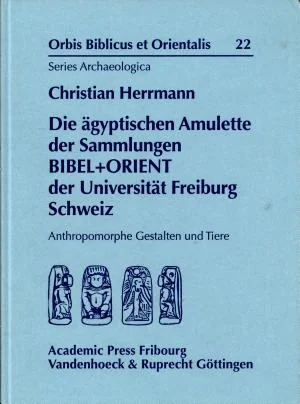
Die ägyptischen Amulette der Sammlungen BIBEL + ORIENT der Universität Freiburg, Schweiz
 75
75

Die ägyptischen Amulette der Sammlungen BIBEL + ORIENT der Universität Freiburg, Schweiz
Christian Herrmann's catalogue of the Bible + Orient collection's Egyptian amulets is an exercise in rigorous documentation. The sheer volume of catalogued items—nearly 950—is impressive, providing a substantial resource for specialists. Herrmann's initial discussion on iconography is methodical, offering a necessary foundation before the detailed listings. The strength lies in its exhaustive nature and the clarity of its illustrations, making it a reliable reference. A limitation, however, is its academic dryness; the esoteric significance, while present in the objects themselves, is presented primarily through descriptive cataloguing rather than deep interpretation. The section detailing amulets depicting Sekhmet, for instance, is factually dense but could benefit from more speculative engagement with their apotropaic function beyond mere identification. This volume is a vital tool for serious study, not a broad introduction to Egyptian magic.
📝 Description
75
### What It Is This volume serves as a meticulous catalogue and scholarly illustration of the Egyptian amulets housed within the Bible + Orient collection at the University of Freiburg, Switzerland. It presents nearly 950 artifacts crafted from diverse materials including metals, bone, ivory, stone, and faience. Each amulet is depicted and described, offering a comprehensive visual and textual record of these ancient objects.
### Who It's For This work is indispensable for Egyptologists, museum curators, archaeologists, and serious collectors of ancient artifacts. It will also appeal to scholars and practitioners of esoteric traditions interested in the material culture and symbolic representations of ancient Egyptian religion and magic. Researchers focusing on iconography and religious symbolism will find extensive material here.
### Historical Context Published in 2003, this catalogue emerges from a tradition of academic study focused on the material remnants of ancient civilizations. The University of Freiburg's Bible + Orient collection represents a significant repository of such artifacts. The work situates itself within ongoing scholarship concerning Egyptian religious practices and the function of apotropaic objects, building upon decades of archaeological discovery and iconographic analysis.
### Key Concepts The book systematically explores the iconography of Egyptian deities and animals as rendered on amulets. It examines the materials used and their potential symbolic associations, as well as the cultural context in which these objects were created and employed. The depiction of specific animals like birds, lions, crocodiles, scorpions, fish, and antelopes, alongside various gods, forms the core of its analytical framework.
💡 Why Read This Book?
• Gain direct access to detailed cataloguing and high-quality illustrations of nearly 950 Egyptian amulets from the University of Freiburg's Bible + Orient collection, offering unparalleled visual data for iconographic study. • Understand the specific symbolic meanings attributed to a wide array of Egyptian animals (e.g., lions, scorpions, fish) and deities as depicted on these ancient artifacts, as analyzed by Christian Herrmann. • Examine the material culture of ancient Egyptian religious practice through a comprehensive survey of amulets made from metal, bone, ivory, stone, and faience, contextualized within the 2003 academic landscape of Egyptology.
⭐ Reader Reviews
Honest opinions from readers who have explored this book.
❓ Frequently Asked Questions
What types of materials are the Egyptian amulets in the collection made from?
The amulets catalogued by Christian Herrmann are crafted from a variety of materials, including metals, bone, ivory, stone, and faience, reflecting common ancient Egyptian practices for amulet production.
How many amulets are featured in Christian Herrmann's catalogue?
The volume presents a comprehensive record of almost 950 Egyptian amulets held in the Bible + Orient collection of the University of Freiburg, Switzerland.
What kinds of figures are depicted on the amulets?
The amulets predominantly depict Egyptian gods or animals. A wide range of fauna is represented, such as birds, lions, crocodiles, scorpions, fish, and antelopes.
When was this catalogue of Egyptian amulets first published?
Christian Herrmann's detailed catalogue, 'Die ägyptischen Amulette der Sammlungen BIBEL + ORIENT der Universität Freiburg, Schweiz', was first published in 2003.
What is the primary focus of Christian Herrmann's analysis in this book?
Herrmann's primary focus is on the iconography of each amulet, discussing the depicted gods or animals before presenting the detailed catalogue of the collection.
Where is the collection of amulets documented in this book located?
The collection of nearly 950 Egyptian amulets featured in this book is housed at the University of Freiburg in Switzerland, specifically within their Bible + Orient collection.
🔮 Key Themes & Symbolism
Iconography of Deities and Animals
The central theme revolves around the visual representations adorning the amulets. Christian Herrmann meticulously details the iconography of various Egyptian gods and a diverse menagerie of animals—from the powerful lioness Sekhmet to the ubiquitous scarab beetle, represented here perhaps as a bird or insect. Each depiction is analyzed for its symbolic import, exploring how these images functioned as potent carriers of meaning and protective power in ancient Egyptian belief systems. The consistent reproduction of specific divine figures and animal forms underscores their perceived efficacy in the magical and religious practices of the time.
Material Culture and Craftsmanship
This work highlights the tangible aspect of ancient Egyptian spirituality through its focus on the materials used for amulet creation. Ranging from common faience and various stones to more precious metals, bone, and ivory, the choice of material often carried its own symbolic weight and dictated the amulet's perceived potency or purpose. The catalogue implicitly showcases the skill of ancient artisans in rendering intricate details on small objects, demonstrating a sophisticated understanding of both material properties and desired iconographic effects.
Amulets as Agents of Protection and Power
Underlying the cataloguing effort is the fundamental function of these objects: to serve as apotropaic devices, offering protection, bestowing blessings, or channeling divine power. Whether depicting a fierce deity like Sekhmet or a swift animal like the antelope, each amulet was intended to interact with the wearer's reality, warding off evil or attracting fortune. The sheer quantity and variety suggest a pervasive cultural reliance on these portable magical instruments for navigating the challenges of life and the afterlife.
Scholarly Documentation of Collections
This book exemplifies the critical role of academic cataloguing in preserving and disseminating knowledge about cultural heritage. By systematically documenting the Egyptian amulets within the Bible + Orient collection at the University of Freiburg, Christian Herrmann provides an invaluable resource for future research. This meticulous approach ensures that these artifacts, previously accessible primarily to on-site researchers, become available for study by a global community of scholars and enthusiasts interested in Egyptology and ancient religions.
💬 Memorable Quotes
“Almost 950 amulets are published here, made from metals, bone and ivory, stone or faience, all of which depict gods or animals.”
— This statement underscores the comprehensive scope of the catalogue, emphasizing the breadth of materials and iconographic subjects covered, presenting a foundational overview of the collection's contents.
“A wide range of Egyptian animals are represented including birds, lions, crocodiles, scorpions, fish and antelope.”
— This highlights the symbolic richness embedded in the natural world for ancient Egyptians, indicating that the book details amulets featuring creatures imbued with specific meanings and protective qualities.
“Christian Herrmann discusses the iconography of each in turn before the catalogue itself.”
— This procedural note indicates the scholarly approach taken, prioritizing iconographic analysis and contextualization before presenting the raw data of the catalogue entries.
“The discussion also covers the materials used for the amulets.”
— This points to the material analysis component, suggesting an exploration of how the physical substance of the amulets contributed to their function and symbolism within ancient Egyptian culture.
“The volume catalogues and illustrates each of the Egyptian amulets in the Bible + Orient' collection of the University of Freiburg in Switzerland.”
— This sentence succinctly defines the book's purpose: a detailed, illustrated inventory of specific artifacts housed within a particular academic institution's collection.
🌙 Esoteric Significance
Tradition
While not explicitly aligned with a single esoteric lineage, this work serves as primary source material for Hermetic, Gnostic, and Neopagan traditions that draw heavily on ancient Egyptian symbolism. It provides concrete examples of divine and animal imagery used for apotropaic and invocatory purposes, allowing practitioners to connect modern ritual with ancient practices through material evidence. The book departs from purely academic treatments by offering a wealth of visual data that can be reinterpreted and applied within contemporary magical frameworks.
Symbolism
Key symbols include the scarab beetle (representing rebirth and the sun god Khepri), the Eye of Horus (Wadjet, symbolizing protection, healing, and royal power), and various animal forms imbued with specific divine attributes. Lions often represent fierce deities like Sekhmet or Bastet, embodying power and protection, while serpents might symbolize chthonic forces or protective deities. Birds frequently represent souls or deities associated with the sky and air, offering a connection to the divine realm.
Modern Relevance
Contemporary practitioners of Egyptian-themed magic, chaos magicians seeking potent archetypes, and scholars of comparative religion find immense value in this catalogue. It informs modern spellcraft, altar work, and the creation of personal talismans by providing authentic ancient designs and iconographic context. Thinkers exploring the psychology of symbols and the enduring power of ancient imagery in the collective unconscious can also leverage its detailed illustrations and analyses.
👥 Who Should Read This Book
• Scholars of Egyptology and Archaeology: Researchers needing precise documentation and illustration of Egyptian amulets for comparative studies or artifact analysis. • Practitioners of Esoteric Traditions: Individuals interested in ancient Egyptian magic, symbolism, and religious practices seeking authentic iconographic references for ritual or study. • Museum Curators and Collectors: Professionals and enthusiasts requiring a detailed catalogue for identification, authentication, and understanding the provenance and significance of Egyptian amulets.
📜 Historical Context
Published in 2003, Christian Herrmann's catalogue emerges from the robust tradition of academic Egyptology that flourished throughout the 20th century. The University of Freiburg's Bible + Orient collection represents a specific institutional effort to amass and study artifacts bearing upon biblical and ancient Near Eastern studies. This work situates itself within ongoing scholarly discourse on Egyptian religion, magic, and material culture, building upon foundational studies by figures like Flinders Petrie and numerous archaeological excavations. While contemporary scholarship might engage more with theoretical frameworks concerning agency or ritual practice, Herrmann’s approach prioritizes detailed empirical documentation. The reception of such catalogues is typically within specialized academic circles, serving as essential reference tools rather than engaging in popular discourse or facing external censorship.
📔 Journal Prompts
The iconography of the lion amulet: how does its depiction relate to specific deities like Sekhmet?
Reflect on the materials used for amulets and their potential symbolic associations.
Consider the range of animal depictions; which animal's symbolism resonates most with personal protective needs?
Analyze the function of faience amulets within the broader context of Egyptian religious practice.
How might the scarab beetle motif, as presented in the catalogue, inform concepts of regeneration?
🗂️ Glossary
Amulet
An object believed to possess magical properties, typically worn to ward off evil, protect the wearer, or bring good fortune. Egyptian amulets often depicted deities or animals.
Iconography
The study of the visual images and symbols used in works of art or literature, particularly their meaning and interpretation within a specific cultural context.
Faience
A non-clay ceramic material, typically glazed, that was widely used in ancient Egypt for producing decorative objects, including amulets, beads, and tiles.
Apotropaic
Having the power to turn away or repel evil; used to describe magical objects or rituals intended to protect against harm or misfortune.
Sekhmet
An ancient Egyptian goddess, often depicted as a lioness or a woman with a lioness head, associated with war, destruction, healing, and protection.
Scarab
A representation of a scarab beetle, a powerful symbol in ancient Egypt associated with creation, rebirth, and the sun god Khepri.
Wadjet
The Eye of Horus, a potent symbol of protection, royal power, and good health in ancient Egyptian mythology.