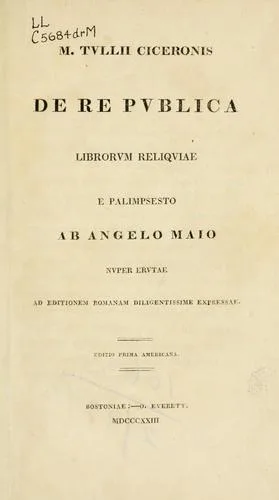
De senectute, De amicitia, De divinatione

 84
84

De senectute, De amicitia, De divinatione
Cicero’s trio of essays, *On Old Age*, *On Friendship*, and *On Divination*, offers a remarkably preserved window into Roman ethical thought. The enduring strength of these pieces lies in their direct, unpretentious exploration of perennial human concerns. Cicero’s ability to distill complex philosophical ideas into accessible dialogue remains a key virtue, particularly in *De amicitia*, where the nature of genuine connection is articulated with profound clarity. However, the work’s antiquity, even in this 1923 edition, means some arguments, especially concerning divination, may feel dated to a contemporary reader less inclined toward empirical skepticism or the specific philosophical schools Cicero engages. A passage in *De divinatione*, where Cicero critiques the unreliability of prodigies, highlights his commitment to reason over superstition, a powerful statement for any era. The collection serves as a vital link to the intellectual foundations of Western civilization.
📝 Description
84
### What It Is This volume presents three seminal philosophical essays by the Roman statesman and orator Marcus Tullius Cicero: *De senectute* (On Old Age), *De amicitia* (On Friendship), and *De divinatione* (On Divination). Originally composed in the 1st century BCE, these works offer enduring reflections on life's stages, human connection, and the nature of knowledge. The 1923 publication by the Esoteric Library makes these classical meditations accessible to a modern audience seeking wisdom from antiquity.
### Who It's For Readers interested in classical philosophy, ethics, and the development of Western thought will find substantial material here. It appeals to those who appreciate reasoned discourse on fundamental human experiences. Students of rhetoric and ancient Roman society will also benefit from Cicero's lucid prose and persuasive arguments, understanding how these concepts were articulated in a pivotal era of Western civilization.
### Historical Context Composed around 44 BCE, these dialogues emerged during a turbulent period in Roman history, shortly before Caesar's assassination. Cicero, a staunch defender of the Republic, was grappling with political instability and personal exile. *De senectute* was written for his friend Atticus, while *De amicitia* was dedicated to the elder Scipio's son. *De divinatione* engages with Stoic and Academic philosophies, questioning the validity of prophecy amidst a society deeply invested in omens and divine signs.
### Key Concepts The texts explore concepts such as the virtues of aging, the philosophical underpinnings of true companionship, and the epistemological challenges of discerning truth from superstition. Cicero champions reason and moderation, advocating for a life guided by moral principles and intellectual rigor. The works serve as a bridge between Greek philosophical traditions and Roman practical ethics, influencing subsequent philosophical and theological discourse for centuries.
✍️ Author
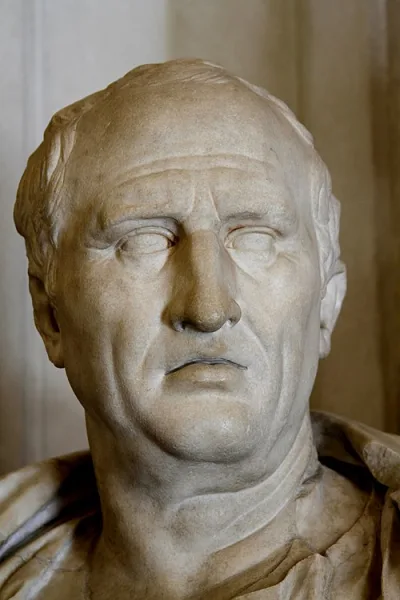
Cicero
The writings of Marcus Tullius Cicero constitute one of the most renowned collections of historical and philosophical work in all of classical antiquity. Cicero was a Roman politician, lawyer, orator, political theorist, philosopher, and constitutionalist …
💡 Why Read This Book?
• Gain a philosophical framework for appreciating the later stages of life, drawing from Cicero's specific arguments in *De senectute* about maintaining vigor and purpose in old age. • Understand the core principles of authentic human connection as articulated in *De amicitia*, exploring Cicero's emphasis on virtue and shared values as the basis for lasting bonds. • Develop critical thinking skills regarding the interpretation of signs and omens, engaging with Cicero's reasoned skepticism presented in *De divinatione* against popular superstitions of his era.
⭐ Reader Reviews
Honest opinions from readers who have explored this book.
❓ Frequently Asked Questions
What philosophical schools influenced Cicero's *De senectute* and *De amicitia*?
Cicero's essays on aging and friendship are heavily influenced by Greek philosophy, particularly the Stoic emphasis on virtue and reason, and the Academic tradition, which he himself belonged to. He engages with the ideas of figures like Panaetius and Aristotle.
When were Cicero's essays *De senectute*, *De amicitia*, and *De divinatione* originally written?
These works were composed by Cicero in the final year of his life, around 44 BCE, during a period of significant political upheaval in Rome.
What is the primary subject of Cicero's *De divinatione*?
*De divinatione* (On Divination) critically examines the practice of predicting the future, questioning the validity of omens, dreams, and prophecies from both Stoic and Academic philosophical standpoints.
How did Cicero's *De amicitia* influence later thinkers?
Cicero's treatise on friendship profoundly shaped Western conceptions of camaraderie. It was particularly influential during the Renaissance and Enlightenment, providing a model for discussions on loyalty, virtue, and the social contract.
Is the 1923 edition of Cicero's works public domain?
Yes, the original works by Cicero are ancient and in the public domain. The 1923 edition's copyright status would depend on the specific publisher's annotations and translations, but the core text is freely accessible.
What is the significance of Marcus Tullius Cicero in Roman history?
Cicero was a prominent Roman statesman, orator, lawyer, and philosopher. He played a crucial role in the late Roman Republic, advocating for republican principles and influencing Roman law and rhetoric.
🔮 Key Themes & Symbolism
Virtues of Aging
Cicero's *De senectute* reframes old age not as a period of decline but as an opportunity for reflection, wisdom, and continued engagement. He emphasizes the importance of virtue, learning, and contributing to society even in later years. The work counters common anxieties about aging by highlighting the potential for intellectual and moral fulfillment, drawing parallels to respected elders in Roman history and myth.
Foundations of Friendship
*De amicitia* posits that true friendship is built upon shared virtue and moral integrity, rather than utility or pleasure. Cicero, through the voice of Laelius, explores the reciprocal duties and deep bonds that characterize genuine companionship. This essay provides a philosophical blueprint for cultivating relationships that withstand adversity and contribute to a well-lived life, setting a high standard for human connection.
Reason vs. Superstition
In *De divinatione*, Cicero critically examines the practice of foretelling the future, contrasting reasoned skepticism with widespread belief in omens, dreams, and prophecies. He argues for empirical observation and logical deduction over unfounded superstition, challenging the reliability of divine signs. This work reflects a key tension in ancient thought between philosophical inquiry and popular religious practices.
Roman Ethical Framework
Across these essays, Cicero constructs a robust ethical framework rooted in Roman values and Hellenistic philosophy. He champions duty, moderation, justice, and intellectual pursuit as pillars of a meaningful existence. These works demonstrate how philosophical concepts were integrated into Roman public and private life, offering practical guidance for citizens and leaders alike.
💬 Memorable Quotes
“Old age is not to be blamed, but rather the infirmities of old age.”
— This statement from *De senectute* refutes the notion that aging itself is inherently negative. Instead, Cicero attributes the difficulties of old age to physical and mental decline, suggesting that a well-lived life and sound character can mitigate these challenges.
“There is no greater blessing than a happy old age.”
— Cicero asserts in *De senectute* that a fulfilling old age is the ultimate reward for a life well-spent. This happiness stems from a legacy of good deeds, strong relationships, and continued intellectual engagement, rather than mere absence of hardship.
“Friendship is nothing else than a concord of the affections, cemented by kindness.”
— This interpretation of a concept from *De amicitia* highlights Cicero's view that friendship is an emotional and ethical bond. It is characterized by mutual goodwill and affectionate regard, built on a foundation of genuine care and shared values.
“The gods are not to be thanked for good things, nor are they to be appeased with gifts.”
— This sentiment, representing a critical stance in *De divinatione*, reflects Cicero's skepticism towards traditional religious practices. He suggests that virtue and reason, not divine intervention or appeasement, are the true sources of well-being.
“No one can make good use of a friend who has no merit of his own.”
— This concept from *De amicitia* emphasizes Cicero's belief that self-worth and virtue are prerequisites for meaningful friendship. One must first cultivate their own character to be a worthy friend and to properly value the qualities in others.
🌙 Esoteric Significance
Tradition
While Cicero's work is primarily classical philosophy, it profoundly influenced later Western esoteric traditions by providing a rational framework for ethics and metaphysics. His emphasis on virtue, reason, and the pursuit of wisdom aligns with Hermetic principles of self-mastery and intellectual ascent. The rational approach to understanding the cosmos and human nature in *De divinatione* can be seen as a precursor to alchemical and astrological systems that sought to decode universal laws through reasoned observation, albeit with different methodologies.
Symbolism
In *De senectute*, the 'harvest' of old age can be interpreted esoterically as the accumulation of spiritual knowledge and wisdom, the fruition of a life dedicated to inner cultivation. The concept of 'virtue' throughout the essays functions as a key symbol, representing the alignment of one's actions with cosmic or divine order, a core Hermetic ideal. Furthermore, the critique of divination in *De divinatione* implicitly elevates inner 'divination'—intuition and reasoned insight—over external omens, a theme resonant with Gnostic and Hermetic emphasis on gnosis.
Modern Relevance
Contemporary practitioners of Stoicism, a resurgent philosophical movement, find Cicero's ethical treatises directly applicable to modern life. His insights into friendship and aging are frequently referenced in self-help and personal development circles seeking principled guidance. Moreover, scholars of Western esotericism often revisit Cicero to trace the philosophical lineage of concepts like the rational soul and the interconnectedness of ethics and cosmology, demonstrating his continued relevance in understanding the intellectual foundations of diverse spiritual paths.
👥 Who Should Read This Book
• Students of Classical Philosophy: Those studying Roman intellectual history and the transmission of Greek thought will find foundational texts that shaped Western ethical discourse. • Individuals interested in Personal Ethics: Readers seeking reasoned perspectives on building strong friendships and navigating the challenges and opportunities of aging will gain practical wisdom. • Comparative Religion Scholars: Researchers examining the interplay between reason, superstition, and religious practice in antiquity will find a critical philosophical examination of divination.
📜 Historical Context
Composed in 44 BCE, these essays by Cicero emerged during the twilight of the Roman Republic, a period marked by civil war and the disintegration of traditional political structures. Cicero, a central figure in Roman politics and philosophy, was writing amidst profound personal and public crises. The intellectual climate was dominated by Greek philosophical schools, particularly Stoicism, which deeply influenced Cicero's ethical thought, and the Academic tradition to which he belonged. *De senectute* and *De amicitia* were penned for his friend Atticus, offering solace and philosophical guidance. *De divinatione* engaged directly with contemporary debates about superstition and reason, challenging popular beliefs in omens and prophecy, a practice common in Roman society. This work stood in contrast to the prevailing religious sentiment and philosophical trends that sought divine pronouncements, like certain Stoic interpretations of natural signs.
📔 Journal Prompts
The virtues Cicero associates with old age in *De senectute*.
The concord of affections as the foundation of friendship.
Cicero's critique of omens and portents in *De divinatione*.
The role of virtue in maintaining lasting friendships.
Reflecting on the balance between reason and intuition in personal decision-making.
🗂️ Glossary
Stoicism
An ancient Greek school of philosophy founded by Zeno of Citium. Stoics emphasized virtue, reason, and living in accordance with nature, believing that negative emotions arose from errors in judgment.
Academic Philosophy
The philosophical tradition of Plato's Academy. Cicero was a prominent member of the New Academy, known for its skeptical approach to knowledge and its dialectical method.
Virtue (Virtus)
In Roman philosophy, 'virtus' encompassed moral excellence, courage, and duty. Cicero saw it as the essential quality for both individual well-being and the health of the state.
Divination
The practice of seeking knowledge of the future or the unknown by supernatural means, such as interpreting omens, dreams, or celestial phenomena.
Concord
In the context of *De amicitia*, concord refers to a harmonious agreement or unity of spirit and affection between individuals, forming the basis of true friendship.
Rhetoric
The art of effective or persuasive speaking or writing. Cicero was a master of Roman rhetoric, and his works often employ persuasive techniques to convey philosophical ideas.
Prodigies
Omens or events regarded as a sign of future misfortune or divine wrath. Cicero critically examines the interpretation of such phenomena in *De divinatione*.