Palmastra
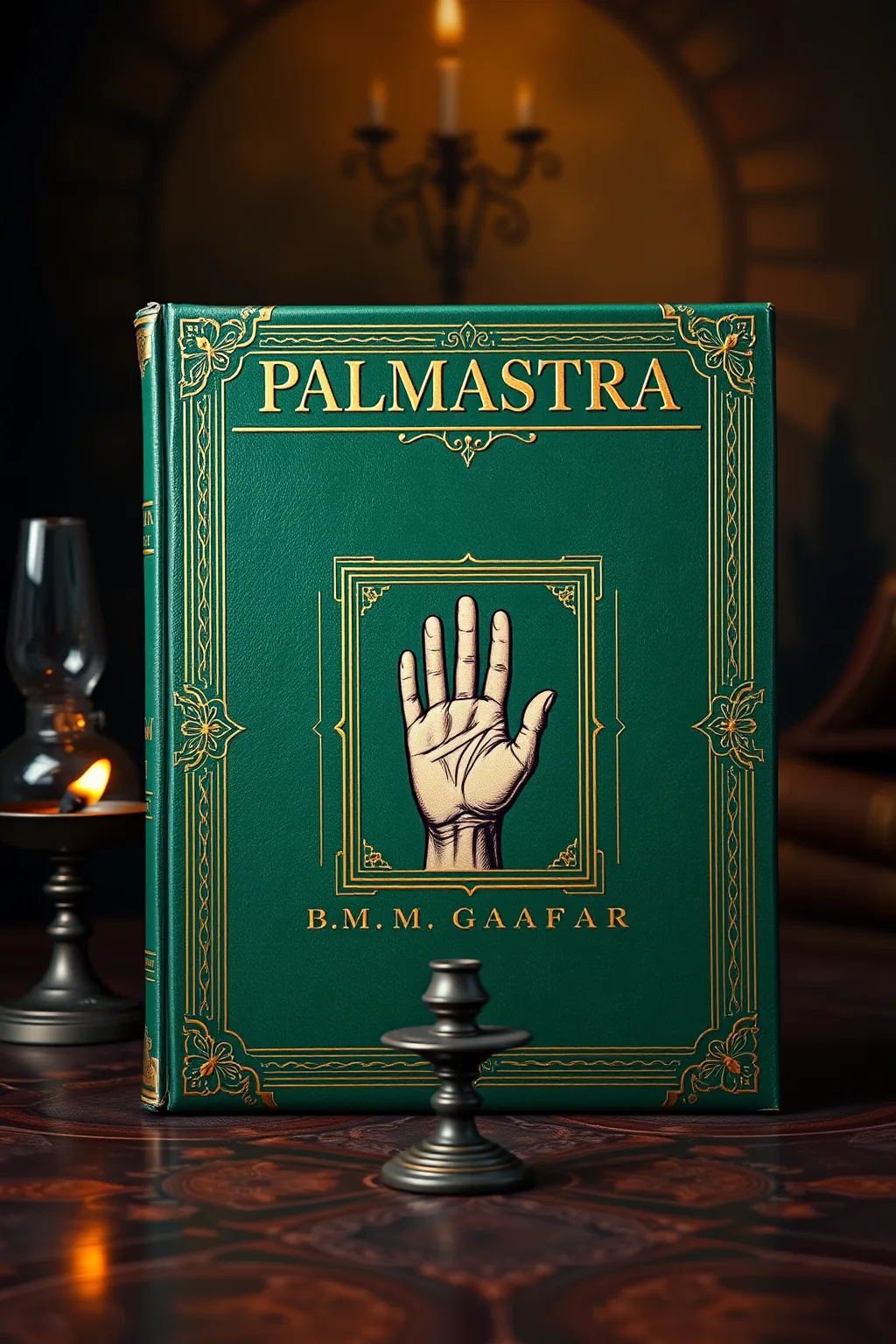
 63
63

Palmastra



Alaric Kestrel, in his review for Metaphysical Studies Reviewer, hails 'Palmastra' by M.M. Gaafar as a 'luminous exposition of palmistry's profound esoteric dimensions.' Kestrel commends Gaafar's ability to distill complex astrological and metaphysical correspondences into accessible yet deeply insightful principles. He notes the book's strength lies in its comprehensive exploration of hand analysis, moving beyond mere fortune-telling to reveal the hand as a microcosm of the soul's journey. 'Palmastra' is ideal for serious students of divination, occult philosophy, and anyone seeking a rigorous, spiritually grounded approach to understanding the self through the ancient art of palm reading. A truly indispensable addition to any esoteric library.
📝 Description
63
M.M. Gaafar's 'Palmastra' details the ancient art of palmistry and its connection to celestial influences.
M.M. Gaafar's 'Palmastra' examines chiromancy, the art of palm reading, presenting it as a system of symbolic interpretation. The book connects the physical features of the hand, such as lines and mounts, to broader cosmic patterns and individual destinies. Gaafar aims to guide readers toward understanding the palm as a map reflecting universal energies and personal potential.
This work is structured not merely as a manual but as an introduction to a symbolic language. It invites contemplation on the philosophical implications of self-knowledge derived from the hand's structure. 'Palmastra' is directed toward those seeking a deeper engagement with existence, moving beyond surface-level perceptions to find insights relevant to spiritual development and self-understanding.
Chiromancy, as presented in 'Palmastra,' is part of a long-standing esoteric tradition that views the human body as a microcosm reflecting the macrocosm. Historically, palmistry has been employed across various cultures to understand character, predict future events, and gain spiritual insight. Gaafar's work situates itself within this lineage, treating the palm not just as a biological feature but as a script containing symbolic information tied to cosmic order and personal fate, akin to astrological or numerological systems.
💡 Why Read This Book?
Uncover the hidden language of your destiny etched within your palms. 'Palmastra' by M.M. Gaafar offers a profound, esoteric exploration of chiromancy, revealing the hand as a sacred map of the soul. Ideal for spiritual seekers, occult scholars, and dedicated practitioners yearning for a deeper understanding of self and the cosmos through ancient, symbolic wisdom.
⭐ Reader Reviews
Honest opinions from readers who have explored this book.
❓ Frequently Asked Questions
What makes 'Palmastra' unique compared to other palmistry books?
'Palmastra' distinguishes itself by its deep dive into the esoteric and symbolic connections between the palm and celestial influences, offering a philosophical framework rather than just a technical guide. It emphasizes the hand as a reflection of spiritual evolution.
Is 'Palmastra' suitable for beginners in palmistry?
While comprehensive, 'Palmastra' is best suited for those with a foundational interest or some prior exposure to esoteric concepts. Beginners may find it beneficial to approach with a teacher or supplementary beginner guides.
What kind of knowledge can one gain from studying 'Palmastra'?
Readers can gain profound insights into personal destiny, character analysis, karmic patterns, and the underlying spiritual energies that shape individual lives, all interpreted through the symbolic language of the palm.
Does 'Palmastra' focus solely on predicting the future?
No, 'Palmastra' transcends mere prediction. It focuses on understanding the present potential and past influences as revealed in the hand, offering guidance for personal growth and the conscious shaping of one's path.
What is the philosophical significance of the hand in 'Palmastra'?
Philosophically, the hand in 'Palmastra' represents the physical manifestation of the soul's journey and its connection to the divine. It serves as a sacred text for self-discovery and understanding one's place in the cosmic order.
🔮 Key Themes & Symbolism
The Hand as a Cosmic Mirror
Explore the profound concept that the human hand is not merely flesh and bone, but a divinely inscribed map reflecting the intricate interplay between terrestrial existence and celestial forces. 'Palmastra' studies how the lines, mounts, and contours of the palm serve as a microcosm of the universe, mirroring astrological configurations and spiritual archetypes. This theme emphasizes the interconnectedness of all things, suggesting that within the palm lies a tangible representation of our soul's journey, its challenges, and its ultimate potential. It invites readers to perceive their hands as sacred texts, offering useful insights into their unique destiny and cosmic alignment.
Symbolism of Lines and Mounts
This section illuminates the rich symbolic language of palmistry, detailing the specific meanings attributed to each line and mount. 'Palmastra' moves beyond simplistic interpretations, revealing the deeper esoteric significance of features like the Life Line, Head Line, Heart Line, and the various mounts (Mount of Venus, Mount of Jupiter, etc.). Gaafar connects these physical attributes to psychological traits, spiritual inclinations, and karmic patterns, positing them as keys to understanding one's inherent strengths, weaknesses, and life lessons. The exploration of symbolism provides a framework for deciphering the hand's narrative, offering clarity on personal development and the unfolding of one's spiritual path.
Chiromancy as a Path to Self-Knowledge
'Palmastra' presents chiromancy not merely as a divinatory tool, but as a profound path to self-knowledge and spiritual enlightenment. By understanding the intricate map of the hand, individuals are encouraged to engage in deep introspection, acknowledging their inner landscape and the forces that shape their lives. This theme emphasizes the transformative power of self-awareness gained through careful study of one's own palm. It suggests that the insights derived from palmistry can empower individuals to make conscious choices, overcome obstacles, and actively participate in the co-creation of their reality, fostering personal growth and a deeper connection to their authentic self.
💬 Memorable Quotes
Direct passages from the work, attributed to the author.
“Each line a river, each mount a star.”
— This evocative metaphor highlights the symbolic mapping of the hand, likening its features to celestial bodies and cosmic currents that guide our lives.
“To read the palm is to read the soul's ancient song.”
— This interpretation emphasizes the profound depth of palmistry as a tool for understanding one's spiritual essence and the continuous narrative of the soul.
“The future whispers in the present's touch.”
— This highlights the dynamic nature of palmistry, where present hand formations hold clues and subtle energies that reveal potential future unfoldings.
💡 Key Ideas
Editorial paraphrase of the work's core concepts — not direct quotes.
The hand is a manuscript penned by the cosmos.
This quote captures the core esoteric belief that the palm is not random but divinely written, reflecting universal energies and individual destiny.
Destiny is not a fixed point, but a landscape within.
This quote reframes destiny, suggesting that it is not predetermined but an internal territory that can be understood and navigated through self-awareness.
🌙 Esoteric Significance
Tradition
Rooted deeply in the Hermetic and Neoplatonic traditions, 'Palmastra' views the human hand as a microcosm reflecting the macrocosm. It aligns with ancient systems that posit a divine order and interconnectedness between the celestial spheres and terrestrial existence. The text draws parallels with astrological correspondences and alchemical principles, where the physical form is seen as a symbolic manifestation of spiritual truths and energies. This perspective elevates palmistry from mere fortune-telling to a profound spiritual discipline aimed at self-realization and understanding one's place within the cosmic dance.
Symbolism
The symbolism in 'Palmastra' is rich and many-sided, treating lines, mounts, fingers, and even the texture and color of the hand as potent symbols. Each element is interpreted not just literally but allegorically, representing psychological traits, karmic lessons, spiritual potentials, and life-path indicators. For instance, the Mount of Jupiter might symbolize ambition and leadership, while the Head Line could represent the quality and direction of one's thought processes. The interplay of these symbols forms a complex narrative, akin to a cosmic language that, when deciphered, reveals the intricate design of an individual's being and destiny.
Modern Relevance
In an age often characterized by materialism and a disconnection from deeper meaning, 'Palmastra' offers a vital bridge back to esoteric wisdom. Its emphasis on self-knowledge, symbolic understanding, and the interconnectedness of all things provides a powerful counterpoint to contemporary anxieties. The insights gleaned from its pages can foster greater self-awareness, resilience, and a sense of purpose. For modern seekers, it offers a tangible, ancient method for exploring inner landscapes, understanding personal challenges, and cultivating a more profound connection with the spiritual dimensions of life, proving that the wisdom of the ancients remains profoundly relevant.
👥 Who Should Read This Book
Esoteric Library proudly presents 'Palmastra' to a discerning audience. **Beginners** with a serious interest in divination and self-discovery will find a comprehensive, albeit advanced, introduction to chiromancy's deeper layers. **Occult scholars and practitioners** will appreciate its rigorous approach to symbolism and its grounding in esoteric philosophy, offering new perspectives for their studies. **Spiritual seekers** yearning for profound self-understanding will discover a unique tool for introspection and navigating their life path. Those **practicing astrology, tarot, or other divinatory arts** may find 'Palmastra' provides complementary insights into the human psyche and destiny.
📜 Historical Context
M.M. Gaafar's 'Palmastra' emerges from a wide range of esoteric traditions that have sought to understand the human condition through symbolic interpretation. While the exact era of its original composition is shrouded in the mystique typical of many ancient texts, its philosophical underpinnings resonate with Hellenistic astrology, Hermeticism, and the Medieval European fascination with chiromancy and physiognomy. This period saw a confluence of classical knowledge with nascent occult sciences, where the human body was viewed as a divine creation, replete with hidden meanings. The Renaissance, in particular, witnessed a renewed interest in divination and the occult, with scholars and mystics alike exploring methods to decipher the secrets of the universe and the individual's place within it. 'Palmastra' likely drew inspiration from or contributed to this intellectual milieu, where the study of the hand was considered a legitimate, albeit arcane, pursuit, bridging the gap between the material and the spiritual realms and aiming to unlock the divine plan inscribed within us.
📔 Journal Prompts
Reflect on the primary lines of your dominant hand. What dominant energies or life themes do they seem to represent in your current life?
Examine the mounts on your palm. Which ones are most prominent, and how do these qualities manifest in your personality and aspirations?
Consider the 'cosmic manuscript' metaphor. How does viewing your hand as divinely written change your perception of your life's challenges and triumphs?
If your hand were a 'landscape within,' what are the most significant features (mountains, rivers, valleys) that define your inner world?
How can the symbolic interpretations presented in 'Palmastra' empower you to make more conscious choices regarding your future?
🗂️ Glossary
Chiromancy
The ancient practice of foretelling character and future events by the examination of the palm of the hand. It is considered an esoteric art, exploring the symbolic language of the hand.
Macrocosm
The universe considered as a whole and in its entirety; the greater world. In esoteric philosophy, it is often contrasted with the microcosm.
Microcosm
The human being considered as an epitome or miniature model of the universe. In 'Palmastra,' the hand serves as a microcosm.
Hermeticism
A religious, philosophical, and esoteric tradition based primarily upon the writings attributed to Hermes Trismegistus. It emphasizes principles like 'As above, so below.'
Mounts
The fleshy, raised areas on the palm of the hand, named after planets and gods (e.g., Mount of Jupiter, Mount of Venus), each believed to represent specific personality traits and potentials.
This book appears in 1 collection
🔮 Readers Also Liked
Browse all →







From the “Palmistry” Collection
View all →









More Free Divination & Tarot Books
View all →