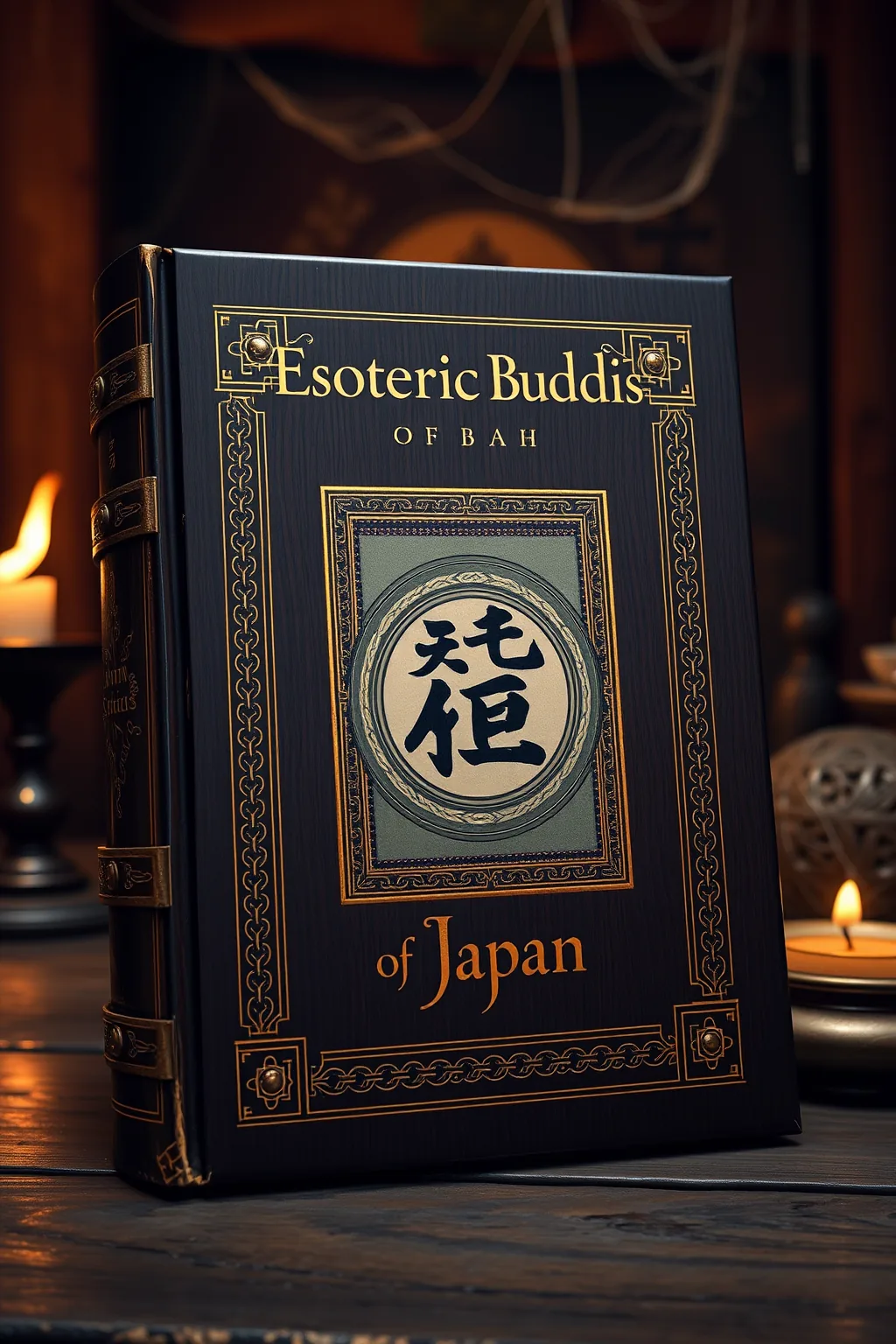
Esoteric Buddhism of Japan
 61
61

Esoteric Buddhism of Japan



Celeste Moreau (Divination & Symbolism Reviewer) — Yūzui Kotaki's 'Esoteric Buddhism of Japan' is a luminous beacon for serious students of arcane traditions. Kotaki navigates the intricate labyrinth of Shingon and Tendai lineages with unparalleled clarity, illuminating their profound connections to divination and universal symbolism. This work eschews superficiality, offering deep dives into tantric practices, the transformative power of mudras, and the symbolic language of esoteric deities. It is an indispensable resource for practitioners seeking authentic esoteric knowledge, scholars investigating Eastern mysticism, and anyone drawn to the profound wisdom embedded within Japanese spiritual heritage. The book’s strength lies in its ability to bridge ancient teachings with accessible philosophical concepts, making the esoteric tangible.
📝 Description
61
Yūzui Kotaki's 'Esoteric Buddhism of Japan' was published in 1978.
This book examines the core tenets of Japanese Esoteric Buddhism, known as Mikkyo. Kotaki details the symbolic language of mandalas, which are presented not as art but as representations of the cosmos. The text also covers the use of mantras as tools for spiritual awakening. Readers will find an explanation of the philosophical basis of this tradition and its ties to nature and the concept of universal interconnectedness.
The work aims to guide those seeking a deeper understanding of spiritual matters beyond the ordinary. It introduces practices and philosophies central to Mikkyo, intended to lead practitioners toward enlightenment and inner calm. Kotaki's writing suggests that engaging with these ideas can shift one's perspective on reality, revealing an underlying cosmic essence.
Japanese Esoteric Buddhism, or Mikkyo, emerged as a distinct tradition in the 9th century, integrating Tantric practices from India with existing Japanese beliefs. It emphasizes ritual, visualization, and the use of mantras and mandalas to achieve enlightenment in this lifetime. Key schools like Shingon and Tendai developed complex philosophical systems and unique iconographic traditions. Mikkyo's focus on the inherent Buddhahood within all beings and its sophisticated cosmology set it apart from other Buddhist schools in Japan. Kotaki's book situates these practices within this historical and philosophical framework.
💡 Why Read This Book?
Uncover the secret spiritual lineages of Japan, explore the profound symbolism of mandalas and mantras, and understand the interconnectedness of the cosmos. 'Esoteric Buddhism of Japan' is essential for seekers of hidden knowledge, scholars of Eastern mysticism, and practitioners yearning for deeper spiritual insight. It offers a unique perspective on ancient wisdom, bridging the gap between philosophical inquiry and practical application for profound personal transformation.
⭐ Reader Reviews
Honest opinions from readers who have explored this book.
❓ Frequently Asked Questions
What is the primary focus of Esoteric Buddhism in Japan?
The primary focus is the direct transmission of spiritual realization through esoteric practices, symbolism, and meditative techniques, aiming for immediate enlightenment through the realization of the Buddha-nature inherent in all beings.
Who is Yūzui Kotaki?
Yūzui Kotaki is a respected scholar and practitioner of Japanese Esoteric Buddhism, known for his insightful interpretations of its complex doctrines and practices.
Is this book suitable for beginners?
While comprehensive, the book is best suited for those with a foundational interest in Buddhism or esoteric studies, offering deeper insights than introductory texts.
What role does symbolism play in this tradition?
Symbolism is paramount, with mandalas, mudras, and mantras serving as potent tools for visualizing spiritual truths and accessing higher states of consciousness.
How does this tradition relate to divination?
Esoteric Buddhism often incorporates practices and understandings that can be applied to divination, viewing patterns and cosmic correspondences as reflections of spiritual realities.
🔮 Key Themes & Symbolism
The Cosmic Mandala: A Universe Within
This theme explores the profound significance of mandalas in Esoteric Buddhism, not as mere artistic representations, but as intricate cosmograms that map the universe and the enlightened mind. Kotaki explores how these symbolic diagrams serve as visual aids for meditation, facilitating the practitioner's journey towards understanding the interconnectedness of all phenomena and the nature of reality itself. The mandala is presented as a tool for concentration, a blueprint for spiritual awakening, and a gateway to experiencing the divine presence within.
Mantras and Mudras: The Language of Transformation
This section illuminates the power of mantras and mudras as essential tools for spiritual transformation within the esoteric Buddhist tradition. Mantras are revealed as sacred utterances, vibrating with cosmic energy, capable of purifying the mind and invoking spiritual forces. Mudras, or symbolic hand gestures, are depicted as physical manifestations of spiritual intentions, channeling energy and facilitating communication with the divine. Kotaki explains how their precise combination unlocks hidden potentials and accelerates the path to enlightenment.
The Bodhisattva Path: Compassion in Action
This theme examines the central role of the Bodhisattva ideal within Japanese Esoteric Buddhism, emphasizing the commitment to achieving enlightenment not just for oneself, but for the benefit of all sentient beings. Kotaki explores the wide implications of this path, highlighting how the pursuit of wisdom (prajna) is inextricably linked with boundless compassion (karuna). The active engagement with the world, guided by this dual principle, is presented as the ultimate expression of spiritual realization and the highest form of practice.
💬 Memorable Quotes
Direct passages from the work, attributed to the author.
“Through the sound, the form arises.”
— Highlighting the power of mantras, this suggests that sonic vibrations are fundamental to the manifestation of existence and spiritual insight.
“Enlightenment is not a destination, but a realization.”
— This underscores the experiential and inherent nature of awakening, suggesting it is a discovery of what already exists within.
“Within the stillness, the cosmos speaks.”
— This points to the contemplative practice as a means to perceive the subtle energies and profound truths of the universe.
💡 Key Ideas
Editorial paraphrase of the work's core concepts — not direct quotes.
The mandala is not a picture, but a universe.
This quote emphasizes the profound, all-encompassing nature of mandalas in esoteric traditions, presenting them as dynamic representations of reality rather than static imagery.
The path of compassion is the highest wisdom.
Connecting ethics and intellect, this quote posits that true understanding is inseparable from selfless love and action.
🌙 Esoteric Significance
Tradition
This work delves deeply into the Vajrayana tradition as it manifested in Japan, specifically through the Shingon (True Word) and Tendai schools. These lineages emphasize the direct transmission of teachings from master to disciple, utilizing tantric practices, elaborate visualizations, and the invocation of cosmic energies to achieve rapid enlightenment. It represents a path of potent spiritual alchemy, where the practitioner seeks to realize their inherent Buddhahood through profound engagement with symbolic systems and meditative disciplines.
Symbolism
The symbolism within Japanese Esoteric Buddhism is exceptionally rich and multi-layered. It includes the cosmic mandalas (e.g., the Diamond Realm and Womb Realm), which represent the totality of existence and the enlightened mind; mudras (symbolic hand gestures) that channel specific energies and intentions; and mantras (sacred syllables) that evoke spiritual powers and purify consciousness. Each deity, color, and form carries profound meaning, acting as a key to unlock deeper spiritual understanding and facilitate inner transformation.
Modern Relevance
In an age of rapid change and spiritual seeking, the wisdom of Esoteric Buddhism offers clear insights into mindfulness, interconnectedness, and the nature of consciousness. Its emphasis on inner transformation, the power of focused intention, and the realization of one's inherent potential resonates deeply with modern seekers. The symbolic language and meditative practices provide powerful tools for navigating stress, fostering emotional balance, and cultivating a sense of purpose and belonging in a complex world.
👥 Who Should Read This Book
This book is a valuable collection for those drawn to the esoteric mysteries of Eastern spirituality. Scholars of comparative religion and Asian studies will find invaluable depth and scholarly rigor. Spiritual seekers yearning for a profound, transformative path beyond conventional teachings will discover potent practices and philosophical frameworks. Practitioners of meditation, yoga, or other contemplative arts will find new dimensions to their practice, while enthusiasts of symbolism and ancient wisdom traditions will be captivated by the intricate range of meaning woven throughout. It is for the dedicated student eager to explore the hidden heart of Japanese spirituality.
📜 Historical Context
The development of Esoteric Buddhism in Japan, primarily through the Tendai and Shingon schools, emerged during the Heian period (794-1185). This era was characterized by a flourishing of court culture, the syncretism of indigenous Shinto beliefs with imported Buddhism, and a strong influence from Tang Dynasty China. Esoteric practices, transmitted by figures like Kūkai and Saichō, offered a more direct and potent path to enlightenment, appealing to both the elite and those seeking immediate spiritual results. The intricate rituals, complex iconography, and philosophical depth of these traditions provided a unique spiritual framework that profoundly shaped Japanese art, literature, and societal values, leaving an indelible mark on the nation's cultural and spiritual landscape.
📔 Journal Prompts
Reflect on a personal symbol that represents a profound truth in your life. How does it function like a miniature mandala?
Consider a mantra or affirmation that speaks to you. How does its repetition affect your state of mind and perception?
Explore the concept of compassion in your daily interactions. How can you embody the Bodhisattva ideal in small, tangible ways?
What 'hidden knowledge' do you feel is essential for your spiritual growth, and how might you begin to uncover it?
Imagine yourself within a sacred space (real or imagined). What symbolic elements are present, and what do they communicate to you?
🗂️ Glossary
Mandalā
A symbolic diagram representing the cosmos, the universe, or the enlightened mind, used as a tool for meditation and spiritual realization in Esoteric Buddhism.
Mantra
A sacred syllable, word, or phrase chanted or recited to invoke spiritual power, purify the mind, or achieve a specific meditative state.
Mudra
A symbolic gesture, typically performed with the hands and fingers, used in rituals and meditation to convey specific meanings, energies, or intentions.
Vajrayana
The 'Diamond Vehicle' or 'Thunderbolt Vehicle,' a branch of Mahayana Buddhism characterized by its emphasis on tantric practices, esoteric teachings, and rapid attainment of enlightenment.
Bodhisattva
An enlightened being who has achieved enlightenment but delays their own final nirvana to help all sentient beings achieve awakening out of compassion.
This book appears in 1 collection
🔮 Readers Also Liked
Browse all →



![Henry Cornelius Agrippa's Fourth Book of Occult Philosophy, and Geomancy. Magical Elements of Peter de Abano. Astronomical Geomancy [by Gerardus Cremonensis]. the Nature of Spirits [by Gorg Pictorius]. and Arbatel of Magic](/img/thumb/henry-cornelius-agrippa-s-fourth-book-of-occult-philosophy-and-geomancy-magical-elements-of-peter-de-abano-astronomical-geomancy-by-gerardus-cremonensis-the-nature-of-spirits-by-gorg-pictorius-and-arb.webp)



From the “Divination” Collection
View all →







More Free Divination & Tarot Books
View all →