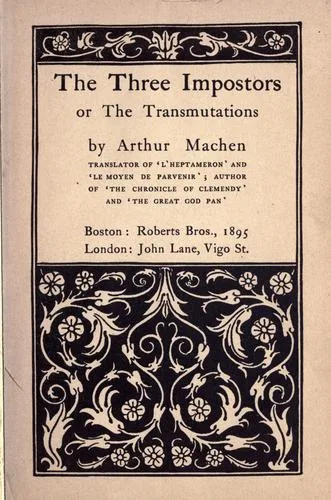
The three impostors or The transmutations
 72
72

The three impostors or The transmutations


Review by Ophelia Vance (Mystical Literature Reviewer) — Arthur Machen's 'The Three Impostors or The Transmutations' is a masterclass in esoteric literature. Machen's prose is rich and evocative, drawing the reader into a world where the veil between the seen and the unseen is thin. The book's strength lies in its intricate symbolism and hermetic themes, which are woven seamlessly into the narrative. Machen's exploration of alchemy and hidden knowledge is both profound and unsettling, making it a valuable resource for scholars and practitioners of the occult. The intended audience for this book includes those with a keen interest in the mystical and the esoteric, as well as those who enjoy a good mystery with a touch of the supernatural.
📝 Description
72
Arthur Machen published 'The Three Impostors or The Transmutations' in 1895, a collection of tales exploring occult themes.
The collection features interconnected stories centered around mysterious figures and hidden knowledge. A nameless narrator encounters individuals who seem to possess secrets beyond ordinary understanding, hinting at a hidden reality beneath the surface of late Victorian London. These encounters often involve unsettling events and a pervasive sense of unease, as the characters brush against ancient lore and clandestine practices. Machen uses these narratives to question the nature of perception and the existence of forces that lie outside conventional experience. The stories blur the lines between the mundane and the supernatural, creating an atmosphere of dread and wonder.
Published in 1895, 'The Three Impostors' emerged during a period of renewed interest in occultism and spiritualism. Machen, influenced by figures like Eliphas Lévi and the Golden Dawn movement, wove elements of hermeticism and alchemy into his fiction. The collection engages with themes of hidden knowledge and the potential for transformation through esoteric means, reflecting a broader cultural fascination with the mystical traditions of the past and their place in the modern world. The narratives hint at a reality more complex than ordinary senses perceive.
💡 Why Read This Book?
Read 'The Three Impostors or The Transmutations' to delve into the depths of alchemical symbolism and hermetic wisdom. This book is perfect for seekers of hidden knowledge, scholars of the occult, and practitioners of the mystical arts. Machen's exploration of the nature of truth and the quest for enlightenment offers a unique perspective on the human condition, making it a valuable addition to any esoteric library.
⭐ Reader Reviews
Honest opinions from readers who have explored this book.
❓ Frequently Asked Questions
What is the central theme of 'The Three Impostors or The Transmutations'?
The central theme revolves around the search for hidden knowledge and the exploration of alchemical symbolism.
Who is the intended audience for this book?
The intended audience includes seekers of hidden knowledge, scholars of the occult, and practitioners of the mystical arts.
How does Machen's writing style contribute to the book's atmosphere?
Machen's rich and evocative prose creates a sense of foreboding and mystery, drawing the reader into a world where the veil between reality and illusion is thin.
What is the significance of the title 'The Three Impostors or The Transmutations'?
The title reflects the book's exploration of deception and transformation, as the characters encounter various imposters and undergo spiritual transmutations.
Is this book suitable for beginners in the occult?
While the book is accessible to beginners, it is best enjoyed by those with some prior knowledge of esoteric themes and hermetic wisdom.
🔮 Key Themes & Symbolism
The Quest for Hidden Knowledge
The book examines the search for hidden knowledge, exploring the mysteries of alchemy and hermetic wisdom. The narrative is filled with symbolism and esoteric lore, making it a valuable resource for those interested in the occult.
The Nature of Truth
Machen's exploration of the nature of truth is a central theme, as the characters grapple with the boundaries between reality and illusion. The book challenges the reader to question their own perceptions and seek deeper understanding.
Transformation and Transmutation
The concept of transformation and transmutation is woven throughout the narrative, as the characters undergo spiritual and physical changes. This theme reflects the alchemical process of purification and enlightenment.
💡 Key Ideas
Editorial paraphrase of the work's core concepts — not direct quotes.
The truth is a veil, thin and delicate, easily torn by the slightest touch of falsehood.
This line underscores the book's exploration of the nature of truth and the fragility of reality.
In the field of the occult, nothing is as it seems.
This quote highlights the deceptive nature of the esoteric world and the need for discernment.
The seeker of hidden knowledge must be prepared to face the darkest depths of the human psyche.
This line emphasizes the challenges and dangers of the quest for enlightenment.
The alchemist's journey is one of purification and transformation.
This quote reflects the book's exploration of alchemical symbolism and the process of spiritual transmutation.
The veil between the seen and the unseen is thin, and those who seek can cross it.
This line underscores the book's mystical themes and the possibility of crossing into the field of the occult.
🌙 Esoteric Significance
Tradition
The book belongs to the Hermetic tradition, which emphasizes the pursuit of hidden knowledge and the transformation of the self. Machen's exploration of alchemy and hermetic wisdom is central to the narrative, making it a valuable resource for practitioners of the mystical arts.
Symbolism
Key symbols in the book include the alchemical process of purification and transmutation, as well as the quest for hidden knowledge. These symbols are woven seamlessly into the narrative, reflecting the book's esoteric themes.
Modern Relevance
The book's exploration of the nature of truth and the quest for enlightenment is as relevant today as it was when it was written. Modern practitioners of the occult and esoteric arts continue to draw inspiration from Machen's work, using it as a guide in their own spiritual journeys.
👥 Who Should Read This Book
Beginners in the occult will find 'The Three Impostors or The Transmutations' to be an accessible introduction to esoteric themes and hermetic wisdom. Scholars of the occult will appreciate the book's detailed symbolism and philosophical depth. Spiritual seekers will find inspiration in the book's exploration of the nature of truth and the quest for enlightenment. Practitioners of the mystical arts will find valuable insights and guidance in Machen's exploration of alchemy and hidden knowledge.
📜 Historical Context
Published in the late 19th century, 'The Three Impostors or The Transmutations' reflects the fascination with the occult and esoteric themes that were prevalent during the Victorian era. Machen's work was influenced by the resurgence of interest in alchemy, hermeticism, and the mystical arts, which were seen as a reaction to the rationalism and materialism of the time. The book's exploration of hidden knowledge and the nature of truth was groundbreaking, and it continues to influence modern literature and esoteric studies.
📔 Journal Prompts
Reflect on the nature of truth as explored in the book. How does Machen's narrative challenge your perceptions of reality?
Consider the role of symbolism in the book. How do the alchemical and hermetic themes enhance your understanding of the narrative?
Explore the concept of transformation and transmutation. How does the book's exploration of these themes resonate with your own spiritual journey?
Reflect on the challenges and dangers of the quest for hidden knowledge. How does Machen's narrative underscore the importance of discernment?
Consider the book's historical context. How does the Victorian fascination with the occult influence Machen's exploration of esoteric themes?
🗂️ Glossary
Alchemy
The ancient practice of transforming base metals into gold, often seen as a metaphor for spiritual transformation.
Hermeticism
A philosophical and spiritual tradition based on the teachings of Hermes Trismegistus, emphasizing hidden knowledge and the pursuit of enlightenment.
Esoteric
Relating to knowledge that is intended for a small group of people with specialized knowledge of arcane subjects.
Symbolism
The use of symbols to represent abstract ideas or qualities, often found in literature and the arts.
Occult
Relating to supernatural, mystical, or secret knowledge, often associated with the study of the hidden and the mysterious.
This book appears in 3 collections
🔮 Readers Also Liked
Browse all →








More by Arthur Machen
All books →





From the “Hermeticism” Collection
View all →







More Free Alchemy & Hermeticism Books
View all →