Some philosophy of the Hermetics

 61
61

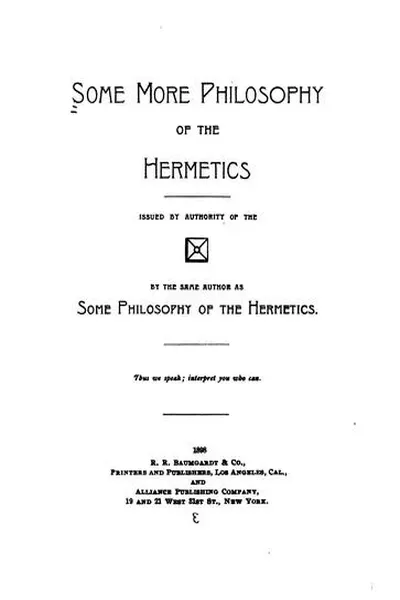
Some philosophy of the Hermetics

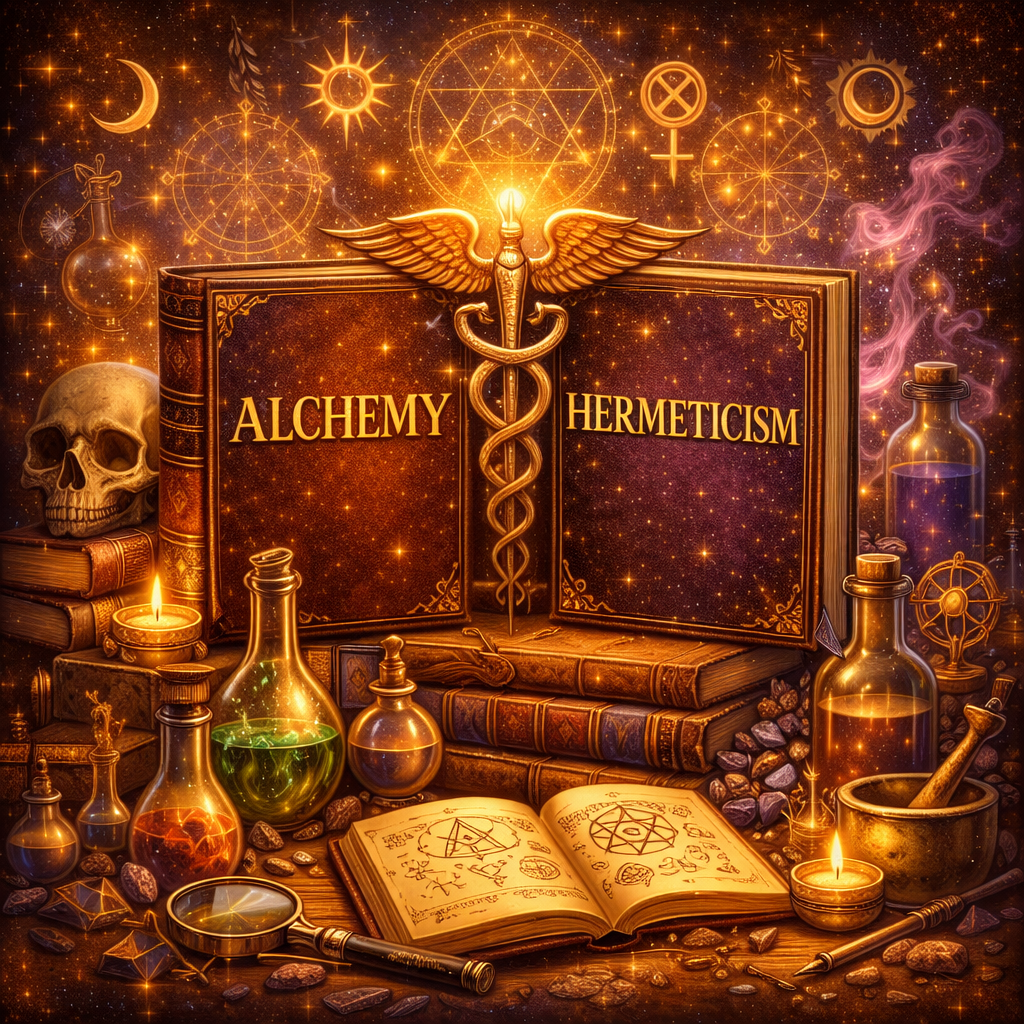

Review by Celeste Moreau (Divination & Symbolism Reviewer) — 'Some Philosophy of the Hermetics' is a treasure trove of esoteric insights, providing a deep dive into the ancient Hermetic traditions. The text's strengths lie in its ability to convey complex ideas through evocative symbolism and philosophical depth. This book is a must-read for those interested in the occult and alchemy, as it offers a rare glimpse into the hidden knowledge of the Hermetics. The intended audience includes scholars, spiritual seekers, and practitioners of the esoteric arts, who will find this work both enlightening and inspiring.
📝 Description
61
This anonymous text from antiquity discusses core Hermetic principles.
This anonymous work from antiquity presents a survey of Hermetic philosophy. It discusses the relationship between the material and spiritual worlds, suggesting a path toward understanding and self-awareness. The text touches upon alchemical ideas and esoteric symbolism, aiming to reveal hidden knowledge.
Its philosophical content seeks to connect the seen and unseen aspects of existence. The book addresses those interested in spiritual truths and the deeper currents within occult traditions. It aims to deepen the reader's grasp of Hermetic practices and their historical weight.
The Hermetic tradition originates from texts attributed to Hermes Trismegistus, a syncretic figure blending Greek god Hermes and Egyptian god Thoth. These writings, compiled largely in Roman Egypt between the 1st and 3rd centuries CE, form a cornerstone of Western esotericism. They articulate a cosmology, theology, and philosophy that influenced Neoplatonism, Gnosticism, and later Renaissance Hermeticism. The tradition emphasizes gnosis, or direct knowledge of the divine, and the idea that the universe is a divine creation reflecting principles accessible through study and contemplation.
💡 Why Read This Book?
Why read 'Some Philosophy of the Hermetics'? This book is a gateway to the mystical world of Hermeticism, offering seekers, scholars, and practitioners a unique opportunity to explore ancient wisdom and symbolism. It provides deep philosophical insights that can enrich your spiritual journey and deepen your understanding of the occult. Whether you are new to the field or a seasoned practitioner, this text will captivate your imagination and expand your horizons.
⭐ Reader Reviews
Honest opinions from readers who have explored this book.
❓ Frequently Asked Questions
What is the main focus of 'Some Philosophy of the Hermetics'?
The main focus is on the philosophical and esoteric teachings of the Hermetics, including alchemy and symbolism.
Who is the intended audience for this book?
The intended audience includes scholars of the occult, spiritual seekers, and practitioners of esoteric arts.
What makes this book significant in the field of Hermeticism?
This book is significant for its deep philosophical insights and its ability to convey complex ideas through symbolism.
Can beginners benefit from reading this text?
Yes, beginners can benefit from the foundational knowledge and mystical themes presented in the book.
How does this book contribute to modern occult studies?
It provides a historical and philosophical context that is still relevant to modern practitioners and scholars of the occult.
🔮 Key Themes & Symbolism
Alchemy and Transformation
The book looks at the alchemical processes of transformation, both physical and spiritual, using symbols and metaphors to illustrate the journey from base matter to enlightened consciousness. This theme highlights the Hermetic belief in the unity of all things and the potential for spiritual elevation through alchemical practices.
Symbolism and Hidden Knowledge
Symbolism is a central to Hermetic philosophy, and this text is rich with esoteric symbols that convey hidden knowledge. Each symbol is imbued with multiple layers of meaning, inviting readers to decipher and interpret them, thereby uncovering the deeper truths they represent.
Philosophical Insights
The philosophical insights in 'Some Philosophy of the Hermetics' offer a profound exploration of the nature of reality, the self, and the divine. Through its teachings, the book encourages readers to question conventional wisdom and seek a deeper understanding of the interconnectedness of all existence.
💬 Memorable Quotes
Direct passages from the work, attributed to the author.
“As above, so below.”
— This famous Hermetic principle emphasizes the correspondence between the macrocosm and the microcosm, reflecting the belief in the unity of all things.
💡 Key Ideas
Editorial paraphrase of the work's core concepts — not direct quotes.
The secret of the universe lies in the harmony of opposites.
This quote underscores the Hermetic philosophy of balance and the reconciliation of opposing forces within the self and the cosmos.
The path to enlightenment is through the purification of the soul.
This line highlights the importance of spiritual cleansing and self-reflection in the Hermetic tradition.
Alchemy is the art of transforming base matter into gold.
This quote symbolizes the alchemical process of personal and spiritual transformation.
The true philosopher seeks the hidden wisdom within.
This quote encourages readers to look inward for spiritual enlightenment and self-discovery.
🌙 Esoteric Significance
Tradition
This book belongs to the Hermetic tradition, which combines elements of alchemy, astrology, and theurgy. Hermeticism emphasizes the pursuit of spiritual enlightenment through the study of symbols and esoteric teachings, aiming to unify the individual with the divine.
Symbolism
Key symbols in this text include the alchemical symbols for transformation, such as the ouroboros (the snake swallowing its tail) and the philosopher's stone. These symbols represent the cyclical nature of life, death, and rebirth, as well as the quest for spiritual perfection.
Modern Relevance
Today, 'Some Philosophy of the Hermetics' continues to inspire modern practitioners of the occult and esoteric arts. Its teachings on alchemy and symbolism are studied by those seeking to understand the deeper layers of reality and the self. Contemporary scholars and spiritual seekers find in this text a rich source of wisdom and inspiration.
👥 Who Should Read This Book
This book is ideal for a diverse audience. Beginners will appreciate the foundational knowledge and mystical themes presented in an accessible manner. Scholars of the occult will find deep philosophical insights and historical context that enrich their studies. Spiritual seekers will be inspired by the esoteric teachings and the call to inner transformation. Practitioners of the esoteric arts will benefit from the practical applications of alchemy and symbolism, making this text a valuable resource for their spiritual journeys.
📜 Historical Context
Written during a time when esoteric knowledge was closely guarded, 'Some Philosophy of the Hermetics' emerged from the mystical traditions of ancient Egypt and Greece. This era saw a blend of philosophical inquiry and occult practices, with Hermeticism playing a key role in bridging the gap between the physical and spiritual realms. The book's influence can be seen in the development of Western esotericism, alchemy, and the occult sciences, making it a foundational text for modern seekers of hidden knowledge.
📔 Journal Prompts
Reflect on a symbol from the book and its personal significance to you.
How does the concept of alchemical transformation apply to your own life?
What are the key philosophical insights you have gained from this text?
In what ways can you incorporate Hermetic teachings into your spiritual practice?
How does the Hermetic principle of 'as above, so below' resonate with your understanding of the world?
🗂️ Glossary
Alchemy
The ancient practice of transforming base metals into gold, symbolizing spiritual and personal transformation.
Hermeticism
An esoteric tradition that combines elements of alchemy, astrology, and theurgy, aiming to unify the individual with the divine.
Symbolism
The use of symbols to convey hidden knowledge and esoteric truths within Hermetic teachings.
Ouroboros
A symbol of a snake swallowing its tail, representing the cyclical nature of life, death, and rebirth.
Philosopher's Stone
A legendary alchemical substance said to turn base metals into gold and grant immortality, symbolizing spiritual perfection.
This book appears in 3 collections
🔮 Readers Also Liked
Browse all →






From the “Hermeticism” Collection
View all →

![The alchemy of happiness, tr. from the Turk. [abridgement] by H.A. Homes](/img/thumb/the-alchemy-of-happiness-tr-from-the-turk-abridgement-by-h-a-homes-ab-mid-mu-ammad-b-mu-ammad-ghazz-l.webp)




More Free Alchemy & Hermeticism Books
View all →