A modern philosopher's stone

 61
61

A modern philosopher's stone

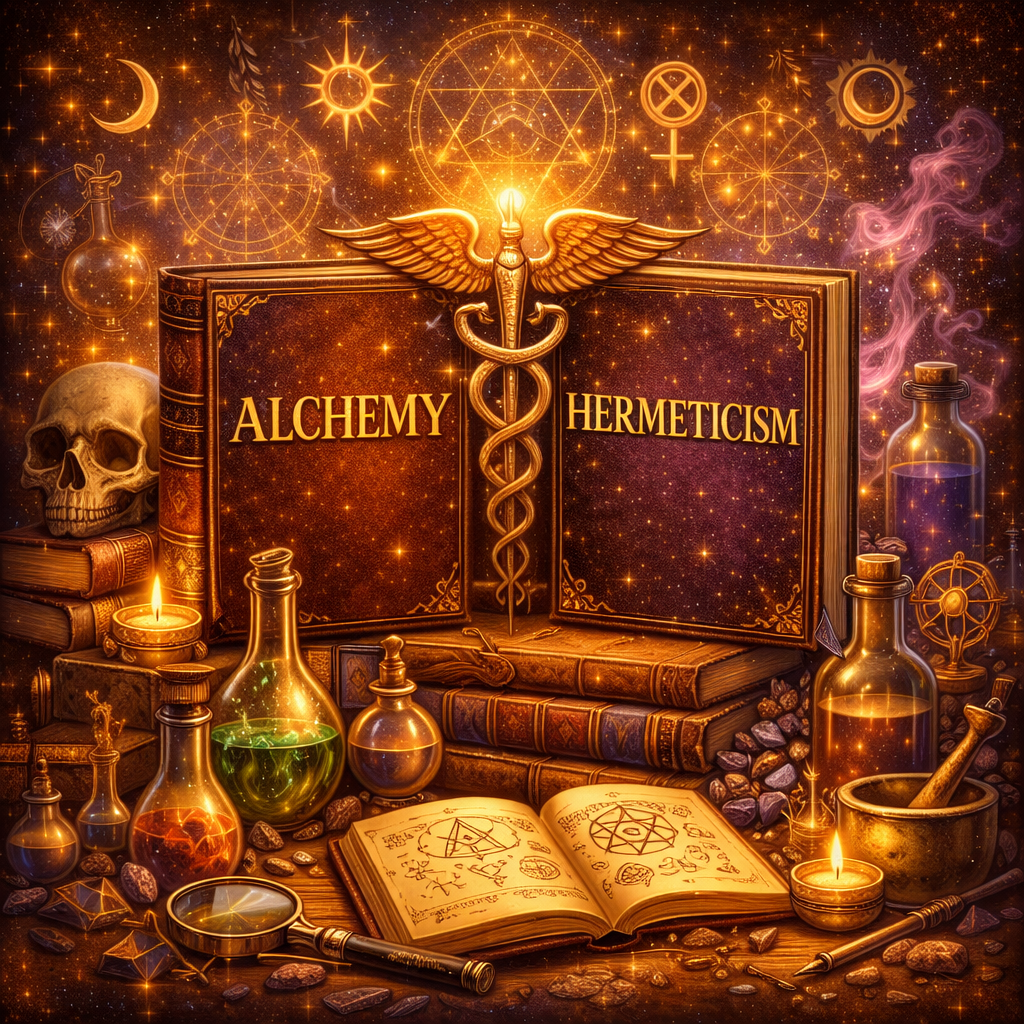

Review by Balthazar Finch (Senior Critic, Occult Philosophy) — 'A Modern Philosopher's Stone' by Grant Gill Smith is a masterful blend of alchemical lore and contemporary research. Gill Smith's insights into the Hermetic tradition are both enlightening and profound, offering readers a unique perspective on the ancient art of transformation. The book's strength lies in its ability to make complex alchemical concepts accessible without diluting their esoteric essence. Ideal for scholars and practitioners of the occult, this work is a must-read for anyone seeking to understand the deeper symbolism and philosophical underpinnings of alchemy.
📝 Description
61
Grant Gill Smith's 'A Modern Philosopher's Stone' (2021) examines alchemy's connection to modern science.
Published in 2021, 'A Modern Philosopher's Stone' by Grant Gill Smith considers alchemy not just as historical practice but as a conceptual framework for understanding reality. Smith connects the symbolic language of Hermeticism with contemporary scientific ideas. The book uses alchemical imagery and processes as metaphors for personal and material transformation. It aims to show how these ancient concepts can inform a modern perspective on the world, suggesting that the alchemical quest for perfection has parallels in scientific discovery and personal growth. The author focuses on how alchemical principles might illuminate the relationship between the material and the immaterial.
Smith's approach is to treat alchemical symbolism as a form of philosophical inquiry. He discusses key alchemical ideas like the Great Work and the Philosopher's Stone itself, reinterpreting them through a modern lens. The text encourages contemplation of how concepts of change and synthesis apply to both the physical world and human consciousness. It is written for those interested in the philosophical underpinnings of esoteric traditions and their potential relevance today.
This book fits within the Hermetic tradition, which draws on the writings attributed to Hermes Trismegistus. Hermeticism often posits a correspondence between the microcosm (human) and the macrocosm (universe), a central theme in alchemy. Smith engages with this tradition by seeking to bridge its ancient symbolic language with current scientific understanding, suggesting that alchemical pursuits were not merely proto-chemistry but early forms of philosophical and psychological inquiry into the nature of reality and transformation.
💡 Why Read This Book?
Read 'A Modern Philosopher's Stone' to uncover the hidden knowledge of alchemy and its relevance in today's world. Ideal for seekers of esoteric truths, scholars of Hermeticism, and practitioners of the mystical arts, this book offers a comprehensive exploration of alchemical symbolism and its philosophical significance. Gill Smith's work bridges the gap between ancient wisdom and modern science, making it an essential read for those who wish to delve into the mysteries of transformation.
⭐ Reader Reviews
Honest opinions from readers who have explored this book.
❓ Frequently Asked Questions
What is the primary focus of 'A Modern Philosopher's Stone'?
The book focuses on the mystical and scientific aspects of alchemy, exploring the Hermetic tradition and its relevance in modern times.
Who is the intended audience for this book?
This book is intended for scholars of Hermeticism, practitioners of the occult, and seekers of esoteric knowledge.
How does the author approach the subject of alchemy?
Grant Gill Smith combines ancient alchemical wisdom with modern scientific research, offering a unique perspective on the art of transformation.
What makes this book unique in the field of alchemy?
The book's strength lies in its ability to make complex alchemical concepts accessible while preserving their esoteric depth.
Is this book suitable for beginners in the field of alchemy?
While it is accessible, it is more suited for those with some prior knowledge of alchemy and Hermeticism.
🔮 Key Themes & Symbolism
The Philosopher's Stone
The central theme of the book, the Philosopher's Stone represents the ultimate goal of alchemy: the transformation of base materials into gold, symbolizing spiritual enlightenment and the unity of opposites.
Hermetic Principles
Gill Smith explores the foundational principles of Hermeticism, highlighting the interconnectedness of all things and the importance of balance and harmony in the universe.
Scientific Alchemy
The book bridges the gap between ancient alchemy and modern science, demonstrating how alchemical symbols and rituals can be understood through a scientific lens.
💡 Key Ideas
Editorial paraphrase of the work's core concepts — not direct quotes.
The alchemist seeks not just to transform matter, but to transform the self.
This quote underscores the spiritual dimension of alchemy, where the quest for material transformation is a metaphor for inner growth.
In the crucible of the mind, gold is forged from lead.
This line emphasizes the alchemical process of purification and transformation, both physically and spiritually.
The Philosopher's Stone is the key to unlocking the secrets of the universe.
This quote highlights the ultimate goal of alchemy: achieving enlightenment and understanding the deeper mysteries of existence.
Hermetic wisdom teaches us that all things are one.
This passage reflects the Hermetic belief in the interconnectedness of all things, a central theme in Gill Smith's work.
The journey of the alchemist is a journey of self-discovery.
This quote underscores the personal and spiritual nature of the alchemical quest, emphasizing inner transformation.
🌙 Esoteric Significance
Tradition
This book belongs to the Hermetic tradition, which emphasizes the interconnectedness of all things and the pursuit of spiritual enlightenment through alchemical practices.
Symbolism
Key symbols include the Philosopher's Stone, the Ouroboros, and the alchemical crucible, each representing different aspects of transformation and unity.
Modern Relevance
Today, this book is relevant for modern practitioners of alchemy and Hermeticism, offering insights into the spiritual and philosophical dimensions of transformation.
👥 Who Should Read This Book
Beginners in the field of alchemy will find this book an accessible introduction to the Hermetic tradition. Scholars of Hermeticism will appreciate the depth of research and esoteric insights. Spiritual seekers will be drawn to the book's exploration of inner transformation and the pursuit of enlightenment. Practitioners of the occult will find valuable techniques and symbolic interpretations that can enhance their practices.
📜 Historical Context
Written in an era of scientific advancement and spiritual introspection, 'A Modern Philosopher's Stone' reflects the growing interest in reconciling ancient wisdom with modern knowledge. Gill Smith's work is significant for its ability to bridge the gap between the mystical traditions of the past and the empirical sciences of the present. It has influenced both academic studies of alchemy and practical applications in the field of spiritual transformation.
📔 Journal Prompts
Reflect on the symbolism of the Philosopher's Stone in your own life. How does it represent your quest for transformation?
Consider the Hermetic principle of the interconnectedness of all things. How does this concept apply to your understanding of the universe?
Explore the idea of the alchemical crucible as a metaphor for personal growth. What challenges have you faced that have led to transformation?
Think about the journey of the alchemist as a journey of self-discovery. What insights have you gained about yourself through this reading?
Examine the balance between ancient wisdom and modern science in your own life. How do these two perspectives coexist and complement each other?
🗂️ Glossary
Alchemy
The ancient art of transforming base materials into gold, symbolizing spiritual enlightenment and the unity of opposites.
Hermeticism
A philosophical and spiritual tradition based on the writings of Hermes Trismegistus, emphasizing the interconnectedness of all things.
Philosopher's Stone
The ultimate goal of alchemy, representing the achievement of spiritual enlightenment and the transformation of base materials into gold.
Ouroboros
A symbol of the eternal cycle of life, death, and rebirth, often depicted as a serpent swallowing its own tail.
Crucible
A container used in alchemy to melt and purify metals, symbolizing the process of transformation and purification.
This book appears in 3 collections
🔮 Readers Also Liked
Browse all →








From the “Hermeticism” Collection
View all →









More Free Alchemy & Hermeticism Books
View all →