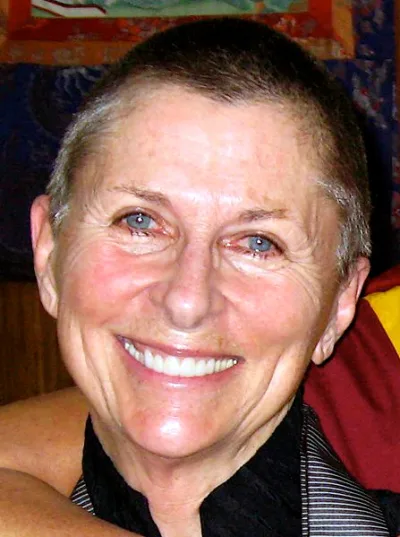
Joan Halifax is a Zen Buddhist teacher, anthropologist, and activist known for her work with the dying and founding the Upaya Zen Center.
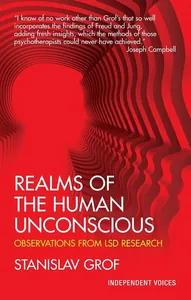
Joan Halifax, born in 1942, is an American Zen Buddhist teacher, anthropologist, and activist with a focus on spirituality and the care of the dying. She is the founder and guiding teacher of the Upaya Zen Center in Santa Fe, New Mexico. Her career has involved extensive work with terminal patients, drawing on Buddhist traditions to offer comfort and ease suffering. Halifax also co-authored "The Human Encounter With Death" with Stanislav Grof, exploring themes of death and rebirth.
Halifax's background includes early experiences with civil rights and anti-war movements. She pursued studies in anthropology and psychology, conducting research in various cultural contexts, including Mali and Mexico. Her founding of the Ojai Foundation and later the Upaya Zen Center reflects her commitment to creating spaces for spiritual training and contemplative practice. She has also been involved with organizations like the Mind and Life Institute, bridging science and Buddhism.
Spiritual and Anthropological Pursuits
Joan Halifax's path has integrated deep engagement with Buddhist philosophy and contemplative practices with extensive anthropological research. She received Dharma transmission from Bernard Glassman and studied with Korean Zen master Seung Sahn, establishing herself as a significant figure in American Zen Buddhism. Her academic work has included medical anthropology and psychology, leading her to study indigenous cultures such as the Dogon tribe in Mali and the Huichols in Mexico. These experiences have informed her understanding of human consciousness and spiritual traditions, particularly in relation to profound life experiences.
Work with the Dying and Compassion
A central focus of Halifax's work is her dedication to the dying. Through her Project on Being with Dying, she has developed and taught methods for confronting death with compassion and fearlessness. She provides training to patients, medical professionals, and loved ones, emphasizing presence, comfort, and easing suffering. Her approach, rooted in Buddhist principles, is presented in a flexible manner adaptable to diverse spiritual and cultural backgrounds. This commitment extends to physically supporting the dying, offering solace and companionship during their final moments.
Founding Centers for Practice and Study
Halifax has established influential centers for spiritual growth and community engagement. In 1979, she founded the Ojai Foundation in California, an interfaith educational center. Later, in 1990, she established the Upaya Zen Center in Santa Fe, New Mexico. Upaya serves as a hub for Zen training, engaged Buddhism, and courses focused on end-of-life care. The center's design and philosophy, as described by Sarah Buie, emphasize interconnectedness, environmental stewardship, and the integration of interior and exterior spaces, reflecting Halifax's holistic vision.
Key Ideas
- Engaged Buddhism
- Compassionate end-of-life care
- Interconnectedness of mind and space
- Stewardship of land and resources
Books by
10 free public domain books · Read online or download