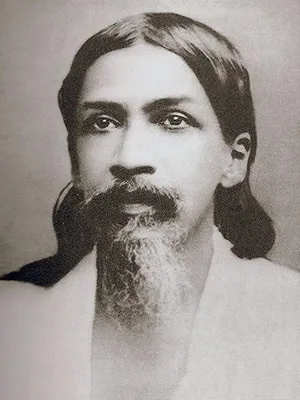
Indian philosopher, yogi, and nationalist who developed Integral Yoga and advocated for India's independence.
Sri Aurobindo, born Aurobindo Ghose in 1872, was a prominent Indian figure known for his multifaceted contributions as a philosopher, yogi, and nationalist. Initially educated in England with aspirations for the Indian Civil Service, he returned to India and became involved in political activities advocating for the nation's autonomy from British rule. Following a period of imprisonment and subsequent acquittal, he retreated to Pondicherry, dedicating himself to spiritual pursuits and the development of his unique philosophy and practice known as Integral Yoga.
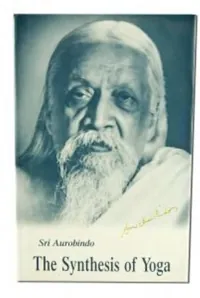
His literary output is extensive, encompassing philosophical treatises like 'The Life Divine' and 'The Synthesis of Yoga,' as well as the epic poem 'Savitri.' Aurobindo's work sought to synthesize Eastern and Western thought, exploring humanity's potential for spiritual evolution. He co-founded the Sri Aurobindo Ashram with Mirra Alfassa, which became a center for the practice of Integral Yoga. His influence extended beyond philosophy and spirituality to include significant involvement in the Indian independence movement.
Early Life and Education
Born Aurobindo Ghose in Calcutta in 1872, he was sent to England at a young age for his education, with his father aiming for him to enter the Indian Civil Service. He studied at various institutions, including Manchester Grammar School and St Paul's School, and later King's College, Cambridge. During his time in England, he developed a strong command of languages and was exposed to Western thought, though he also experienced a growing detachment from religious dogma. His father's financial difficulties and Aurobindo's own lack of interest in the civil service ultimately shifted his path.
Political Activism and Spiritual Awakening
Upon returning to India in 1893, Aurobindo initially served in the princely state of Baroda, where he also began to engage with the burgeoning Indian independence movement. He worked behind the scenes due to his official position, connecting with various resistance groups and nationalist leaders. He formally moved to Calcutta in 1906, becoming involved in national education and increasing his political activity. A period of imprisonment followed, after which he withdrew to Pondicherry. This withdrawal marked a profound shift towards spiritual practice and the formulation of his philosophy.
Integral Yoga and Philosophical Contributions
In Pondicherry, Sri Aurobindo developed and articulated his vision of Integral Yoga, a spiritual path aimed at the transformation of human consciousness and the realization of the Divine on Earth. His philosophical writings, such as 'The Life Divine' and 'The Synthesis of Yoga,' explore the principles and methods of this practice, synthesizing diverse philosophical, religious, and psychological traditions. His work offers a complex vision of humanity's spiritual evolution, bridging Eastern and Western spiritual thought.
Key Ideas
- Integral Yoga: a spiritual path for the transformation of consciousness and the realization of the Divine.
- Synthesis of Eastern and Western philosophy, religion, literature, and psychology.
- Humanity's transition towards a divine existence.
Books by
6 free public domain books · Read online or download