The Synthesis of Yoga
 78
78

The Synthesis of Yoga
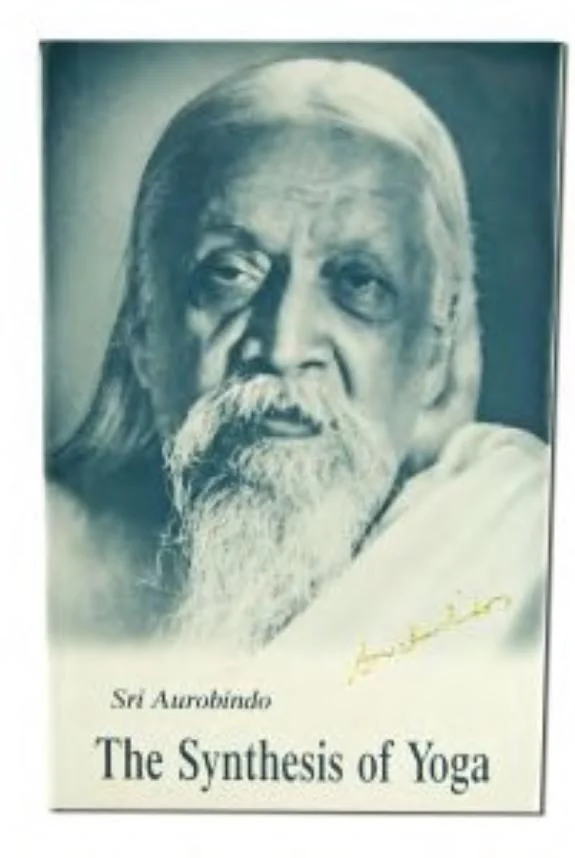
Sri Aurobindo’s *The Synthesis of Yoga*, first published in 1992, is not a casual read, nor does it pretend to be. It is a dense, systematic exposition of integral yoga, a spiritual path Aurobindo developed that aims for a complete transformation of human consciousness and existence. The work meticulously breaks down the various stages and disciplines required for this ascent, drawing parallels and distinctions with traditional yogic paths. Aurobindo’s strength lies in his rigorous intellectual framework, providing a philosophical underpinning for his spiritual practices. However, the sheer scope and the esoteric terminology can be daunting for newcomers to his philosophy. The section on 'The Triple Transformation' offers a particularly clear articulation of the goal, but the preceding chapters demand significant focus. Ultimately, *The Synthesis of Yoga* functions less as a gentle guide and more as a comprehensive manual for the dedicated spiritual aspirant seeking a complete divine life within human existence.
📝 Description
78
### What It Is ### Who It's For ### Historical Context ### Key Concepts
💡 Why Read This Book?
• Learn the structured principles of integral yoga, as outlined by Sri Aurobindo in his comprehensive system, a departure from simpler yogic methods. • Understand the concept of the 'Triple Transformation' (Psychic, Spiritual, and Supramental), a unique framework for total human evolution described in the book. • Gain insight into the integration of diverse spiritual disciplines, as detailed in sections discussing Raja Yoga, Karma Yoga, Jnana Yoga, and Bhakti Yoga, within a unified approach.
⭐ Reader Reviews
Honest opinions from readers who have explored this book.
❓ Frequently Asked Questions
What is the primary goal of the integral yoga described in The Synthesis of Yoga?
The primary goal is an integral divine life within human existence, involving the transformation of the entire being—physical, vital, mental, psychic, and spiritual—through a systematic discipline.
When was The Synthesis of Yoga first published?
The Synthesis of Yoga was first published in 1992, consolidating Sri Aurobindo's extensive writings on his spiritual philosophy and practice.
How does Sri Aurobindo's integral yoga differ from traditional yoga paths?
Integral yoga seeks a complete transformation of the entire being and life, not just individual liberation or ascent. It aims to bring down a higher consciousness to transform earthly existence.
What are the main components of spiritual self-discipline discussed in the book?
The book explores various lines of spiritual self-discipline, including Raja Yoga, Karma Yoga, Jnana Yoga, and Bhakti Yoga, presenting them synthetically for an integral divine life.
Is The Synthesis of Yoga suitable for beginners in spiritual study?
While comprehensive, the book's depth and systematic approach are best suited for those with some background in spiritual philosophy or a dedicated commitment to Aurobindo's path.
What does 'synthetical view' mean in the context of this book?
A 'synthetical view' means integrating and harmonizing the principles and methods of various spiritual disciplines into a unified, coherent system for achieving an integral divine life.
🔮 Key Themes & Symbolism
Integral Transformation
The core of Aurobindo's philosophy presented in *The Synthesis of Yoga* is the concept of integral transformation. This involves not merely spiritual liberation or enlightenment for the individual soul, but a complete change of the entire human being—mind, life, and body—and ultimately, of life on Earth. It is about bringing down the higher supramental consciousness to earth and divinizing terrestrial existence, rather than escaping it. The work meticulously details the process and purpose of this comprehensive evolution.
The Path of Yoga
Aurobindo synthesizes various traditional yogic paths within his integral yoga. He dedicates substantial portions of *The Synthesis of Yoga* to analyzing Raja Yoga, Karma Yoga, Jnana Yoga, and Bhakti Yoga. However, his approach is not to present them as separate or competing systems, but as interconnected disciplines that must be harmonized and integrated to achieve the full transformation of the being. This involves understanding their principles and methods in relation to the larger goal.
The Triple Transformation
Central to Aurobindo's integral yoga is the idea of a 'Triple Transformation': the psychic transformation (discovering and bringing forward the soul or psychic being), the spiritual transformation (realizing the higher spiritual planes of existence), and the supramental transformation (bringing down the creative supramental consciousness). *The Synthesis of Yoga* elaborates on these stages, explaining how they build upon each other to effect a radical change in human nature and consciousness.
The Descent of Consciousness
Unlike many spiritual paths that focus solely on ascent, *The Synthesis of Yoga* emphasizes the necessity of descent. Aurobindo posits that true transformation requires not only ascending to higher spiritual planes but also bringing their divine qualities and consciousness down into the material world. This process of 'descent' is crucial for divinizing earthly existence and establishing a divine life on Earth, a concept explored throughout the book.
💬 Memorable Quotes
Direct passages from the work, attributed to the author.
“Truth of philosophy is of a merely theoretical value unless it can be lived.”
— This highlights Aurobindo's pragmatic approach to spirituality. He asserts that abstract philosophical concepts hold little weight if they cannot be embodied and realized in one's lived experience and actions.
“The ascent to the higher planes is one movement, the descent of the higher consciousness into the lower is another.”
— This captures the dual nature of Aurobindo's integral yoga. It's not enough to reach spiritual heights; the divine consciousness must also permeate and transform the lower, material aspects of existence.
“The integral Yoga is not one of the old yogas, but a new formation.”
— This statement underscores the originality of Aurobindo's system. While drawing from traditional paths, integral yoga aims for a more comprehensive transformation of the entire being and life on Earth.
“The work aims at an integral divine life in the human existence.”
— This concise interpretation of the book's blurb states the ultimate objective: the establishment of a life on Earth that is fully infused with divine consciousness and realization, transforming the very fabric of human existence.
💡 Key Ideas
Editorial paraphrase of the work's core concepts — not direct quotes.
The goal is not to escape the world but to divinize it.
This paraphrased concept emphasizes the outward-facing aspect of integral yoga. It seeks to transform human life and the Earth itself, rather than advocating for renunciation or transcendence of the material realm.
🌙 Esoteric Significance
Tradition
Sri Aurobindo's integral yoga draws from the Indic tradition, particularly Vedanta and the yogic systems of India, but significantly departs from them. It is not strictly tied to Gnostic, Kabbalistic, or Hermetic lineages, though it shares with them a concern for transformation and a hierarchical understanding of consciousness. Aurobindo's innovation lies in synthesizing these ancient principles with a modern psychological and evolutionary perspective, aiming for a divinization of earthly life rather than solely individual liberation or transcendence.
Symbolism
Key symbols in Aurobindo's work include the 'Triple Transformation' (psychic, spiritual, supramental), representing stages of consciousness evolution. The 'descent' of higher consciousness into the material is also symbolic, contrasting with the typical 'ascent' narratives. The 'psychic being' or soul, the hidden divine spark within, is central, acting as the agent of transformation. The ultimate goal, the 'Supramental,' symbolizes the highest plane of consciousness capable of fully transforming life.
Modern Relevance
Contemporary spiritual thinkers and practitioners interested in evolutionary spirituality, integral consciousness, and the transformation of society draw heavily on Aurobindo's work. His ideas on the potential for a higher evolution of consciousness and the divinization of life on Earth resonate with movements advocating for conscious evolution and a holistic approach to spirituality that engages with the material world, rather than rejecting it.
👥 Who Should Read This Book
• Serious students of Sri Aurobindo's philosophy and integral yoga seeking a foundational text for his spiritual system. • Practitioners of various yogic disciplines (Raja, Karma, Jnana, Bhakti) interested in understanding how they can be synthesized into a unified path. • Philosophers and spiritual seekers exploring the concept of evolutionary spirituality and the potential for transforming human consciousness and life on Earth.
📜 Historical Context
Sri Aurobindo's *The Synthesis of Yoga*, first published in 1992, emerged from a rich intellectual milieu in early 20th-century India, a period marked by a resurgence of spiritual inquiry and a blending of Eastern and Western thought. Aurobindo himself was a highly educated figure, having studied in England and been influenced by Western philosophy and literature, alongside his deep engagement with Indian spiritual traditions. This work was developed during his active spiritual sadhana (practice) at Pondicherry, French India, after his return from England in 1910. It countered prevailing notions that spiritual realization necessitated renunciation of worldly life, a stance also explored by contemporaries like Swami Vivekananda, though Aurobindo's approach was more systematically integrated. While not subject to widespread censorship, its complex philosophical system and radical reinterpretation of yoga offered a distinct alternative to more conventional paths like Advaita Vedanta or the devotional Bhakti movements, influencing subsequent generations of spiritual seekers and thinkers.
📔 Journal Prompts
Reflect on the concept of the 'Triple Transformation' and its implications for personal growth.
Consider the synthesis of Raja Yoga, Karma Yoga, Jnana Yoga, and Bhakti Yoga as presented in the work.
Examine the idea of a 'divine life in human existence' and its practical realization.
Contemplate the balance between 'ascent' and 'descent' in spiritual practice.
Analyze the role of the 'psychic being' in the process of integral transformation.
🗂️ Glossary
Integral Yoga
Sri Aurobindo's spiritual path aiming for the complete transformation of the entire being—mind, life, body, and spirit—and the divinization of life on Earth.
Psychic Being
The inner soul or true self, a spark of the Divine, which acts as the center and initiator of transformation in Aurobindo's philosophy.
Supramental
The highest plane of divine consciousness, above the mind, capable of transforming all existence and establishing a divine order on Earth.
Triple Transformation
The process of psychic, spiritual, and supramental transformation required for integral yoga, leading to a divinized human existence.
Raja Yoga
A traditional path of yoga focusing on mind control and meditation, often associated with Patanjali's Yoga Sutras.
Karma Yoga
The yoga of action, emphasizing performing one's duties without attachment to the results, as a means of spiritual purification.
Jnana Yoga
The yoga of knowledge, seeking liberation through wisdom, discrimination, and understanding the nature of reality.
This book appears in 1 collection
🔮 Readers Also Liked
Browse all →








From the “Yoga” Collection
View all →








More Free Occult Philosophy Books
View all →