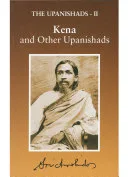
The Upanishads--II : Kena And Other Upanishads
 76
76

The Upanishads--II : Kena And Other Upanishads
Sri Aurobindo's exegesis on the Kena and other Upanishads offers a dense, highly specific interpretation that demands a committed reader. His strength lies in drawing out the psychological and spiritual implications of ancient Sanskrit verses, connecting them to a universal consciousness. The commentary on the Kena Upanishad’s exploration of Brahman as the "ear of the ear, mind of the mind" is particularly potent. However, the sheer volume of Aurobindo’s own philosophical framework can sometimes overshadow the original text for those less familiar with his system. The text is less a direct translation and more a profound immersion into Aurobindo’s vision of Vedanta. It's a significant scholarly and spiritual undertaking, but clarity for the uninitiated is not its primary goal.
📝 Description
76
Published in 2006, this volume collects Sri Aurobindo's commentary on the Kena and other Upanishads.
This book contains Sri Aurobindo's extensive analysis of key Vedic texts, focusing on the Kena Upanishad and others not previously gathered in one place. First appearing in 2006, this edition incorporates material that was not published before, building on earlier collections. Aurobindo's work acts as a guide to understanding the connection between individual awareness and the universal Brahman, as seen through his distinct philosophical viewpoint.
The book is aimed at serious students of Indian philosophy and comparative religion. It will interest those who want to grasp the spiritual meanings of consciousness, the nature of existence, and the path to self-discovery as Sri Aurobindo described it. Anyone looking into the development of Hindu thought and its more hidden aspects will find a good amount of information here. Aurobindo's interpretation engaged with traditional Sanskrit scholarship and contemporary Western philosophy.
His approach often differed from purely academic or literal readings common at the time. This 2006 publication consolidates his lifelong study, making his detailed commentary available to a broader readership.
Sri Aurobindo's interpretation of the Upanishads belongs to the tradition of Indian spiritual thought that seeks to understand the relationship between the individual self and the ultimate reality, Brahman. His work engages with the esoteric dimensions of the Vedas, moving beyond purely ritualistic or intellectual understanding to explore the transformative potential of spiritual knowledge. This commentary, consolidated in 2006, reflects a 20th-century synthesis of ancient Indian wisdom with modern philosophical inquiry, aiming to make these profound insights accessible to contemporary seekers.
💡 Why Read This Book?
• Gain a unique perspective on the Kena Upanishad's inquiry into the "Who?" behind perception, as Sri Aurobindo interprets it as the search for the Self beyond the senses and mind. • Understand the concept of Brahman-consciousness and its relation to material existence, as detailed in Aurobindo's commentary, offering a distinct view from traditional Vedanta. • Explore the spiritual implications of Vedic terminology, benefiting from Sri Aurobindo's 2006 compilation that brings together extensive, previously unpublished material.
⭐ Reader Reviews
Honest opinions from readers who have explored this book.
❓ Frequently Asked Questions
What is the primary focus of the Kena Upanishad as interpreted by Sri Aurobindo?
Sri Aurobindo focuses on the Kena Upanishad's exploration of the relationship between mind-consciousness and Brahman-consciousness. He interprets it as an investigation into the fundamental 'Who?' that underlies sensory experience and mental activity, seeking the ultimate source of perception.
How does the 2006 edition of 'The Upanishads--II' differ from previous versions?
The 2006 edition significantly expands upon earlier single-volume works. It includes a substantial amount of new material published for the first time in book form, making it a more comprehensive resource for Aurobindo's commentaries.
What is Brahman-consciousness according to Sri Aurobindo's interpretation?
Brahman-consciousness, in Aurobindo's view, represents the ultimate, undifferentiated reality. It is the divine awareness that is the source of all existence, transcending the limitations of individual mind and matter, and is the subject of the Kena Upanishad's inquiry.
Who was Sri Aurobindo and when did he primarily write?
Sri Aurobindo (1872-1950) was an Indian philosopher, yogi, guru, poet, and nationalist. His extensive writings on the Upanishads and other spiritual texts were produced throughout the first half of the 20th century, though this compilation was published posthumously in 2006.
Is this book a direct translation of the Kena Upanishad?
No, this book is primarily Sri Aurobindo's commentary and interpretation of the Kena and other Upanishads. While it engages deeply with the original Sanskrit, it presents his philosophical and spiritual insights derived from the texts.
What specific Upanishads are covered in this volume besides the Kena?
Besides the Kena Upanishad, this volume includes commentaries on other significant Upanishads. The exact selection is part of the expanded material brought together in this two-volume set, consolidating previously disparate texts.
🔮 Key Themes & Symbolism
Consciousness Beyond Senses
The Kena Upanishad, as interpreted by Sri Aurobindo, relentlessly questions the source of sensory perception and mental activity. It posits a fundamental consciousness, the 'ear of the ear' and 'mind of the mind,' which is Brahman. This theme challenges the reader to look beyond empirical data and intellectual constructs to apprehend a deeper reality that animates all phenomena. Aurobindo's commentary clarifies this often-subtle distinction, essential for understanding the Vedantic path to liberation.
The Nature of Brahman
This volume explores Sri Aurobindo's understanding of Brahman, the ultimate, unchanging reality. He presents Brahman not merely as an abstract philosophical concept but as the living, conscious ground of all existence. The text explores the paradox of Brahman's transcendence (beyond all thought and being) and immanence (present within every particle of the universe). This dual aspect is crucial for grasping the Upanishadic worldview.
Ignorance vs. Knowledge
A central concern in the Kena Upanishad and Aurobindo's commentary is the distinction between avidya (ignorance) and vidya (knowledge). Ignorance is defined as the perception of multiplicity and the identification with the limited ego, while knowledge is the realization of the singular, divine unity. The book maps the transition from one state to the other, highlighting the transformative power of true spiritual insight.
The Role of the Mind
Sri Aurobindo's analysis emphasizes the mind's dual capacity: it can be an instrument of ignorance, trapping us in illusions of separateness, or it can become a refined tool for realizing Brahman. The Kena Upanishad's famous verses on the mind of the mind are central here. Aurobindo's interpretation guides the reader on how to purify and direct the mind towards its ultimate spiritual function.
💬 Memorable Quotes
Direct passages from the work, attributed to the author.
“Who is the seer? Who is the hearer? Who is the thinker? Who is the knower?”
— This series of questions from the Kena Upanishad, central to Sri Aurobindo's commentary, challenges the conventional identification of the self with the physical senses and the thinking mind, pointing towards a deeper, unmanifest witness.
“The ear of the ear, the mind of the mind, the speech of the speech, the life of the life, the eye of the eye.”
— Aurobindo interprets these phrases as referring to the divine consciousness that is the true source and animator of our sensory and mental faculties, the ultimate reality behind all functional activities.
“If you think that you know it, little you know.”
— This enigmatic statement highlights the limitations of intellectual knowledge regarding the Absolute. Sri Aurobindo explains it as the inability of the finite mind to fully grasp the Infinite, suggesting that true realization transcends conceptual understanding.
“It is known when it is known.”
— Aurobindo interprets this seemingly tautological statement as signifying a direct, intuitive apprehension of Brahman, distinct from discursive reasoning. Knowledge here is not accumulation but a state of being and realization.
💡 Key Ideas
Editorial paraphrase of the work's core concepts — not direct quotes.
That which is not expressed by speech, but that by which speech is expressed...
This passage, analyzed by Aurobindo, points to a reality beyond linguistic formulation. It suggests that the power of communication originates from a source that speech itself cannot define or contain.
🌙 Esoteric Significance
Tradition
Aurobindo's work on the Upanishads firmly situates itself within the Advaita Vedanta tradition, yet significantly departs from Shankara's more monistic interpretations. He introduces a concept of 'Integral Yoga,' which seeks not just liberation from the material world but its transformation. This approach aligns with a broader esoteric impulse to manifest divine consciousness in the earthly realm, moving beyond mere ascetic renunciation.
Symbolism
The Kena Upanishad, and Aurobindo's commentary, employs potent symbolic language. The 'ear of the ear' and 'mind of the mind' are not literal organs but symbols for the divine consciousness that is the ultimate source of sensory and mental function. The 'lightning' often symbolizes the sudden flash of divine knowledge or realization, a brief but intense manifestation of the Absolute.
Modern Relevance
Contemporary esoteric practitioners, particularly those interested in consciousness studies and integral spirituality, draw heavily from Aurobindo's synthesis. His work informs modern yogic traditions that aim for a complete transformation of being, not just individual enlightenment. Thinkers exploring the intersection of quantum physics and consciousness, or the potential for a divinized humanity, find resonance in his interpretations of ancient wisdom.
👥 Who Should Read This Book
["• Advanced students of Indian philosophy: Those familiar with the Vedas and Upanishads will appreciate Aurobindo's unique interpretive framework and its departure from classical commentaries.", "• Seekers of spiritual transformation: Individuals interested in paths that aim not just for liberation but for the divinization of life will find Aurobindo's concept of 'Integral Yoga' compelling.", "• Comparative religion scholars: Researchers studying the evolution of religious thought and esoteric traditions will benefit from Aurobindo's synthesis of ancient texts with modern philosophical concerns."]
📜 Historical Context
Sri Aurobindo's engagement with the Upanishads occurred within the vibrant intellectual milieu of early 20th-century India, a period marked by a resurgence of interest in indigenous spiritual traditions. His work, though compiled and published extensively later (with this specific volume appearing in 2006), reflects the synthesis he sought between ancient Vedanta and modern thought. He directly countered prevailing colonial-era interpretations that often dismissed or misunderstood the philosophical depth of these texts. Aurobindo's approach offered a sophisticated reinterpretation, drawing parallels with contemporary Western psychology and philosophy, a departure from purely academic or devotional readings. His vision was part of a broader movement, alongside figures like Swami Vivekananda, to present Indian spirituality as a profound philosophical system, capable of addressing modern existential questions, and distinct from the ritualistic or syncretic practices often emphasized by others.
📔 Journal Prompts
The 'ear of the ear' and 'mind of the mind' as symbolic representations of Brahman.
Identifying moments where sensory input or mental activity points beyond itself.
The distinction between knowing a concept and realizing a truth.
The potential for transformation of the material world through consciousness.
Reflecting on the 'Who?' that perceives, thinks, and knows.
🗂️ Glossary
Brahman
In Upanishadic and Vedantic philosophy, the ultimate, unchanging reality; the supreme cosmic spirit that is the source of all existence. It is often described as both transcendent and immanent.
Kena Upanishad
One of the principal Upanishads, focusing on the nature of Brahman and the means of knowing it. Its name derives from the opening question, 'Kena' (By whom?).
Aurobindo, Sri
An Indian philosopher, yogi, and nationalist (1872-1950) known for his synthesis of yoga and Western thought, particularly his interpretations of the Vedas and Upanishads.
Consciousness
In this context, refers to awareness and subjective experience. The Upanishads explore different levels of consciousness, from the empirical to the transcendental (Brahman-consciousness).
Ignorance (Avidya)
The state of spiritual blindness or misunderstanding that identifies the self with the transient physical and mental phenomena, failing to recognize the underlying unity of Brahman.
Knowledge (Vidya)
Spiritual wisdom or realization; the understanding of the true nature of reality as Brahman, leading to liberation from ignorance and suffering.
Integral Yoga
Sri Aurobindo's system of spiritual practice aimed at the transformation of the entire being—mind, body, and spirit—and the manifestation of the Divine in the world.