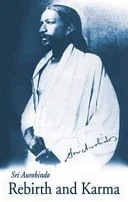
Rebirth and Karma
 83
83

Rebirth and Karma
Sri Aurobindo's Rebirth and Karma presents a formidable argument for the interconnectedness of existence through the mechanisms of reincarnation and causal action. The strength of this work lies in its systematic deconstruction of these concepts, moving beyond anecdotal evidence to a philosophical and spiritual architecture. Aurobindo's exploration of "higher lines of karma" is particularly compelling, suggesting that spiritual aspiration can actively reshape karmic trajectories, a departure from fatalistic interpretations. However, the prose, while precise, can be dense, requiring sustained reader attention. For instance, the section detailing the subtle body's role in karmic transmission, while illuminating, demands careful parsing. The book serves as an excellent, albeit challenging, primer on Aurobindo's integral view of spiritual evolution.
📝 Description
83
Sri Aurobindo's 1991 book Rebirth and Karma examines cyclical existence and causal action.
This work presents a thorough analysis of reincarnation and its karmic effects through the perspective of Sri Aurobindo. It is not a basic introduction but a detailed look at the philosophical and spiritual workings behind rebirth and the consequences of actions. The book maps the connections between past deeds, current situations, and future outcomes, giving readers a way to understand these complex ideas.
It is best suited for dedicated students of esoteric philosophy, comparative religion, and spiritual growth. Those who want to go beyond simple ideas of karma and rebirth will find much to consider. The book will appeal to readers who value careful philosophical reasoning and are ready to engage with difficult concepts about awareness, fate, and spiritual development. It is especially useful for those studying integral yoga philosophy.
Rebirth and Karma originates from Sri Aurobindo's larger philosophical output, which combined Eastern spirituality with Western thought. His ideas on karma and rebirth were formed in the early to mid-20th century, a time when Indian spiritual ideas gained attention in the West, partly through groups like the Theosophical Society. Aurobindo's distinct contribution was his concept of spiritual evolution and a transformed consciousness. He presented traditional ideas within a developing cosmic system, moving away from fixed destinies.
💡 Why Read This Book?
• Understand the mechanics of rebirth beyond simple reincarnation, as detailed in Sri Aurobindo's discussions on the progression of consciousness, offering a unique perspective compared to cyclical theories. • Grasp the concept of "higher lines of karma," learning how spiritual actions and intentions, as explored in the early 20th-century writings, can actively modify one's causal destiny. • Gain insight into the integral yoga philosophy, appreciating how the concepts of karma and rebirth are foundational to Sri Aurobindo's vision of spiritual transformation and evolutionary progress.
⭐ Reader Reviews
Honest opinions from readers who have explored this book.
❓ Frequently Asked Questions
What is the original publication year of Sri Aurobindo's Rebirth and Karma?
Rebirth and Karma was first published in 1991, compiling Sri Aurobindo's extensive writings on these profound spiritual subjects.
Does this book focus only on Eastern concepts of karma?
While rooted in Eastern thought, the book integrates these concepts within Sri Aurobindo's broader philosophical framework, which engages with Western philosophical ideas and his vision of integral yoga.
Is Rebirth and Karma suitable for beginners in spiritual studies?
It is an in-depth study, best suited for those with some background in spiritual or philosophical concepts. Beginners might find it challenging but rewarding with dedicated study.
What are the 'higher lines of karma' mentioned in the book?
The 'higher lines of karma' refer to the idea that actions performed with spiritual consciousness and intent operate on different, more potent planes of causality than ordinary actions.
Where can I find more works by Sri Aurobindo on similar topics?
Esoteric Library offers other works by Sri Aurobindo, including those that expand on his philosophy of consciousness, evolution, and the nature of the Divine.
Does the book offer practical exercises for working with karma?
While primarily philosophical, the book's detailed explanations of karma and rebirth provide the intellectual groundwork for practices within Sri Aurobindo's integral yoga that aim at spiritual transformation.
🔮 Key Themes & Symbolism
The Mechanics of Rebirth
This theme scrutinizes the process of rebirth, presenting it not as a simple return to physical existence but as a conscious evolution across lifetimes. Sri Aurobindo details how the soul, or psychic being, carries forward its evolutionary journey, accumulating experiences and refining its nature. The work posits that rebirth is an essential mechanism for the soul's unfolding and its eventual realization of its divine potential, intricately linked to the unfolding cosmic plan.
Causality and Karmic Law
Central to the book is the examination of karma as the universal law of cause and effect governing existence. It moves beyond a simplistic view of retribution, exploring how actions, thoughts, and intentions create subtle energies that shape future experiences. The work emphasizes that karma is not merely a chain of reactions but a dynamic force that can be understood and transformed through conscious effort and spiritual aspiration.
Spiritual Evolution
Rebirth and Karma are presented as integral components of a grander scheme of spiritual evolution. Sri Aurobindo argues that the purpose of repeated lives and karmic experiences is to facilitate the soul's growth towards a higher consciousness and a more perfect expression of its divine nature. This evolutionary perspective frames the challenges and opportunities encountered in life as essential steps in the soul's journey toward self-realization and union with the Divine.
The Higher Lines of Karma
This theme introduces a nuanced understanding of karmic action, distinguishing between ordinary causal chains and those initiated by spiritual consciousness. Actions performed with divine will or aspiration operate on different planes, potentially transcending or transforming conventional karmic effects. This concept highlights the power of focused spiritual practice to alter one's destiny and accelerate evolutionary progress, offering a path of conscious participation in cosmic law.
💬 Memorable Quotes
Direct passages from the work, attributed to the author.
“The soul progresses through rebirth.”
— This concise statement expresses the book's core assertion that reincarnation is not a random event but a purposeful mechanism for the soul's continuous development and spiritual advancement across multiple existences.
“Karma is the law of cause and effect.”
— This fundamental definition underscores the book's exploration of karma as a governing principle of the universe, where every action, intention, and thought initiates a chain of consequences that shapes experience.
“Spiritual actions create higher lines of karma.”
— This highlights the unique aspect of Aurobindo's philosophy: that acts performed with divine consciousness operate on planes beyond ordinary causality, offering a transformative potential for the individual's evolutionary path.
“Our present is shaped by past actions.”
— This interpretation emphasizes the direct link between past deeds and current circumstances, illustrating the practical, lived reality of karmic influence on an individual's life situation and character.
“The goal is the soul's self-realization.”
— This points to the ultimate purpose behind rebirth and the working of karma within Aurobindo's integral philosophy: the soul's journey towards recognizing and manifesting its inherent divine nature.
🌙 Esoteric Significance
Tradition
This work is firmly rooted in the Indic spiritual tradition, particularly Vedanta and Yoga, but significantly reinterprets them through Sri Aurobindo's unique lens of Integral Yoga. It moves beyond cyclical views of existence to frame rebirth and karma within a progressive, evolutionary cosmology aimed at the transformation of consciousness and the manifestation of the Divine on Earth.
Symbolism
While not heavily symbolic in the manner of traditional Hermetic texts, the concepts themselves function symbolically. 'Rebirth' symbolizes ongoing spiritual evolution and the soul's persistent journey toward perfection. 'Karma' symbolizes the intricate web of cause and effect that governs existence, highlighting the responsibility and agency individuals possess within the cosmic order. The 'higher lines of karma' represent the potential for divine grace and conscious spiritual effort to transcend ordinary limitations.
Modern Relevance
Sri Aurobindo's concepts of karma, rebirth, and spiritual evolution continue to influence contemporary spiritual thinkers and practitioners. His integral approach informs modern discussions on consciousness, personal development, and the potential for collective transformation. Groups and individuals engaged with integral spirituality, consciousness studies, and advanced yogic practices often draw directly from his framework for understanding life's purpose and direction.
👥 Who Should Read This Book
• Students of comparative religion and philosophy seeking a structured, in-depth exploration of reincarnation and karma that integrates Eastern spiritual traditions with a unique evolutionary perspective. • Practitioners of yoga and meditation who wish to understand the deeper philosophical underpinnings of spiritual practice and its causal effects on their evolutionary journey. • Esoteric scholars interested in 20th-century spiritual thought, particularly Sri Aurobindo's distinct contribution to concepts of consciousness, destiny, and the transformation of human nature.
📜 Historical Context
Sri Aurobindo's 'Rebirth and Karma,' first published in 1991, draws from his extensive philosophical and spiritual writings developed primarily in the first half of the 20th century. This era saw a significant cross-pollination of Eastern and Western thought, with figures like Helena Blavatsky and Annie Besant popularizing concepts like reincarnation and karma through the Theosophical Society. Aurobindo's unique contribution was his synthesis of these ideas with a vision of integral yoga and evolutionary spirituality. While contemporaries like Aldous Huxley explored Eastern philosophies, Aurobindo offered a comprehensive system focused on the transformation of consciousness and the earth's spiritual future. His work distinguished itself from more fatalistic interpretations of karma prevalent in some circles, emphasizing the potential for conscious spiritual action to reshape destiny. The reception of his ideas, while influential within spiritual movements, often remained distinct from mainstream academic philosophy.
📔 Journal Prompts
The concept of 'higher lines of karma' and its potential to alter destiny.
Personal experiences of causality that suggest a connection between past actions and present circumstances.
The idea of rebirth as a continuous evolutionary process for the soul.
How the understanding of karma influences daily choices and spiritual practice.
The role of spiritual aspiration in shaping one's evolutionary path.
🗂️ Glossary
Rebirth
The cyclical return of the soul or consciousness to physical existence after death, understood as a process of spiritual evolution and learning across multiple lifetimes.
Karma
The universal law of cause and effect governing all actions, thoughts, and intentions, which determines the consequences experienced by an individual in this life and future lives.
Higher Lines of Karma
A concept suggesting that actions performed with spiritual consciousness, divine will, or aspiration operate on different planes of causality, potentially transforming or transcending ordinary karmic effects.
Integral Yoga
Sri Aurobindo's path of spiritual practice aimed at the transformation of the entire being—physical, vital, mental, psychic, and spiritual—leading to the manifestation of the Divine consciousness on Earth.
Psychic Being
The inner soul or true individual, the divine spark within that carries the essence of consciousness through rebirth and guides the evolutionary journey.
Causality
The principle of cause and effect; in this context, it refers to the intricate network of influences and consequences that shape existence, particularly through karmic actions.
Spiritual Evolution
The process by which consciousness progresses towards higher states of being, ultimately aiming for the realization and manifestation of the Divine nature within the individual and the world.
This book appears in 1 collection
🔮 Readers Also Liked
Browse all →








From the “Reincarnation” Collection
View all →






More Free Occult Philosophy Books
View all →