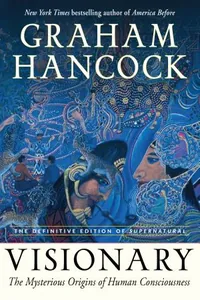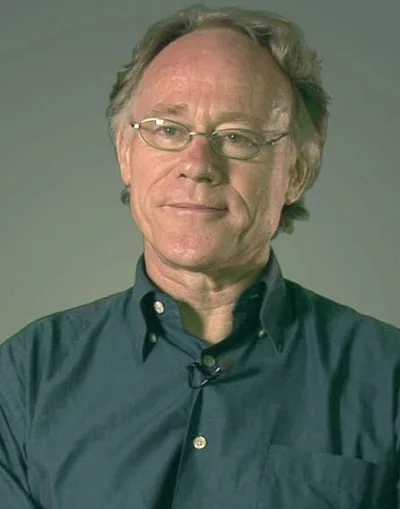
Graham Hancock is an author promoting theories of an advanced Ice Age civilization, drawing on ancient myths and archaeology.
Graham Hancock is a British author known for his theories about a lost advanced civilization that existed during the last Ice Age. He proposes that this civilization possessed sophisticated spiritual technology and was wiped out by comet impacts around 12,900 years ago, with survivors passing their knowledge to early known civilizations in regions like Egypt and Mesoamerica. Hancock, who initially worked as a journalist and wrote about international development, shifted his focus to speculative accounts of human prehistory in 1992.
His work has been critically assessed by scholars who describe it as pseudoarchaeology and pseudohistory. Critics point to a lack of accuracy, consistency, and impartiality, arguing that Hancock's research selectively uses evidence to support preconceived conclusions, often ignoring contradictory information and historical context. His ideas are seen as a modern interpretation of hyperdiffusionism, a concept dating back to the 19th century. Hancock himself views his work as a challenge to academic dogma and a path to understanding spiritual elements overlooked by materialistic science, though he has not pursued scholarly peer review for his theories.
Theories on Lost Civilizations
Hancock's central thesis posits the existence of an advanced global civilization during the Pleistocene epoch, which predates generally accepted timelines for complex societies. He suggests this civilization was destroyed by a cataclysmic event, possibly comet impacts, leading to the Younger Dryas period. According to his theories, survivors of this disaster disseminated advanced knowledge, including astronomical and architectural understanding, to emerging cultures in places like ancient Egypt, Sumer, and Mesoamerica. This transmission is presented as the catalyst for the development of early civilizations, with monuments and myths worldwide serving as fragmented evidence of this lost heritage.
Methodology and Scholarly Reception
Hancock's approach involves interpreting archaeological findings, myths, and historical texts to support his hypotheses. Scholars, however, frequently critique his methodology, characterizing it as pseudoarchaeology and pseudohistory. They argue that his work lacks empirical rigor, demonstrating bias by cherry-picking evidence that aligns with his conclusions while disregarding contradictory data. This selective approach, they contend, misrepresents sources and ignores crucial historical and cultural contexts. Hancock's ideas are often linked to the concept of hyperdiffusionism, suggesting a single source for ancient innovations, a notion that has been debated for over a century.
Spiritual and Esoteric Dimensions
Beyond historical and archaeological claims, Hancock's work delves into spiritual and esoteric dimensions. He suggests that the Ice Age civilization possessed advanced spiritual technologies and that its members had psychic abilities, potentially communicating with non-physical entities through psychedelic substances. Anthropologists have described his writings as incorporating paranormal elements and presenting a mythic narrative focused on secret knowledge. Hancock positions his work as a spiritual quest, offering an alternative to materialistic scientific perspectives and aiming to reveal deeper truths about reality and consciousness.
Key Ideas
- An advanced global civilization existed during the last Ice Age.
- This civilization was destroyed by cataclysmic events, possibly comet impacts.
- Survivors of this civilization transmitted knowledge to early known cultures.
- Ancient myths and monuments contain evidence of this lost civilization.
- The lost civilization possessed advanced spiritual and psychic technologies.