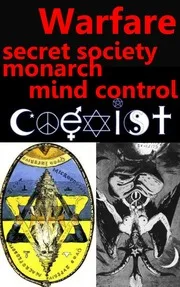
Talisman

 71
71

Talisman
Hancock and Bauval's "Talisman" presents a compelling, if ambitious, argument for a pervasive, ancient religious system. Its strength lies in the meticulous detail with which they connect disparate global monuments, particularly the astronomical alignments around the Giza plateau and their proposed connection to the Orion correlation. However, the speculative leap from correlation to a unified, secret religion feels less substantiated than the architectural analyses themselves. The assertion that this 'secret religion' has 'shaped the world' is a bold claim that requires more direct evidence beyond symbolic parallels. The work is a significant contribution to alternative history, but readers should approach its grandest conclusions with critical discernment.
📝 Description
71
Graham Hancock and Robert Bauval suggest a lost civilization shaped global architecture and religion.
Graham Hancock and Robert Bauval's "Talisman" investigates the idea of a sophisticated, lost civilization whose influence is apparent in global architecture and religious thought. The authors argue that enduring myths and monumental structures are not accidental but deliberate markers left by an advanced ancient society. They examine architectural alignments and symbolic patterns at sites like the Pyramids of Giza and Angkor Wat. These, they suggest, are not random but remnants of a unified, secret religion or philosophy that has guided human development for millennia, influencing our cosmic understanding.
The book traces this proto-religion's lineage through comparative mythology and archaeology. Hancock and Bauval connect disparate cultures and epochs, proposing a continuous transmission of core doctrines and symbols from a remote antiquity. This primeval faith, they contend, underpins many later spiritual and philosophical systems. The authors challenge conventional historical timelines, suggesting that some monumental constructions predate accepted chronologies and display knowledge beyond typical attributions for ancient peoples. A central concept is the 'Great Year' astronomical cycle, which they believe influenced the design and siting of these ancient wonders.
This work fits within esoteric traditions that propose pre-diluvian or lost high cultures, such as those inspired by Ignatius Donnelly's "Atlantis: The Antediluvian World." It engages with the idea of a hidden, ancient wisdom that predates known history and continues to influence humanity. The focus on astronomical knowledge and its integration into monumental architecture aligns with interpretations found in various archaeoastronomy circles and alternative historical narratives that seek a deeper, often spiritual, meaning behind ancient ruins.
💡 Why Read This Book?
• Understand the astronomical alignments of the Giza Pyramids, a core element linking ancient sites and potentially revealing the 'Great Year' concept. • Explore the hypothesis of a unified, ancient secret religion influencing global architecture and mythology from antiquity. • Examine how concepts like the 'Orion Correlation' could explain the deliberate placement and design of prehistoric monuments.
⭐ Reader Reviews
Honest opinions from readers who have explored this book.
❓ Frequently Asked Questions
What is the 'Great Year' concept as discussed in "Talisman"?
The 'Great Year' refers to the precession of the equinoxes, a cycle of approximately 25,920 years. Hancock and Bauval argue that ancient builders, particularly around Giza, used this astronomical cycle to align their monumental architecture, suggesting a sophisticated understanding of cosmic rhythms.
What is the 'Orion Correlation' theory in "Talisman"?
This theory posits that the three main pyramids of Giza are deliberately laid out to mirror the three stars of Orion's belt, suggesting a connection to the god Osiris and a specific point in the past, around 10,500 BCE.
What kind of evidence do Hancock and Bauval use to support their thesis?
They rely on archaeological findings, architectural analysis, comparative mythology, ancient texts, and astronomical calculations to build their case for a lost civilization and its religious influence.
How does "Talisman" differ from other books on ancient civilizations?
"Talisman" focuses specifically on the idea of a unified, secret religion or philosophy transmitted through monumental architecture and symbolism across cultures and millennia, rather than just exploring individual ancient sites or myths.
What is the proposed timeframe for the civilization discussed in "Talisman"?
The authors suggest that the architects of this sophisticated system were active around 10,500 BCE, a period significantly predating conventional timelines for advanced civilization and monumental construction.
Who are Graham Hancock and Robert Bauval?
Graham Hancock is a British writer and journalist known for his theories on ancient civilizations and alternative history. Robert Bauval is a Belgian author and researcher who focuses on Egyptology and astronomical alignments in ancient structures.
🔮 Key Themes & Symbolism
The Architects of the Great Year
This theme centers on the authors' hypothesis that a highly advanced civilization, predating accepted history, deliberately constructed monumental sites like the Pyramids of Giza. These structures are presented not just as tombs or temples, but as sophisticated astronomical observatories and calendrical devices, aligned with celestial events such as the precession of the equinoxes. The 'Great Year' concept suggests these ancient builders understood and encoded vast cosmic cycles into their architecture, aiming to transmit this knowledge across epochs.
The Orion Correlation and Osiris Myth
A central to the book's argument is the 'Orion Correlation,' proposing that the layout of the Giza pyramids mirrors the belt stars of Orion. This alignment is linked to the ancient Egyptian deity Osiris, god of the afterlife and resurrection. The authors suggest this correlation points to a specific time, around 10,500 BCE, as the origin point for this architectural tradition, implying a sophisticated religious or cosmological system that predates dynastic Egypt and has a trans-cultural reach.
Global Architectural Syncretism
"Talisman" argues that similar architectural principles, symbolic motifs, and astronomical alignments appear in ancient sites across the globe, from Egypt and Mesoamerica to Southeast Asia. This widespread presence, the authors contend, is evidence of a single, ancient source religion or wisdom tradition that influenced disparate cultures. The book seeks to demonstrate how these shared elements form a coherent, albeit hidden, global spiritual narrative.
The Hidden Religion of the World
The central thesis posits the existence of a 'secret religion' or 'sacred science' that has subtly guided human spiritual and intellectual development throughout history. This tradition, according to Hancock and Bauval, has been passed down through generations, influencing major religions and philosophical movements. Its adherents, or their symbolic legacy, are seen as having shaped the world's foundational beliefs and cultural paradigms from a remote antiquity.
💬 Memorable Quotes
Direct passages from the work, attributed to the author.
“The Giza pyramids are not just tombs, but a map.”
— This concise statement captures the book's core argument: that the monumental architecture of ancient Egypt, particularly the Giza complex, holds a coded message, functioning as a symbolic representation of astronomical knowledge and a guide to understanding cosmic cycles.
“We propose that the "Talisman" was a hidden spiritual tradition that has secretly guided the development of civilization.”
— This highlights the central thesis of a pervasive, ancient religion whose influence, though not overt, has been instrumental in shaping human progress and cultural evolution across millennia.
“The alignment of the pyramids with Orion's Belt suggests a specific point in prehistory.”
— This refers to the 'Orion Correlation' theory, a key piece of evidence the authors use. It implies that the builders possessed advanced astronomical knowledge and intended to mark a specific celestial configuration from a very distant past.
“The "Great Year" is the key to understanding the architects' intent.”
— This emphasizes the importance of the astronomical precession cycle (the 'Great Year') as the underlying principle that informed the design and purpose of ancient monumental structures, linking them to vast cosmic timescales.
“Ancient myths across the world echo the same fundamental truths.”
— This interpretation points to the comparative mythology aspect of the book, suggesting that recurring themes and narratives in global myths are not coincidental but are fragments of a shared, ancient wisdom tradition.
🌙 Esoteric Significance
Tradition
The work draws heavily on Hermetic and Gnostic traditions, particularly their emphasis on hidden knowledge, cosmic cycles, and a primeval wisdom that predates established religions. It aligns with esoteric schools that propose a lost golden age and a continuous lineage of initiates preserving ancient truths. However, "Talisman" departs by grounding this esoteric knowledge primarily in physical architecture and astronomical observation rather than purely textual or mystical transmission.
Symbolism
Key symbols include the pyramid, representing ascension, cosmic order, and the connection between earthly and celestial realms. The constellation Orion is central, symbolizing resurrection and a connection to the divine or a lost progenitor race. The ouroboros, though not explicitly detailed in the blurb, is often associated with these cycles of creation and destruction that the authors explore through astronomical alignments.
Modern Relevance
Contemporary thinkers in esoteric circles, particularly those interested in archaeoastronomy, ancient mysteries, and alternative history, continue to reference "Talisman." It influences modern interpretations of ancient sites and fuels discussions within communities exploring Gnostic ideas of hidden knowledge and the potential for advanced ancient technologies or cosmologies, resonating with groups interested in the 'Great Year' and pre-diluvian civilizations.
👥 Who Should Read This Book
• Amateur historians and archaeologists seeking to explore alternative theories about ancient civilizations and their capabilities. • Students of comparative religion and mythology interested in tracing potential links between global belief systems and ancient astronomical practices. • Enthusiasts of archaeoastronomy and those fascinated by the precise alignments of ancient megalithic structures worldwide.
📜 Historical Context
Published in 2004, "Talisman" emerged within a range of burgeoning alternative history and pseudoscientific archaeology. The early 2000s saw increased public interest in theories challenging established chronologies, fueled by earlier works from authors like Erich von Däniken and, indeed, Hancock's own "Fingerprints of the Gods" (1995). This period was also marked by a strong critical counter-current from mainstream archaeology and Egyptology, which largely dismissed such theories as lacking empirical evidence. The work engaged with the ongoing debate about the true age and capabilities of ancient civilizations, particularly concerning the construction of the Giza pyramids. While not a direct engagement with a specific contemporary scholar's work within the text itself, the book's theses placed it in direct opposition to orthodox Egyptology and archaeological consensus, inviting significant debate and criticism from figures like Zahi Hawass. The reception was polarized, with enthusiasts embracing its grand vision and academics decrying its speculative nature.
📔 Journal Prompts
The alignment of the Giza pyramids with Orion's Belt suggests a specific point in prehistory.
The "Great Year" is the key to understanding the architects' intent.
Reflect on the concept of a 'hidden religion' and its potential influence on global culture.
Consider the symbolic meaning of a 'Talisman' in ancient and modern contexts.
Analyze the global presence of similar architectural motifs and their possible shared origin.
🗂️ Glossary
Precession of the Equinoxes
The slow wobble of Earth's axis, causing the position of the vernal equinox to shift westward along the ecliptic over approximately 25,920 years. This 'Great Year' cycle is central to the book's astronomical arguments.
Orion Correlation
The theory that the three main pyramids of Giza are intentionally laid out to mirror the three stars of Orion's Belt, suggesting a deliberate astronomical alignment with profound symbolic meaning.
Great Year
A term used in esoteric and astronomical contexts referring to the full cycle of the precession of the equinoxes (approx. 25,920 years), believed by some to represent a cosmic epoch or a complete cycle of creation and destruction.
Sacred Science
A concept suggesting that ancient civilizations possessed a unified body of knowledge, encompassing astronomy, mathematics, and spirituality, which was used to construct monumental works and guide societal development.
Archaeoastronomy
The interdisciplinary study of how people in the past understood and used astronomical phenomena and celestial bodies, often in relation to their built environments and cultural practices.
Megalithic Construction
The building of structures using large stones, often requiring advanced engineering, logistics, and labor, as seen in sites like Stonehenge, Machu Picchu, and the Egyptian pyramids.
Proto-religion
A hypothesized foundational or earliest form of religious belief and practice from which later, more complex religions may have evolved or derived their core concepts.
This book appears in 1 collection
🔮 Readers Also Liked
Browse all →







From the “Freemasonry” Collection
View all →



More Free Freemasonry & Secret Societies Books
View all →