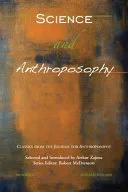
Science and Anthroposophy
 80
80

Science and Anthroposophy
Arthur Zajonc's Science and Anthroposophy attempts a rigorous bridge between the empirical and the spiritual, a task fraught with inherent difficulty. He navigates this terrain with intellectual honesty, particularly when dissecting the epistemological chasm between conventional science and Anthroposophy. A notable strength lies in his nuanced exploration of how subjective perception can inform objective understanding, moving beyond simplistic dualisms. For instance, his discussion on karma as a lived ethical dynamic, rather than mere cosmic retribution, offers a fresh perspective. However, the book occasionally falters when attempting to translate complex Anthroposophical concepts, like specific etheric forces, into terms readily digestible for a secular scientific audience without extensive prior knowledge of Steiner's work. This can lead to passages that feel dense and perhaps overly specialized. Despite this, the work serves as a critical and valuable contribution to the ongoing discourse on the nature of knowledge. It is a serious academic inquiry into a challenging synthesis.
📝 Description
80
Arthur Zajonc's 2009 book examines science and Anthroposophy.
Published in 2009, "Science and Anthroposophy" by Arthur Zajonc scrutinizes the relationship between empirical science and Rudolf Steiner's spiritual philosophy. The book questions how consciousness and subjective experience fit into a larger view of reality, moving beyond a purely materialist outlook. Zajonc considers the possibility of a science that recognizes the qualitative aspects of existence, not just the quantitative measurements common in current science.
This work is for those interested in the philosophical basis of science and alternative ways of knowing. It will interest students and academics in consciousness studies, esoteric traditions, and the history of science, especially those who wish to connect the material and spiritual. Readers familiar with Rudolf Steiner or curious about Anthroposophy's approach to knowledge will find this book useful.
Zajonc, a physicist and former president of the Mind and Life Institute, was active in discussions between scientists and figures like the Dalai Lama. "Science and Anthroposophy" addresses a long-standing debate in Western thought concerning materialism versus idealism and the nature of knowledge, a tension seen in thinkers like Goethe before Steiner developed Anthroposophy.
This book engages with Anthroposophy, a spiritual philosophy founded by Rudolf Steiner in the early 20th century. Steiner sought to create a spiritual science that could offer verifiable insights into the spiritual world, complementing empirical science. The tradition emphasizes the development of higher faculties of perception and understanding through specific meditative and cognitive practices. "Science and Anthroposophy" situates Steiner's work within broader philosophical discussions about the nature of reality and knowledge, connecting it to historical figures and movements that have sought to bridge the material and spiritual.
💡 Why Read This Book?
• Gain an understanding of Anthroposophy's unique approach to knowledge acquisition, specifically how Arthur Zajonc frames 'imaginative cognition' as a method for understanding phenomena beyond current scientific reach. • Explore the concept of karma not as a deterministic fate but as a dynamic, ethical force that shapes individual and collective development, as detailed within the book's analysis of Steiner's thought. • Discover how the book proposes a re-evaluation of scientific methodology to incorporate qualitative experience, drawing parallels with Goethe's approach to nature study to inform a more holistic worldview.
⭐ Reader Reviews
Honest opinions from readers who have explored this book.
❓ Frequently Asked Questions
What is the primary aim of Arthur Zajonc's Science and Anthroposophy?
The primary aim is to explore the potential for integrating Anthroposophy, Rudolf Steiner's spiritual science, with conventional empirical science. Zajonc seeks to bridge the gap between objective measurement and subjective, qualitative experience in understanding reality.
How does Science and Anthroposophy relate to Rudolf Steiner's philosophy?
The book critically examines and elaborates on core Anthroposophical concepts, such as karma and imaginative cognition, presenting them within a framework that engages with modern scientific thought, as developed by Rudolf Steiner.
What kind of scientific perspective does Zajonc advocate for?
Zajonc advocates for an expanded scientific perspective that acknowledges the role of consciousness and subjective experience. He suggests moving beyond purely materialistic reductionism to embrace a 'spiritual science' that can apprehend qualitative realities.
Who is Arthur Zajonc and what is his background?
Arthur Zajonc is a physicist, author, and educator, known for his work on quantum physics and consciousness. He has been a prominent figure in dialogues between science and contemplative traditions, previously serving as president of the Mind and Life Institute.
Does the book offer practical applications of Anthroposophy?
While primarily an intellectual and philosophical exploration, the book discusses how Anthroposophical insights, such as understanding karma and developing imaginative cognition, can inform a more holistic approach to life and learning.
Is Science and Anthroposophy suitable for readers new to Anthroposophy?
It can be, but prior familiarity with Rudolf Steiner's work or an interest in deep philosophical inquiry is beneficial. The book engages directly with Anthroposophical concepts, assuming some level of engagement from the reader.
🔮 Key Themes & Symbolism
Epistemology of Spiritual Science
The work meticulously dissects the methods by which knowledge can be acquired, contrasting the empirical, quantitative approach of modern science with Anthroposophy's emphasis on qualitative, imaginative, and spiritual perception. Zajonc explores how Rudolf Steiner proposed specific cognitive faculties, like 'imaginative cognition,' to engage with non-material realities. This theme challenges the notion that only what can be measured is real, proposing a framework for a 'science of the spirit' that complements, rather than rejects, materialist science. It is concerned with the validity and reliability of subjective experience as a source of knowledge about the cosmos.
Karma as Ethical Causality
Zajonc examines the Anthroposophical understanding of karma, moving beyond simplistic notions of cosmic retribution. He presents karma as a profound principle of ethical causality, where past actions and intentions shape present circumstances and future possibilities, not just for individuals but for collective humanity. This perspective offers a dynamic view of destiny and free will, suggesting that understanding karmic patterns is key to conscious evolution. The book examines how this concept provides a moral and spiritual dimension to human life often absent in secular scientific worldviews.
Consciousness and the Material World
A central theme is the nature of consciousness and its relationship to the material universe. Zajonc critiques the limitations of a purely materialistic paradigm that struggles to account for subjective experience, intentionality, and the richness of inner life. He explores how Anthroposophy posits consciousness as fundamental, not merely an emergent property of matter. The work encourages a broader view where the spiritual and material are not opposing forces but interconnected aspects of a unified reality, inviting a re-evaluation of the scientific method itself to include the observer's role.
Goethean Science and Phenomenology
The book draws inspiration from Johann Wolfgang von Goethe's approach to natural science, often termed 'Goethean science.' This methodology emphasizes detailed phenomenological observation, seeking to understand the living processes and archetypal forms in nature without solely relying on reductionist analysis or abstract mathematics. Zajonc suggests this approach offers a model for how Anthroposophy can engage with the natural world, fostering a more holistic and intuitive comprehension of phenomena, and providing a counterpoint to the purely analytical methods dominant in contemporary science.
💬 Memorable Quotes
Direct passages from the work, attributed to the author.
“The difficulty lies in the fact that we have trained ourselves to trust only that which can be measured.”
— This highlights the core challenge Zajonc addresses: the ingrained reliance on quantitative data in Western science. It suggests that our current scientific education and practice limit our perception of reality to what is empirically verifiable, potentially excluding other valid forms of knowing.
“Karma is not a destiny imposed from without, but a process of becoming, guided by ethical intention.”
— This interpretation reframes karma from a fatalistic doctrine into an active, ethical force. It emphasizes human agency and the power of conscious moral choices in shaping one's life trajectory, aligning with Anthroposophy's focus on spiritual development.
“We must cultivate faculties of perception that can grasp the living qualities of nature.”
— This points to the need for an expanded epistemology, advocating for the development of new ways of seeing and understanding that go beyond mere analytical dissection. It calls for a more direct, qualitative engagement with the natural world.
“The challenge is to develop a science that can include the spiritual without abandoning rigor.”
— This expresses the book's central thesis: the possibility of a 'spiritual science.' It suggests that the pursuit of knowledge about spiritual realities need not be relegated to faith or speculation but can be approached with disciplined, albeit different, methods of inquiry.
“Our inner life is not an epiphenomenon, but a fundamental aspect of reality.”
— This statement directly challenges materialistic views that see consciousness as a secondary product of physical processes. It asserts the primacy or at least equal standing of subjective experience and the inner world in the constitution of reality.
🌙 Esoteric Significance
Tradition
The work fits within the Western Esoteric tradition, specifically drawing from Anthroposophy, which itself is a modern development building upon Theosophy and earlier mystical currents. While not strictly Hermetic or Gnostic, Anthroposophy shares with them a concern for hidden knowledge and the potential for human spiritual evolution. Zajonc's approach seeks to contextualize Steiner's ideas within a broader framework of spiritual science, aiming to make its epistemological claims accessible to a contemporary audience familiar with scientific discourse.
Symbolism
While not overtly symbolic in the manner of alchemical texts, Anthroposophy utilizes concepts that function symbolically. For instance, 'karma' acts as a symbol for ethical interconnectedness and the unfolding of destiny through moral causality, representing the dynamic interplay of action and consequence. 'Imaginative cognition' functions as a symbol for higher modes of perception, representing the capacity to directly apprehend spiritual realities or formative forces that lie beyond sensory experience, suggesting a transformation of consciousness itself.
Modern Relevance
Zajonc's work is highly relevant to contemporary discussions in consciousness studies, transpersonal psychology, and integral theory. Thinkers like Ken Wilber, who advocate for integral approaches that synthesize science, spirituality, and diverse worldviews, find resonance in Zajonc's efforts to bridge empirical science and subjective experience. His emphasis on 'spiritual science' also informs contemporary movements exploring non-dual philosophies and the role of contemplative practices in scientific research.
👥 Who Should Read This Book
• Students of consciousness and the philosophy of science seeking to understand alternative epistemologies beyond materialism. • Practitioners and scholars of Anthroposophy looking for a critical engagement with Rudolf Steiner's work from a contemporary scientific perspective. • Individuals interested in the historical and intellectual connections between spiritual movements and scientific inquiry in the 20th and 21st centuries.
📜 Historical Context
Science and Anthroposophy emerged in 2009, a period marked by increasing public interest in consciousness studies and the limitations of purely materialistic scientific explanations. Arthur Zajonc, a physicist and proponent of dialogue between science and contemplative traditions, positioned himself within a lineage of thinkers seeking to bridge these realms. This work engages with a long-standing tension in Western thought, dating back to debates between the Enlightenment's emphasis on reason and earlier holistic or vitalistic philosophies. Contemporaries like Fritjof Capra, author of 'The Tao of Physics' (1975), had already explored connections between modern physics and Eastern mysticism, albeit from a different angle. Zajonc's contribution specifically addresses Rudolf Steiner's Anthroposophy, a movement that had faced criticism from established scientific circles since its inception in the early 20th century for its claims of spiritual perception. The book sought to provide a more rigorous, philosophical engagement with Anthroposophical epistemology, addressing critiques and offering a path for integrating its insights into a broader intellectual landscape.
📔 Journal Prompts
Reflect on the limitations of purely quantitative measurement when attempting to understand complex phenomena like human emotion or artistic creation.
Consider the concept of 'imaginative cognition' as presented by Zajonc; how might developing such a faculty alter one's perception of the natural world?
Explore the ethical implications of karma as described in the book; how does viewing it as 'ethical causality' change your understanding of personal responsibility?
Examine the relationship between consciousness and matter discussed in Science and Anthroposophy; where does the book suggest the materialist view falls short?
How might a 'Goethean' approach to observation, focusing on qualitative aspects, offer a different kind of understanding compared to standard scientific methods?
🗂️ Glossary
Anthroposophy
A spiritual philosophy founded by Rudolf Steiner, seeking to understand the spiritual dimensions of existence through a method described as 'spiritual science,' aiming to bridge the gap between the material and the spiritual.
Karma
In Anthroposophy, karma is understood not as fate, but as a dynamic principle of ethical causality, where actions and intentions shape present and future experiences, guiding individual and collective evolution.
Imaginative Cognition
A faculty of knowing proposed by Rudolf Steiner, distinct from sensory perception and conceptual thinking, allowing for direct apprehension of spiritual realities or formative forces.
Spiritual Science
The term Rudolf Steiner used for Anthroposophy, referring to a rigorous, disciplined method of spiritual inquiry aimed at investigating the spiritual world with clarity and objectivity.
Goethean Science
An approach to natural science inspired by Johann Wolfgang von Goethe, emphasizing phenomenological observation, the study of living processes, and the recognition of archetypal forms, rather than solely reductionist analysis.
Materialism
A philosophical viewpoint that asserts only matter exists, and that all phenomena, including consciousness, can be explained solely in terms of material interactions.
Epistemology
The branch of philosophy concerned with the theory of knowledge, investigating its nature, scope, and justification; how we know what we know.