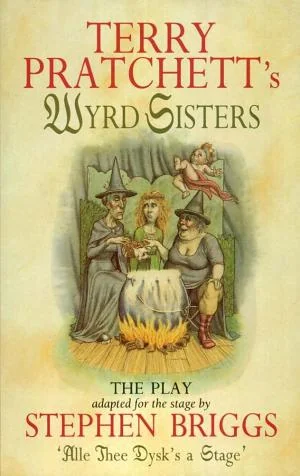
Terry Pratchett's Wyrd Sisters
 73
73

Terry Pratchett's Wyrd Sisters
Terry Pratchett's take on *Macbeth* in *Wyrd Sisters* is nothing short of brilliant, particularly in how it uses the three witches – Granny Weatherwax, Nanny Ogg, and Magrat Garlick – to dismantle the tragic trajectory. The sheer audacity of turning a bloody regicide into a comedic farce, driven by the witches' pragmatic, if often self-serving, interventions, is a masterstroke. The limitation, if one can call it that, lies in its sheer familiarity to Pratchett's existing Discworld readers; the magic is well-established, but for newcomers, the initial immersion into the Discworld's unique logic might require a slight adjustment. A standout moment is the witches' manipulation of theatrical performance to expose the villainy of Duke Felmet, demonstrating how narrative itself can be a potent force. *Wyrd Sisters* remains a sharp, funny, and surprisingly insightful commentary on power and destiny.
📝 Description
73
Terry Pratchett's *Wyrd Sisters*, published in 1996, satirizes Shakespeare's *Macbeth* with three unconventional witches.
Terry Pratchett's 1996 novel, *Wyrd Sisters*, places the familiar Discworld setting at the center of a dramatic power struggle. When King Verence is murdered, the throne is usurped by Lord Felmet, whose power is maintained by his sorceress wife. Three witches, Granny Weatherwax, Nanny Ogg, and Magrat Garlick, find themselves entangled in the ensuing chaos when they are tasked with protecting the kingdom's rightful heir. The heir, a young woman named Desideria, escapes the castle and finds refuge with a troupe of travelling players. She becomes the lead in their production of 'The Tragedy of King Verence,' a play that mirrors the real-life events unfolding in Lancre. The witches must then work to ensure the play's narrative aligns with destiny, rather than the machinations of the usurpers.
The novel humorously dissects the nature of fate, prophecy, and theatrical performance. Pratchett uses the witches' practical, down-to-earth approach to magic as a foil to the grander, more sinister forces at play. Their interventions are driven by a sense of duty and a pragmatic understanding of how things 'ought' to be, rather than adherence to abstract magical laws. This blend of satire and sharp observation of human ambition makes *Wyrd Sisters* a characteristic example of Pratchett's work.
While not strictly an esoteric text, *Wyrd Sisters* engages with themes often found in occult fiction, particularly the concept of prophecy and its manipulation. The witches operate with a form of folk magic, rooted in common sense and an understanding of natural cycles, contrasting with the more overt, power-hungry sorcery of the antagonists. The narrative questions whether destiny is predetermined or if it can be influenced by individual action and narrative framing, a common philosophical undercurrent in many esoteric traditions. The play-within-a-play structure further comments on the power of stories to shape reality.
💡 Why Read This Book?
• Gain an understanding of how Pratchett deconstructs Shakespearean tragedy, specifically *Macbeth*, by examining the witches' non-traditional approach to prophecy and influence, offering a unique perspective on fate versus agency. • Experience Pratchett's signature satirical wit applied to grand themes, learning how humor can be a powerful tool for social and literary critique, particularly evident in the portrayal of the travelling theatre troupe. • Discover the unique, practical brand of witchcraft embodied by Granny Weatherwax and Nanny Ogg, contrasting sharply with typical fantasy portrayals and highlighting a grounded, common-sense approach to magic and problem-solving.
⭐ Reader Reviews
Honest opinions from readers who have explored this book.
❓ Frequently Asked Questions
Is *Wyrd Sisters* a direct retelling of Shakespeare's *Macbeth*?
While *Wyrd Sisters* draws heavily on the plot and characters of Shakespeare's *Macbeth*, it is a satirical parody rather than a direct retelling. Terry Pratchett uses the familiar framework to explore his own themes and characters within the Discworld setting.
Who are the main witch characters in *Wyrd Sisters*?
The central witch characters are Granny Weatherwax, known for her formidable will and sharp tongue; Nanny Ogg, who is pragmatic and enjoys worldly pleasures; and Magrat Garlick, the youngest and most impressionable, fond of traditional witchcraft symbols.
What is the significance of the travelling theatre troupe in the book?
The theatre troupe, led by the incompetent leader Col. de Plume, plays a crucial role in revealing the truth about Duke Felmet's crimes. Their performance of a play mirroring the events of *Macbeth* becomes a device for exposing the Duke and influencing public opinion.
When was Terry Pratchett's *Wyrd Sisters* first published?
Terry Pratchett's *Wyrd Sisters* was first published in 1996 as part of his highly popular Discworld series.
Does *Wyrd Sisters* require prior knowledge of other Discworld books?
No, *Wyrd Sisters* can be read as a standalone novel. While it exists within the larger Discworld universe and features established characters like the witches, its plot is self-contained and accessible to new readers.
What makes the witches in *Wyrd Sisters* unique compared to other fictional witches?
The witches in *Wyrd Sisters* are unique due to their grounded, practical approach to magic, often relying on psychology, common sense, and social manipulation rather than overt spellcasting. Their power stems from reputation and deep understanding of human nature.
🔮 Key Themes & Symbolism
Subversion of Archetypes
The novel brilliantly subverts the archetypes found in Shakespeare's *Macbeth*. Instead of a single, ambitious Macbeth, the story centers on three witches who are far from the cackling villains of folklore. Granny Weatherwax embodies stern pragmatism, Nanny Ogg represents earthy wisdom, and Magrat Garlick adds a touch of naive idealism. Their collective, often contradictory, influence steers events away from predetermined tragedy, demonstrating Pratchett's skill in taking familiar roles and infusing them with unexpected depth and humor. The supposed 'heroes' and 'villains' are also re-examined, highlighting the ambiguity of good and evil.
The Nature of Power and Prophecy
Power, in *Wyrd Sisters*, is not solely derived from crowns or armies but from influence, reputation, and understanding. The witches wield a unique form of power that is both feared and respected, often achieved through psychological manipulation and shrewd observation rather than overt magical displays. Prophecy itself is presented not as an unalterable destiny but as a set of suggestions that can be interpreted, twisted, or even ignored. The narrative questions the very idea of predetermined fate, suggesting that human agency, even when guided by seemingly fated pronouncements, plays a significant role in shaping outcomes.
Performance and Reality
The theme of performance is central, particularly through the subplot involving the travelling theatre company. Their staged performance of a play mirroring the events of *Macbeth* becomes a critical tool for exposing the truth and manipulating public perception of Duke Felmet. This highlights Pratchett's commentary on how stories are told, how reality can be shaped by narrative, and how art can function as a mirror to society. The witches, in their own way, are also performers, using their reputations and perceived powers to manage the world around them.
💬 Memorable Quotes
Direct passages from the work, attributed to the author.
““She knew, with the certainty of the very young, that she was going to be happy.””
— This reflects Magrat Garlick's youthful optimism and her belief in a brighter future, often contrasted with the world-weary pragmatism of Granny Weatherwax and Nanny Ogg. It captures her hopeful spirit as she navigates the complexities of her world.
““The trouble with the world is that too many people grow up.””
— This sentiment, often echoing Pratchett's own views, suggests a critique of cynicism and the loss of childlike wonder or open-mindedness as people age. It implies that the world's problems stem from a lack of imagination and a surrender to jaded perspectives.
💡 Key Ideas
Editorial paraphrase of the work's core concepts — not direct quotes.
“You can't treat people like toys.”
This line captures Granny Weatherwax's core philosophy regarding agency and respect. It highlights her belief that individuals, regardless of their station or perceived destiny, possess intrinsic worth and should not be manipulated or controlled as mere pawns in a larger game.
“Witches are always the same. They’re always old. They’re always ugly. They’re always evil. They’re always wizards.”
This quote, delivered by one of the characters, humorously points out the stereotypical and often inaccurate perceptions of witches. It sets the stage for Pratchett's subversion of these tropes by presenting his own, far more nuanced and complex witch characters.
“The difference between a witch and a lump of lard is that a lump of lard can’t turn itself into a witch.”
Spoken by Nanny Ogg, this line emphasizes the inherent nature and potential of witchcraft. It suggests that while anyone might possess latent magical ability, true witchcraft requires a specific, innate quality and the will to embrace it, distinguishing it from mere inert matter.
🌙 Esoteric Significance
Tradition
While not strictly adhering to a single esoteric tradition, *Wyrd Sisters* draws upon and playfully subverts archetypes common in European folklore and witchcraft lore, which have influenced various esoteric paths like Wicca and modern paganism. The novel's depiction of witches as figures of wisdom, social commentary, and practical, if unconventional, magic can be seen as a contemporary, secular interpretation of ancient matriarchal figures and earth-based spiritualities. It offers a humorous lens through which to view the power dynamics and archetypal roles often explored in more formal esoteric studies.
Symbolism
The three witches themselves serve as potent archetypal symbols, representing different facets of feminine power and wisdom: the crone (Granny Weatherwax), the mother/earthy one (Nanny Ogg), and the maiden (Magrat Garlick). Their association with nature, intuition, and the cyclical aspects of life echoes symbolism found in many nature-based esoteric traditions. The play-within-a-play motif, where the theatre troupe performs a version of *Macbeth*, symbolizes the power of narrative and illusion, hinting at how reality can be perceived and manipulated, a concept resonant with hermetic principles of correspondence.
Modern Relevance
Contemporary practitioners and enthusiasts of modern witchcraft and pagan traditions often find resonance in Pratchett's portrayal of witches. The emphasis on common sense, psychological insight, and the power of belief, rather than solely on spellcasting, aligns with many modern interpretations of witchcraft that prioritize personal agency and self-empowerment. Thinkers and writers exploring the intersection of folklore, mythology, and contemporary spirituality can draw inspiration from how Pratchett reimagines these ancient archetypes for a modern audience, making complex ideas accessible and entertaining.
👥 Who Should Read This Book
• Readers interested in comparative mythology and folklore who wish to see classic archetypes (like the witches and the Scottish play) humorously deconstructed and reinterpreted. • Aspiring writers and satirists seeking examples of how to employ parody and wit to critique established literary works and societal norms. • Fans of Terry Pratchett's Discworld series looking for an accessible entry point or a deep dive into the characters and world-building of the witches.
📜 Historical Context
Terry Pratchett's *Wyrd Sisters*, published in 1996, arrived during a vibrant period for British fantasy literature. The Discworld series had already established Pratchett as a major voice, known for his satirical take on genre conventions. By 1996, fantasy had moved beyond simple heroic quests, with authors like Neil Gaiman and Ursula K. Le Guin exploring more complex themes. *Wyrd Sisters* specifically engaged with literary tradition by offering a playful, yet insightful, parody of Shakespeare's *Macbeth*. This era saw a flourishing of postmodern literary techniques, including parody and intertextuality, which Pratchett masterfully employed. The novel's critical reception was overwhelmingly positive, cementing its place within the burgeoning field of literary fantasy that challenged traditional narrative structures and celebrated intellectual wit, standing in contrast to more earnest, high-fantasy works of the time.
📔 Journal Prompts
Granny Weatherwax's unwavering self-opinion and its impact on her actions.
The theatrical performance as a catalyst for truth in *Wyrd Sisters*.
Nanny Ogg's pragmatic approach to life and magic.
Magrat Garlick's journey from naivety to self-assurance.
How the witches' perceived power differs from their actual influence.
🗂️ Glossary
Discworld
The fictional flat world, carried through space on the backs of four elephants standing on the shell of a giant space turtle named Great A'Tuin. It is the setting for Terry Pratchett's fantasy novels.
Lancre
A small kingdom within the Discworld, known for its mystical properties and as the primary home of Granny Weatherwax, Nanny Ogg, and Magrat Garlick.
Theopold the Perceptive
A character in the play-within-a-play, serving as a stand-in for a character in the original Macbeth narrative, whose actions are revealed through the performance.
Duke Felmet
The tyrannical ruler of Lancre who usurped the throne by murdering the king. He is the primary antagonist in *Wyrd Sisters*, serving as the villain analogous to Shakespeare's Macbeth.
Hwel
The playwright and leader of the travelling theatre troupe in *Wyrd Sisters*. He is responsible for staging the play that mirrors the events in Lancre.
Verence
The rightful heir to the throne of Lancre, who was transformed into a frog by Duke Felmet. His story is central to the plot, with the witches working to restore him.
The Great God Om
A deity in the Discworld pantheon, particularly prominent in *Small Gods*. While not central to *Wyrd Sisters*, Om represents the Discworld's unique theological landscape.
This book appears in 1 collection
🔮 Readers Also Liked
Browse all →








From the “Witchcraft” Collection
View all →





More Free Occult Philosophy Books
View all →