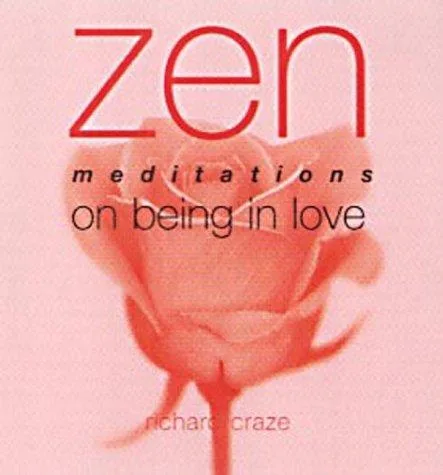
Zen Meditations
 77
77

Zen Meditations
Richard Craze’s Zen Meditations offers a grounded approach to a practice often shrouded in mystique. Unlike many texts that lean heavily on philosophical exposition, Craze prioritizes actionable steps, a significant strength for the uninitiated. The section detailing breath awareness, for instance, is particularly lucid, breaking down a fundamental practice into manageable components. However, the book occasionally feels a bit too concise, particularly when touching upon the broader philosophical underpinnings of Zen, leaving a reader wanting more context on the historical development of these ideas. The original publication year of 2000 is notable, placing it before the widespread secularization of mindfulness. Craze’s directness is its greatest asset, though it sometimes sacrifices depth for accessibility. It serves well as an introductory manual, but those seeking intricate philosophical debates might need to look elsewhere.
📝 Description
77
Richard Craze's Zen Meditations, published in 2000, offers practical Zen Buddhist techniques.
Zen Meditations, by Richard Craze, was first published in 2000. This book is not a scholarly examination of Buddhist scriptures but a practical guide to Zen meditation. Craze focuses on methods and ideas meant to build mindfulness, concentration, and self-awareness through regular practice. The book aims to make meditation accessible to anyone looking for a calmer, more centered life.
This work suits beginners to meditation or those wanting to improve their current practice. Readers interested in Eastern philosophies and contemplative ways, but who prefer clear instructions over academic study, will find it appealing. People feeling stressed by modern life and seeking ways to manage it, sharpen focus, and find inner peace will find the guidance useful. It is a good start for anyone curious about applying Zen principles to daily life.
Published in 2000, Zen Meditations arrived as Western interest in Eastern spirituality grew. This period saw Buddhist ideas move beyond academia into popular culture, with authors like Thich Nhat Hanh making Zen more accessible. Craze's book offered a modern approach to established Zen practices, differing from older, academic, or monastic interpretations. Its release predates the major mindfulness trend of the 2010s, marking it as an early contribution to secular meditation practices.
💡 Why Read This Book?
• Gain practical, step-by-step instructions for breath awareness meditation, a core technique discussed early in the book, enabling immediate practice. • Understand the Zen concept of impermanence as presented by Craze, offering a specific lens through which to view daily challenges and reduce attachment. • Learn about walking meditation, a distinct practice detailed in the text, providing an alternative to seated meditation for cultivating mindfulness in movement.
⭐ Reader Reviews
Honest opinions from readers who have explored this book.
❓ Frequently Asked Questions
When was Richard Craze's Zen Meditations first published?
Zen Meditations by Richard Craze was first published in the year 2000, marking its entry into the discourse on contemplative practices at the turn of the millennium.
What is the primary focus of Zen Meditations?
The book's primary focus is on providing practical, accessible methods for Zen meditation, aiming to cultivate mindfulness, concentration, and self-awareness for daily life.
Is Zen Meditations suitable for beginners?
Yes, the book is particularly suited for beginners, offering clear instructions on core techniques like breath awareness and walking meditation without excessive philosophical jargon.
Does the book discuss the historical background of Zen Buddhism?
While it acknowledges the origins of Zen, the book's emphasis is on practical application rather than an in-depth historical or philosophical exploration of Zen Buddhism's lineage.
What kind of meditation techniques are covered?
The book covers fundamental techniques such as breath awareness meditation and walking meditation, explaining their purpose and how to perform them effectively.
What is the author's approach to meditation?
Richard Craze adopts a direct and practical approach, presenting meditation as a tool for enhancing present-moment awareness and managing inner states, rather than an escape.
🔮 Key Themes & Symbolism
Present Moment Awareness
This theme centers on the core Zen principle of anchoring one's consciousness in the 'now.' The book guides readers to observe their thoughts, feelings, and surroundings without judgment, understanding that true experience only occurs in the present. It contrasts this with the mind's tendency to dwell on the past or anticipate the future, framing this constant mental activity as a source of distraction and suffering. Practical exercises are provided to cultivate this focused awareness, essential for deepening meditative states and engaging more fully with life.
Impermanence and Non-Attachment
A fundamental Buddhist concept, impermanence (anicca) is explored as a reality that underlies all existence. The book suggests that recognizing the transient nature of all phenomena—thoughts, emotions, physical sensations, and external circumstances—can liberate individuals from the suffering caused by clinging to what is inherently changeable. By fostering non-attachment, practitioners can develop equanimity and a more fluid response to life's inevitable shifts. This theme encourages a shift from resisting change to accepting and working with it.
Discipline and Practice
Zen Meditations underscores that the benefits of meditation are realized through consistent effort and discipline. It emphasizes that meditation is not a passive activity but a rigorous training of the mind. The book advocates for establishing a regular practice, even in short durations, to build mental stamina and achieve lasting results. This theme addresses the challenges of maintaining motivation and overcoming mental inertia, presenting discipline as a key virtue in the path toward greater clarity and inner peace.
The Nature of Mind
The book offers insights into the workings of the human mind, particularly its habitual patterns of thought and perception. It suggests that through mindful observation, one can begin to understand the conditioned nature of the mind and its role in creating subjective reality. By deconstructing these patterns, practitioners can gain a clearer perspective, reducing reactivity and fostering a more objective understanding of oneself and the world. This exploration aims to explain mental processes and empower individuals to cultivate a more serene mental landscape.
💬 Memorable Quotes
Direct passages from the work, attributed to the author.
“Focus on the breath.”
— This simple instruction captures a primary technique in Zen meditation, emphasizing the breath as an anchor to the present moment and a tool for calming the restless mind.
“All things change.”
— A concise expression of the Buddhist doctrine of impermanence, reminding the practitioner that clinging to any state or object leads to suffering due to its transient nature.
“Observe without judgment.”
— This highlights the practice of non-judgmental awareness, encouraging the meditator to witness thoughts and sensations as they arise and pass without labeling them as good or bad.
“Meditation is training.”
— This framing emphasizes the active, disciplined nature of meditation, portraying it not as an escape but as a deliberate practice to cultivate mental clarity and resilience.
“Be here now.”
— A direct call to presence, urging the reader to abandon preoccupations with the past or future and fully inhabit the current moment, which is the only reality.
🌙 Esoteric Significance
Tradition
While Zen Buddhism is a distinct Mahayana Buddhist school with its own lineage, Craze's work interfaces with broader esoteric currents through its emphasis on direct experience, mind training, and the realization of inner potential. It shares with Western esoteric traditions a focus on personal transformation and the cultivation of heightened awareness, though it eschews the ritualistic or occult elements often found in Hermeticism or Kabbalah. Its significance lies in presenting these profound meditative disciplines in a secularized, accessible format, bridging Eastern contemplative science and Western psychological inquiry.
Symbolism
The book primarily utilizes the symbolism of the breath as a direct link to the present moment and the vital life force. The concept of 'emptiness' (sunyata), though not always explicitly termed as such, underlies the encouragement to observe thoughts and phenomena without clinging, recognizing their lack of inherent, fixed self. The practice of walking meditation itself symbolizes the integration of mindfulness into all aspects of life, suggesting that spiritual awareness is not confined to a cushion but can be cultivated in movement and action.
Modern Relevance
Craze's approach in Zen Meditations remains highly relevant today, particularly for secular mindfulness practitioners and those in fields like cognitive psychology and neuroscience exploring the effects of meditation. Therapists and coaches often draw on similar accessible techniques to help clients manage stress and improve focus. The book's emphasis on practical application speaks to contemporary demands for evidence-based and actionable self-improvement tools, bridging the gap between ancient contemplative wisdom and modern personal development paradigms.
👥 Who Should Read This Book
• Beginners interested in Eastern contemplative practices seeking straightforward, actionable meditation techniques without complex philosophy. • Individuals experiencing stress or seeking to improve focus and concentration through practical, daily exercises. • Readers exploring comparative spirituality who prefer a direct, experiential guide to Zen principles over academic study.
📜 Historical Context
Zen Meditations arrived in 2000, a period when Western engagement with Eastern spiritual traditions was accelerating, yet still distinct from the widespread 'mindfulness' phenomenon of the following decade. Richard Craze's work entered a landscape populated by figures like Thich Nhat Hanh, who had already been making Zen accessible for decades, and academic scholars like D.T. Suzuki, whose writings had introduced Zen concepts to the West much earlier. Unlike the monastic or highly philosophical texts that dominated earlier periods, Craze’s approach aligned with a growing demand for practical, secularized contemplative methods. The book bypassed complex doctrinal debates, focusing instead on direct experiential techniques, reflecting a broader cultural shift towards psychospiritual self-help and personal development that gained momentum at the turn of the millennium.
📔 Journal Prompts
The practice of breath awareness.
Reflecting on the concept of impermanence.
Cultivating non-judgmental observation.
Integrating discipline into daily life.
Understanding the mind's habitual patterns.
🗂️ Glossary
Mindfulness
The state of active, open attention on the present. It involves observing thoughts, feelings, and sensations without judgment, fostering a clear awareness of one's current experience.
Concentration
The ability to focus one's attention on a single object or task for a sustained period. In meditation, it is developed through practices like focusing on the breath.
Present Moment
The immediate now; the only point in time where experience truly occurs. Zen practice emphasizes returning awareness to this moment whenever the mind wanders.
Impermanence
The Buddhist concept that all phenomena are in a constant state of flux and change. Recognizing this helps reduce attachment and suffering.
Non-Attachment
The practice of letting go of desires and aversions, understanding that clinging to things or outcomes leads to dissatisfaction. It involves observing experiences without needing to possess or reject them.
Discipline
The commitment to regular practice and self-control, essential for developing mental fortitude and consistency in meditation.
Awareness
The state or ability to perceive, feel, or be conscious of events, objects, or sensory patterns. In Zen, it is cultivated to be open and non-judgmental.
🔮 Readers Also Liked
Browse all →









More by Richard Craze
All books →





More Free Spiritual Development Books
View all →