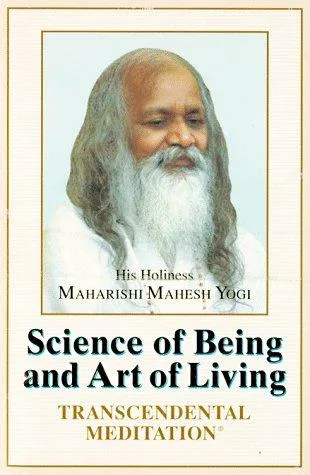
The Science of Being and Art of Living
 80
80

The Science of Being and Art of Living
Maharishi Mahesh Yogi's "The Science of Being and Art of Living" offers a meticulously structured argument for the efficacy of Transcendental Meditation. Rather than vague spiritual pronouncements, the text presents a systematic philosophy, detailing how the practice of TM supposedly leads to profound states of consciousness and tangible improvements in life. The core strength lies in its logical progression, attempting to ground spiritual aims in a quasi-scientific framework. However, the text occasionally veers into assertions that demand a significant leap of faith from the reader, particularly concerning the broad societal transformations promised. A notable passage discusses the 'state of restful alertness,' a concept central to TM's appeal, describing it as a state of deep rest while the mind remains active and aware. This duality is key to the practice's purported benefits. For those open to its premises, it's a detailed guide; for skeptics, it requires considerable prior conviction.
📝 Description
80
Maharishi Mahesh Yogi's 1963 book systematically explains Transcendental Meditation and its philosophical basis.
"The Science of Being and Art of Living" details Maharishi Mahesh Yogi's method for Transcendental Meditation (TM). The book goes beyond simply teaching the technique; it outlines the mental, physical, and societal advantages that stem from this practice. Maharishi presents a framework for reaching a state of 'pure consciousness' or 'being,' which he identifies as the origin of all creativity and intelligence.
This work is for individuals seeking practical ways to reduce stress, foster personal development, and achieve greater mental clarity. It will appeal to those interested in Eastern philosophies and meditation, especially those who prefer a structured, methodical approach to spiritual matters. Readers desiring a direct route to inner peace and a more satisfying life, as described by Maharishi's system, will find value here. The ideas presented in the book originated in the mid-20th century with Maharishi's global introduction of TM. This era saw growing Western interest in Eastern spirituality. Maharishi's mantra-based technique offered an alternative to other meditation styles, establishing its own distinct place. His efforts led to the establishment of TM centers across the globe.
Maharishi Mahesh Yogi's work is rooted in the Vedic tradition of India, specifically drawing from the Upanishads and the lineage of Advaita Vedanta. His system of Transcendental Meditation offers a practical application of the concept of 'transcending' – moving beyond the active thinking mind to experience a subtler, more fundamental level of awareness. This aligns with the Vedantic goal of realizing the unity of the individual self (Atman) with the ultimate reality (Brahman), described here as the 'Unified Field' and 'pure consciousness.' The book connects these ancient philosophical ideas to modern psychological and physiological well-being.
💡 Why Read This Book?
• Learn the foundational principles behind Maharishi Mahesh Yogi's Transcendental Meditation technique, understanding the concept of 'restful alertness' as explained in the book's early chapters, which promises deep relaxation without loss of mental engagement. • Discover the 'seven states of consciousness' as outlined by Maharishi, gaining insight into a unique model of human potential and awareness that departs from more common psychological frameworks. • Grasp the 'Art of Living' philosophy, connecting the practice of meditation to concrete improvements in daily life, as presented in the latter sections of the book, emphasizing its relevance beyond mere stress reduction.
⭐ Reader Reviews
Honest opinions from readers who have explored this book.
❓ Frequently Asked Questions
What is the core difference between Transcendental Meditation and other meditation techniques as presented in the book?
The book emphasizes that Transcendental Meditation, as taught by Maharishi Mahesh Yogi, utilizes a specific, silently repeated mantra. This is presented as an effortless technique designed to allow the mind to settle down naturally to a state of 'restful alertness,' distinguishing it from concentration or contemplation methods.
When was 'The Science of Being and Art of Living' first published?
While the ideas have been disseminated for decades, a significant edition of 'The Science of Being and Art of Living' was first published on July 18, 2022, consolidating Maharishi Mahesh Yogi's teachings on TM.
What does Maharishi mean by 'pure consciousness'?
In the context of the book, 'pure consciousness' refers to the most settled state of the mind, a state of 'being' beyond thought, which Maharishi Mahesh Yogi posits as the source of all creativity, intelligence, and energy.
Can this book teach me how to perform Transcendental Meditation?
While the book explains the principles and philosophy behind Transcendental Meditation, it is not a substitute for instruction from a certified TM teacher. Maharishi's approach emphasizes personalized guidance for effective practice.
What are the claimed benefits of practicing TM according to the book?
The book claims a wide range of benefits, including reduced stress and anxiety, improved clarity of mind, enhanced creativity, better physical health, and increased happiness. These are attributed to the regular practice of achieving 'restful alertness'.
Who is Maharishi Mahesh Yogi?
Maharishi Mahesh Yogi was an Indian spiritual leader who popularized the Transcendental Meditation (TM) technique globally starting in the 1950s. He founded the TM movement and presented his teachings in numerous books and lectures.
🔮 Key Themes & Symbolism
Consciousness and Being
The book posits that the ultimate reality is consciousness, a field of pure awareness from which all existence arises. Maharishi Mahesh Yogi describes a technique, Transcendental Meditation, designed to allow individuals to directly experience this 'Being' – the unmanifest source of thought and action. This experience is presented not as an escape, but as a means to tap into a deeper wellspring of creativity, intelligence, and energy, leading to a more effective and fulfilling 'Art of Living' in the everyday world.
Restful Alertness
A central concept is 'restful alertness,' the unique state achieved during Transcendental Meditation. Unlike sleep (rest without alertness) or ordinary waking activity (alertness without rest), TM reportedly cultivates a state of profound physical rest coupled with a sharp, clear mental awareness. The book explains how this state is instrumental in dissolving accumulated stress and fatigue, thereby revitalizing the mind and body, and fostering mental clarity and physiological balance.
The Unified Field
Maharishi frames the practice of TM within the context of modern physics, referencing the concept of a 'Unified Field' as the fundamental ground of all natural law. He suggests that the mind, through TM, can access this field of pure consciousness, which is also the source of the unified field in physics. This connection aims to provide a scientific basis for the profound effects of meditation, linking inner experience to the fundamental order of the universe.
Stress Dissolution
The book presents a theory of stress accumulation, where unresolved tensions and anxieties become 'stored' in the nervous system. Transcendental Meditation is proposed as a direct mechanism for 'dissolving' this accumulated stress. By providing deep rest and allowing the mind to settle, the practice facilitates the natural release of these burdens, leading to improved mental health, emotional stability, and greater resilience in the face of life's challenges.
💬 Memorable Quotes
Direct passages from the work, attributed to the author.
“The state of consciousness is the state of life.”
— This statement captures the book's core philosophy: that our experience of life is fundamentally determined by the level and quality of our consciousness. It suggests that by refining our consciousness, we directly enhance our experience of living.
“Life is to be lived, and the art of living is to live it fully.”
— This highlights the practical application of Maharishi's teachings. The 'Science of Being' leads to the 'Art of Living,' implying that a deeper understanding of existence and consciousness enables one to engage with life more completely and effectively.
“Consciousness is the field of all possibilities.”
— This interpretation suggests that the source of all creation and potential lies within consciousness itself. By accessing this field through practices like TM, individuals can tap into a limitless reservoir of creativity and solutions.
“Restful alertness is the state of perfect balance.”
— This concept describes the unique state of deep relaxation combined with mental clarity achieved through TM. It is presented as an optimal state for the mind and body, conducive to healing and enhanced functioning.
💡 Key Ideas
Editorial paraphrase of the work's core concepts — not direct quotes.
Stress is a burden on the nervous system.
This paraphrased concept explains Maharishi's view of stress not just as a psychological state, but as a physiological load that accumulates. TM is presented as a method to alleviate this physical burden.
🌙 Esoteric Significance
Tradition
Maharishi Mahesh Yogi's teachings on Transcendental Meditation draw from the ancient Vedic traditions of India, specifically the Upanishads. While not strictly Hermetic or Gnostic, it shares common ground with esoteric philosophies that posit a fundamental spiritual reality underlying material existence. The emphasis on accessing a deeper level of consciousness aligns with yogic and Vedantic paths focused on self-realization and the unity of existence, aiming to reveal the inherent divine or pure consciousness within the individual.
Symbolism
While "The Science of Being and Art of Living" is largely conceptual, the practice of TM itself involves the use of a mantra, which can be seen as a sonic symbol or seed of consciousness. The concept of the 'Unified Field' serves as a modern symbolic representation of the ultimate, undifferentiated reality, echoing ideas found in various mystical traditions that speak of a primordial unity from which all diversity emanates.
Modern Relevance
The work continues to influence contemporary mindfulness and meditation movements, even those not directly affiliated with TM. Its structured approach and claims of scientific validation resonate with modern wellness culture. Thinkers and practitioners in fields ranging from positive psychology to neuroscience, and even some proponents of consciousness studies, engage with Maharishi's framework for understanding the mind's potential and the benefits of deep meditative states.
👥 Who Should Read This Book
• Individuals interested in practical spirituality and self-improvement, seeking a structured method for stress reduction and mental clarity beyond secular mindfulness. • Students of comparative religion and philosophy, looking to understand the modern propagation of ancient Indian Vedic thought and its global impact. • Practitioners of other contemplative disciplines who are curious about the unique approach of mantra-based meditation and its claimed physiological and psychological benefits.
📜 Historical Context
Maharishi Mahesh Yogi first began introducing his Transcendental Meditation (TM) technique to the West in the late 1950s. "The Science of Being and Art of Living," while published in its most recent iteration in 2022, contains teachings that date back decades. This period was characterized by a burgeoning interest in Eastern spiritual traditions, partly fueled by counter-cultural movements and a search for alternatives to Western materialism. Competitors in this spiritual marketplace included figures like Swami Prabhupada of the Hare Krishna movement and various Zen Buddhist masters. Maharishi's unique selling proposition was the emphasis on a specific, simple mantra-based technique and its purported scientific basis, often presented in lectures and seminars across major universities. While not facing outright censorship, TM's widespread adoption and Maharishi's ambitious claims sometimes drew skepticism from the scientific and academic communities, alongside immense popularity among followers.
📔 Journal Prompts
The concept of 'restful alertness' as described by Maharishi Mahesh Yogi.
The 'seven states of consciousness' and their implications for daily experience.
Connecting the 'Science of Being' to your personal 'Art of Living'.
Reflecting on the idea of stress as a burden on the nervous system.
Exploring the 'Unified Field' as the source of thought and creativity.
🗂️ Glossary
Transcendental Meditation (TM)
A specific, mantra-based meditation technique taught by Maharishi Mahesh Yogi, designed to induce a state of 'restful alertness' and allow the mind to settle to its deepest level.
Mantra
A specific sound or word, often from Sanskrit, used silently during TM practice. It is chosen for its specific vibrational quality, intended to help the mind settle inward.
Pure Consciousness
The state of awareness at its most fundamental level, beyond thought and perception; the 'Being' that is the source of all activity and existence according to Maharishi's philosophy.
Restful Alertness
A unique state of deep physical relaxation combined with mental clarity and wakefulness, reportedly achieved during TM practice.
Unified Field
In Maharishi's TM philosophy, this refers to the most fundamental level of reality, the source of all physical laws and consciousness, often compared to the unified field in theoretical physics.
Seven States of Consciousness
A framework presented by Maharishi Mahesh Yogi to describe different levels of awareness, ranging from waking consciousness to higher states achieved through spiritual practice.
Art of Living
The practical application of the 'Science of Being'; living life fully and effectively by drawing on the resources of a settled consciousness.