Zen Master
 78
78

Zen Master
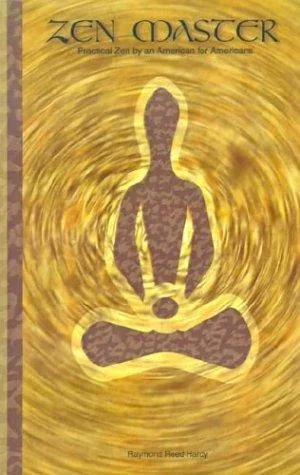
Raymond Reed Hardy’s Zen Master offers a structured entry point into the labyrinthine world of Zen Buddhism, framed for those accustomed to Western esoteric discourse. Hardy’s strength lies in his ability to translate concepts like sunyata (emptiness) into language that feels familiar, even if it occasionally risks oversimplification. He successfully grounds abstract ideas in practical application, a commendable feat. However, the work sometimes feels more like a commentary on Zen through an esoteric filter than a direct immersion into Zen itself. The section on the koan, while attempting clarity, could benefit from more nuanced examples of its psychological impact, moving beyond mere intellectual puzzles. Despite this, for readers bridging Western mystical thought and Eastern practice, Zen Master provides a clear, if sometimes generalized, map.
📝 Description
78
Raymond Reed Hardy's Zen Master, published in 2000, connects Zen Buddhist practice with Western esoteric thought.
Zen Master, by Raymond Reed Hardy, first appeared in 2000. The book works to explain core Zen Buddhist ideas, such as mindfulness, emptiness (sunyata), and the awakened mind, in ways that a wider audience can understand. Hardy brings Western esoteric perspectives to bear on these concepts.
This book is suitable for those interested in comparative religion, Eastern philosophies, and contemplative techniques. It is especially useful for readers wanting to see how Western esoteric traditions connect with Eastern spiritual paths. Anyone who values clear explanations of complex spiritual ideas will find this work valuable. It addresses subjects like direct experience versus intellectual understanding, the role of zazen meditation in gaining insight, and impermanence as a route to freedom.
Published at the start of the new millennium, Zen Master arrived during a time of growing Western curiosity about Eastern religions. While not tied to a specific Zen school like Soto or Rinzai, the book reflects a broader cultural interest in spiritual alternatives found in established Eastern traditions. Hardy's writing engages with the ideas of figures like D.T. Suzuki, who were important in bringing Zen to Western attention.
💡 Why Read This Book?
• Gain a clear framework for understanding Zen's core tenets, such as 'emptiness' (sunyata), as presented by Raymond Reed Hardy in 2000, offering a structured approach to Buddhist philosophy. • Explore the practice of zazen, the seated meditation central to Zen, and its role in cultivating direct insight, as detailed within the book's chapters. • Understand the concept of 'no-mind' (mushin) as a state of effortless action and awareness, providing a unique perspective on mindfulness beyond typical Western interpretations.
⭐ Reader Reviews
Honest opinions from readers who have explored this book.
❓ Frequently Asked Questions
What is the primary focus of Raymond Reed Hardy's Zen Master?
The book primarily focuses on explaining core Zen Buddhist principles, such as mindfulness, emptiness (sunyata), and the practice of zazen, through a Western esoteric lens. It aims to make these concepts accessible to a broad audience.
When was Zen Master first published?
Zen Master by Raymond Reed Hardy was first published in the year 2000, reflecting a period of heightened Western interest in Eastern spiritual traditions.
Does the book cover specific Zen lineages like Rinzai or Soto?
While the book explores general Zen philosophy and practice, it does not focus on differentiating between specific historical Zen lineages like Rinzai or Soto. Its approach is more generalized.
What esoteric traditions does Zen Master draw upon?
The book frames Zen concepts within a Western esoteric context, aiming to bridge understanding between Eastern spiritual disciplines and Western mystical thought, although specific traditions are not exhaustively detailed.
Is Zen Master suitable for absolute beginners to Buddhism?
Yes, the book is designed to be accessible to those new to Buddhist philosophy. It breaks down complex ideas like mindfulness and emptiness into understandable terms, making it a good starting point.
What is 'sunyata' as explained in Zen Master?
Sunyata, or emptiness, is presented as a core Zen concept signifying the lack of inherent, independent existence of phenomena. The book explores this not as nihilism, but as a basis for understanding interconnectedness and impermanence.
🔮 Key Themes & Symbolism
Mindfulness and Direct Experience
The work emphasizes that true understanding in Zen arises not from intellectualization but from direct, present-moment awareness. It advocates for cultivating mindfulness (sati) as a means to perceive reality as it is, unclouded by conceptual filters. This theme highlights the book's commitment to experiential learning, a core part of many esoteric paths, encouraging readers to apply these principles in daily life rather than treating them as mere philosophical theories.
The Nature of Emptiness (Sunyata)
Zen Master studies the concept of sunyata, explaining it not as a void, but as the absence of inherent, independent self-nature in all phenomena. This understanding is presented as crucial for dissolving attachment and realizing interconnectedness. The book frames emptiness as a liberating insight, freeing the practitioner from the illusion of a fixed self and fostering a compassionate outlook towards all beings.
Zazen as a Path
Seated meditation, or zazen, is presented as the central practice for realizing Zen insights. The book details the posture, breath awareness, and mental cultivation involved in zazen. It frames this practice as a direct method for quieting the discursive mind, observing mental patterns, and ultimately experiencing the nature of consciousness. This methodical approach aligns with the structured disciplines found in many Western esoteric orders.
The Paradox of 'No-Mind' (Mushin)
Hardy explores the concept of 'no-mind' (mushin), describing it as a state of spontaneous, uninhibited action and perception, free from ego-driven thought. This is not about lacking a mind, but about transcending the constant chatter of the conceptual mind to allow for intuitive understanding and responsive action. The book suggests this state is achievable through consistent practice, leading to a more fluid and authentic engagement with the world.
💬 Memorable Quotes
Direct passages from the work, attributed to the author.
“Emptiness is not nothingness, but the space in which all arises.”
— This interpretation clarifies the esoteric understanding of sunyata. It's presented not as a nihilistic void, but as the fundamental ground of reality, the potentiality from which all phenomena manifest, highlighting interdependence.
“The practice is the goal, not a means to an end.”
— This reflects the Zen principle of 'just sitting' (shikantaza). It suggests that the value lies in the process of meditation itself, not in achieving a specific future state, emphasizing the importance of the present moment in spiritual development.
“To know the self is to realize the self has no fixed self.”
— This paradoxical statement points to the doctrine of anatta (no-self). It suggests that the ultimate realization of one's true nature involves understanding that there is no permanent, unchanging ego or soul.
💡 Key Ideas
Editorial paraphrase of the work's core concepts — not direct quotes.
True seeing comes not from thought, but from being.
This paraphrased concept underscores the Zen emphasis on direct experience over intellectual analysis. It suggests that profound understanding arises from present-moment awareness and unfiltered perception, a principle central to many mystical traditions.
Attachment to form binds the mind; formlessness liberates.
This quote speaks to the Buddhist doctrine of impermanence and non-self. It suggests that clinging to fixed ideas, identities, or material possessions creates suffering, while recognizing the fluid, interdependent nature of reality offers freedom.
🌙 Esoteric Significance
Tradition
Zen Master aligns broadly with the Western esoteric interest in contemplative practices and the direct apprehension of reality, often found in mystical branches of traditions like Hermeticism or Gnosticism. While Zen itself is an Eastern Buddhist tradition, Hardy's presentation bridges it to Western seekers by emphasizing experiential realization and the transcendence of ordinary conceptual thought, mirroring esoteric goals of gnosis or direct divine contact.
Symbolism
The primary 'symbol' explored is the practice of zazen itself, representing stillness, focused attention, and the emptying of the mind. Another key motif is the concept of 'emptiness' (sunyata), which in esoteric terms can be seen as the primordial void or the unmanifest potential from which all creation arises, a concept echoed in Kabbalistic Ain Soph or Hermetic prima materia.
Modern Relevance
Contemporary mindfulness movements, secularized meditation apps, and even certain strands of Western psychological therapy draw implicitly or explicitly on Zen principles discussed in works like Hardy's. Thinkers exploring embodied cognition and non-dual awareness also find resonance with the book's emphasis on direct experience and the dissolution of the egoic self, continuing the dialogue Hardy initiated.
👥 Who Should Read This Book
• Individuals new to Buddhist philosophy seeking an accessible introduction to Zen concepts like mindfulness and emptiness. • Practitioners of Western esoteric traditions interested in exploring the parallels and divergences with Eastern contemplative methods. • Seekers of practical techniques for mental clarity and stress reduction through structured meditation practices like zazen.
📜 Historical Context
Published in 2000, Raymond Reed Hardy's Zen Master emerged during a period of significant Western engagement with Eastern philosophies. The late 20th century saw a surge in popularity for meditation and Buddhist studies, partly influenced by figures like Alan Watts and the Beat Generation's embrace of Zen in the 1950s and 60s. Hardy's work can be seen as part of this ongoing process of translating and integrating Buddhist concepts into Western frameworks. While not directly engaging with a specific Western esoteric school like Theosophy or Hermeticism, it tapped into a broader spiritual milieu seeking practical methods for inner transformation. Its publication predates the widespread digital dissemination of esoteric knowledge, positioning it as a more traditional print contribution to the field, offering accessible explanations that built upon the groundwork laid by earlier introductions to Zen, such as those by D.T. Suzuki.
📔 Journal Prompts
The concept of 'no-mind' (mushin) and its application in daily tasks.
Reflections on the nature of 'emptiness' (sunyata) beyond intellectual understanding.
Personal experiences with zazen and observed shifts in awareness.
The distinction between conceptual thought and direct experience.
How the idea of impermanence, as discussed in the book, impacts perceived reality.
🗂️ Glossary
Zazen
A specific term for seated meditation central to Zen Buddhism. It involves precise posture, breath awareness, and cultivating a state of alert, non-judgmental presence.
Sunyata
A Sanskrit term meaning 'emptiness' or 'voidness'. In Zen, it refers to the lack of inherent, independent existence of all phenomena, leading to an understanding of interdependence and impermanence.
Mushin
A Japanese term translating to 'no-mind'. It describes a state of mind free from ego-driven thoughts, allowing for spontaneous, intuitive action and clear perception.
Mindfulness (Sati)
The practice of maintaining a non-judgmental awareness of one's thoughts, feelings, bodily sensations, and surrounding environment in the present moment.
Koan
A paradoxical anecdote or riddle used in Zen Buddhism to provoke doubt and test a student's progress in Zen practice, aiming to break through rational thought.
Anatta
A Pali term, equivalent to the Sanskrit 'anatman', meaning 'no-self'. It is a fundamental Buddhist doctrine stating that there is no permanent, unchanging, independent self or soul.
Formlessness
In the context of Zen, this refers to the understanding that phenomena lack inherent, fixed form or essence, aligning with the concept of emptiness and impermanence.
🔮 Readers Also Liked
Browse all →







More by Raymond Reed Hardy
All books →
More Free Spiritual Development Books
View all →