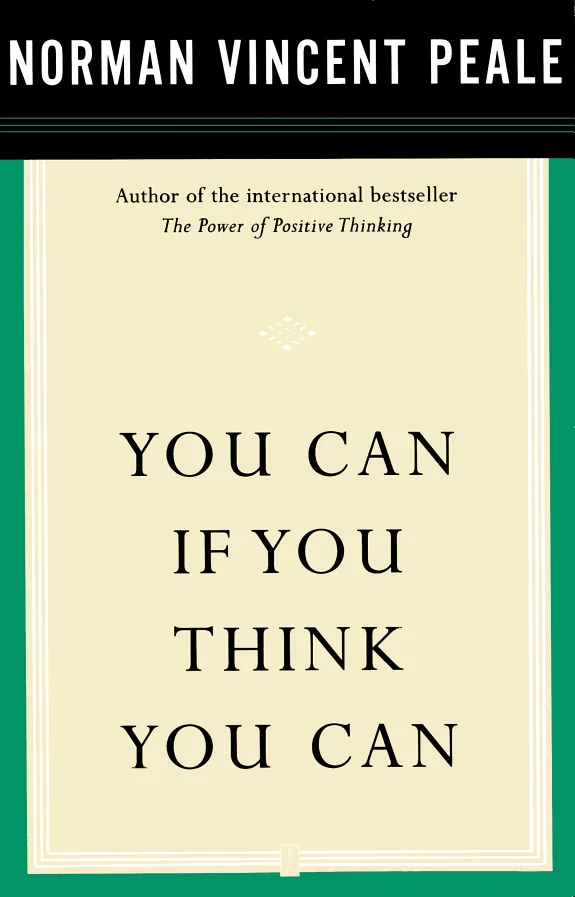
You Can If You Think You Can
 81
81

You Can If You Think You Can
Norman Vincent Peale's "You Can If You Think You Can" offers a familiar, yet potent, distillation of his core philosophy on mental resilience. The strength of the book lies in its unwavering directness; Peale doesn't shy away from the practical application of faith and positive thinking, presenting them as actionable tools rather than abstract ideals. His discussions on reframing perception, particularly the emphasis on "persistence through perception," provide a concrete mechanism for confronting adversity. However, the work occasionally leans into platitudes, and readers seeking novel psychological frameworks might find the concepts somewhat dated. A notable passage on the "healing of the mind through faith" illustrates his consistent blend of spiritual guidance and psychological uplift. Ultimately, the book serves as a robust reminder of the internal resources available to anyone willing to cultivate them.
📝 Description
81
Norman Vincent Peale published "You Can If You Think You Can" in 1987, focusing on mental fortitude.
Norman Vincent Peale's "You Can If You Think You Can," released in 1987, provides practical advice for developing mental strength. It is not a book of complex doctrines but a guide to building resilience, grounded in Christian principles and psychological insights. Peale, a minister, shares wisdom gained from years of counseling, highlighting the importance of belief and a positive outlook for personal advancement and overcoming challenges.
The book targets readers experiencing discouragement, self-doubt, or facing difficult situations. It appeals to those desiring a stronger inner life, better equipped to handle external pressures and internal worries. Individuals who prefer straightforward guidance that blends faith with practical psychology will find value here. It is especially recommended for those familiar with "The Power of Positive Thinking" and interested in Peale's methods for enhancing mental toughness and spiritual fortitude.
While not strictly esoteric in the sense of occult traditions, "You Can If You Think You Can" emerged from a late 20th-century spiritual development movement. This movement often blended Christian theology with practical psychology, emphasizing the mind's power to influence reality. Peale's work, particularly following his 1952 success with "The Power of Positive Thinking," became a touchstone for this trend. It engaged with broader ideas about mental discipline and faith as tools for personal empowerment, contrasting with more deterministic views of human behavior prevalent in some psychological circles of the era.
💡 Why Read This Book?
• Learn to reframe challenges using the "principle of persistence through perception" as outlined by Dr. Peale, enabling a more robust approach to problem-solving. • Discover practical methods for accessing "inner power," drawing on faith and disciplined thought to build mental fortitude, a core concept from the book's chapters. • Understand how to cultivate unwavering belief in one's capabilities, a key takeaway from Peale's extensive ministry and counseling experience documented since the 1950s.
⭐ Reader Reviews
Honest opinions from readers who have explored this book.
❓ Frequently Asked Questions
What is the main principle Norman Vincent Peale emphasizes in "You Can If You Think You Can"?
The book's central principle is "persistence through perception." Dr. Peale teaches that overcoming obstacles relies heavily on how one perceives them and the unwavering mental commitment to continue despite difficulties.
When was "You Can If You Think You Can" by Norman Vincent Peale first published?
Norman Vincent Peale's "You Can If You Think You Can" was first published on August 26, 1987.
How does "You Can If You Think You Can" differ from "The Power of Positive Thinking"?
While both books share Peale's core philosophy, "You Can If You Think You Can" focuses on applying his principles to specific obstacles and challenges, offering a more direct approach to problem-solving than the foundational concepts in "The Power of Positive Thinking."
What is 'inner power' according to Norman Vincent Peale?
In Peale's view, 'inner power' is a spiritual and psychological resource accessible through faith and positive mental attitudes. It's the wellspring of strength one can tap into to face and overcome life's difficulties.
Does "You Can If You Think You Can" require religious belief to be effective?
While rooted in Christian principles, the book's emphasis on mental attitude, belief, and persistence can be beneficial to individuals of various backgrounds. Peale's message aims to empower the individual's own mental and spiritual resources.
What kind of advice does Norman Vincent Peale offer for dealing with difficult situations?
Peale advises readers to maintain faith, cultivate a positive perception of challenges, and practice persistent effort. He stresses that by believing in one's ability to overcome, and drawing on spiritual strength, even baffling problems can be resolved.
🔮 Key Themes & Symbolism
The Principle of Persistence
This core concept, "persistence through perception," suggests that one's ability to overcome challenges is not merely about effort but about a fundamental shift in how those challenges are viewed. Peale argues that by altering one's perception from one of defeat to one of possibility, and then maintaining that belief with persistent action, individuals can unlock the strength to achieve their goals. This involves actively challenging negative thought patterns and affirming one's capacity for success, drawing on both inner resolve and faith.
Harnessing Inner Power
Peale posits the existence of a potent 'inner power' within each individual, accessible through faith and disciplined thinking. This is not a mystical energy but a psychological and spiritual wellspring that can be tapped to overcome adversity. The book provides methods for accessing this power, emphasizing prayer, positive affirmations, and the cultivation of a strong belief system. It suggests that this internal resource is key to developing resilience and achieving personal breakthroughs when faced with difficulties.
The Role of Belief and Faith
Central to Peale's philosophy is the transformative power of belief and faith. He asserts that a strong conviction in one's ability to succeed, coupled with faith in a higher power, creates a mental environment conducive to overcoming obstacles. This theme underscores the idea that limiting beliefs are often the primary barriers to progress. By strengthening one's faith and cultivating a positive belief system, individuals can dismantle these internal barriers and empower themselves to achieve desired outcomes.
Overcoming Obstacles Through Perception
The book emphasizes that the nature of our problems is often amplified or diminished by our perspective. Peale encourages readers to actively reframe their perception of difficulties, viewing them not as insurmountable barriers but as opportunities for growth and demonstration of inner strength. This active reframing, combined with sustained effort, is presented as a critical strategy for navigating and ultimately conquering life's challenges, irrespective of their apparent magnitude.
💬 Memorable Quotes
Direct passages from the work, attributed to the author.
“The ability to achieve success is directly related to your belief in your ability to succeed.”
— This highlights Peale's foundational idea that self-belief is not a mere byproduct of success, but a prerequisite. It suggests that our internal conviction acts as a powerful determinant of our external achievements.
“Persistence through perception is the key to overcoming any difficulty.”
— This captures the book's central thesis: true perseverance stems from a conscious, sustained effort to perceive challenges in a way that empowers, rather than defeats, the individual.
“Draw upon your inner power, a wellspring of strength available through faith.”
— This interpretation emphasizes the spiritual and psychological dimension of resilience. It suggests an inherent capacity for strength that can be accessed and amplified through religious belief and a focused mindset.
“Your attitude toward a problem is more important than the problem itself.”
— This points to the subjective nature of our experience with difficulties. Peale suggests that it is our internal response and outlook, rather than the objective circumstances, that largely dictates our ability to cope and succeed.
💡 Key Ideas
Editorial paraphrase of the work's core concepts — not direct quotes.
Believe in yourself and in the power of your thoughts to shape your reality.
This paraphrased concept points to the active role individuals play in their own lives through mental discipline. It suggests that thoughts are not passive but possess a creative force capable of influencing outcomes.
🌙 Esoteric Significance
Tradition
While not strictly aligned with a single esoteric lineage like Hermeticism or Kabbalah, Peale's work draws heavily from practical Christian spirituality, which has its own mystical and contemplative traditions. It can be seen as a modern, democratized form of spiritual psychology, emphasizing the divine spark within the individual and the power of prayer and faith, concepts found in many mystical traditions. It departs from traditional esotericism by focusing on broad accessibility and avoiding specific ritualistic or symbolic systems, instead offering universal psychological principles framed within a religious context.
Symbolism
The primary 'symbol' in Peale's work is the human mind itself, depicted as a battleground for thoughts and beliefs. "Inner power" functions as a potent motif, representing the divine potential within. The concept of "faith" acts as a key, unlocking this power, while "obstacles" symbolize the trials that test and ultimately strengthen this inner resolve. These are not arcane symbols but psychological and spiritual archetypes presented for practical application.
Modern Relevance
Peale's emphasis on the mind-body connection and the power of positive thought continues to influence contemporary self-help, positive psychology, and even certain therapeutic approaches like Cognitive Behavioral Therapy (CBT), albeit often without direct attribution to Peale. Thinkers and practitioners focusing on mindset, resilience, and the impact of belief systems on well-being echo his core tenets. His work remains relevant for those exploring the intersection of spirituality, psychology, and personal empowerment in the 21st century.
👥 Who Should Read This Book
• Individuals seeking practical, faith-based strategies for overcoming personal or professional challenges, looking for actionable advice beyond abstract theories. • Those interested in the historical development of the self-help movement and the impact of Norman Vincent Peale's psychological and spiritual guidance, particularly his key work from the mid-20th century. • Readers who appreciate direct, encouraging prose and are open to exploring how a positive mental attitude and belief in one's capabilities can foster resilience and achieve goals.
📜 Historical Context
Published in 1987, "You Can If You Think You Can" arrived during a period where self-help literature was experiencing immense popularity, building on the groundwork laid by authors like Dale Carnegie and even Peale's own earlier work. The era saw a convergence of psychological insights, often filtered through a lens of Christian spirituality, aimed at empowering individuals in an increasingly complex modern world. Peale's approach, emphasizing positive thinking and faith, stood in contrast to more deterministic psychological theories prevalent in academic circles. While figures like Albert Ellis were developing Rational Emotive Behavior Therapy (REBT), focusing on challenging irrational beliefs, Peale offered a more faith-based pathway to similar outcomes of mental resilience. His work was widely embraced by the public, though sometimes met with skepticism from more secular or scientifically rigorous psychological communities.
📔 Journal Prompts
The concept of 'persistence through perception': How has your perception of a past challenge influenced your persistence?
Your personal wellspring of 'inner power': What practices or beliefs most effectively help you access it?
Affirming your 'ability to succeed': Identify one specific belief you hold about yourself that could be strengthened.
Reframing an 'obstacle': Describe a current difficulty and reframe it as an opportunity for growth.
The role of 'faith' in your life: How does your faith, in a broad sense, support your efforts to overcome challenges?
🗂️ Glossary
Inner Power
A concept referring to the inherent psychological and spiritual strength within an individual, accessible through faith, positive thinking, and disciplined mental effort, enabling them to overcome difficulties.
Persistence Through Perception
The central principle advocated by Peale, suggesting that the ability to overcome obstacles is significantly influenced by one's viewpoint of those obstacles and the sustained mental commitment to persevere.
Positive Mental Attitude (PMA)
A mindset characterized by optimism, confidence, and a focus on solutions rather than problems. Peale championed PMA as a fundamental tool for achieving success and well-being.
Belief System
The collection of beliefs and assumptions an individual holds about themselves, others, and the world. Peale emphasizes the importance of cultivating a strong, positive belief system to facilitate personal growth.
Obstacles
Challenges, difficulties, or setbacks encountered in life. The book provides strategies for reframing and overcoming these obstacles through mental fortitude and faith.
Faith
In Peale's context, this encompasses religious faith and a deep-seated belief in one's own capabilities and the possibility of positive outcomes, acting as a catalyst for action.
Self-Image
An individual's perception of themselves. Peale suggests that a positive self-image, cultivated through conscious effort, is crucial for achieving success and happiness.
This book appears in 1 collection
🔮 Readers Also Liked
Browse all →








From the “Self-Realization” Collection
View all →







More Free Occult Philosophy Books
View all →