On life after death
 83
83

On life after death
Elisabeth Kübler-Ross's "On Life After Death" tackles one of humanity's most enduring enigmas with her characteristic blend of empathy and empirical observation. The strength of the book lies in its vast collection of personal testimonies, which Kübler-Ross presents with immense respect, allowing the voices of those who have neared death to speak for themselves. Her 1991 publication offers a compelling counterpoint to purely materialistic views of existence, grounded in decades of clinical experience and personal reflection. A notable passage describes patients reporting a profound sense of peace and unconditional love, a recurring theme that offers significant comfort to the bereaved. However, the book's primary limitation is its reliance on anecdotal evidence, which, while powerful emotionally, may not satisfy readers seeking rigorous scientific proof. Despite this, Kübler-Ross’s work provides a valuable perspective for anyone questioning the finality of death. It serves as a gentle yet firm reminder of the persistent human hope for continuity.
📝 Description
83
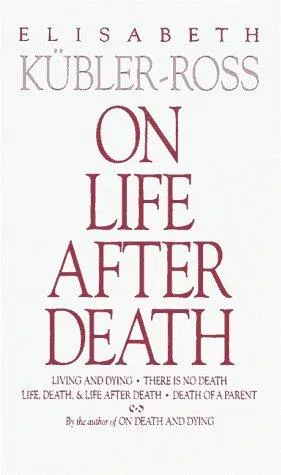
Elisabeth Kübler-Ross's 1991 book examines what happens after physical death.
Published in 1991, "On Life After Death" compiles Elisabeth Kübler-Ross's research and personal reflections on existence beyond the physical body. Drawing on her work with terminally ill patients, she presents accounts of near-death experiences, out-of-body phenomena, and spiritual encounters. Kübler-Ross suggests that death is a transition, not an absolute end, aiming to provide comfort and understanding to those facing loss or fearing mortality.
The book is for individuals dealing with grief, the loss of loved ones, or the fear of death. It also appeals to readers interested in parapsychology, consciousness, and the connection between science and spirituality. Those curious about testimonies from people who have neared death and returned with accounts will also find material here.
This book emerged from a 1970s and 1980s cultural interest in the afterlife, influenced by figures like Raymond Moody. Kübler-Ross built upon her earlier work on grief, applying her empathetic approach to testimonies of those who experienced NDEs. It entered a period where spiritual and paranormal subjects gained wider public attention, moving beyond purely academic or religious discussions.
💡 Why Read This Book?
• Gain a nuanced understanding of near-death experiences, as explored through Kübler-Ross's extensive interviews with individuals who have faced mortality, offering a perspective beyond typical medical explanations. • Discover the recurring themes in alleged post-mortem encounters, such as the "light" and the presence of spiritual guides, as documented in her 1991 work, which can reframe one's view of the transition. • Explore the concept of soul continuity and spiritual realms, providing a framework for processing grief and loss that integrates personal anecdotes with a broader spiritual narrative.
⭐ Reader Reviews
Honest opinions from readers who have explored this book.
❓ Frequently Asked Questions
What is Elisabeth Kübler-Ross's background that lends credibility to "On Life After Death"?
Elisabeth Kübler-Ross was a Swiss-American psychiatrist renowned for her foundational work on grief and dying, detailed in her 1969 book "On Death and Dying." Her extensive experience with terminally ill patients provided a unique foundation for exploring life after death.
Does "On Life After Death" present scientific proof of an afterlife?
The book primarily relies on anecdotal evidence and personal testimonies from near-death experiences. While it presents compelling accounts and reflections, it does not claim to offer empirical scientific proof in the conventional sense.
What are some common themes found in the near-death experiences described in the book?
Common themes include encountering a bright light, meeting deceased loved ones or spiritual beings, experiencing a life review, and a profound sense of peace and unconditional love, as documented by Kübler-Ross.
How does "On Life After Death" relate to Kübler-Ross's earlier work "On Death and Dying"?
"On Life After Death" expands upon the themes introduced in "On Death and Dying" (1969). While the earlier book focused on the process of dying and grief, this 1991 work directly addresses the question of consciousness and existence beyond physical death.
Is the book suitable for someone grieving a loss?
Yes, the book is particularly resonant for those grieving. Kübler-Ross's empathetic approach and the collection of comforting testimonies offer solace and a different perspective on the continuity of life and love beyond physical separation.
When was "On Life After Death" first published?
"On Life After Death" was first published in 1991, building upon Elisabeth Kübler-Ross's decades of work with the terminally ill and her growing exploration of spiritual phenomena.
🔮 Key Themes & Symbolism
Continuity of Consciousness
Kübler-Ross posits that consciousness persists beyond physical death, a central tenet of many esoteric traditions. The book compiles numerous accounts from individuals who, during near-death experiences, reported awareness, perception, and even interaction with spiritual entities or realms. This exploration challenges materialistic paradigms by suggesting that the 'self' is not solely a product of the brain but an enduring spiritual essence. The work aligns with concepts found in Gnosticism and Neoplatonism, which view the physical body as a temporary vessel for an eternal soul.
The Nature of Spiritual Realms
Based on patient testimonies, "On Life After Death" describes perceived non-physical dimensions inhabited by beings of light and departed souls. These realms are often depicted as places of profound peace, unconditional love, and accelerated spiritual learning. Kübler-Ross details encounters with deceased relatives and guides, suggesting a structured spiritual hierarchy or community that awaits individuals transitioning from life. This speaks to descriptions of the Bardo in Tibetan Buddhism or the Astral Plane in Theosophy, offering a framework for understanding post-mortem existence.
Love as an Eternal Force
A recurring motif throughout the book is the overwhelming presence and power of love experienced during NDEs. Kübler-Ross emphasizes that this love is not conditional but a fundamental, universal energy that transcends earthly limitations and the finality of death. This concept aligns with mystical traditions across various religions that identify divine essence with love, suggesting that our ultimate reality and connection lie in this pervasive force, guiding souls and providing comfort both in life and in the transition beyond.
The Process of Transition
Kübler-Ross frames death not as an abrupt end but as a transition, a passage from one state of being to another. The book details common experiences reported during this transition, such as out-of-body sensations, a tunnel of light, and a review of one's life. This perspective offers a more holistic view of mortality, integrating spiritual and psychological elements, and providing a framework for understanding the dying process that is less about cessation and more about transformation, echoing ancient beliefs about the soul's journey.
💬 Memorable Quotes
Direct passages from the work, attributed to the author.
“It is not uncommon for people who have had a near-death experience to describe seeing a light.”
— This highlights a recurring phenomenon in NDE accounts, often interpreted as a benevolent presence or the entrance to a spiritual realm, symbolizing hope and transition.
“The love that is felt is immense and unconditional.”
— This captures a core element of NDEs, suggesting that love is the fundamental energy of existence, a concept central to many spiritual philosophies and a profound comfort for those facing loss.
“People often report meeting deceased loved ones or spiritual guides.”
— This points to the perceived continuity of relationships and the presence of supportive entities in the afterlife, challenging the notion that death severs all connections.
“There is a great sense of peace and acceptance.”
— This describes the emotional state frequently reported by individuals who have experienced NDEs, indicating a profound shift in perception regarding life and its conclusion.
💡 Key Ideas
Editorial paraphrase of the work's core concepts — not direct quotes.
Death is not an end, but a transformation.
This summarizes Kübler-Ross's central thesis, reframing mortality as a passage rather than a cessation, offering a hopeful perspective on the ultimate fate of consciousness.
🌙 Esoteric Significance
Tradition
This work draws heavily from the modern spiritualist movement and the broader esoteric tradition of exploring consciousness beyond the physical. While not adhering strictly to a single lineage like Theosophy or Anthroposophy, Kübler-Ross's compilation of near-death experiences and her interpretation of them align with concepts of soul travel, the existence of non-physical planes, and the continuity of spiritual essence found across various esoteric schools. It represents a popularization of ideas that have circulated within these circles for centuries, making them accessible to a wider audience.
Symbolism
The most prominent symbol is the 'light,' often described as brilliant, warm, and emanating unconditional love. This light is a universal motif in spiritual traditions, representing divine presence, ultimate reality, or the source from which consciousness emanates. Another recurring motif is the 'tunnel,' symbolizing the passage or transition from the physical realm to a spiritual one. The encounter with deceased loved ones or spiritual guides also functions symbolically, representing connection, continuity, and the presence of benevolent forces guiding the soul's journey.
Modern Relevance
Kübler-Ross's work continues to influence contemporary discussions on death, dying, and consciousness. Her empathetic approach and the emphasis on NDEs resonate with modern palliative care movements advocating for holistic patient well-being. Thinkers and practitioners in consciousness studies, transpersonal psychology, and even those exploring quantum consciousness theories often reference her findings. Her legacy is evident in the ongoing research into NDEs and the continued integration of spiritual perspectives into end-of-life care and grief counseling.
👥 Who Should Read This Book
• Individuals grappling with personal loss and grief: Readers seeking comfort and a broadened perspective on the continuity of consciousness after the death of loved ones will find solace in the collected testimonies. • Students of parapsychology and consciousness studies: Those interested in phenomena like near-death experiences, out-of-body experiences, and the nature of subjective awareness beyond physical limitations will find extensive anecdotal material. • Healthcare professionals and caregivers: Individuals working in palliative care, hospice, or psychology can gain insights into patient perspectives on death and dying, fostering a more compassionate and holistic approach to end-of-life support.
📜 Historical Context
Elisabeth Kübler-Ross's "On Life After Death," released in 1991, arrived at a key moment in Western culture's engagement with the afterlife. The preceding decades had seen a surge of interest in phenomena like near-death experiences (NDEs), partly fueled by Raymond Moody Jr.'s "Life After Life" (1975) and the growing popularity of parapsychology. Kübler-Ross, already a celebrated figure for her pioneering work on the stages of dying in "On Death and Dying" (1969), lent significant weight and a compassionate, clinical perspective to these explorations. Her work provided a bridge between the medical establishment, which often viewed such experiences as mere neurological events, and the public seeking spiritual validation. This book emerged in dialogue with the burgeoning New Age movement and challenged the prevailing secular and materialistic views of existence, offering a more hopeful, consciousness-centered perspective on mortality, a perspective that often faced skepticism from more conservative scientific and religious circles.
📔 Journal Prompts
The recurring 'light' in near-death experiences: what does this symbol represent in your personal spiritual framework?
Reflecting on the concept of unconditional love as described by those who have neared death.
The soul's journey beyond the physical body: explore your beliefs about post-mortem existence.
Life review: consider the lessons and significance of key moments in your life.
The transition from life to what follows: how does the idea of transformation alter your perception of death?
🗂️ Glossary
Near-Death Experience (NDE)
A profound personal experience associated with being close to death, often involving altered states of consciousness, sensory phenomena like a light, and feelings of peace.
Out-of-Body Experience (OBE)
A sensation of leaving one's physical body and perceiving the surroundings from a different vantage point, often reported during NDEs.
Spiritual Realm
A non-physical dimension believed to be inhabited by souls, spiritual beings, or divine presence, often described as a place of peace and love.
Consciousness Continuity
The belief or theory that awareness and personal identity persist beyond the physical death of the body.
Life Review
A common element of NDEs where individuals report experiencing their entire life, or significant portions of it, in rapid succession, often with emotional and ethical understanding.
Soul
In many spiritual and esoteric traditions, the immaterial essence of a living being, considered to be immortal and separable from the body.
Transition
In the context of death, viewed not as an end but as a passage from one state of existence to another, often implying a spiritual or conscious journey.
🔮 Readers Also Liked
Browse all →









More by Elisabeth Kübler-Ross
All books →

More Free Occult Philosophy Books
View all →