WTF is Tarot?
 72
72

WTF is Tarot?
Bakara Wintner's WTF is Tarot? effectively strips away the mystique surrounding tarot for the modern beginner. It’s refreshing to see a guide that prioritizes intuition and personal connection over dense historical analysis. Wintner’s direct, conversational tone makes complex ideas feel manageable, a significant achievement. The section detailing the court cards, for instance, offers a nuanced perspective that moves beyond simple archetypes. However, the book occasionally leans too heavily on the author’s personal style, which might not universally appeal to readers seeking a more neutral introduction. A limitation is its primary focus on the Rider-Waite-Smith system, offering less for those working with other decks. Ultimately, WTF is Tarot? succeeds as an approachable entry point into a complex system.
📝 Description
72
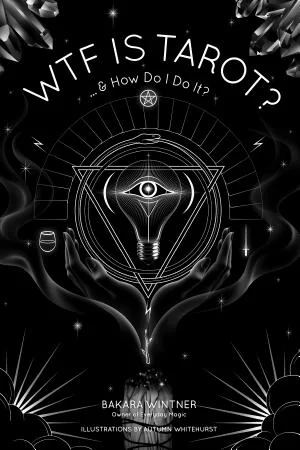
WTF is Tarot? (2017) offers a practical, modern guide to the Rider-Waite-Smith deck.
Bakara Wintner's 2017 book, WTF is Tarot?, approaches the Rider-Waite-Smith tarot deck with a focus on practical use and personal connection. Wintner moves away from academic or obscure interpretations, aiming to make the symbolism and structure of the cards clear for those new to tarot. The book is designed to build a reader's confidence in using tarot for self-reflection and gaining insight.
This guide is written for beginners who might find traditional tarot texts off-putting or too complex. It favors an intuitive approach over memorization and appeals to individuals curious about tarot's psychological and symbolic dimensions, free from religious dogma. Those who are skeptical but interested in the mechanics and meaning behind the cards will also find this an accessible entry point.
Published in 2017, WTF is Tarot? reflects a contemporary resurgence of interest in divination, particularly among younger generations. This period saw a shift from the more formal interpretations of mid-20th century tarot, influenced by figures like A.E. Waite and Pamela Colman Smith. Wintner's work aligns with a modern trend toward personalized spirituality and practical engagement with occult tools, moving away from rigid structures towards intuitive application.
💡 Why Read This Book?
• You will learn a practical, intuitive approach to reading the Rider-Waite-Smith deck, moving beyond memorization by understanding the narrative flow of the Major Arcana as presented by Wintner. • You will gain confidence in using tarot for self-reflection, as the book encourages a personal dialogue with the cards, a method distinct from rigid, predictive systems. • You will grasp the symbolic language of the Minor Arcana suits (Wands, Cups, Swords, Pentacles) through Wintner's grounded explanations, fostering a deeper connection to their everyday meanings.
⭐ Reader Reviews
Honest opinions from readers who have explored this book.
❓ Frequently Asked Questions
Is WTF is Tarot? suitable for someone who has never seen a tarot deck before?
Absolutely. Published in 2017, WTF is Tarot? is designed specifically for beginners. It breaks down the structure of the Rider-Waite-Smith deck, explaining concepts like the Major and Minor Arcana clearly, making it an ideal first introduction.
Does the book focus on specific tarot spreads?
While the book covers fundamental card meanings and interpretations, it emphasizes understanding the cards themselves. It provides a foundation for using various spreads, encouraging personal adaptation rather than dictating rigid layouts.
What is the historical significance of the Rider-Waite-Smith deck mentioned?
The Rider-Waite-Smith deck, central to Wintner's book, was first published in 1909. Its illustrated Minor Arcana by Pamela Colman Smith were revolutionary, depicting scenes rather than just symbolic arrangements, which Wintner’s work builds upon.
Can I use this book if I'm interested in the psychological aspects of tarot?
Yes, Wintner's approach is highly psychological. The book frames tarot as a tool for self-discovery and understanding one's inner landscape, aligning with modern psychological interpretations of symbolic systems.
How does this book differ from older tarot guides?
Unlike older, more dogmatic texts, WTF is Tarot? (2017) adopts a contemporary, anti-authoritarian voice. It prioritizes intuition and personal experience, moving away from the prescriptive methods found in many mid-20th-century guides.
Does the author discuss the origins of tarot cards?
The book touches upon the context of the Rider-Waite-Smith deck's creation but primarily focuses on making the cards accessible for contemporary use. It doesn't delve deeply into the ancient origins of cartomancy.
🔮 Key Themes & Symbolism
Intuitive Interpretation
Wintner champions an intuitive approach to tarot, encouraging readers to trust their gut feelings and personal associations with the cards. This contrasts with older methods that relied heavily on memorized meanings. The work emphasizes that the 'right' interpretation is often the one that speaks most directly to the individual querent's situation, fostering a personal relationship with the symbolism of the Rider-Waite-Smith deck.
The Fool's Journey Archetype
A central concept explored is the narrative arc of the Major Arcana, often termed 'The Fool's Journey.' Wintner guides readers through this sequence, presenting it as a metaphor for personal growth and spiritual evolution. Each card represents a stage or lesson, from the initial leap of faith by The Fool to the integration symbolized by The World.
Practical Application
WTF is Tarot? moves beyond theoretical knowledge to practical use. It focuses on how to actively engage with the cards for self-understanding, decision-making, and exploring life's challenges. The book aims to clarify the process, making tarot a usable tool rather than an arcane mystery confined to specialists.
Explaining Court Cards
The book offers a fresh perspective on the Court Cards (Page, Knight, Queen, King). Instead of fixed personality types, Wintner encourages seeing them as aspects of self or archetypal energies, providing more dynamic and relatable interpretations that are less prone to rigid categorization.
💬 Memorable Quotes
Direct passages from the work, attributed to the author.
“Tarot is not meant to predict your future; it’s meant to help you create it.”
— This statement reframes tarot from a deterministic tool to one of empowerment. It suggests that the cards offer guidance and insight into present energies and potential paths, enabling the user to actively shape their future.
“The cards are a mirror, reflecting what’s already within you.”
— This highlights the introspective nature of tarot. It posits that the meanings derived from a reading are not external pronouncements but rather projections of the querent's own subconscious thoughts, feelings, and hidden potentials.
“Learn the symbols, but don't be afraid to break the rules.”
— This encourages a balance between foundational knowledge and personal intuition. While understanding traditional meanings is important, Wintner advocates for trusting one's own insights when they diverge from established interpretations.
“The suits represent different areas of life.”
— This simple yet crucial concept frames the four suits—Wands, Cups, Swords, and Pentacles—as distinct domains of human experience, such as creativity, emotions, intellect, and the material world.
“Your intuition is your most powerful tool in a reading.”
— This emphasizes the subjective and personal element of tarot. Wintner suggests that a reader's intuitive connection to the cards and the querent is paramount, often more valuable than rigid adherence to textbook meanings.
🌙 Esoteric Significance
Tradition
The work aligns with modern psychological interpretations of archetypal symbolism, often drawing implicitly from Jungian psychology, while remaining firmly rooted in the Western esoteric tradition via its focus on the Rider-Waite-Smith deck. It departs from more strictly Hermetic or Kabbalistic frameworks by prioritizing intuitive connection and personal narrative over rigid adherence to established symbolic correspondences.
Symbolism
Key symbols include The Fool, representing new beginnings and leaps of faith, and the four suits: Wands (action, creativity), Cups (emotions, relationships), Swords (intellect, conflict), and Pentacles (material world, security). Wintner interprets these not as fixed decrees but as dynamic energies and life lessons encountered on a personal journey.
Modern Relevance
Wintner's approach influences contemporary tarot practitioners and educators who emphasize accessibility and personal empowerment. Her work is relevant to modern spirituality movements, digital divination communities, and therapeutic applications of symbolic systems, resonating with thinkers like Jessica Dore who bridge psychology and divination.
👥 Who Should Read This Book
• Newcomers to tarot seeking a friendly, jargon-free introduction to the Rider-Waite-Smith system, wanting to understand basic card meanings and structure. • Individuals interested in the psychological and self-exploratory aspects of tarot, looking for a tool to enhance self-awareness rather than predict the future. • Those who find traditional esoteric texts intimidating, appreciating a contemporary voice that explains divination and encourages personal intuition.
📜 Historical Context
WTF is Tarot? arrived in 2017, a period marked by a significant resurgence of interest in occult and esoteric practices, particularly among younger demographics. This era saw a departure from the more formal, sometimes rigid interpretations prevalent in mid-20th century tarot scholarship, influenced by figures like Eden Gray and her interpretations of the Rider-Waite-Smith deck. Wintner's work taps into a contemporary desire for accessible, personalized spirituality, moving away from the denser, academic approaches seen in some circles. It reflects a broader cultural shift towards self-help and psychological exploration using symbolic systems. The book's direct, informal tone contrasts sharply with the more traditional presentation of tarot, aligning with a generation seeking authenticity and demystification in spiritual tools.
📔 Journal Prompts
The Fool's Journey as a metaphor for your current life path.
Reflecting on the symbolism of the suit of Cups in your emotional landscape.
Interpreting the Queen of Swords as a facet of your own personality.
How the energy of The Magician manifests in your creative pursuits.
Connecting the minor arcana suit of Pentacles to your material goals.
🗂️ Glossary
Major Arcana
The 22 trump cards in a tarot deck, often representing significant life events, archetypal figures, and spiritual lessons on the journey of The Fool.
Minor Arcana
The 56 cards divided into four suits (Wands, Cups, Swords, Pentacles), typically representing everyday situations, challenges, and experiences.
Rider-Waite-Smith Deck
The iconic tarot deck first published in 1909, known for its symbolic imagery and illustrated Minor Arcana, forming the basis for many modern decks and interpretations.
Querent
The person for whom a tarot reading is being done; the individual seeking insight or guidance from the cards.
Suit
One of the four divisions within the Minor Arcana: Wands, Cups, Swords, and Pentacles, each associated with different elements and areas of life.
Court Cards
The four face cards in each suit: Page, Knight, Queen, and King, often representing people, personality types, or specific energies.
Intuition
The ability to understand something immediately, without the need for conscious reasoning; a key element emphasized by Wintner for tarot interpretation.
🔮 Readers Also Liked
Browse all →
More by Bakara Wintner
All books →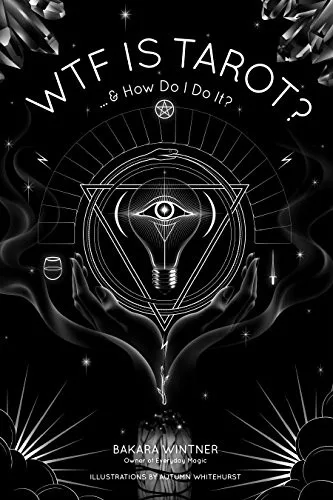
More Free Divination & Tarot Books
View all →