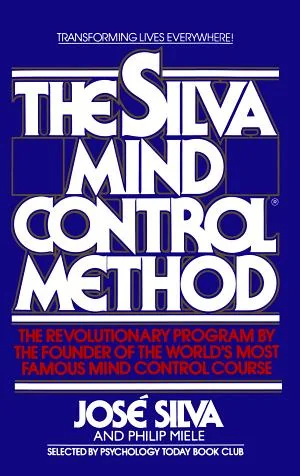
The Silva mind control method
 72
72

The Silva mind control method
José Silva’s method, as presented by Philip Miele, offers a compelling, albeit distinctly 20th-century, framework for mental self-regulation. The strength lies in its systematic, almost pedagogical approach to accessing altered states, particularly the "Alpha level." The "Three Fingers Technique" is a standout for its immediate utility in achieving a calmer, more focused state. However, the book's limitation is its occasional overreach, presenting subjective experiences as objective facts without sufficient empirical caveat. The section detailing "Mind Power" for achieving goals, while inspiring, can feel anecdotal without deeper exploration of the mechanisms. Despite this, the practical exercises provide a tangible path for readers to explore their own mental landscape. It is a pragmatic manual for the self-directed mind.
📝 Description
72
José Silva first described his mind control techniques in the 1960s, aiming to unlock the mind's latent potential.
The Silva Mind Control Method presents a structured program for individuals to access deeper mental faculties. It teaches techniques to reach an "Alpha level" of brainwave activity, which is described as a state conducive to enhanced problem-solving, self-influence over physiology, and goal achievement through focused thought. The book functions as a practical manual, guiding readers through exercises and meditations designed to cultivate these mental skills. It is intended for those interested in self-improvement, mental discipline, and exploring the mind's capabilities beyond conventional limits. The method offers a systematic approach for stress reduction, improved concentration, and the development of intuitive abilities, appealing to those seeking a step-by-step system to tap into their mental reserves.
Emerging in the 1960s alongside a growing interest in parapsychology and human potential, The Silva Method offered a Western, structured framework for altered states of consciousness. It gained traction within a cultural milieu receptive to mind-body connections and non-ordinary states, drawing parallels with movements in meditation, biofeedback, and Eastern philosophies. The method's focus on achieving specific mental states for practical results placed it within a broader tradition of exploring consciousness for personal development and control.
💡 Why Read This Book?
• Learn to consciously enter the "Alpha level" using specific techniques like the "Three Fingers Technique," enabling deeper focus and relaxation than typically achieved through casual meditation. • Discover "The Cage" exercise to create a personalized mental sanctuary for stress relief and problem-solving, a concrete method for mental fortification. • Understand the concept of "Mind Power" as presented by José Silva, allowing for the focused application of visualization and intention to address personal challenges.
⭐ Reader Reviews
Honest opinions from readers who have explored this book.
❓ Frequently Asked Questions
What is the "Alpha level" in The Silva Mind Control Method?
The "Alpha level" refers to a brainwave frequency state, typically between 8 and 12 Hz, associated with deep relaxation and heightened mental receptivity. José Silva taught specific techniques to help individuals consciously enter this state for improved focus and subconscious access.
Are there specific exercises in the book?
Yes, the book outlines several practical exercises. These include the "Three Fingers Technique" for entering Alpha, "The Cage" for creating a mental sanctuary, and "The Dream Method" for problem-solving, all designed for progressive mental training.
When was The Silva Mind Control Method first published?
The Silva Mind Control Method was first published in 2022. However, the underlying Silva Method techniques were developed and taught by José Silva much earlier, gaining popularity throughout the latter half of the 20th century.
Can this method help with stress?
The method is designed to help manage stress by teaching techniques to enter a relaxed state ("Alpha level") and create a mental sanctuary ("The Cage"). These practices aim to provide mental control and reduce the impact of daily pressures.
Who developed the Silva Method?
The Silva Method was developed by José Silva, an American self-taught psychoneurologist and inventor from Laredo, Texas. Philip Miele co-authored the book, detailing Silva's system.
Is this book suitable for beginners in mind control techniques?
Absolutely. The book is structured as a step-by-step program, making it accessible for beginners. It aims to demystify mind control and provide practical tools for anyone looking to enhance their mental capabilities.
🔮 Key Themes & Symbolism
Conscious Alpha State
The foundational concept is the deliberate induction of the "Alpha level," a brainwave frequency state (8-12 Hz) characterized by deep relaxation and heightened mental clarity. The work posits that this state is not merely for rest but serves as a gateway to accessing subconscious resources and enhancing cognitive functions. Techniques like the "Three Fingers Technique" are presented as practical tools for reliably entering this state, moving beyond passive meditation to active mental control. This theme explores the practical application of achieving and maintaining Alpha for self-improvement and problem-solving.
Mind Power and Manifestation
This theme explores the belief that focused mental energy, particularly when directed from the Alpha level, can influence reality. The book details methods for "Mind Power," suggesting that visualization and intention are potent forces for achieving personal goals, improving health, and solving problems. It moves beyond mere self-awareness to an active engagement with the external world through mental projection. This concept taps into principles of psychosomatic influence and the potential for the mind to shape perceived outcomes.
Subconscious Programming
A significant aspect of the Silva Method involves learning to communicate with and reprogram the subconscious mind. The book suggests that many limitations and unwanted behaviors stem from ingrained subconscious patterns. By accessing the Alpha state, individuals can introduce new, positive suggestions and visualizations directly to the subconscious. This process is presented as a means of overcoming mental blocks, enhancing creativity, and fostering personal growth by altering internal directives.
Mental Sanctuary and Control
The creation of a personal "Mental Laboratory" or "Cage" is a key exercise designed to provide a secure, internal space for focused thought and relaxation. This sanctuary serves as a retreat from external distractions and a controlled environment for practicing mental techniques. It emphasizes the importance of mental discipline and the ability to compartmentalize thoughts and emotions, fostering a sense of inner command and resilience against mental clutter and stress.
💬 Memorable Quotes
Direct passages from the work, attributed to the author.
“The Alpha level is where the mind is most receptive.”
— This statement captures the core belief of the Silva Method: that a specific brainwave state (Alpha) is optimal for learning, healing, and accessing deeper mental faculties, making it the primary target for the system's techniques.
“Use your imagination to solve problems.”
— This emphasizes the practical application of mental exercises within the Silva system, particularly "The Dream Method," where creative visualization is employed as a tool to find solutions to challenges.
“Create a mental space for peace.”
— This refers to the "Cage" or "Mental Laboratory" technique, a core exercise designed to build a personal sanctuary for relaxation, focus, and mental resilience, offering a tangible method for stress management.
💡 Key Ideas
Editorial paraphrase of the work's core concepts — not direct quotes.
You can learn to control your mind and body.
This paraphrase highlights the empowering premise of the Silva Method, suggesting that mental and physiological functions are not merely automatic but can be consciously influenced and directed through learned techniques.
The subconscious mind holds great power.
This quote underscores the importance placed on the subconscious in the Silva Method. It suggests that by understanding and interacting with this deeper level of awareness, individuals can unlock significant potential for change and self-improvement.
🌙 Esoteric Significance
Tradition
While not strictly adhering to a single lineage, the Silva Method draws upon principles found in various esoteric traditions, particularly those focusing on mind-body connection and the power of consciousness, reminiscent of certain Hermetic and New Thought philosophies. It reframes concepts of mental power and intention in a more secular, accessible language, diverging from traditional ritualistic or theological frameworks but echoing the Hermetic maxim 'As Above, so Below' through its emphasis on internal states influencing external reality.
Symbolism
The primary 'symbol' within the Silva Method is the "Alpha level" itself, representing a threshold state between conscious and subconscious awareness. The "Mental Laboratory" or "Cage" functions as a symbolic sacred space, a personalized inner sanctum for focused intention and mental work, akin to a magician's circle or a monk's meditation cell. The "Three Fingers Technique" can be seen as a symbolic gesture, a physical anchor to facilitate the transition into the desired mental state.
Modern Relevance
The Silva Method's principles continue to influence modern self-help, mindfulness, and neuro-linguistic programming (NLP) practices. Contemporary thinkers and practitioners in fields like positive psychology, cognitive behavioral therapy (CBT) adaptations, and even some aspects of performance coaching echo its emphasis on visualization, intention, and achieving altered states for enhanced well-being and goal attainment. Its legacy is evident in the popularization of mental techniques for stress reduction and personal efficacy.
👥 Who Should Read This Book
• Individuals seeking practical, step-by-step techniques for mental self-regulation and stress reduction, similar to guided meditation but with a focus on active control. • Aspiring practitioners of mind-body disciplines who wish to understand foundational concepts of altered states and subconscious influence without deep immersion in complex philosophical systems. • Self-improvement enthusiasts interested in exploring the potential of their own minds for problem-solving, creativity, and goal achievement through structured mental exercises.
📜 Historical Context
The Silva Mind Control Method emerged in the mid-20th century, a period marked by widespread fascination with the untapped potential of the human mind. Developed by José Silva starting in the 1950s and gaining momentum through the 1960s and 70s, his techniques coincided with the rise of the Human Potential Movement and interest in parapsychology. This era saw figures like Carl Rogers exploring humanistic psychology and organizations like the Esalen Institute fostering research into altered states of consciousness. Silva's work offered a systematic, accessible approach, distinct from more esoteric or purely spiritual traditions, positioning itself as a practical, almost scientific, method for mental self-mastery. While competing schools explored meditation and biofeedback, Silva's method stood out for its explicit focus on achieving specific, tangible results through controlled mental states, distinguishing it from the broader philosophical inquiries of contemporary figures like Alan Watts.
📔 Journal Prompts
Reflect on the concept of the "Alpha level" and your personal experience entering it.
Describe your "Mental Laboratory" and how you utilize it for focus.
Analyze a recent problem using the principles of "Mind Power" as outlined.
Consider the implications of "subconscious programming" on your daily habits.
How does the "Three Fingers Technique" aid your transition to a calmer state?
🗂️ Glossary
Alpha Level
A state of brainwave activity typically ranging from 8 to 12 cycles per second, associated with deep relaxation, heightened receptivity, and access to subconscious functions.
Three Fingers Technique
A specific physical gesture (touching thumb to index, middle, and ring fingers) used to help the practitioner quickly enter the Alpha level.
Mental Laboratory
A personalized mental space created through visualization, serving as a sanctuary for relaxation, problem-solving, and practicing mental techniques.
Mind Power
The Silva Method's concept of harnessing focused mental energy, intention, and visualization, particularly from the Alpha level, to influence personal outcomes.
Subconscious Mind
The part of the mind operating below the level of conscious awareness, believed by Silva to store memories, habits, and beliefs that influence behavior and perception.
Dream Method
A technique involving setting an intention before sleep to solve a problem or gain insight, with the expectation that the subconscious mind will provide answers upon waking.
Beta Level
The normal waking state of consciousness, characterized by brainwave frequencies typically above 13 cycles per second, associated with active, outward-focused thinking.
🔮 Readers Also Liked
Browse all →









More by José Silva, Philip Miele
All books →
More Free Occult Philosophy Books
View all →