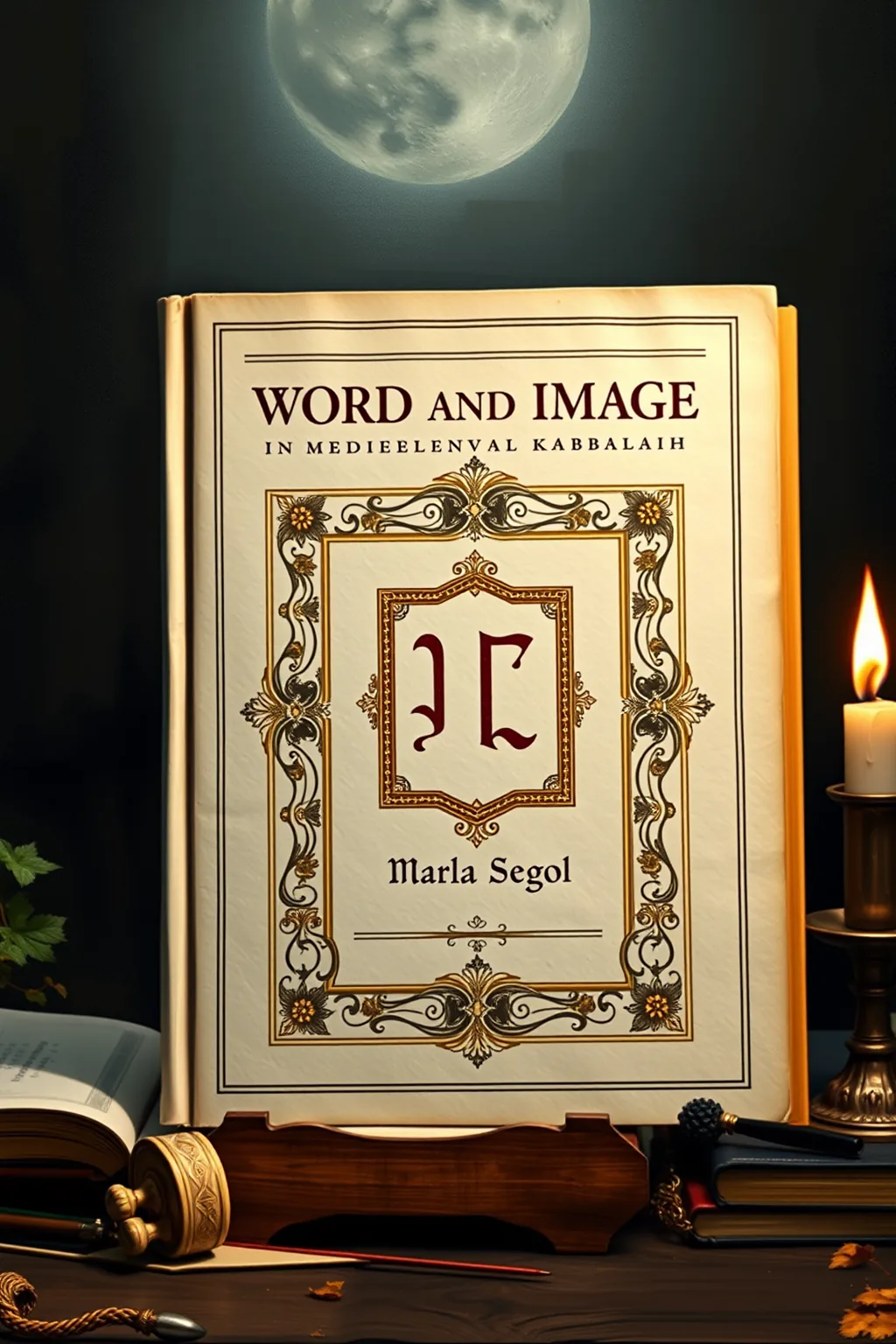
Word and image in medieval Kabbalah
 61
61

Word and image in medieval Kabbalah


Isolde Whitaker (Sacred Texts Editor) — Marla Segol's 'Word and Image in Medieval Kabbalah' is an indispensable text for anyone seeking to grasp the profound depth of Jewish mysticism. Segol masterfully navigates the complex interplay between linguistic structures and visual symbolism, illuminating the esoteric techniques employed by medieval Kabbalists. Her rigorous scholarship unearths the practical applications of mystical theory, demonstrating how the Sefer Yeẓirah and related traditions served as frameworks for spiritual ascent and cosmic understanding. This book offers rare insights into a tradition often veiled in mystery, making it essential reading for serious students of Kabbalah, comparative religion, and the history of esoteric thought. A truly illuminating and authoritative contribution.
📝 Description
61
Marla Segol's 2017 book examines how Hebrew letters and divine names structured medieval Kabbalistic thought.
Marla Segol’s book, 'Word and Image in Medieval Kabbalah,' analyzes the central role of Hebrew letters, divine names, and visual symbols in Jewish mysticism. It shows how texts such as the Sefer Yeẓirah were understood not just as philosophical works but as tools for accessing cosmic knowledge. Segol details the combination of precise language and visual elements, where symbols and diagrams were believed to bring about spiritual realities.
The work illuminates the connection between language and the cosmos, illustrating how medieval Kabbalists used the elements of creation to understand the divine. It is a resource for those interested in the symbolic systems within Western esotericism, particularly how language and imagery functioned as pathways to spiritual understanding.
This book sits within the study of Kabbalah, a system of Jewish mysticism that developed between the 12th and 18th centuries. Kabbalah uses meditation, commentary, and coded interpretations of the Torah to understand the divine nature and the creation of the universe. Segol's work focuses on the specific period of medieval Kabbalah, highlighting its unique engagement with linguistic and visual elements as methods for mystical attainment and cosmic insight.
💡 Why Read This Book?
Uncover the secret language of creation and the mystical power of Hebrew letters. 'Word and Image in Medieval Kabbalah' offers a unique lens into how medieval mystics perceived the divine through visual and linguistic symbolism. Ideal for scholars of Jewish mysticism, practitioners seeking deeper understanding of Kabbalistic principles, and seekers of hidden knowledge who are drawn to the profound interplay between language, image, and the cosmos. Embark on a journey to decode the universe's foundational elements.
⭐ Reader Reviews
Honest opinions from readers who have explored this book.
❓ Frequently Asked Questions
What is the primary focus of this book?
The book meticulously examines the symbiotic relationship between Hebrew letters, divine names, and visual imagery within medieval Kabbalah, exploring how these elements were used to understand and interact with the divine realms.
Which specific Kabbalistic texts are discussed?
Key texts include the foundational Sefer Yeẓirah, alongside other significant medieval Kabbalistic writings that illustrate the principles of word and image as tools for mystical contemplation and practice.
Is prior knowledge of Kabbalah required to read this book?
While some familiarity with Jewish mysticism can enhance the reading experience, Marla Segol's clear and evocative prose makes the subject accessible to dedicated students and curious newcomers alike.
What is the historical period covered by the book?
The book primarily focuses on the medieval and early modern periods of Kabbalistic development, specifically from approximately 425 to 1789 CE, detailing the evolution of these concepts.
How does this book relate to esoteric traditions outside of Judaism?
While rooted in Jewish mysticism, the book touches upon universal themes of symbolic language and the power of form, offering insights relevant to broader studies of Western esotericism and comparative mythology.
🔮 Key Themes & Symbolism
The Power of the Hebrew Alphabet
This theme studies the profound belief within medieval Kabbalah that the Hebrew letters are not mere phonetic symbols but fundamental building blocks of creation. The book explores how mystics viewed these letters as divine emanations, imbued with potent energies and secrets. It examines the practices of Gematria (numerical value of letters), Notarikon (acrostics), and Temurah (letter substitution) as methods for deciphering hidden meanings and accessing higher spiritual states. The profound interconnectedness of language and reality is illuminated, revealing how the very structure of the cosmos is encoded within the Hebrew alphabet.
Visual Symbolism and Mystical Vision
Central to medieval Kabbalah was the use of visual aids, diagrams, and symbolic imagery to facilitate spiritual ascent. This theme investigates how Kabbalists employed everything from geometric patterns and sacred geometry to anthropomorphic representations of divine attributes and angelic hierarchies. The book highlights the crucial role of imagination and visionary experience, where contemplation of these symbols was believed to open pathways to the divine. It explores how images served as mnemonic devices, meditative tools, and conduits for direct mystical communion with the ineffable. The interplay between the seen and the unseen is a recurring motif.
The Sefer Yeẓirah and Cosmic Creation
This theme focuses on the foundational text, the Sefer Yeẓirah (Book of Formation), and its profound influence on medieval Kabbalistic thought. The book unpacks how this ancient work, with its emphasis on the twenty-two Hebrew letters and the ten sefirot, provided a blueprint for understanding the process of creation. Segol elucidates how Kabbalists interpreted the Sefer Yeẓirah not as a theoretical text but as a practical guide for recreating the divine order within the human soul and the cosmos. The inherent power of language and numerical structures, as presented in the Sefer Yeẓirah, is revealed as a key to unlocking cosmic mysteries and achieving spiritual perfection.
💬 Memorable Quotes
Direct passages from the work, attributed to the author.
“Within the glyph lies the blueprint of existence.”
— This suggests that the visual and linguistic forms used in Kabbalah are not arbitrary but contain the fundamental structures and divine intentions behind the creation of the universe.
“To see the word is to perceive the unseen.”
— This highlights the transformative nature of Kabbalistic study, where engaging with sacred texts and symbols allows the practitioner to access spiritual realities beyond ordinary perception.
“The mystic's canvas is woven from divine letters.”
— This metaphor emphasizes the creative and spiritual act of Kabbalistic contemplation, where the practitioner uses the elements of Hebrew language as the raw materials for constructing their inner spiritual landscape.
“In the silence between letters, the universe whispers.”
— This points to the contemplative aspect of Kabbalah, suggesting that true insight comes not just from the letters themselves but from the contemplative space they create, allowing for divine revelation.
💡 Key Ideas
Editorial paraphrase of the work's core concepts — not direct quotes.
The letter is the seed of the divine word, and the image is its blossoming.
This quote expresses the core thesis: Hebrew letters are potent, primordial elements, and visual representations are the dynamic unfolding of their inherent spiritual power, leading to profound understanding.
🌙 Esoteric Significance
Tradition
This work is deeply rooted in the tradition of Kabbalah, a complex and many-sided system of Jewish mysticism. It explores Kabbalah not as a monolithic entity but as a diverse set of practices and interpretations that evolved over centuries. The book focuses on the esoteric dimension of Kabbalah, emphasizing its goal of achieving direct communion with the divine, understanding the hidden workings of the cosmos, and facilitating spiritual transformation through specialized knowledge and techniques. It highlights Kabbalah's unique approach to theology, cosmology, and the human soul through symbolic language and contemplative practices.
Symbolism
The core symbolism explored revolves around the Hebrew alphabet and divine names, viewed as the fundamental building blocks of creation. Each letter is seen as a potent force, a channel of divine energy, and a key to unlocking cosmic secrets. Alongside linguistic symbolism, the book studies the rich visual language of Kabbalah, including geometric patterns, sacred diagrams, and anthropomorphic representations of divine attributes (sefirot). These symbols function as meditative aids, mnemonic devices, and symbolic maps for reading through the spiritual realms and understanding the divine emanations that structure reality.
Modern Relevance
The exploration of 'Word and Image in Medieval Kabbalah' holds profound relevance for contemporary spiritual seekers and scholars. It offers a unique perspective on the power of language and symbol in shaping consciousness and understanding reality, resonating with modern interests in semiotics, mindfulness, and the psychology of perception. The Kabbalistic emphasis on the interconnectedness of all things and the potential for inner transformation through focused contemplation provides valuable insights for personal growth and spiritual development. Furthermore, it contributes to a broader understanding of Western esoteric traditions and their enduring influence on art, philosophy, and mystical thought.
👥 Who Should Read This Book
This informative work is essential for several audiences. For **scholars of Jewish mysticism and religious history**, it provides rigorous analysis and fresh perspectives on the formative period of Kabbalah. **Practitioners of Kabbalah and those interested in esoteric traditions** will find useful insights into the practical application of symbolic language and the nature of divine communication. **Seekers of hidden knowledge and wisdom** drawn to the mystical dimensions of language and art will discover a wide range of profound ideas. **Beginners** interested in exploring the foundational texts and concepts of Kabbalah will find Segol's clear exposition to be an excellent entry point into this complex and rewarding field of study.
📜 Historical Context
The medieval period, particularly from the 12th to the 15th centuries, witnessed a vibrant flourishing of Kabbalistic thought across Europe and the Middle East. This era was marked by intense intellectual and spiritual ferment, often occurring in communities that were both deeply religious and engaged with philosophical currents from Islamic and Christian traditions. The emergence of key Kabbalistic texts like the Zohar coincided with a desire to reinterpret Jewish scripture and tradition through a mystical lens, seeking deeper, esoteric meanings. The study of 'Word and Image' was particularly potent in this milieu, as mystics grappled with the perceived divine origins of language and sought symbolic systems to articulate complex spiritual concepts. This period saw Kabbalah move from a more reclusive practice to a significant force shaping Jewish spiritual and intellectual life, influencing thinkers and practitioners for centuries to come and laying the groundwork for later esoteric developments.
📔 Journal Prompts
Reflect on a time when a word or image profoundly shifted your understanding or perception. What was it and why was it so impactful?
Consider the Hebrew letters as fundamental forces. If you were to assign a 'force' or 'energy' to your favorite letter, what would it be and why?
Explore the concept of a 'divine blueprint.' How might the universe, or your own life, be seen as an expression of a pre-ordained symbolic language?
Imagine you are a medieval Kabbalist. What visual symbol would you use to represent the most profound spiritual truth you understand?
How does the relationship between spoken word and visual representation in your daily life influence your understanding of reality?
🗂️ Glossary
Kabbalah
A complex and esoteric system of Jewish mysticism that seeks to understand the nature of God, the universe, and the human soul through symbolic interpretation of scripture and contemplative practices.
Sefer Yeẓirah
An ancient Kabbalistic text, considered foundational, that expounds on the creation of the universe through the manipulation of the twenty-two Hebrew letters and the ten sefirot.
Sefirot
Ten divine emanations or attributes through which God manifests and interacts with the created universe in Kabbalistic cosmology. They form a symbolic tree of life.
Gematria
A method of Kabbalistic exegesis where the numerical value of Hebrew letters is used to find hidden meanings and connections between words or phrases.
Esotericism
Teachings or practices that are meant to be understood by a select group of initiates or those with specialized knowledge, often concerning spiritual or mystical truths.
This book appears in 1 collection
🔮 Readers Also Liked
Browse all →









More by Marla Segol
All books →
From the “Kabbalah” Collection
View all →






More Free Kabbalah & Jewish Mysticism Books
View all →