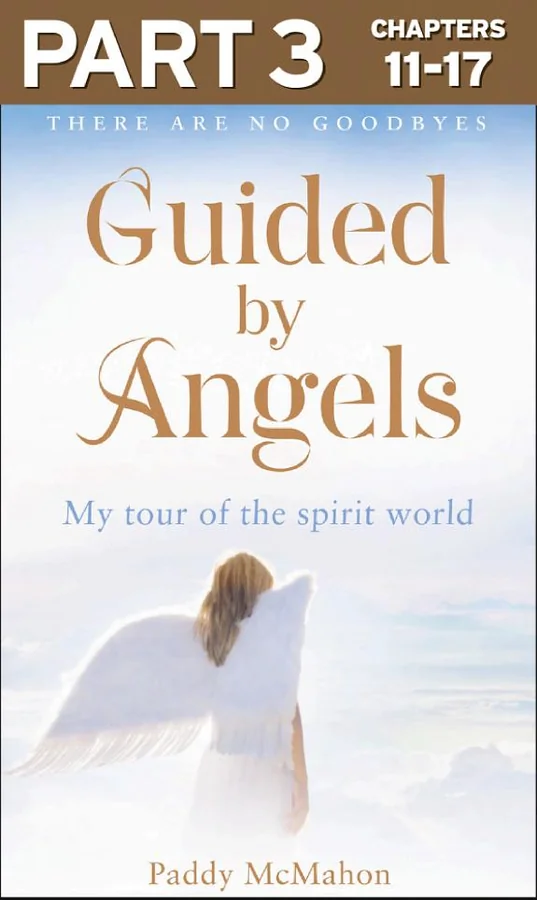
Guided By Angels: Part 3 of 3: There Are No Goodbyes, My Tour of the Spirit World
 72
72

Guided By Angels: Part 3 of 3: There Are No Goodbyes, My Tour of the Spirit World
Paddy McMahon's "Guided By Angels: Part 3" presents the concluding chapters of an extensive personal narrative concerning spirit world visitation. The strength of this volume lies in its unwavering commitment to the author's singular vision; McMahon consistently recounts his experiences with a tone of earnest conviction. He details specific interactions with what he identifies as angelic beings, offering a consistent, if idiosyncratic, perspective on spiritual progression. However, the book's primary limitation is its self-contained nature within McMahon's broader project. Without the context of Parts 1 and 2, this segment can feel disorienting. For instance, the detailed descriptions of specific angelic hierarchies lack grounding for a new reader. The verdict is that this is a dedicated, if specialized, continuation for committed followers of McMahon's unique spiritual journey.
📝 Description
72
Paddy McMahon's "Guided By Angels: Part 3" concludes his 2015 account of angelic interactions and the spirit world.
This is the third and final volume in Paddy McMahon's "Guided By Angels" series, covering chapters 11 through 17. The book continues the personal testimony begun in the earlier parts, detailing McMahon's experiences and observations within what he describes as the spirit world. The narrative focuses on his interactions with angelic entities, whom he identifies as guides.
The work presents itself as a direct account of spiritual guidance and communication. McMahon writes about his perceived encounters, framing them as lessons and experiences within a non-physical existence. The structure of the spirit world and the concept of life continuing after physical death are central to his reflections. The book aims to convey a perspective on spiritual progression and understanding, distinct from traditional moral frameworks.
Published in 2015, this work fits within contemporary spiritualism and mediumistic literature. It follows a tradition of individuals documenting direct spiritual encounters and communications with non-physical entities. McMahon's narrative echoes earlier figures who reported interactions with angelic or spirit guides, aiming to impart lessons for earthly existence. The book’s dissemination via digital platforms also marks its place in the modern era of esoteric subject communication.
💡 Why Read This Book?
• Gain insight into McMahon's specific framework for angelic communication, learning how he interprets their guidance beyond conventional religious doctrine, as detailed in chapters 11-17. • Understand McMahon's personal cosmology of the spirit world, including his views on its structure and inhabitants, as presented in this final volume. • Explore a contemporary personal testimony of spiritual visitation, offering a unique perspective on life after death narratives distinct from established theological accounts.
⭐ Reader Reviews
Honest opinions from readers who have explored this book.
❓ Frequently Asked Questions
What is the publication history of "Guided By Angels: Part 3"?
"Guided By Angels: Part 3: There Are No Goodbyes, My Tour of the Spirit World" was first published digitally on January 30, 2014, as the concluding segment of a larger work.
Is this book part of a series?
Yes, this is the third and final part of Paddy McMahon's "Guided By Angels" series, continuing the narrative from the first two volumes.
What subject matter does this book cover?
This book covers chapters 11-17 of McMahon's account, detailing his experiences and interpretations of the spirit world and angelic guidance.
Who is the author, Paddy McMahon?
Paddy McMahon is the author of the "Guided By Angels" series, sharing personal testimonies of spiritual encounters and tours of the spirit world.
Can "Guided By Angels: Part 3" be read as a standalone book?
While it concludes the series, it is designed as the final part of a larger narrative. Reading Parts 1 and 2 first would provide the essential context for this volume.
What is the primary focus of McMahon's writings on the spirit world?
McMahon focuses on personal, direct experiences of spiritual realms and communication with beings he identifies as angels, presenting these as guides for spiritual understanding.
🔮 Key Themes & Symbolism
Angelic Communication
The work centers on direct, personal communication with entities identified as angels. McMahon presents these beings not as distant deities but as accessible guides offering insights into spiritual matters and the workings of the afterlife. The narrative details specific dialogues and interactions, emphasizing a collaborative learning process between the author and his angelic guides. This theme explores a modern interpretation of angelic roles, diverging from traditional hierarchical structures towards a more personalized mentorship.
Spirit World Exploration
This theme details McMahon's purported tours and observations within the spirit world. It outlines a personal cosmology, describing the environments, inhabitants, and general atmosphere of non-physical realms. The narrative suggests a structured, albeit unfamiliar, existence beyond the physical body, emphasizing progression and learning. McMahon's descriptions offer a unique, firsthand account of what he perceives as the afterlife, distinct from common religious or philosophical models.
Spiritual Progression Beyond Death
A core concept is the continuity of consciousness and the potential for spiritual growth after physical death. McMahon's narrative implies that the spirit world is a realm for continued development, guided by angelic entities. This perspective frames death not as an end, but as a transition to a new phase of existence focused on understanding and evolving. The work suggests that such progression is accessible and guided, offering a hopeful outlook on mortality.
Personal Testimony and Guidance
The entire work is framed as a personal testimony, emphasizing the author's subjective experiences. McMahon positions himself as a conduit for information received directly from angelic sources. This theme highlights the value placed on direct, unmediated spiritual experience and personal revelation over established dogma. The narrative serves as a guide, encouraging readers to consider the possibility of their own spiritual connections and intuitive guidance.
💬 Memorable Quotes
Direct passages from the work, attributed to the author.
“There are no goodbyes, only transitions.”
— This statement captures McMahon's view on death and the spirit world, suggesting continuity rather than finality. It implies that separation is temporary and that consciousness persists, re-framing the concept of loss.
“Angels are guides, not gods.”
— This highlights McMahon's distinct perspective on angelic beings, positioning them as mentors and teachers rather than objects of worship. It emphasizes their role in facilitating spiritual understanding and personal growth.
“My tour revealed structured non-physical realms.”
— This interpretation points to McMahon's detailed descriptions of the spirit world, indicating that he perceived it as having order and distinct areas, not just formless energy.
“Guidance comes through direct inner knowing.”
— This reflects McMahon's emphasis on intuitive or direct spiritual perception as the primary means of receiving messages from angelic guides, rather than solely through external signs.
💡 Key Ideas
Editorial paraphrase of the work's core concepts — not direct quotes.
The spirit world is a place of learning.
This paraphrase suggests that the afterlife, according to McMahon's experience, is not a static paradise or punishment, but an active environment for continued education and soul evolution.
🌙 Esoteric Significance
Tradition
McMahon's work fits within the broad spectrum of Western esotericism, particularly its modern manifestations focused on direct spiritual experience and communication with non-physical entities. While not strictly adhering to a single lineage like Hermeticism or Kabbalah, it draws upon the general Gnostic impulse towards immediate knowledge (gnosis) of the divine and the existence of intermediary spiritual beings. His emphasis on angelic guidance aligns with certain Christian esoteric traditions but is presented through a personal, contemporary lens, distinct from formalized theological structures.
Symbolism
The primary symbol is the 'angel' itself, representing not just a religious figure but a direct conduit for higher wisdom and spiritual progression. McMahon's 'tours' of the spirit world can be seen as symbolic journeys through inner landscapes, representing stages of consciousness or spiritual understanding. The concept of 'guidance' itself functions symbolically, indicating a divinely-ordained path towards enlightenment accessible through personal connection.
Modern Relevance
McMahon's personal testimony speaks to contemporary spiritual seekers interested in direct experience and alternative interpretations of the afterlife. His work finds echoes in modern mediumship, channeled literature, and discussions around consciousness studies. Thinkers and practitioners exploring non-dualistic spirituality or the phenomenology of religious experience might find his candid, experiential approach relevant to discussions on subjective spiritual reality.
👥 Who Should Read This Book
• Individuals who have read "Guided By Angels: Parts 1 and 2" and seek the conclusion to Paddy McMahon's narrative. • Readers interested in contemporary personal testimonies of spiritual encounters and purported communication with angelic beings. • Those exploring diverse perspectives on the nature of the spirit world and consciousness beyond physical death.
📜 Historical Context
Published in 2014, "Guided By Angels: Part 3" emerged during a period of sustained interest in New Age spirituality and personal accounts of the paranormal and afterlife. The early 21st century saw a proliferation of such narratives, often disseminated through self-publishing and online platforms, allowing authors like Paddy McMahon to share their experiences directly with a global audience. This trend continued a lineage tracing back to spiritualist movements of the 19th century and figures like Helena Blavatsky and the Theosophical Society, though McMahon's work focuses on a more personal, less systematized angelic interaction. Unlike the more academic explorations of consciousness or comparative religion, McMahon's book is firmly rooted in subjective experience, contributing to a broader cultural discourse on spirituality that often prioritizes individual revelation over institutionalized doctrine. The reception of such works typically falls into two camps: fervent belief from those seeking similar experiences, and skepticism from mainstream academia and religious institutions.
📔 Journal Prompts
McMahon's concept of angelic guidance: How does your inner knowing align with his described interactions?
Reflect on the idea of 'transitions' versus 'goodbyes' in your own life experiences.
Describe a personal experience that felt like a 'tour' of an unfamiliar inner or outer landscape.
Consider the role of 'learning' in your understanding of the spirit world.
Analyze the difference between 'angels as guides' and 'angels as gods' in your spiritual framework.
🗂️ Glossary
Angelic Guidance
The concept, central to McMahon's work, of receiving direct instruction, wisdom, and support from beings identified as angels during spiritual experiences or tours of the spirit world.
Spirit World
The non-physical realm or dimension described by McMahon as existing beyond physical death, characterized by consciousness, spiritual entities, and opportunities for continued learning and progression.
Tour of the Spirit World
McMahon's term for his direct, experiential journeys into the spirit world, where he claims to have interacted with angelic beings and observed the nature of that realm.
Transition
McMahon's preferred term for death, emphasizing continuity of consciousness and existence rather than a final ending or separation.
Inner Knowing
The intuitive or direct spiritual perception that McMahon suggests is a primary method for receiving guidance from angelic sources.
Spiritual Progression
The idea that consciousness continues to evolve and learn after physical death, a key function of the spirit world as depicted in McMahon's narrative.
Esoteric
Relating to or being concerned with the supernatural, occult, or magical. In McMahon's context, it refers to his personal, non-traditional experiences and interpretations of spiritual realities.
This book appears in 1 collection
🔮 Readers Also Liked
Browse all →









From the “Angels” Collection
View all →




More Free Occult Philosophy Books
View all →