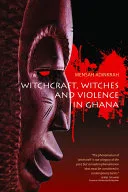
Witchcraft, Witches, and Violence in Ghana
 71
71

Witchcraft, Witches, and Violence in Ghana
Mensah Adinkrah's "Witchcraft, Witches, and Violence in Ghana" offers a starkly realistic portrayal of a phenomenon often relegated to historical footnotes or sensationalized headlines. The author methodically dissects the social and economic factors fueling contemporary witch accusations, particularly focusing on the targeting of elderly, impoverished women. A notable strength is the book's refusal to exoticize the subject, instead grounding the analysis in observable social dynamics and psychological underpinnings. However, the dense academic prose might present a barrier for readers less familiar with anthropological theory. The discussion around the media's complicity in perpetuating harmful narratives, as presented in the section on media portrayal, is particularly compelling and offers a critical lens on modern information dissemination. This work serves as a vital, if challenging, examination of social control and belief in the 21st century.
📝 Description
71
Mensah Adinkrah's 2018 book examines witchcraft accusations and violence in Ghana.
This study analyzes the ongoing phenomenon of witchcraft accusations and the violence directed at alleged witches in contemporary Ghana. The book details how these beliefs connect with social structures, economic inequalities, and cultural ideas about misfortune. It moves beyond simple explanations to show the complex factors that keep these practices alive, focusing on the social and psychological reasons behind witch persecution.
The work places current Ghanaian witchcraft beliefs in a broader historical context, recognizing that accusations and persecution are not new. It compares these events to historical witch trials elsewhere but stresses the specific cultural and economic conditions in Ghana. The author tracks how colonial histories and post-colonial development have shaped these beliefs and actions, demonstrating the adaptation of older customs.
Adinkrah discusses ideas like 'social death' for accused witches, how economic hardship leads to scapegoating, and why accusations are often gendered, with women, especially the old and poor, being unfairly targeted. The book also considers the media's part in spreading these stories and the psychological aspects of believing in harmful supernatural forces.
While not strictly an esoteric text in the sense of occult practices, this book engages with the power of belief systems to shape social reality and enact violence. It examines how deeply held cultural understandings of misfortune and malevolent forces, even when lacking empirical evidence, can lead to tangible harm and social exclusion. The work investigates the psychological mechanisms that sustain these beliefs and the social dynamics that make certain individuals targets, touching on themes relevant to the anthropology of religion and the sociology of belief.
💡 Why Read This Book?
• Learn how specific socio-economic conditions in Ghana, particularly in the post-colonial era, contribute to the scapegoating of individuals accused of witchcraft, as detailed in the book's analysis of economic hardship. • Understand the gendered dimensions of witch persecution by exploring how elderly and marginalized women become primary targets, a concept central to Adinkrah's examination of social vulnerability. • Gain insight into the cultural mechanisms that sustain belief in witchcraft, examining how beliefs about 'putative witches' influence social interactions and justice systems in contemporary Ghana.
⭐ Reader Reviews
Honest opinions from readers who have explored this book.
❓ Frequently Asked Questions
What is the primary reason elderly women are accused of witchcraft in Ghana?
The book indicates that elderly women are often accused due to their marginalized social and economic status, making them convenient scapegoats for community misfortunes. Their perceived lack of social support and vulnerability contributes to their targeting.
How does Mensah Adinkrah define 'putative witches'?
Mensah Adinkrah uses 'putative witches' to describe individuals who are socially designated and accused of witchcraft, regardless of whether they actually practice it. This term highlights the social construction of the witch identity.
When was "Witchcraft, Witches, and Violence in Ghana" first published?
The book "Witchcraft, Witches, and Violence in Ghana" by Mensah Adinkrah was first published on August 1, 2015.
Does the book discuss the role of traditional healers in witchcraft accusations?
Yes, the work explores how traditional beliefs and practices, including the roles of certain practitioners, intersect with and sometimes perpetuate the cycle of witchcraft accusations and violence within Ghanaian communities.
What is the significance of childhood socialization in the context of witchcraft beliefs?
The book examines how childhood socialization, through homes and schools, plays a role in transmitting and reinforcing beliefs about witchcraft. This early exposure shapes societal attitudes and the acceptance of such accusations.
Are there any historical parallels drawn to European witch trials?
Yes, the work draws parallels between contemporary Ghanaian witch accusations and historical witch trials in Europe, noting similarities in the targeting of vulnerable individuals and the social dynamics at play.
🔮 Key Themes & Symbolism
Social Scapegoating Mechanisms
Adinkrah meticulously details how social and economic pressures in Ghana create fertile ground for scapegoating. The book illustrates how misfortunes, from illness to financial ruin, are attributed to the malevolent actions of 'putative witches.' This mechanism serves to deflect blame from systemic issues or individual failings, offering a simplistic explanation for complex problems and reinforcing social cohesion through shared suspicion directed at marginalized individuals, often elderly women.
Gendered Persecution of Women
A central theme is the profoundly gendered nature of witchcraft accusations in Ghana. The work highlights how women, particularly those who are elderly, widowed, poor, and childless, become primary targets. Their social position, often lacking strong familial support networks, makes them vulnerable. The book explores the cultural stereotypes and anxieties that contribute to the association of female deviance with witchcraft, leading to severe social ostracization and violence.
Belief Systems and Social Order
The book examines the enduring power of belief systems in shaping social realities. It investigates how the prevalent belief in witchcraft, despite modernization, continues to influence daily life, legal processes, and community dynamics in Ghana. Adinkrah analyzes the psychological and social functions these beliefs serve, providing a framework for understanding fear, causality, and the maintenance of a perceived social order through the identification and punishment of alleged transgressors.
Media's Role in Perpetuating Narratives
Adinkrah critically assesses the influence of mass media in the context of witchcraft accusations. Exposure to media, whether traditional or emerging platforms, can amplify existing beliefs and contribute to the social construction of witches. The work explores how sensationalized reporting or the uncritical dissemination of accusations can further marginalize and endanger individuals, illustrating the complex relationship between information, belief, and social violence.
💬 Memorable Quotes
Direct passages from the work, attributed to the author.
“Purported witches are blamed for all manner of adversities including inexplicable illnesses and untimely deaths.”
— This statement expresses the core function of witchcraft accusations: providing a supernatural explanation for life's difficulties. It highlights how belief systems can serve as a framework for understanding and responding to suffering, often by identifying an external agent of harm.
“As in other historical periods and other societies, in contemporary Ghana, alleged witches are typically female, elderly, poor, and marginalized.”
— This observation underscores the consistent pattern of targeting vulnerable demographics. It connects contemporary Ghanaian practices to broader historical trends of witch persecution, emphasizing that the accused often share characteristics of social and economic disadvantage.
“Childhood socialization in homes and schools, exposure to mass media, and...”
— This fragment points to the multi-faceted ways witchcraft beliefs are transmitted and reinforced. It suggests a systemic process beginning in early education and extending through public discourse, embedding these ideas within the cultural fabric.
“Witchcraft violence is a feature of many contemporary African societies.”
— This opening assertion frames the book's scope, positioning the Ghanaian case study within a wider regional context. It signals that the phenomenon is not isolated but part of a broader social and cultural landscape in Africa.
“In Ghana, belief in witchcraft and the malignant activities of putative witches is prevalent.”
— This statement establishes the pervasiveness of the belief system being examined. It indicates that witchcraft is not a fringe idea but a significant and active component of Ghanaian societal understanding and interpersonal dynamics.
🌙 Esoteric Significance
Tradition
While not directly aligned with a specific Western esoteric lineage like Hermeticism or Kabbalah, this work engages with the universal human tendency to conceptualize and act upon beliefs in unseen forces and malevolent entities. It touches upon the psychological underpinnings of fear, projection, and the search for causality, themes explored across various mystical and occult traditions that seek to understand the hidden dynamics of existence and human consciousness.
Symbolism
The 'putative witch' functions as a potent social symbol, embodying societal anxieties and transgressions. The elderly, impoverished female figure becomes a cultural locus for fears surrounding aging, powerlessness, and social decay. Illness and untimely death, frequently attributed to witchcraft, serve as potent symbols of vulnerability and the breakdown of natural order, prompting the need for ritualistic or social 'cleansing' and retribution.
Modern Relevance
Contemporary thinkers in critical theory, post-colonial studies, and gender studies draw on analyses like Adinkrah's to understand the ongoing impact of colonial legacies, the intersection of economic disparity with cultural practices, and the persistence of gendered violence. The work is relevant to discussions on human rights, social justice, and the need to critically examine belief systems that lead to the persecution of vulnerable populations in various global contexts.
👥 Who Should Read This Book
• Anthropologists and sociologists studying West African cultures and the dynamics of social control, who will gain detailed case studies on belief systems. • Researchers of gender studies and human rights, seeking to understand the specific vulnerabilities and persecution faced by marginalized women. • Students of comparative religion and folklore, interested in the persistent influence of pre-modern belief systems in contemporary global contexts.
📜 Historical Context
Mensah Adinkrah's "Witchcraft, Witches, and Violence in Ghana" emerged in a period where scholarly interest in African belief systems and their social manifestations was robust. Published in 2015, it engaged with ongoing debates in anthropology and sociology concerning modernity, tradition, and the persistence of 'superstition' in post-colonial states. The work can be seen as contributing to a lineage of scholarship, including the foundational work of scholars like E. E. Evans-Pritchard on Azande witchcraft, while offering a contemporary, Ghana-specific focus. Unlike earlier anthropological accounts that might have focused solely on cultural beliefs, Adinkrah's analysis is deeply rooted in socio-economic factors and the lived experiences of victims. The book implicitly responds to a need for nuanced understanding beyond simplistic labels, challenging Western-centric views of rationality and progress by demonstrating the complex social functions of witchcraft beliefs in maintaining order and explaining misfortune in the 21st century.
📔 Journal Prompts
The social construction of 'putative witches' and its impact on community dynamics.
Childhood socialization's role in perpetuating witchcraft beliefs.
Economic hardship as a catalyst for witch accusations.
Gendered targeting of women in witchcraft accusations.
The media's influence on belief in malevolent supernatural forces.
🗂️ Glossary
Putative Witch
An individual designated and accused of practicing witchcraft by members of their community, irrespective of the actual existence or practice of witchcraft. This term emphasizes the social and legal attribution of the label.
Witchcraft Violence
Physical, social, or psychological harm inflicted upon individuals accused of witchcraft. This can range from ostracization and property seizure to severe physical assault and murder.
Social Death
A state where an individual is no longer recognized or treated as a member of their community or society, effectively ceasing to exist in a social sense, often as a consequence of severe accusations or sanctions.
Scapegoating
The practice of blaming an individual or group for the faults or failures of others. In the context of witchcraft, it serves as a mechanism to deflect attention from underlying social or economic problems.
Childhood Socialization
The lifelong process through which individuals learn and internalize the values, beliefs, norms, and behaviors of their society, beginning in infancy and continuing throughout life, shaping their understanding of the world.
Malignant Activities
Actions believed to be intentionally harmful or evil, often attributed in this context to witches, encompassing the causing of illness, death, misfortune, and other adversities.
Marginalized
Relegated to an unimportant or powerless position within a society or group. This status often makes individuals more vulnerable to accusations and persecution.



![D. [i. e., Doktor] Balthasar Bekkers reformierten Predigers in Amsterdam bezauberte Welt. ... 1781: Vol 1 Iss 81](/img/thumb/d-i-e-doktor-balthasar-bekkers-reformierten-predigers-in-amsterdam-bezauberte-welt-1781-vol-1-iss-81-bekker-balthasar-1634-1698.webp)



![An answer of a letter from a gentleman in Fife, to a nobleman, containing a brief acccount [sic] of the barbarous and illegal treatment, these poor women accused of witchcraft, met with from the baillies of Pittenweem and others, ... To which is adde](/img/thumb/an-answer-of-a-letter-from-a-gentleman-in-fife-to-a-nobleman-containing-a-brief-acccount-sic-of-the-barbarous-and-illegal-treatment-these-poor-women-accused-of-witchcraft-met-with-from-the-baillies-of.webp)