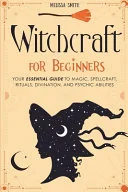
Witchcraft for Beginners
 77
77

Witchcraft for Beginners
Melissa Smith’s "Witchcraft for Beginners" attempts a daunting task: to demystify a practice often shrouded in both folklore and intentional obfuscation. The book succeeds admirably in laying out foundational concepts with clarity. Smith’s explanation of energy work, for instance, is refreshingly practical, avoiding overly esoteric jargon and focusing on tangible methods of focus and intent. A particular strength lies in its emphasis on ethical considerations, a crucial but often overlooked aspect for newcomers. However, the book occasionally feels constrained by its own 'beginner' mandate. While comprehensive for the absolute novice, experienced practitioners might find the explorations of spellcraft somewhat generalized. For example, the section on crafting a "simple protection spell" provides a solid template but lacks the nuanced variations that deeper study might offer. Despite this, for its intended audience, the work serves as a clear and encouraging first step into the world of witchcraft.
📝 Description
77
Melissa Smith's 2020 book, Witchcraft for Beginners, explains core magical principles without sensationalism.
This book aims to demystify modern witchcraft for newcomers. It moves past common sensationalized portrayals to present a practical approach to magical practice, focusing on personal growth and connecting with the natural world. Smith systematically explains fundamental concepts, making them accessible to those unfamiliar with the subject. The guide is intended for individuals drawn to witchcraft who have no prior experience. It is for readers who have seen shallow representations of magic and want a more genuine and structured understanding. Those seeking hands-on methods, ethical guidelines, and a structure for spiritual development will find this volume valuable. The practices it outlines are drawn from various historical and modern esoteric streams. It acknowledges influences from folk magic and the broader Neopagan movement that grew in the mid-20th century. The book presents witchcraft as a current, developing spiritual path, not merely a historical artifact.
Central to its method are basic ideas like energy work, visualization, and the responsible use of spellcraft. Readers learn about the significance of intent, how to use natural correspondences such as herbs and crystals, and how to create sacred space. The focus is on developing a personal practice based on self-awareness and respect for universal energies.
Witchcraft for Beginners draws from various historical and contemporary esoteric traditions, acknowledging influences from folk magic and the mid-20th century Neopagan revival. It frames witchcraft not as an ancient relic but as a dynamic spiritual path relevant today. The book connects personal development with an understanding of natural forces and energy work, central tenets in many esoteric systems.
💡 Why Read This Book?
• Learn foundational energy work and visualization techniques that can be applied immediately to personal practice, as detailed in the "Key Concepts" section, offering a tangible starting point. • Understand the ethical framework of spellcasting, moving beyond simplistic notions to consider the impact of magical actions, a core principle emphasized throughout the book. • Gain insight into the historical context of modern witchcraft, appreciating its evolution and diverse influences, a perspective crucial for a well-rounded understanding beyond mere ritual.
⭐ Reader Reviews
Honest opinions from readers who have explored this book.
❓ Frequently Asked Questions
What are the core principles of witchcraft taught in "Witchcraft for Beginners"?
The book emphasizes foundational principles such as energy manipulation, visualization techniques, the importance of intent, and the ethical application of spellcraft. It guides beginners on working with natural correspondences and creating sacred space.
Does "Witchcraft for Beginners" require specific tools or materials to start practicing?
While the book discusses the use of natural correspondences like herbs and crystals, it prioritizes accessible methods. Many practices can be initiated with readily available items, focusing on personal energy and intent rather than expensive tools.
How does Melissa Smith address the ethical considerations of witchcraft?
Smith dedicates significant attention to the ethical dimensions of magical practice. The book stresses the importance of responsible intent, respecting free will, and understanding the potential consequences of one's actions in spellcasting.
Is "Witchcraft for Beginners" suitable for someone with no prior spiritual or religious background?
Yes, the book is designed for absolute beginners and assumes no prior spiritual or religious knowledge. It provides a comprehensive introduction to the concepts and practices of witchcraft from the ground up.
What is the publication year of "Witchcraft for Beginners"?
The book "Witchcraft for Beginners" by Melissa Smith was first published on August 30, 2024.
What kind of spellcraft is covered in this book?
The book covers fundamental spellcraft techniques, focusing on crafting simple spells for purposes like protection and personal empowerment. It emphasizes the process of intention setting and using natural elements.
🔮 Key Themes & Symbolism
Foundational Magic
This theme centers on the core principles necessary for initiating a witchcraft practice. It details essential techniques like energy work, which involves learning to sense and direct subtle energies, and visualization, the art of mentally forming desired outcomes. The book emphasizes building a strong internal foundation before progressing to more complex practices, ensuring that beginners develop a robust understanding of magical mechanics and their own capabilities.
Ethical Spellcraft
A significant focus is placed on the responsible and ethical application of magic. "Witchcraft for Beginners" guides readers to consider the implications of their actions, stressing the importance of positive intent and respect for the free will of others. This theme aims to dispel harmful stereotypes by promoting a mindful approach to spellcasting, ensuring that magical endeavors are constructive and aligned with personal integrity and universal balance.
Nature and Correspondences
The book explores the deep connection between witchcraft and the natural world. It introduces the concept of correspondences – the symbolic relationships between elements, herbs, crystals, colors, and celestial bodies. Understanding these connections allows practitioners to harness natural energies and enhance their spells. This theme highlights how working with nature can ground a practice and deepen one's spiritual connection to the earth and its cycles.
Personal Empowerment
Central to the book's philosophy is the idea that witchcraft is a path to personal empowerment and self-discovery. By learning magical techniques and understanding their own inner strength, readers are encouraged to take control of their lives and manifest positive changes. This theme focuses on building confidence, enhancing intuition, and fostering a sense of agency through disciplined practice and self-reflection.
💬 Memorable Quotes
Direct passages from the work, attributed to the author.
“Magic begins with focused intent and the belief in its possibility.”
— This highlights the fundamental role of the practitioner's mindset in witchcraft. It suggests that the power of magic lies not solely in external tools or rituals, but primarily in the clarity of one's purpose and the conviction that one can effect change.
“Understand the energies around you before you attempt to shape them.”
— This principle underscores the importance of awareness and sensitivity in magical practice. Before trying to manipulate energy for spellwork, one must first learn to perceive and comprehend the existing energetic currents in their environment and within themselves.
“The ethical use of magic safeguards both the practitioner and the recipient.”
— This emphasizes the moral dimension of witchcraft. It posits that ethical considerations are not merely guidelines but protective measures, ensuring that magical actions do not cause harm and maintain a balance beneficial to all involved.
“Nature provides a rich lexicon of symbols and energies for magical work.”
— This points to the deep connection between witchcraft and the natural world. It suggests that elements like plants, stones, and celestial events are not random but hold inherent symbolic meaning and power that can be intentionally utilized in magical practices.
“Visualization is the art of seeing your desired outcome clearly before it manifests.”
— This defines visualization as a key technique for manifesting intentions. It frames the practice as a mental rehearsal, where vividly imagining the end result primes the mind and energy for its eventual realization in the physical world.
🌙 Esoteric Significance
Tradition
While not explicitly aligning with a single esoteric lineage like Hermeticism or Kabbalah, "Witchcraft for Beginners" draws broadly from the currents of modern Western esotericism, particularly Neopaganism and folk magic traditions. It reflects a contemporary interpretation of witchcraft that emphasizes personal spiritual development, connection with nature, and the practical application of energetic principles, moving away from older, more dogmatic or secretive systems.
Symbolism
The book frequently employs symbols of nature, such as the elements (Earth, Air, Fire, Water), lunar phases, and the use of herbs and crystals. These symbols are presented not just as decorative elements but as active conduits of energy and meaning. For instance, the moon is often associated with intuition and cycles, while specific herbs might be linked to protection or prosperity, serving as tangible anchors for magical intent.
Modern Relevance
This work speaks to contemporary spiritual seekers exploring alternative paths outside of established religions. It aligns with the rise of self-directed spirituality and the popularization of witchcraft through social media and online communities. Thinkers and practitioners focused on eco-spirituality, personal empowerment, and practical manifestation techniques in the 21st century find value in its accessible approach.
👥 Who Should Read This Book
['• Aspiring witches with no prior magical knowledge, seeking a structured and ethical introduction to fundamental practices.', '• Individuals interested in comparative spirituality exploring modern esoteric paths and their foundational principles.', '• Those seeking self-empowerment tools and a deeper connection with nature through accessible spiritual practices.']
📜 Historical Context
Published in 2024, Melissa Smith's "Witchcraft for Beginners" emerges in an era where esoteric practices have gained significant mainstream visibility, a stark contrast to earlier periods. The mid-20th century, particularly following Gerald Gardner's public emergence in the 1950s, saw witchcraft begin to re-establish itself as a distinct spiritual path, often drawing from Neopaganism and earlier occult traditions like Ceremonial Magic. Unlike the more academically focused or strictly initiatory paths like Thelema or Golden Dawn traditions, which had their own distinct intellectual currents, the burgeoning witchcraft movement sought broader accessibility. While figures like Doreen Valiente were instrumental in shaping modern Wiccan liturgy, Smith's work reflects a contemporary impulse to provide an even more simplified and universally applicable entry point, unburdened by specific covent structures or historical revivalism. The reception of such beginner guides is generally positive among new adherents, though often met with critique from more traditional or academically inclined occultists who may view them as overly simplistic or lacking historical depth.
📔 Journal Prompts
Reflect on the concept of 'focused intent' as it applies to a personal goal.
Describe an instance where you observed natural energy at play.
How might the ethical principles discussed apply to a non-magical situation?
Consider the symbolism of the moon in relation to your current emotional state.
Map out the basic steps for a simple visualization exercise for confidence.
🗂️ Glossary
Energy Work
The practice of sensing, directing, and manipulating subtle energies within oneself and the environment, often used in spellcasting and meditation.
Visualization
The mental technique of creating vivid images or scenes in one's mind, used to focus intent, achieve goals, or explore inner landscapes.
Spellcraft
The art and practice of casting spells, involving the focused use of intention, energy, and often symbolic tools or ingredients to effect change.
Correspondences
The symbolic relationships between different elements, objects, times, or energies (e.g., herbs, crystals, colors, moon phases) used to enhance magical workings.
Sacred Space
A designated area, temporarily or permanently consecrated, where magical or spiritual work is performed, often created through ritual to enhance focus and connection.
Intent
The conscious aim or purpose behind a magical action or spell, considered the driving force that directs energy towards a specific outcome.
Neopaganism
A broad category of modern spiritual movements that draw inspiration from historical pagan religions, often emphasizing nature worship, polytheism, and ritual.
This book appears in 1 collection
🔮 Readers Also Liked
Browse all →








From the “Spellcraft” Collection
View all →

More Free Occult Philosophy Books
View all →