Witch

 73
73

Witch
Fiona Horne's *Witch* arrived in 1998 as a direct, no-nonsense guide to a spiritual path often shrouded in mystery and misunderstanding. Unlike academic texts or overtly academic explorations of paganism, Horne writes from the perspective of an experienced practitioner, aiming to equip readers with tangible methods. The book's strength lies in its unpretentious tone and its clear explanations of foundational concepts, such as the use of correspondences and the mechanics of intention in spellcraft. One particularly effective passage details the construction of a simple ritual circle, breaking down a seemingly complex act into manageable steps. However, its brevity means that some deeper theoretical underpinnings or historical nuances of witchcraft traditions might feel underdeveloped for more advanced students. The work is a solid primer, offering practical entry points rather than exhaustive treatises. It serves effectively as a functional introduction for those ready to engage with the practice.
📝 Description
73
Fiona Horne's Witch, published in 1998, aimed to make contemporary witchcraft accessible.
Published in 1998, Fiona Horne's Witch functions as a practical manual for modern witchcraft. The book seeks to clarify occult practices for newcomers, moving past sensationalized images to present straightforward techniques and philosophical ideas. It covers fundamental aspects of magical practice, belief systems, and the historical roots of contemporary witchcraft. Horne emphasizes personal agency and the incorporation of spiritual ideas into everyday life.
This book is intended for those curious about or actively involved in modern paganism and witchcraft. It is suitable for beginners who may have encountered mixed or incomplete information about Wicca and similar traditions. Readers looking for a flexible spiritual path, interested in ritual, spellcraft, and the energetic forces that guide magical work, will find its content useful. It also interests those studying the development of esoteric movements in the late 20th century.
The late 1990s saw a rise in the public interest in esoteric knowledge, fueled by increased internet access and a cultural turn toward spiritual exploration outside established religions. Horne's book appeared during this period, following earlier figures like Gerald Gardner and Doreen Valiente. It contributed to the growing discussions on paganism and the revival of goddess-centered spiritualities, making witchcraft more visible to a wider audience.
💡 Why Read This Book?
• You will learn practical techniques for ritual construction and spellcasting, exemplified by the book's guidance on creating sacred space, which provides actionable steps beyond abstract magical theory. • You will gain an understanding of the concept of divine polarity as presented by Horne, specifically focusing on the dynamic interplay of masculine and feminine energies in magical practice, a core tenet explored in the text. • You will feel empowered to explore personal spiritual development through the lens of nature-based spirituality, as the book emphasizes integrating the cycles of the earth and moon into your practice, as detailed in its sections on seasonal observances.
⭐ Reader Reviews
Honest opinions from readers who have explored this book.
❓ Frequently Asked Questions
When was Fiona Horne's 'Witch' first published?
Fiona Horne's 'Witch' was first published in 1998, a period when interest in contemporary esoteric practices was experiencing significant public growth.
What is the primary audience for 'Witch' by Fiona Horne?
The book is primarily aimed at individuals curious about or beginning to explore modern witchcraft and paganism, offering an accessible introduction to its concepts and practices.
Does 'Witch' by Fiona Horne focus on a specific tradition of witchcraft?
While drawing on common threads in contemporary witchcraft, the book offers a general overview rather than strictly adhering to a single, highly specific tradition like Gardnerian Wicca.
What kind of content can I expect in Fiona Horne's 'Witch'?
Readers can expect practical guidance on ritual, spellcraft, intention setting, understanding correspondences, and exploring the concept of the Goddess, presented in an accessible manner.
Is 'Witch' by Fiona Horne considered a foundational text in modern witchcraft?
Published in 1998, it is considered an important accessible guide from the late 20th century that helped introduce many to the concepts of contemporary witchcraft practices.
What are some key themes covered in Fiona Horne's 'Witch'?
Key themes include the practical application of intention, the use of natural cycles and correspondences, understanding divine polarity, and personal empowerment through spiritual practice.
🔮 Key Themes & Symbolism
Practical Ritual Application
Horne's work moves beyond theoretical occultism to provide actionable techniques for engaging with magical practice. This includes detailed explanations of how to construct a ritual space, the importance of visualization, and the role of intention in manifesting desired outcomes. The book emphasizes that ritual is not merely symbolic but a tangible means of directing energy and influencing reality, grounded in personal will and understanding of esoteric principles. The focus is on empowering the individual practitioner through learned skills.
The Concept of Divine Polarity
A central theme in 'Witch' is the exploration of divine polarity, often understood as the balance and interplay between masculine and feminine energies. Horne presents these not as rigid gender roles but as fundamental forces present within all individuals and the cosmos. This concept informs ritual structure, spell formulation, and personal spiritual integration, encouraging a holistic approach that honors both active and receptive aspects of being. It reflects a broader trend in contemporary paganism towards immanent divinity.
Nature-Based Spirituality
The book strongly links spiritual practice to the natural world, emphasizing the significance of lunar cycles, seasonal changes, and the elements. Horne advocates for aligning one's magical work with these rhythms, viewing nature as a primary source of wisdom and power. This connection fosters a sense of immanence, where the divine is found within and around us, rather than in a distant, transcendent realm. It encourages a more embodied and grounded approach to esoteric studies.
Personal Empowerment and Ethics
Horne stresses that witchcraft is a path of personal empowerment, where the practitioner assumes responsibility for their actions and intentions. The book addresses the ethical considerations inherent in magical work, advocating for practices that are constructive and avoid harm. This emphasis on individual agency and ethical conduct is crucial, positioning witchcraft as a responsible spiritual discipline rather than a system of uncontrolled forces. It encourages self-awareness and conscious choice.
💬 Memorable Quotes
Direct passages from the work, attributed to the author.
“The circle is cast for protection and focus.”
— This highlights the dual purpose of ritualistic space-making in witchcraft: to create a secure environment for magical work and to enhance mental concentration on the task at hand.
“Intention is the engine of magic.”
— This concise statement underscores the paramount importance of clear, focused intent in any magical operation, suggesting that the will and desire of the practitioner are the primary drivers of magical effect.
“Work with the cycles of the moon and seasons.”
— This advice points to the naturalistic foundation of much contemporary witchcraft, emphasizing the alignment of magical practices with the observable rhythms of the earth and sky for greater efficacy.
“See the divine in all things.”
— This principle encourages an immanent view of spirituality, suggesting that the sacred is not separate from the mundane but is present in every aspect of existence, fostering reverence for the world.
“Balance is key to understanding polarity.”
— This relates to the concept of divine polarity, stressing that neither the masculine nor feminine principle should dominate, but rather a harmonious integration is sought for completeness.
🌙 Esoteric Significance
Tradition
Horne's *Witch* fits within the broader spectrum of modern eclectic witchcraft, drawing from Wicca and Neo-Paganism. It doesn't strictly adhere to a single historical lineage like Gardnerian Wicca but synthesizes common practices and philosophical currents prevalent in the late 20th century. Its emphasis on personal gnosis, practical application, and immanent divinity aligns with a post-Theosophical, post-New Age approach to esoteric studies, prioritizing individual experience and accessible methodology over rigid dogma.
Symbolism
The book frequently engages with the symbolism of the Goddess, representing the immanent divine, fertility, and cyclical nature of life and death. Another key symbolic motif is the ritual circle, which serves not only as a practical boundary for magic but also as a microcosm of the cosmos and a sacred space for communion with spiritual forces. The concept of polarity itself, symbolized by the interplay of masculine and feminine energies, is fundamental to understanding the dynamic balance sought in the universe and within the practitioner.
Modern Relevance
Contemporary practitioners of eclectic witchcraft and those exploring nature-based spirituality continue to find value in Horne's direct approach to ritual and intention. Her emphasis on personal empowerment and practical skills appeals to modern seekers looking for tangible spiritual tools outside traditional religious structures. Thinkers and practitioners focused on the re-emergence of goddess spirituality and accessible magical theory often cite works like *Witch* as helpful introductions that bridge the gap between esoteric concepts and daily life.
👥 Who Should Read This Book
• Aspiring practitioners of contemporary witchcraft seeking a clear, step-by-step introduction to core concepts and techniques. • Individuals interested in exploring nature-based spirituality and aligning their lives with natural cycles and energies. • Those curious about the evolution of esoteric thought in the late 20th century, particularly concerning Neo-Paganism and Wicca.
📜 Historical Context
Fiona Horne's *Witch*, published in 1998, emerged during a period of significant public engagement with esoteric subjects, fueled by increased accessibility through media and the nascent internet. The book arrived roughly three decades after the influential publication of works by figures like Raymond Buckland and the continued discussions around Gerald Gardner's legacy. It contributed to a burgeoning wave of accessible guides that explained witchcraft for a wider audience, diverging from the more academic or secretive approaches that sometimes characterized earlier occult literature. This era saw a proliferation of Neo-Pagan movements, with authors like Scott Cunningham also popularizing Wicca. Horne's work offered a practical, contemporary perspective, positioning itself within this evolving range of modern spiritual seeking and responding to a public appetite for self-empowerment through alternative spiritual paths.
📔 Journal Prompts
Reflect on the concept of divine polarity as presented in the book.
Consider how the principle of intention guides your daily actions.
Map your local environment to natural cycles discussed in the text.
Design a simple ritual using the principles of circle casting.
Analyze the ethical implications of a chosen magical act.
🗂️ Glossary
Divination
The practice of seeking knowledge of the future or the unknown by supernatural means, often using tools like tarot cards or runes.
Correspondences
The symbolic association of objects, colors, herbs, planets, etc., with specific energies, deities, or magical intentions, used to enhance spellcraft.
Goddess
In many Neo-Pagan traditions, the divine feminine principle, often seen as immanent in nature and representing creation, fertility, and cyclical renewal.
Immanence
The philosophical or theological concept that divinity is present within the material world and human experience, rather than being transcendent and separate.
Spellcraft
The art and practice of creating and casting spells, involving focused intention, symbolic actions, and the use of correspondences to effect change.
Ritual
A set of actions performed in a prescribed order, often for symbolic or spiritual purposes, used to create sacred space, invoke energies, or manifest intentions.
Polarity
In this context, refers to the dynamic interplay of complementary forces, often conceptualized as masculine and feminine energies, essential for balance and creation.
🔮 Readers Also Liked
Browse all →









More by Fiona Horne
All books →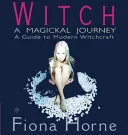
More Free Witchcraft & Paganism Books
View all →