Companion to Yi jing Numerology and Cosmology
 74
74

Companion to Yi jing Numerology and Cosmology
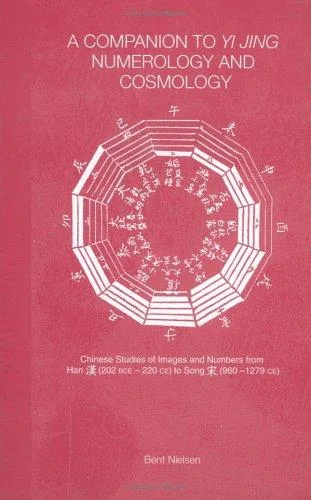
Bent Nielsen's "Companion to Yi Jing Numerology and Cosmology" offers a commendable, if dense, exploration of the I Ching's structural logic. Its strength lies in its methodical deconstruction of hexagram relationships through a numerological and cosmological lens, moving beyond common interpretive glosses. Nielsen provides a useful framework for understanding how ancient Chinese thinkers might have perceived cosmic patterns reflected in the text. However, the book's academic rigor can also be its limitation; the prose is at times dry, and the conceptual density may prove challenging for readers without a background in mathematics or Chinese philosophy. A particularly illuminating section is the detailed breakdown of how specific numerical sequences might relate to the progression and transformation of hexagrams, illustrating a less-explored facet of I Ching study.
📝 Description
74
Published in 2002, Bent Nielsen's Companion to Yi Jing Numerology and Cosmology examines the I Ching through mathematical and philosophical principles.
This book offers a scholarly look at the I Ching, focusing on its numerological and cosmological foundations. Bent Nielsen moves past simple interpretations to reveal the mathematical and philosophical structures that shaped the text. It serves as an academic resource for readers who want a more thorough grasp of the hexagrams and their connections.
The volume is for dedicated students of the I Ching, especially those interested in its mathematical aspects, history, and esoteric meanings. It will also attract practitioners aiming for a systematic understanding of the text's symbolic logic, beyond intuitive readings. Researchers in comparative religion, Chinese philosophy, and esoteric studies will find it a useful reference.
Nielsen's 2002 work addresses scholarly debates on the I Ching's origins and interpretation methods. Unlike approaches that emphasized philosophical commentary or divination, Nielsen centers on numerology and cosmology. He seeks an underlying systematic framework, possibly linking the I Ching to ancient worldviews focused on cosmic order and numerical harmony.
Bent Nielsen's work situates the I Ching within a tradition of seeking cosmic order through symbolic systems. The I Ching, with its roots in ancient China, is presented not just as a divination tool but as a complex cosmological map. Nielsen's analysis connects its structure to broader ancient concerns with numerical harmony and the interplay of fundamental forces like Yin and Yang. This perspective aligns with esoteric traditions that view the physical and symbolic worlds as interconnected expressions of underlying mathematical and spiritual principles.
💡 Why Read This Book?
• Gain a systematic understanding of the I Ching's structure, moving beyond intuitive readings by exploring the numerological principles behind hexagram formation as detailed by Nielsen. • Discover how ancient cosmological models, such as the Five Elements and Yin-Yang, are interwoven with the I Ching's symbolic language, as presented in the text's analysis of these connections. • Appreciate the I Ching as a sophisticated system of thought by examining its mathematical underpinnings, as revealed through Nielsen's specific focus on numerical progressions and relationships.
⭐ Reader Reviews
Honest opinions from readers who have explored this book.
❓ Frequently Asked Questions
What is the primary focus of Companion to Yi Jing Numerology and Cosmology?
The book's primary focus is to explore the I Ching (Book of Changes) through the specific lenses of numerology and ancient Chinese cosmological concepts, aiming to reveal the underlying structure and mathematical logic of the text.
Who is the author, Bent Nielsen, and when was this book first published?
Bent Nielsen is the author of this scholarly work, which was first published in 2002, offering a detailed examination of the I Ching's esoteric dimensions.
Does this book explain how to perform I Ching readings?
While it provides a deep understanding of the I Ching's structure, it is less a practical 'how-to' guide for divination and more an academic exploration of its numerological and cosmological foundations.
What kind of background knowledge is recommended for reading this book?
Readers would benefit from some familiarity with the I Ching itself, as well as an interest in or basic understanding of numerology and Chinese cosmology (e.g., Yin-Yang, Five Elements).
How does Nielsen's approach differ from other I Ching commentaries?
Nielsen's approach is distinctive in its rigorous focus on the mathematical and cosmological architecture of the I Ching, seeking to explain its system through these specific frameworks rather than solely through philosophical or divinatory interpretations.
Is this book suitable for beginners interested in the I Ching?
It is more suited for intermediate to advanced students of the I Ching who are seeking a deeper, structural understanding, rather than those just beginning their study of the text.
🔮 Key Themes & Symbolism
Hexagrammatic Structure
The work meticulously details how the 64 hexagrams of the I Ching can be understood through their sequential and numerical relationships. Nielsen explores the binary logic of the trigrams and their combinations, demonstrating how specific numerical progressions might have dictated the order and transformation of these symbols. This approach offers a systematic way to view the hexagrams not as isolated units but as interconnected components of a larger, ordered system, revealing a potential mathematical blueprint underlying the text's divinatory and philosophical significance.
Cosmological Frameworks
Nielsen connects the I Ching's structure to foundational Chinese cosmological concepts, most notably Yin-Yang theory and the Five Elements (Wu Xing). The book examines how these principles might be embedded within the hexagrams themselves, influencing their interpretation and relationships. By mapping these macrocosmic principles onto the microcosmic structure of the I Ching, the work suggests a profound integration of the text within a worldview concerned with universal harmony and cyclical change, offering insights into ancient Chinese thought processes.
Numerological Underpinnings
A central theme is the exploration of numerology as a key to understanding the I Ching. Nielsen investigates how numerical values assigned to lines, trigrams, and hexagrams could have informed the text's arrangement and meaning. This perspective treats the I Ching as a sophisticated system where numbers are not merely symbolic but integral to its operational logic, potentially revealing an ancient science of correlation between number, cosmos, and human affairs. The book provides a rigorous analysis of these numerical relationships.
Systematic Interpretation
This companion advocates for a systematic approach to the I Ching, moving beyond purely intuitive or philosophical readings. Nielsen's work provides tools for readers to engage with the text on a structural level, understanding the internal logic that governs its various components. By emphasizing the numerological and cosmological architecture, the book offers a method for achieving a more consistent and logically grounded interpretation of the I Ching's wisdom, suitable for dedicated practitioners and scholars alike.
💬 Memorable Quotes
Direct passages from the work, attributed to the author.
“The arrangement of the hexagrams follows a discernible numerical logic.”
— This statement highlights Nielsen's central thesis: that the I Ching is not arbitrary but structured according to mathematical principles, suggesting a deeper, systematic order waiting to be uncovered.
“Cosmological models provide a framework for understanding hexagram transformations.”
— This points to the interconnectedness of the I Ching with broader ancient Chinese philosophical systems, suggesting that understanding concepts like Yin-Yang is crucial for grasping the text's dynamic principles.
“Numerology offers a path to deciphering the I Ching's inherent patterns.”
— This emphasizes the author's belief that numerical relationships are a primary key to unlocking the text's complex symbolic language and divinatory efficacy.
“The binary nature of trigrams forms the basis of hexagram construction.”
— This interpretation underscores the foundational role of the two primary states (broken and unbroken lines) in building the more complex sixty-four hexagrams, pointing to the text's elemental building blocks.
“Understanding the I Ching requires appreciating its systemic relationships.”
— This suggests that viewing individual hexagrams in isolation is insufficient; true comprehension comes from recognizing how they interact and relate within the entire system of the I Ching.
🌙 Esoteric Significance
Tradition
This work operates within the broad tradition of Hermeticism and Western esotericism, particularly its interest in correspondences and macrocosm-microcosm relationships. While the I Ching is distinctly Chinese in origin, Nielsen's approach—seeking underlying mathematical and symbolic orders that govern reality—aligns with Hermetic principles. It bridges Eastern and Western esoteric thought by applying analytical methods often found in Western occult traditions to an Eastern sacred text, framing the I Ching as a system of universal symbolic language.
Symbolism
Key symbols explored include the Yin-Yang duality, represented by the broken and unbroken lines forming the trigrams and hexagrams. Nielsen also examines the symbolism of the Five Elements (Wu Xing) and how their cyclical interactions might be encoded within the hexagrammatic structure. The hexagrams themselves, as combinations of trigrams, are examined not just for their divinatory meanings but as symbolic representations of fundamental states of cosmic and human affairs.
Modern Relevance
Contemporary practitioners of comparative spirituality and esoteric studies find Nielsen's work valuable for its rigorous analytical approach. Thinkers interested in systems theory, sacred geometry, and the mathematical underpinnings of ancient wisdom traditions can draw upon its detailed expositions. It informs modern efforts to synthesize Eastern and Western esoteric philosophies, offering a structured methodology for understanding symbolic systems that resonate with contemporary interest in finding universal patterns and order in the universe.
👥 Who Should Read This Book
• Dedicated I Ching students seeking to move beyond basic divination techniques to understand the text's underlying structural logic and mathematical principles. • Scholars of Chinese philosophy and comparative religion interested in the systematic, cosmological, and numerological frameworks that inform ancient Chinese texts. • Practitioners of Western esoteric traditions looking for connections between Eastern symbolic systems and Hermetic principles of order and correspondence.
📜 Historical Context
Bent Nielsen's "Companion to Yi Jing Numerology and Cosmology," published in 2002, entered a field of I Ching scholarship with a long and diverse history. For centuries, interpretations ranged from the philosophical commentaries of Confucian scholars to the practical divinatory manuals. In the late 20th and early 21st centuries, Western engagement with the I Ching often focused on Carl Jung's psychological interpretations or more generalized New Age approaches to divination. Nielsen's work positioned itself against this backdrop by advocating for a rigorous, systematic examination rooted in the text's potential mathematical and cosmological architecture. It sought to provide a framework for understanding the I Ching's internal logic, akin to uncovering the blueprint of an ancient philosophical engine. While not a direct engagement with a specific contemporary scholar in its presentation, the book implicitly responded to a trend toward less structured interpretations by offering a model for disciplined, analytical study, drawing parallels with universal ancient concerns for cosmic order found in various cultures.
📔 Journal Prompts
The numerical progression of hexagrams: How does this sequence suggest a dynamic cosmology?
Cosmological models: What parallels exist between the Five Elements and the relationships between specific hexagrams?
Binary logic: How does the simple Yin-Yang structure of lines build such complex symbolic meanings?
Systemic relationships: Reflect on a hexagram's meaning when viewed not in isolation, but in relation to its predecessor and successor.
Numerological keys: How might specific numbers associated with trigrams influence the interpretation of a hexagram?
🗂️ Glossary
Hexagram
A figure composed of six horizontal lines, each line being either solid (Yang) or broken (Yin). There are 64 unique hexagrams in the I Ching.
Trigram
A figure composed of three horizontal lines, each line being either solid (Yang) or broken (Yin). There are eight basic trigrams.
Yang
In I Ching and Chinese philosophy, the active, positive, masculine principle, typically represented by a solid line (—).
Yin
In I Ching and Chinese philosophy, the passive, negative, feminine principle, typically represented by a broken line (--).
Five Elements (Wu Xing)
A traditional Chinese philosophical concept that describes the fundamental elements of reality: Wood, Fire, Earth, Metal, and Water, and their dynamic cycles of generation and overcoming.
Numerology
The study of the divine or mystical significance of numbers and their influence on human affairs and the natural world.
Cosmology
The branch of astronomy concerned with the origin and evolution of the universe; in philosophy, the study of the order and nature of the universe.
🔮 Readers Also Liked
Browse all →







More by Bent Nielsen
All books →

More Free Occult Philosophy Books
View all →