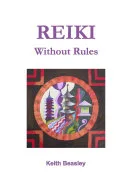
Reiki - Without Rules
 74
74

Reiki - Without Rules
Keith Beasley’s Reiki - Without Rules moves beyond the standard self-help manual, proposing a radical integration of Reiki into the fabric of everyday existence. Beasley’s strength lies in his insistence that the universal life-force energy, once truly embraced, should dismantle barriers rather than erect new ones. He compellingly argues against rigid adherence to prescribed techniques, suggesting that true mastery comes from allowing the energy to inform one's entire being. A particular passage that stands out is his discussion of how Reiki can inform our past and future, moving beyond immediate present-moment healing. While the book occasionally drifts into slightly generalized spiritual discourse, its core message about unlearning the 'rules' to truly embody Reiki is a refreshing perspective. It’s a call to action for practitioners to live their practice, not just perform it.
📝 Description
74
Keith Beasley's 2007 book, Reiki - Without Rules, argues universal life-force energy integrates into daily existence.
Reiki - Without Rules challenges the common view of Reiki as solely a therapeutic practice. Keith Beasley proposes that universal life-force energy, once internalized, extends beyond clinical settings to influence everyday life. The book examines how this energy affects personal spirituality and transforms ordinary existence.
This work is intended for Reiki practitioners who wish to deepen their practice beyond mere energy transfer. It also speaks to individuals interested in incorporating spiritual practices into their daily routines, shifting focus from external healing to internal growth. Readers curious about the historical development and wider uses of energy work will find it valuable.
The core concept is the embodiment of Reiki energy, shifting it from an external technique to an internal state of being. Beasley suggests this integration cultivates greater spiritual awareness in routine activities. He points toward a way of living that moves beyond the formal 'rules' of practice, favoring a more intuitive and lived experience of universal energy.
Published in 2007, Reiki - Without Rules appeared during a time when energy healing modalities like Reiki were gaining popularity. Unlike texts that concentrated on the mechanics of hands-on healing, Beasley's book contributed to discussions about the philosophical and spiritual dimensions of universal life-force energy. It moved away from clinical applications, aligning with broader explorations of consciousness found in New Age thought and its interest in the practical application of subtle energies.
💡 Why Read This Book?
• Understand how to embody universal life-force energy beyond therapeutic sessions, as detailed in Beasley's exploration of integrating Reiki into daily activities. • Discover practical applications for deepening spiritual awareness in mundane moments, moving from external healing to internal transformation as discussed in the text. • Challenge rigid 'rules' of practice by embracing a more intuitive connection with energy work, inspired by Beasley's post-2007 perspective on unlearning formal structures.
⭐ Reader Reviews
Honest opinions from readers who have explored this book.
❓ Frequently Asked Questions
What is the core difference between Reiki - Without Rules and other Reiki books?
This book emphasizes integrating Reiki energy into your entire life, not just as a therapeutic technique. It encourages moving beyond prescribed rules to a more intuitive, embodied experience of universal life-force energy.
When was Keith Beasley's Reiki - Without Rules first published?
Reiki - Without Rules by Keith Beasley was first published on August 1, 2007, positioning it within the contemporary wave of esoteric literature exploring practical spirituality.
Can this book help someone new to Reiki?
Yes, while it challenges conventions, it offers a foundational perspective on universal life-force energy and its potential for daily spiritual growth, making it suitable for those seeking a deeper understanding.
What does Beasley mean by 'without rules'?
Beasley suggests that while initial structure is helpful, true mastery of Reiki involves transcending rigid adherence to techniques. It means allowing the energy to guide your actions and inform your being organically.
How does this book relate to spiritual development?
It frames Reiki not just as a healing modality but as a path to becoming 'more spiritual' in everyday life by integrating universal energy into all actions and perceptions.
Does the book offer practical exercises?
The book focuses more on conceptual shifts and internal integration rather than step-by-step exercises. It encourages readers to find their own intuitive ways of living with Reiki energy.
🔮 Key Themes & Symbolism
Embodied Energy
The central thesis is that Reiki, as universal life-force energy, should not remain confined to a therapy session or a set of prescribed actions. Beasley argues for its full integration into the practitioner's being, transforming mundane activities into expressions of this energy. This moves beyond merely 'doing' Reiki to 'being' Reiki, where conscious awareness and the flow of energy become inseparable aspects of daily existence, fostering a more authentic spiritual presence.
Beyond Dogma
Beasley challenges the tendency for spiritual practices to become encumbered by rules and dogma. He posits that the true nature of Reiki is fluid and intuitive, and that rigid adherence can hinder its deeper potential. This theme encourages readers to question established protocols and explore a more personal, direct relationship with the universal energy, moving towards self-discovery rather than external validation.
Everyday Spirituality
The work connects the practice of Reiki to the evolution of personal spirituality within contemporary life. It explores how embracing universal life-force energy can elevate ordinary experiences, making them sacred. This perspective shifts the focus from seeking spirituality in extraordinary events to finding it in the fabric of daily routines, relationships, and personal growth.
Past and Future Integration
Beasley extends the concept of Reiki's influence beyond the present moment. The book suggests that integrated energy work can inform one's understanding and experience of their past and future. This implies a holistic approach to time and consciousness, where the energetic flow helps to reframe personal history and shape future possibilities with greater awareness and intention.
💬 Memorable Quotes
Direct passages from the work, attributed to the author.
“What happens when we allow that to live in and through us?”
— This question captures the book's core inquiry into the transformative potential of fully embodying Reiki energy, moving beyond its application as an external technique to its integration into one's very being.
“How does Reiki help us to become 'more spiritual' in our day to day lives?”
— This highlights the book's focus on practical spirituality, suggesting that Reiki's universal life-force energy can be a catalyst for elevating ordinary existence and fostering a deeper, lived connection to the sacred.
“Keith shares his path in and through Reiki - out of the therapy centre and into our pasts and futures.”
— This phrase indicates Beasley's personal journey and the book's broad scope, extending the application of Reiki beyond clinical settings to encompass a more holistic view of personal history and future potential.
“Most of us now know that Reiki is the universal life-force energy.”
— This opening statement acknowledges the widespread recognition of Reiki's fundamental nature, setting the stage for the book to explore the implications of this understanding once it moves from intellectual knowledge to lived experience.
“The work explores how to become 'more spiritual' in our day to day lives.”
— This interpretation points to the book's practical aim: to demonstrate how the principles and energy of Reiki can be applied to enhance everyday existence and cultivate a more profound sense of spiritual connection.
🌙 Esoteric Significance
Tradition
While not explicitly tied to a single lineage like Hermeticism or Kabbalah, *Reiki - Without Rules* engages with the broader esoteric tradition of channeling universal life-force energy, a concept found across various spiritual philosophies, including vitalism and certain interpretations of Theosophy. Beasley's departure from rigid 'rules' aligns with modern esoteric movements that prioritize personal experience and intuitive development over strict adherence to ancient doctrines, seeking a lived mysticism.
Symbolism
The primary 'symbol' explored is the concept of universal life-force energy itself, often referred to as 'Reiki.' Beasley's work deconstructs the tendency to reify this energy into fixed symbols or codified practices. Instead, the energy becomes a fluid, pervasive force. The departure from the 'therapy centre' can be seen as symbolic of moving from a specialized, ritualized space to the boundless, everyday world as the true temple for spiritual practice.
Modern Relevance
Beasley's call to integrate spiritual energy into daily life without rigid constraints speaks to contemporary trends in mindfulness, embodied cognition, and secular spirituality. Thinkers and practitioners focusing on the intersection of consciousness, well-being, and everyday experience—such as those in the positive psychology movement or proponents of integrated spirituality—find resonance in his message of living one's practice authentically.
👥 Who Should Read This Book
• Reiki practitioners seeking to move beyond technique-focused practice to a more embodied and intuitive connection with universal life-force energy. • Individuals interested in exploring how esoteric principles can be integrated into daily life to foster personal spirituality and enhance everyday experiences. • Students of comparative spirituality looking to understand contemporary approaches to energy work that emphasize personal discovery over dogmatic adherence.
📜 Historical Context
Published in 2007, Keith Beasley's *Reiki - Without Rules* emerged at a time when Reiki had already achieved significant global recognition as a healing modality, largely popularized through the work of figures like Hawayo Takata in the mid-20th century. The early 21st century saw a proliferation of Reiki manuals, many focusing on technique and lineage. Beasley's work, however, deliberately positioned itself against a burgeoning trend of formalized, rule-bound practice. It tapped into a broader esoteric discourse of the era that sought to integrate spiritual energies into everyday consciousness, moving beyond purely physical healing. This approach resonated with emergent New Age philosophies that emphasized personal transformation and lived spirituality, differentiating it from more traditional, discipline-focused esoteric schools and aligning it with contemporary explorations of embodied consciousness.
📔 Journal Prompts
The concept of integrating Reiki into past and future experiences.
How the 'rules' of a spiritual practice might limit its full expression.
Finding the universal life-force energy in mundane daily activities.
Personal definitions of becoming 'more spiritual' through energy work.
The shift from external practice to internal embodiment of Reiki.
🗂️ Glossary
Reiki
A Japanese form of complementary therapy invented in the early 20th century by Mikao Usui. It involves 'laying-on-hands' where practitioners are believed to channel 'universal life-force energy' to promote relaxation and healing.
Universal Life-Force Energy
The fundamental energetic essence believed to permeate all living things and the universe. In the context of Reiki, it is the intelligent energy channeled for healing and spiritual growth.
Therapy Centre
A physical location where therapeutic services, including energy healing modalities like Reiki, are typically administered in a formal, structured setting.
Spiritual
Relating to or concerned with the human spirit or soul as opposed to material or physical things. In this context, it refers to practices and states of being that foster a deeper connection to oneself and the universe.
Embodiment
The process of integrating a concept, belief, or energy into one's physical being and daily actions, moving from intellectual understanding to lived experience.
Intuitive Practice
Engaging in spiritual or healing work based on inner knowing and feeling rather than strict adherence to predetermined rules or techniques.
Dogma
A set of principles laid down by an authority as incontrovertibly true. In spirituality, it can refer to rigid doctrines that may limit personal exploration.