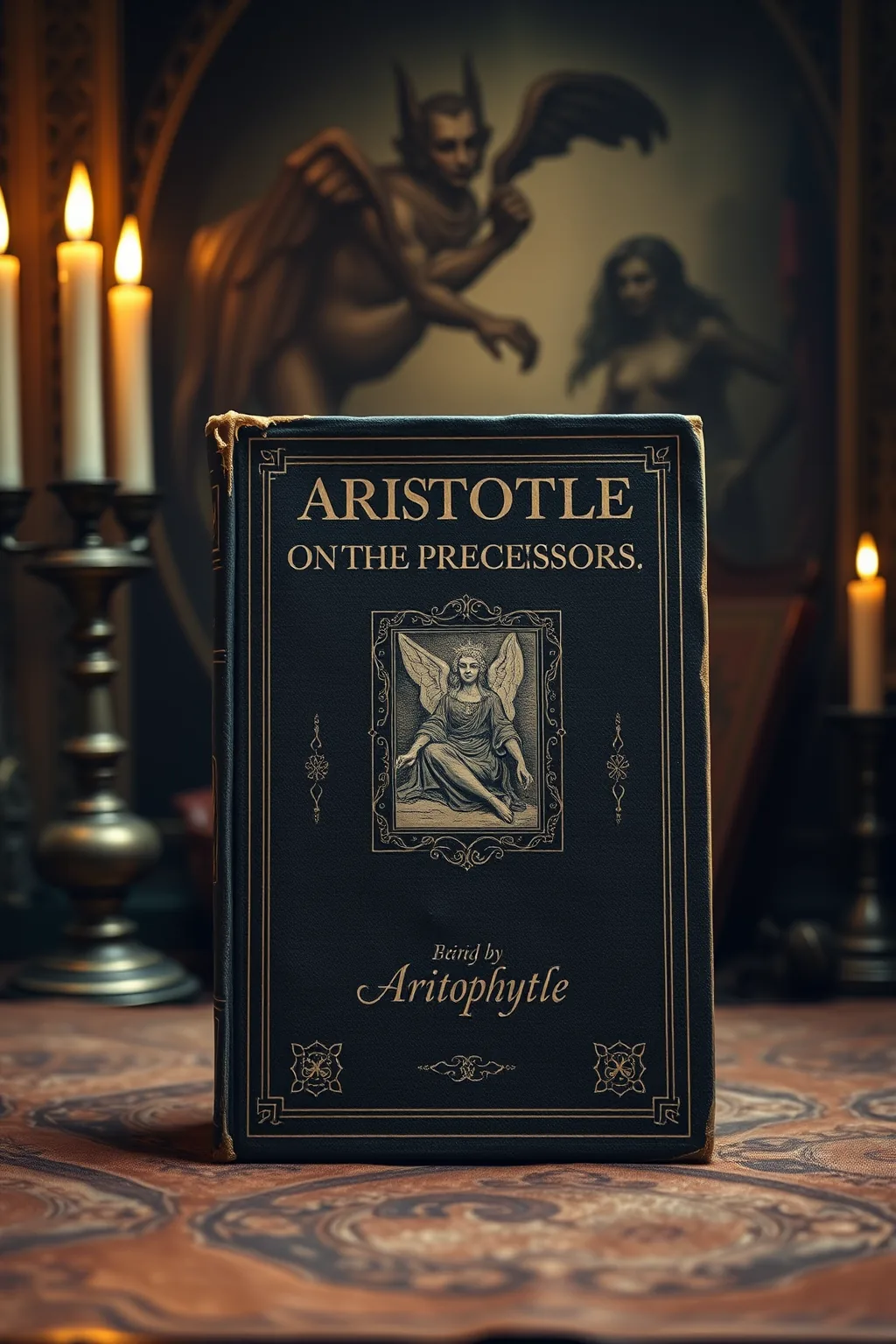
Aristotle on His Predecessors, Being the First Book of His Metaphysics
 71
71

Aristotle on His Predecessors, Being the First Book of His Metaphysics



Aristotle's 'Aristotle on His Predecessors, Being the First Book of His Metaphysics' is a treasure trove for those delving into the esoteric and occult dimensions of philosophy. This 1910 edition, digitized from the University of Michigan's library, offers a deep dive into Aristotle's metaphysical inquiries, providing a lens through which to view the occult philosophy of ancient times. For modern esoteric seekers, this text is a goldmine of insights into the philosophical underpinnings of Western mysticism. Aristotle's reflections on his predecessors reveal a rich tapestry of thought that has influenced esoteric traditions for centuries. The book's historical context and philosophical depth make it an essential read for anyone interested in the occult. It bridges the gap between classical philosophy and modern esotericism, offering a unique perspective on the nature of reality and being.
📝 Description
71
In 340 BCE, Aristotle began his Metaphysics by examining Plato and earlier thinkers.
Aristotle's first book of the Metaphysics reviews the philosophies of thinkers who came before him. He focuses on Plato's theory of Forms and how earlier philosophers understood the causes and principles of the natural world. Aristotle analyzes their ideas about the fundamental nature of reality, questioning their methods and conclusions.
He discusses how Plato's Forms, separate from the physical world, might relate to the concrete objects we perceive. Aristotle also considers earlier views on elements, motion, and the ultimate sources of change. This book is not just a historical survey; it sets the stage for Aristotle's own metaphysical system by establishing the problems he intends to solve. It shows his critical engagement with the intellectual tradition he inherited.
While Aristotle's Metaphysics is a cornerstone of Western philosophy, Book 1 operates within an intellectual tradition that sought deeper, often hidden, principles behind the observable world. His critique of Plato's separate Forms and his inquiry into ultimate causes resonate with currents of thought that look beyond mere appearance. The text engages with questions about the ultimate reality that have long been central to mystical and speculative traditions, even as Aristotle frames them through rigorous philosophical argument.
💡 Why Read This Book?
Reading 'Aristotle on His Predecessors' today offers a profound journey into the esoteric and occult dimensions of philosophy. This book provides readers with a deep understanding of the metaphysical inquiries that have shaped Western thought. By exploring Aristotle's reflections on his predecessors, readers gain insights into the philosophical foundations of esoteric traditions. This knowledge is invaluable for both academic scholars and spiritual seekers, offering a unique perspective on the nature of reality and being.
⭐ Reader Reviews
Honest opinions from readers who have explored this book.
❓ Frequently Asked Questions
What is the significance of 'Aristotle on His Predecessors'?
This book is significant because it provides a deep dive into Aristotle's metaphysical inquiries, revealing the esoteric and occult philosophy that underpins Western thought. It is a valuable resource for both academic scholars and spiritual seekers.
Who should read this book?
Anyone interested in the intersection of classical philosophy and occult studies will find this book enriching. It is particularly valuable for those seeking to understand the philosophical foundations of Western esotericism.
What can readers expect to gain from this text?
Readers can expect to gain insights into the metaphysical inquiries that have shaped Western thought, as well as a deeper understanding of the esoteric traditions that have influenced modern spirituality.
🔮 Key Themes & Symbolism
Platonic Ideas and Forms
Aristotle examines the mystical concept of Platonic ideas, exploring how these eternal forms shape the physical world and influence our understanding of reality. This theme is central to the book's esoteric significance, as it reveals the hidden knowledge that underlies the visible universe.
The Nature of Objects
This book examines the relationship between objects and their forms, questioning the very nature of existence. Aristotle's insights into the mystical properties of objects offer a profound perspective on the interconnectedness of all things.
Mystical Foundations of Science
Aristotle's exploration of the mystical underpinnings of scientific inquiry challenges readers to consider the esoteric dimensions of knowledge and discovery. This theme highlights the hidden wisdom that lies at the heart of human endeavor.
💬 Memorable Quotes
Direct passages from the work, attributed to the author.
“All knowledge begins with wonder.”
— Aristotle emphasizes the esoteric nature of curiosity, suggesting that true understanding arises from a deep sense of awe and mystery.
“The wise man knows that he knows nothing.”
— This reflection on the limits of human knowledge invites readers to embrace the mysteries that lie beyond our understanding.
“The path to truth is through the exploration of hidden knowledge.”
— Aristotle's call to uncover the esoteric truths of the universe is a central theme of his metaphysical inquiries.
💡 Key Ideas
Editorial paraphrase of the work's core concepts — not direct quotes.
The forms of things are eternal and unchanging.
This quote underscores the mystical belief in the permanence of Platonic ideas, which transcend the temporal world.
The soul is the source of all movement and life.
This quote points to the mystical connection between the soul and the physical world, highlighting the hidden forces that govern existence.
🌙 Esoteric Significance
Tradition
This book belongs to the Hermetic tradition, which emphasizes the pursuit of hidden knowledge and the mystical dimensions of existence. Aristotle's exploration of Platonic ideas aligns with the Hermetic quest for spiritual enlightenment and the unification of mind and matter.
Symbolism
Key symbols in this work include the eternal forms of Platonic ideas, which represent the unchanging truths that underlie the visible world. These symbols invite readers to contemplate the mystical connections between the physical and metaphysical realms.
Modern Relevance
This book remains relevant today, inspiring modern practitioners of esoteric studies and metaphysical disciplines. Its insights into the nature of reality and the hidden knowledge that permeates the universe continue to shape contemporary thought and spiritual inquiry.
👥 Who Should Read This Book
Beginners interested in esoteric studies will find this book a challenging but rewarding introduction to the mystical foundations of Western philosophy. Scholars of occult and metaphysical disciplines will appreciate the depth of Aristotle's analysis and its enduring significance. Spiritual seekers will be drawn to the book's exploration of hidden knowledge and the quest for spiritual enlightenment. Practitioners of metaphysical disciplines will find valuable insights into the nature of reality and the interconnectedness of all things.
📜 Historical Context
Written in the 4th century BCE, 'Aristotle on His Predecessors' was a groundbreaking work that sought to synthesize the philosophical traditions of his time. This book was crucial in establishing the foundations of Western metaphysics, influencing generations of thinkers and shaping the course of esoteric and occult studies. Its importance lies in its ability to bridge the gap between Platonic ideals and Aristotelian empiricism, providing a comprehensive framework for understanding the nature of reality.
📔 Journal Prompts
Reflect on the concept of eternal forms and how they influence your understanding of the world.
Consider the mystical underpinnings of scientific inquiry and their implications for your spiritual journey.
Explore the relationship between the soul and the physical world, and how this connection shapes your perception of reality.
Think about the limits of human knowledge and the mysteries that lie beyond our understanding.
Contemplate the Hermetic quest for hidden knowledge and its relevance to your spiritual and intellectual pursuits.
🗂️ Glossary
Platonic Ideas
Eternal, unchanging forms that represent the true essence of things, existing in a realm beyond the physical world.
Metaphysics
The branch of philosophy that explores the fundamental nature of reality, existence, and the underlying principles of the universe.
Esoteric
Relating to hidden or secret knowledge that is accessible only to a select few, often through spiritual or intellectual inquiry.
Hermetic Tradition
A philosophical and spiritual tradition that emphasizes the pursuit of hidden knowledge and the unification of mind and matter.
Occult Philosophy
The study of mystical and esoteric beliefs and practices, often involving the exploration of hidden knowledge and the supernatural.
This book appears in 3 collections
🔮 Readers Also Liked
Browse all →









More by Aristotle
All books →


From the “Occultism” Collection
View all →








More Free Occult Philosophy Books
View all →