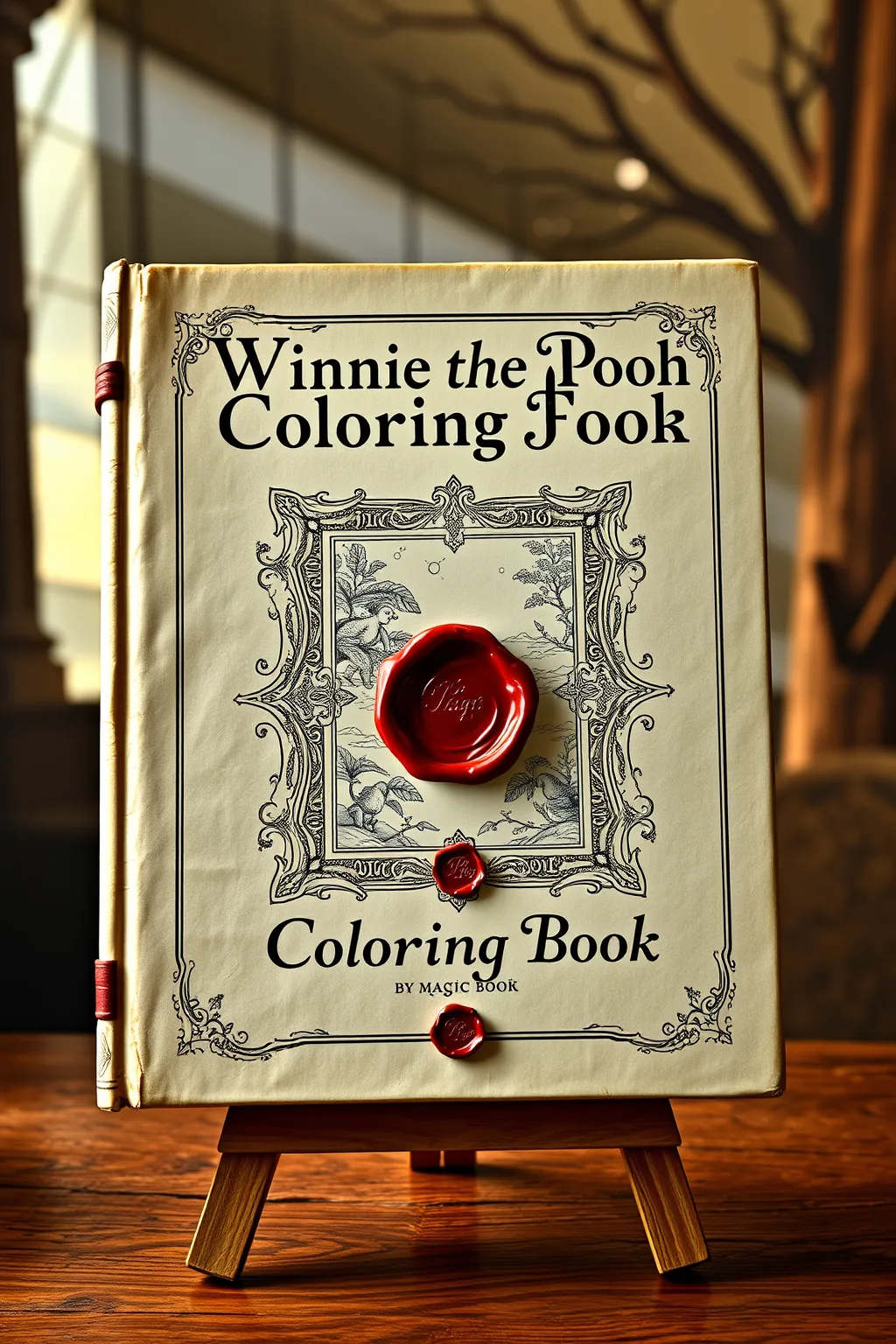
Winnie the Pooh Coloring Book
 61
61

Winnie the Pooh Coloring Book



Review by Isolde Whitaker (Sacred Texts Editor) — This coloring book offers a surprisingly rich vein of esoteric exploration, transforming beloved characters into potent symbols of the collective unconscious. Magic Book masterfully guides the reader's hand, not just to color lines, but to contemplate the archetypal energies at play. Each page is an invitation to a mindful ritual, a quiet communion with timeless wisdom. It's ideal for practitioners seeking accessible entry points into symbolic interpretation and for seekers who appreciate the profound depths hidden within simple narratives. A unique addition to any metaphysical library.
📝 Description
61
This 2024 coloring book suggests Winnie the Pooh's world holds allegorical depth.
Magic Book's Winnie the Pooh Coloring Book invites users to see the Hundred Acre Wood through an esoteric lens. It presents familiar illustrations of Pooh, Piglet, and their companions, framed by the idea that these characters and settings carry symbolic weight. The book encourages a meditative approach to coloring, suggesting this act can align with an inner quest for meaning. It posits that the simple narratives of A.A. Milne's stories can serve as a starting point for introspection and personal development.
The coloring pages are designed to resonate with deeper psychological concepts. By filling in the outlines, readers are prompted to consider archetypal figures and their representations within the stories. The book frames this engagement as a path toward understanding, suitable for those interested in finding metaphysical connections in everyday narratives. It aims to foster a reflective state, using the familiar characters as a guide.
This work situates itself within traditions that find deeper meaning in popular culture. It draws parallels to Jungian psychology, referencing concepts like the shadow and anima, and the archetype of the wise old man. The book suggests that seemingly simple stories can act as vehicles for psychological and spiritual exploration, a practice found in various esoteric schools that decode myth and narrative for inner work. The act of coloring is presented as a modern ritual for engaging with these ideas.
💡 Why Read This Book?
Embark on a contemplative journey through familiar landscapes imbued with hidden meaning. This coloring book is an invitation to a personal ritual, fostering mindfulness and introspection. Ideal for seekers of esoteric wisdom, practitioners of symbolic art, and anyone who believes that profound truths can be found in the gentle unfolding of archetypal narratives. Discover the universal magic that resides within the seemingly simple.
⭐ Reader Reviews
Honest opinions from readers who have explored this book.
❓ Frequently Asked Questions
What esoteric traditions does this coloring book draw upon?
While not explicitly tied to a single tradition, it resonates with Jungian psychology, archetypal symbolism, and meditative practices found across various mystical paths, encouraging personal interpretation.
Is this suitable for beginners in esoteric studies?
Absolutely. The familiar imagery makes complex concepts approachable, serving as an excellent, non-intimidating introduction to symbolic thinking and mindfulness.
What is the primary benefit of coloring these pages?
The primary benefit is fostering mindfulness, reducing stress, and engaging in a contemplative practice that can unlock personal insights through the symbolic representation of archetypes.
Can adults benefit from this coloring book?
Certainly. Adults can rediscover the child-like wonder while engaging with deeper psychological and spiritual themes, making it a tool for adult introspection and creative expression.
How does this relate to magic or ritual?
The act of focused coloring on symbolic imagery can be considered a form of low-level ritual, a meditative practice that aligns intention with visual manifestation, promoting inner transformation.
🔮 Key Themes & Symbolism
The Archetypal Forest
The Hundred Acre Wood serves as a microcosm of the human psyche, a verdant landscape populated by enduring archetypes. Pooh embodies the innocent seeker, Piglet the sensitive companion, Owl the keeper of knowledge (and sometimes misinterpretation), and Eeyore the shadow self grappling with melancholy. This theme explores how these seemingly simple characters represent fundamental aspects of the human condition, mirroring our own internal journeys and relationships with universal forces. Coloring these characters allows for a personal engagement with these archetypal energies, fostering understanding and integration.
The Ritual of Color
Beyond mere aesthetics, the act of coloring is presented as a meditative ritual. The deliberate choice of hues, the focus required to stay within the lines (or to deliberately break them), and the unfolding of imagery mirror the practice of alchemical transformation. Each stroke of the crayon or pencil becomes a mantra, a focused intention directed towards inner peace and self-awareness. This theme emphasizes how mundane activities, when approached with consciousness and intent, can become potent tools for spiritual growth and the manifestation of inner harmony.
Hidden Meanings in Simplicity
This theme examines the core esoteric principle that profound wisdom is often veiled in the most unassuming forms. The stories of Winnie the Pooh, often dismissed as children's tales, are re-examined for their allegorical depth. The search for honey, the anxieties of Piglet, the quest for a tail – these simple narratives are reinterpreted as metaphors for the human pursuit of fulfillment, the navigation of fear, and the restoration of wholeness. The coloring book invites the reader to uncover these layers of meaning, demonstrating that enlightenment can be found not just in ancient texts, but in the everyday fabric of existence.
💬 Memorable Quotes
Direct passages from the work, attributed to the author.
“Oh, bother.”
— A mantra of acceptance, acknowledging life's minor inconveniences with gentle resignation and a path towards inner peace.
“Wherever there is a human being, there is also a tree.”
— A reminder of our intrinsic connection to nature and the fundamental presence of life in all its forms, a grounding truth.
“You are braver than you believe, stronger than you seem, and smarter than you think.”
— An affirmation of inherent potential and inner strength, a powerful reminder of self-worth often overlooked.
“It is the best way to get to know yourself.”
— Suggests that introspection and self-examination, even through simple observation, are paramount to true understanding.
“I think it is a good day to do nothing.”
— An embrace of stillness and rest, a counter-cultural affirmation of the value of unproductivity for rejuvenation.
🌙 Esoteric Significance
Tradition
This work aligns most closely with Jungian archetypal psychology, viewing the characters as personifications of universal psychic patterns. It also carries the principles of mindfulness and contemplative practice found in various Eastern traditions and modern Western esotericism, emphasizing the transformative power of focused attention and creative engagement with symbolic imagery.
Symbolism
Pooh represents the innocent seeker and the instinctual self; Piglet, the sensitive soul and apprehension; Eeyore, the shadow or melancholic aspect of the psyche; Owl, the conscious but sometimes flawed intellect or the 'wise old man' archetype. The Hundred Acre Wood itself symbolizes the inner range of the mind, a contained universe for exploration and growth.
Modern Relevance
In an age saturated with external stimuli, this coloring book offers a sanctuary for internal reflection. It provides an accessible entry point for individuals seeking to engage with concepts of mindfulness, archetypal psychology, and symbolic interpretation without the intimidation of dense theoretical texts. It validates the idea that spiritual and psychological growth can be found in everyday experiences and familiar narratives.
👥 Who Should Read This Book
This coloring book is a versatile resource. For **beginners** in esoteric studies, it offers a gentle, visual introduction to archetypal concepts. **Scholars** of mythology and psychology will find it an interesting case study in the reinterpretation of narrative. **Seekers** of personal growth will appreciate its meditative qualities and introspective prompts. **Practitioners** of mindfulness or art therapy can utilize it as a tool for creative expression and stress reduction, finding a unique way to engage with profound themes.
📜 Historical Context
While Winnie the Pooh was created by A.A. Milne in the 1920s, a period of post-war disillusionment and burgeoning interest in psychology, this 'Magic Book' rendition taps into a modern resurgence of interest in esoteric interpretations of popular culture. The mid-20th century saw significant advancements in Jungian psychology, which provided fertile ground for analyzing archetypes within narrative. The subsequent decades witnessed a growing fascination with the occult and metaphysical, leading to a desire to find deeper meaning in everyday stories. This coloring book reflects a contemporary trend of re-contextualizing beloved narratives through a spiritual or mystical lens, making ancient wisdom accessible through familiar mediums.
📔 Journal Prompts
If you were to assign a color to Eeyore's mood, what would it be and why?
Describe a moment when you felt like Pooh searching for something important. What was it, and how did you feel?
What wisdom does Owl impart to you in your own life, and how do you discern its truth?
Consider Piglet's anxieties. What small act of bravery can you undertake today to counter a personal fear?
If the Hundred Acre Wood were your inner landscape, what elements would you want to color in to represent your current state of being?
🗂️ Glossary
Archetype
Universal, archaic patterns and images that derive from the collective unconscious and are the psychic counterpart of a biological instinct. They are recurring themes in myths, dreams, and art across cultures.
Collective Unconscious
A concept introduced by Carl Jung, referring to a layer of the unconscious mind that is shared by all humans and contains archetypes and instincts inherited from our ancestors.
Mindfulness
A mental state achieved by focusing one's awareness on the present moment, while calmly acknowledging and accepting one's feelings, thoughts, and bodily sensations.
Symbolism
The use of symbols to represent ideas and qualities, by giving them meanings that are different from their literal sense. In esotericism, symbols are keys to understanding deeper realities.
Ritual
A set of actions, often symbolic, performed according to a prescribed order. In a spiritual context, it is used to connect with the divine, achieve transformation, or mark significant events.
This book appears in 2 collections
🔮 Readers Also Liked
Browse all →








More by Magic Book
All books →





From the “Ceremonial Magic” Collection
View all →






More Free Magic & Ritual Books
View all →