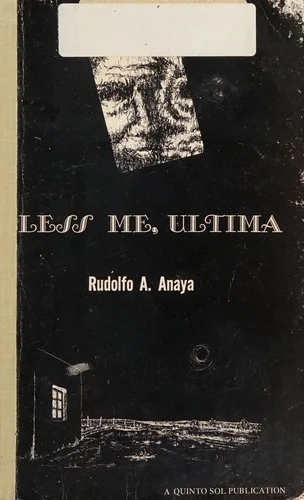
Bless Me, Ultima
 73
73

Bless Me, Ultima


Lorelei Sage, Contemplative Literature Editor — Rudolfo A. Anaya's 'Bless Me, Ultima' is a luminous gem within the Esoteric Library's collection, offering profound insights into indigenous spirituality and the transformative power of mentorship. Ultima, the enigmatic curandera, serves as a masterful guide, initiating young Antonio into the subtle energies and hidden lore of the land. Anaya's prose is both lyrical and grounded, evoking a palpable sense of place while delving into universal truths about faith, doubt, and the soul's quest for understanding. This novel is a potent exploration of the liminal spaces where tradition meets personal revelation, making it an indispensable read for seekers of spiritual wisdom and literary scholars alike, offering a rare glimpse into the enduring magic of the pagan past.
📝 Description
73
Rudolfo A. Anaya's 1972 novel explores a boy's coming of age under a curandera's tutelage.
Antonio Marez's childhood on the New Mexico plains is changed by Ultima, an elderly curandera. She arrives with her owl and her knowledge of herbs, introducing Antonio to a world where the mystical touches the everyday. His experiences with her reveal the power within nature and his own spirit. The book follows Antonio as he grapples with his family's expectations, his Catholic upbringing, and the ancient, earth-based traditions Ultima represents.
This narrative is more than a story of growing up; it is an introduction to spiritual concepts tied to the land and ancestral ways. Ultima serves as Antonio's guide, showing him a connection to the cosmos and a different kind of wisdom. The novel examines themes of faith, identity, and the challenges of reconciling different belief systems.
The novel is rooted in the syncretic spiritual traditions of New Mexico, blending indigenous beliefs, Catholicism, and Spanish folk magic. Ultima embodies the role of the wise elder and spiritual guide, common in shamanic traditions. Her connection to nature, herbs, and animal spirits, particularly her owl, reflects animistic worldviews where natural elements possess consciousness and power. The narrative explores the tension between orthodox religious doctrine and lived, immanent spirituality, a common theme in esoteric thought that seeks direct experience of the divine or sacred within the material world.
💡 Why Read This Book?
Embark on a transformative journey into the heart of ancestral magic and spiritual awakening. 'Bless Me, Ultima' offers a profound exploration of self-discovery through the wisdom of a wise curandera, revealing the hidden connections between nature, family, and the cosmos. Ideal for seekers of esoteric knowledge, students of comparative religion, and anyone yearning to understand the deep currents of indigenous spirituality and its timeless relevance. Witness the unfolding of a young soul guided by ancient secrets.
⭐ Reader Reviews
Honest opinions from readers who have explored this book.
❓ Frequently Asked Questions
What is a curandera?
A curandera is a traditional folk healer in Hispanic cultures, particularly in Latin America and the Southwestern United States. They utilize a combination of herbal remedies, spiritual practices, and often a deep connection to nature and the divine to diagnose and treat physical and spiritual ailments.
What is the central conflict in the novel?
The central conflict revolves around Antonio's internal struggle to reconcile the Catholic faith of his family with the pagan, spiritual teachings of Ultima, and his own burgeoning understanding of the world.
What is the significance of Ultima's hawk?
Ultima's hawk is a powerful spiritual familiar, symbolizing her connection to the natural world and her heightened senses. It often acts as a protector and an extension of her own spiritual insight, representing freedom and keen observation.
How does the novel explore the theme of duality?
The novel frequently explores duality through contrasting elements: good versus evil, light versus darkness, faith versus doubt, and the clash between traditional indigenous beliefs and imposed religious doctrines.
Is 'Bless Me, Ultima' based on real traditions?
Yes, the novel draws heavily on the rich tapestry of traditional Mexican and Native American spiritual beliefs, healing practices (curanderismo), and folklore, giving it a strong foundation in authentic cultural traditions.
🔮 Key Themes & Symbolism
The Awakening of Spiritual Consciousness
This theme explores Antonio's profound journey from childhood innocence to a complex understanding of the spiritual world, guided by Ultima's ancient wisdom. It explores the innate human capacity for spiritual perception, the interconnectedness of all life, and the process of integrating seemingly disparate belief systems. The narrative emphasizes that true understanding often lies beyond rigid dogma, in the intuitive grasp of nature's rhythms and the subtle energies that permeate existence. Antonio's growth mirrors the universal quest for meaning and the awakening of one's inner mystic.
The Power of the Earth and Ancestral Knowledge
The novel places immense value on the earth as a source of spiritual power and the repository of ancestral wisdom. Ultima's healing practices are deeply rooted in the natural world – herbs, plants, and the very soil of New Mexico. This theme highlights the importance of respecting and communing with nature, recognizing its inherent sacredness, and understanding that true knowledge is often passed down through generations, embedded in oral traditions and lived experiences. It serves as a counterpoint to more abstract or institutionalized forms of spirituality.
The Interplay of Faith and Doubt
A central tension in 'Bless Me, Ultima' is Antonio's grappling with his Catholic upbringing and the alternative spiritual realities presented by Ultima. The book doesn't dismiss faith but rather examines its many-sided nature, exploring how doubt can be a catalyst for deeper spiritual inquiry and personal growth. It suggests that a holistic understanding of the divine encompasses both established religious doctrines and the more fluid, intuitive, and nature-based spiritualities, encouraging a synthesis rather than a stark dichotomy.
💬 Memorable Quotes
Direct passages from the work, attributed to the author.
“I was a lost child, and she was the only anchor in the storm.”
— This highlights Ultima's role as a spiritual guide and protector for Antonio, offering him stability and wisdom amidst the confusion and turmoil of his early life and spiritual awakening.
“The curse was a shadow that followed them.”
— This evokes the pervasive presence of malevolent forces and the concept of spiritual or karmic retribution, suggesting that negative energies can have tangible, enduring effects on individuals and families.
“She was the calm in the storm, the quiet in the chaos.”
— This beautifully describes Ultima's serene presence and profound inner strength, contrasting with the often tumultuous events and emotional landscapes surrounding Antonio, solidifying her role as a strong example of peace.
💡 Key Ideas
Editorial paraphrase of the work's core concepts — not direct quotes.
And the golden carp was the spirit of the river, the spirit of the earth, the spirit of the land.
This quote captures the novel's profound connection to nature worship and animism, presenting the golden carp not as a mere fish, but as a potent, living embodiment of the natural world and its spiritual essence.
The owl was a baker's daughter who was stolen away by the devil.
This quote introduces the folklore and superstitions that permeate the community, illustrating how ancient tales and beliefs shape the perception of the natural world and its inhabitants, often imbuing them with mystical or ominous significance.
🌙 Esoteric Significance
Tradition
The novel deeply engages with indigenous spiritual traditions, particularly those found in Mesoamerica and the Southwestern United States, which are often characterized by animism, shamanism, and a profound reverence for the natural world. It aligns with Neopaganism and Earth-based spiritualities that emphasize the sacredness of the land and the interconnectedness of all living beings. Ultima embodies the archetype of the wise woman or shaman, acting as a conduit to ancient knowledge and a facilitator of spiritual initiation.
Symbolism
Key symbols abound, including Ultima's hawk, representing spiritual sight and freedom; the golden carp, a powerful nature deity; the llano itself, a vast, elemental landscape pregnant with spiritual significance; and the river, a symbol of life's flow and purification. The contrasting imagery of the Catholic Church and Ultima's pagan ways highlights the novel's exploration of spiritual duality and the search for a unified understanding of the divine.
Modern Relevance
In an age often dominated by materialism and a disconnection from nature, 'Bless Me, Ultima' offers a vital reminder of the profound wisdom embedded in indigenous beliefs and the healing power of the natural world. Its themes of spiritual awakening, the integration of diverse belief systems, and the importance of ancestral knowledge resonate with contemporary seekers looking for more holistic and earth-centered approaches to spirituality and personal growth. The novel encourages a re-evaluation of what constitutes true wisdom and a deeper connection to the earth and our own inner landscapes.
👥 Who Should Read This Book
This novel is a treasure for a diverse readership. **Beginners** in esoteric studies will find a gentle yet profound introduction to themes of nature spirituality and shamanic archetypes through Antonio's relatable journey. **Scholars** of literature, religious studies, and Chicano/a studies will appreciate the rich cultural collection, symbolic depth, and socio-historical context. **Seekers** of spiritual meaning will be drawn to Ultima's wisdom, the exploration of faith and doubt, and the affirmation of earth-based magic. **Practitioners** of folk magic, herbalism, or nature-based spiritualities will find resonance in Ultima's methods and her deep connection to the land.
📜 Historical Context
Rudolfo A. Anaya's 'Bless Me, Ultima,' published in 1972, emerged during an important era of cultural awakening and assertion for Mexican Americans. The Chicano Movement was gaining momentum, advocating for civil rights, cultural preservation, and a reclaiming of identity. In this context, the novel served as a powerful literary voice, celebrating the rich heritage of the Southwest, its combination of Indigenous, Spanish, and Mexican influences, and challenging the dominant Anglo-American narrative. The spiritual and philosophical underpinnings of the book resonated deeply with a generation seeking to understand and validate their ancestral roots, offering a spiritual framework that was both deeply personal and collectively resonant. It provided a literary space for exploring themes of faith, tradition, and the evolving identity of a people.
📔 Journal Prompts
Reflect on a time you felt a deep connection to nature. What did it reveal to you?
Consider Ultima's role as a spiritual mentor. What qualities make a powerful spiritual guide?
Explore the concept of 'pagan past' in your own life or cultural heritage. What ancient wisdom might still be relevant?
How do you navigate conflicting belief systems or spiritual paths in your own life?
Imagine you have a spiritual familiar like Ultima's hawk. What would it represent and how would it guide you?
🗂️ Glossary
Curandera
A traditional folk healer in Hispanic and Indigenous cultures, skilled in using herbs, spiritual practices, and rituals for healing physical and spiritual ailments. Embodies ancient wisdom and a deep connection to the earth.
Llano
An expansive, open grassland, particularly referring to the plains of New Mexico. The llano in the novel is depicted as a vast, elemental space, rich with natural spiritual power and ancestral memories.
Pagan
Referring to ancient, non-Christian religions often associated with nature worship, polytheism, and earth-based spiritual practices. In the context of the novel, it signifies a connection to pre-Christian indigenous beliefs.
Mestizo
A person of mixed European (typically Spanish) and Indigenous American ancestry. The cultural and ethnic identity of many characters in the novel reflects this heritage.
Santero
An artist who creates religious images, often for household altars or churches, particularly in New Mexican folk art. Represents the blend of religious devotion and artistic expression.
This book appears in 2 collections
🔮 Readers Also Liked
Browse all →







From the “Ceremonial Magic” Collection
View all →





More Free Magic & Ritual Books
View all →