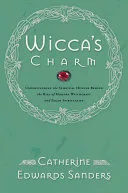
Wicca's Charm
 75
75

Wicca's Charm
Catherine Sanders' "Wicca's Charm" offers a grounded, journalistic look at why Wicca has gained traction in the United States. Sanders avoids sensationalism, instead focusing on the lived experiences and motivations of practitioners. Her exploration of how Wiccan spirituality fills a "spiritual hunger" is particularly effective, moving beyond simplistic explanations. A notable strength is her ability to convey the personal significance of these practices without resorting to esoteric jargon. However, the book occasionally feels like it's still grappling with the author's initial unfamiliarity, sometimes presenting basic tenets as novel discoveries. The passage discussing the appeal of nature-based spirituality in a post-industrial society, for instance, highlights the book's core contribution. Ultimately, "Wicca's Charm" provides a valuable, accessible introduction for the genuinely curious, if not a deeply scholarly analysis.
📝 Description
75
Catherine Sanders' 2009 book, Wicca's Charm, investigates the rise of Wiccan spirituality in contemporary America.
Published in 2009, Wicca's Charm examines the growing appeal of Wiccan spirituality in modern America. Journalist Catherine Sanders moved past common stereotypes to understand why this resurgence occurred. The book discusses how contemporary Pagan beliefs address a perceived lack in established spiritual and religious systems, granting followers a sense of meaning and connection. This work is for anyone interested in the development of spiritual practices outside mainstream Western religions. It will especially appeal to readers who want to grasp the motivations of people drawn to modern Paganism and the ways Wicca offers a structure for personal growth and community involvement. Those interested in comparative religion or the sociology of belief will find it informative.
Sanders places the emergence of Wicca and modern Paganism within the larger framework of the late 20th and early 21st centuries, a time characterized by a search for different spiritual directions. She acknowledges the impact of earlier Pagan revivals and the continuing cultural changes that made these beliefs more visible and accessible. Sanders' journalistic method contrasts with older, more academic or purely devotional writings on the subject.
Wicca's Charm situates modern Wicca within the broader context of Western esotericism and the New Religious Movements of the late 20th century. It acknowledges earlier Pagan revivals while focusing on how contemporary practitioners engage with nature-based spirituality as an alternative to established religious institutions. The book contrasts its journalistic approach with earlier, more academic or devotional texts, highlighting the personal and communal search for meaning that fueled this spiritual shift.
💡 Why Read This Book?
• Understand the specific ways Wiccan spirituality addresses a "spiritual hunger" in America, as detailed in the book's investigation into modern Paganism's appeal. • Gain insight into the core tenets and practices of contemporary Wicca, moving beyond common misconceptions to grasp its practical and personal significance for adherents. • Appreciate the historical context of Wicca's growth in the late 20th and early 21st centuries, understanding its place within a larger trend of seeking alternative spiritual paths.
⭐ Reader Reviews
Honest opinions from readers who have explored this book.
❓ Frequently Asked Questions
When was Wicca's Charm first published?
Wicca's Charm was first published on August 5, 2009, by Catherine Sanders.
What is the main focus of Wicca's Charm?
The book investigates why Wiccan spirituality is attracting a significant number of followers in America, exploring the reasons behind this growing spiritual movement.
Who is the author of Wicca's Charm?
The author is Catherine Sanders, a journalist who explored the phenomenon of Wicca for her book.
What kind of audience is Wicca's Charm intended for?
It is aimed at individuals curious about modern Paganism, comparative religion, the sociology of belief, and those seeking to understand alternative spiritual paths.
Does the book present Wicca as a historical religion or a modern phenomenon?
While acknowledging historical roots, the book primarily focuses on the contemporary manifestations and appeal of Wicca in the late 20th and early 21st centuries.
What spiritual needs does Wicca address, according to the book?
The book suggests Wicca addresses a perceived 'spiritual hunger' by offering connection, meaning, and a framework for personal growth outside of conventional religious structures.
🔮 Key Themes & Symbolism
Addressing Spiritual Hunger
Sanders' core argument is that Wicca and related Paganisms are filling a void left by traditional religious structures. The book details how these paths offer a sense of immanent divinity, connection to nature, and personal empowerment, which appeals to individuals seeking meaning in a secularizing or disenchanted world. It highlights how the focus on personal experience and a direct relationship with the sacred appeals to those disillusioned with dogma.
Modern Paganism's Appeal
This theme examines the specific draw of modern Pagan spirituality. It moves beyond stereotypes to explore the philosophical underpinnings, the emphasis on earth-centered living, and the communal aspects that attract adherents. The work presents Wicca not as an archaic relic but as a vibrant, evolving spiritual practice relevant to contemporary life and its challenges.
Journalistic Exploration
The book is characterized by its journalistic approach, with Catherine Sanders investigating the phenomenon through interviews and research. This perspective aims for objectivity and seeks to understand the 'why' behind Wicca's growth, contrasting with purely academic or practitioner-focused accounts. It emphasizes accessibility for a general audience curious about these alternative beliefs.
Nature and Divinity
A significant aspect explored is the Wiccan reverence for nature and the divine perceived within it. The book details how this immanent spirituality offers a powerful counterpoint to transcendent, anthropocentric religious models. It discusses the cyclical rhythms of the earth and the embodiment of the divine through natural forces as central to the Wiccan worldview.
💬 Memorable Quotes
Direct passages from the work, attributed to the author.
“Hundreds of thousands of people practice Wicca and other forms of modern Pagan spirituality in America today.”
— This statistic, presented early in the book, establishes the significant scale of the phenomenon Sanders investigates, setting the stage for her journalistic inquiry into its underlying appeal.
“When a routine magazine assignment led her to realize that her stereotype of Wiccans as eccentric spiritual outsiders was embarrassingly misinformed...”
— This reveals the author's personal journey from preconception to curiosity, framing the book as an exploration driven by a desire to correct misconceptions about Wiccan practitioners.
“Sanders wanted to understand why such belief systems are rapidly attracting followers.”
— This succinctly states the central research question of the book: identifying the specific factors contributing to the growth and popularity of Wicca and related spiritualities.
“The book explores how Wiccan Spirituality Is Filling a Spiritual Hunger in America.”
— This phrase captures the book's main thesis, suggesting that Wicca offers a compelling alternative to traditional religious frameworks for those seeking deeper meaning and connection.
“Her curiosity compelled her to understand the Wiccan my...”
— This fragment from the blurb indicates the author's deep-seated motivation to uncover the truth behind Wicca, moving beyond superficial understanding to genuine comprehension.
🌙 Esoteric Significance
Tradition
While not strictly adhering to a single ancient tradition, Wicca as presented in "Wicca's Charm" draws from Neo-Paganism, a modern spiritual movement influenced by 20th-century revivals of pre-Christian European nature religions. It fits within the broader umbrella of Western Esotericism, emphasizing personal gnosis, immanent divinity, and ritual practice, often departing from hierarchical or dogmatic structures found in older esoteric lineages.
Symbolism
The book likely touches upon symbols central to Wicca, such as the pentacle, representing the five elements and spirit, and the divine feminine and masculine, often symbolized by the Goddess and God. These symbols signify the interconnectedness of all things, the cyclical nature of life, death, and rebirth, and the inherent divinity within humanity and the natural world.
Modern Relevance
Contemporary thinkers and practitioners exploring earth-centered spirituality, eco-feminism, and alternative religious movements can find resonance in Sanders' depiction of Wicca's appeal. It serves as a point of reference for understanding the ongoing search for spiritual fulfillment outside traditional Abrahamic faiths and highlights the enduring human need for ritual, community, and connection to the sacred in nature.
👥 Who Should Read This Book
• Inquisitive individuals seeking to understand the motivations behind modern spiritual movements beyond mainstream religions. • Students of comparative religion or sociology of belief interested in the growth of Neo-Paganism in the United States. • Those exploring alternative paths to spirituality who want an accessible overview of Wicca's appeal and core concepts.
📜 Historical Context
Published in 2009, "Wicca's Charm" emerged during a period of significant growth and increased visibility for modern Paganism in the United States. The late 20th and early 21st centuries saw a broader cultural search for alternative spiritualities, partly as a reaction against perceived rigidity in mainstream religions and partly fueled by New Age movements and increased access to information. This era followed foundational texts and revivals from figures like Gerald Gardner in the mid-20th century, but Sanders' journalistic approach offered a fresh perspective. While scholars like J. Gordon Melton were documenting these movements, Sanders aimed for a more accessible, narrative-driven exploration. The book's reception likely contributed to mainstream awareness, though it operated outside the direct academic discourse surrounding Paganism at the time.
📔 Journal Prompts
The "spiritual hunger" described in the book.
The appeal of nature-based spirituality explored by Sanders.
Misconceptions about Wiccan practitioners.
The role of community in modern Paganism.
Personal connections to the divine in nature.
🗂️ Glossary
Wicca
A contemporary Neopagan religious movement that draws upon a diverse range of ancient European pagan and 18th-century Wiccan traditions. It is often characterized by reverence for nature, the divine feminine and masculine, and the practice of magic.
Modern Paganism
A broad term encompassing various contemporary religious movements that seek to revive or are inspired by pre-Christian European polytheistic beliefs and practices, including Wicca, Druidry, and Asatru.
Neopaganism
A contemporary religious movement that seeks to revive or draw inspiration from the beliefs and practices of ancient pagan religions.
Spiritual Hunger
A term used to describe a deep-seated human desire for meaning, connection, and transcendence that may not be fulfilled by conventional religious or secular frameworks.
Immanent Divinity
The belief that the divine is present within the natural world and all of creation, as opposed to a transcendent God who exists separately from it.
Pentacle
A five-pointed star, often enclosed in a circle, used as a symbol in Wicca and other Neopagan traditions, typically representing the five elements (earth, air, fire, water, and spirit) or protection.
Goddess and God
The divine feminine and masculine principles, often revered as deities in Wicca, symbolizing the complementary forces of nature and the cosmos.