Wicca and the Christian heritage
 78
78

Wicca and the Christian heritage
Pearson’s "Wicca and the Christian Heritage" is a valuable, albeit dense, contribution to understanding the historical and theological entanglements of modern witchcraft. It commendably avoids sensationalism, instead focusing on the intricate ways Christian imagery and concepts have been recontextualized within Wiccan practice. The strength lies in its meticulous tracing of potential influences, particularly in its discussion of how figures like Gerald Gardner were shaped by their British religious environment. A notable limitation, however, is the book's academic density, which may present a barrier to readers seeking a more accessible overview. The exploration of the 'Christian substratum' and the adaptation of concepts like the divine feminine through a Christian lens is particularly compelling, though at times the connections feel speculative rather than definitive. Ultimately, it’s a work for the dedicated researcher rather than the casual inquirer.
📝 Description
78
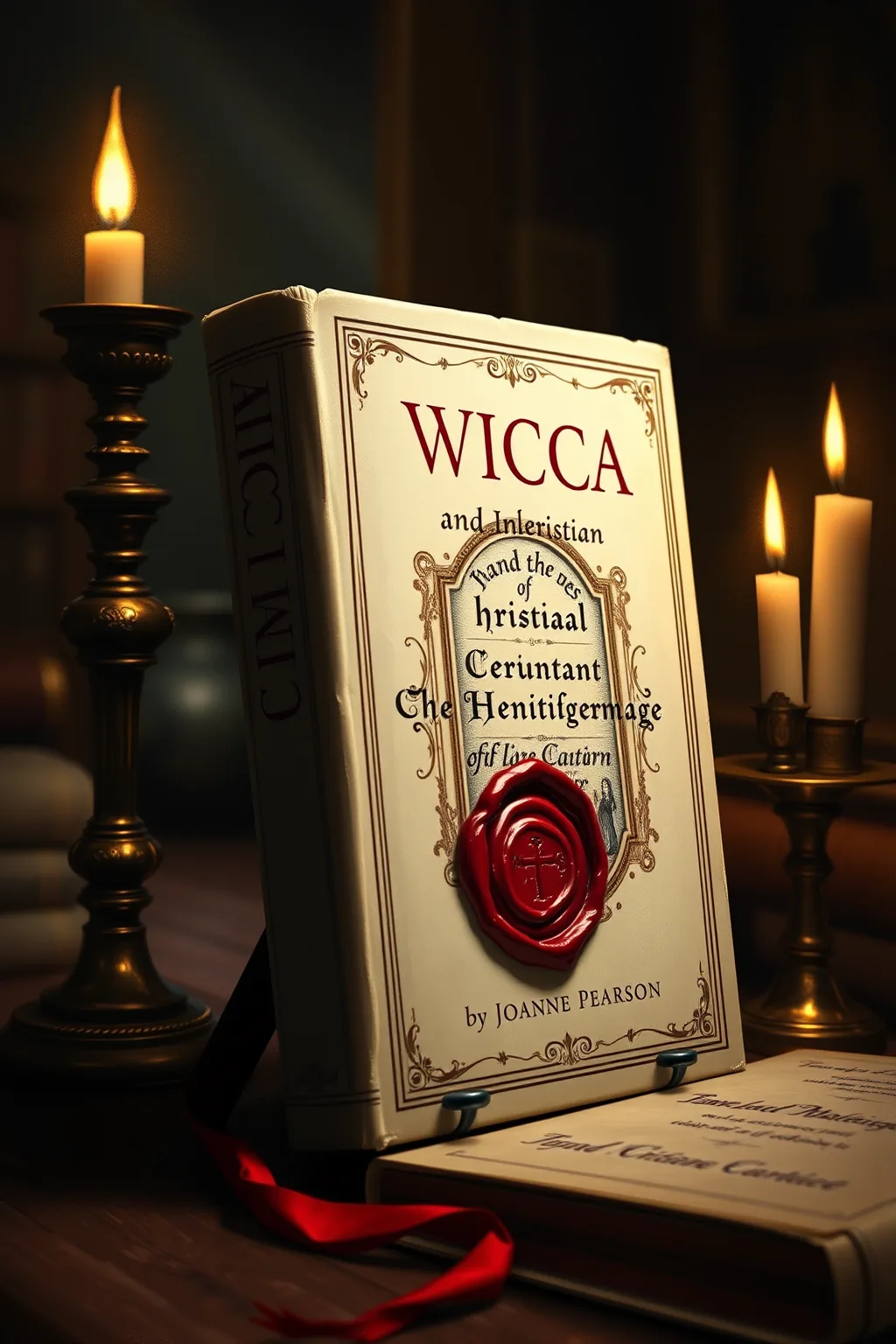
Joanne Pearson's 2007 book examines Wicca's connections to Christian heritage.
Published in 2007, Joanne Pearson's Wicca and the Christian Heritage investigates the intricate relationship between modern Wicca and its Christian roots. Pearson argues against viewing Wicca as entirely separate from Western religious history. Instead, she details residual influences, shared symbolism, and historical dialogues that link these traditions. The book moves past simple oppositions to show how Christian theological ideas, devotional practices, and even historical heresies might have shaped Wiccan beliefs and rituals.
This work is for students of Western esotericism, religious studies scholars, and Wiccan practitioners interested in their historical lineage. It is also relevant for those studying comparative religion, especially the connections between established faiths and newer spiritual movements. Readers should be prepared for academic discussion and curious about the historical foundations of contemporary spirituality.
Pearson's work emerged during a time of growing academic scrutiny of neopaganism's historical development. It followed scholarship that moved beyond folklore to explore the cultural and religious environment from which Wicca arose in the mid-20th century. The book addresses the need for scholarship that acknowledges the complex European religious landscape, building on earlier research into witchcraft's origins.
💡 Why Read This Book?
• Understand the "Christian substratum" concept, revealing how Christian theological frameworks and imagery may have been reinterpreted within early Wicca, offering a unique perspective beyond typical origin stories. • Explore the historical context of figures like Gerald Gardner and Doreen Valiente, learning how their formative experiences in a predominantly Christian Britain influenced the development of modern Wicca. • Gain insight into the scholarly debate surrounding Wicca's origins, appreciating how Pearson's 2007 work challenged simpler narratives by highlighting the complex, layered religious history it emerged from.
⭐ Reader Reviews
Honest opinions from readers who have explored this book.
❓ Frequently Asked Questions
Does "Wicca and the Christian Heritage" claim Wicca is a direct descendant of Christianity?
No, Joanne Pearson's 2007 work explores the complex influences and shared symbolic language, suggesting a dialogue and reinterpretation of Christian elements rather than a direct lineage. It highlights how figures like Gardner operated within a Christian cultural milieu.
What specific Christian concepts does the book link to Wicca?
The book examines concepts such as the reinterpretation of the divine feminine, potential parallels in devotional practices, and how Christian symbolic structures might have been adapted. It looks at the 'Christian substratum' influencing early 20th-century Wiccan developers.
Is this book suitable for practicing Wiccans?
Yes, particularly for those interested in the academic and historical underpinnings of their tradition. It provides a scholarly perspective on Wicca's development, offering context beyond ritual and belief.
What makes this book different from other books on Wicca's history?
Its primary distinction is its focus on the often-ignored Christian heritage and influences, moving beyond purely folkloric or neopagan-centric origin narratives. It offers a comparative theological and historical approach.
Who was Joanne Pearson and what is her academic background?
Joanne Pearson is a scholar of religion whose work often focuses on contemporary spirituality and neopaganism. "Wicca and the Christian Heritage" (2007) stems from her academic research into the historical formation of modern witchcraft traditions.
Are there any specific examples of Christian symbolism discussed in relation to Wicca?
The work explores how certain Christian symbols or theological ideas, such as those related to the duality of good and evil or the concept of a creator deity, might have been reframed or inverted within the Wiccan cosmology as it developed.
🔮 Key Themes & Symbolism
The Christian Substratum
This theme posits that modern Wicca, despite its distinct identity, is not entirely divorced from its European religious past. Pearson explores how elements of Christian theology, symbolism, and even suppressed or marginalized Christian sects may have provided a conceptual bedrock. This "substratum" was not necessarily adopted consciously but seeped into the cultural and intellectual milieu from which figures like Gerald Gardner drew. The work investigates how concepts of divinity, ritual structure, and even notions of sin or salvation might have been recontextualized or inverted within the developing Wiccan worldview, presenting a nuanced view of syncretism.
Reinterpretation of Symbolism
Pearson examines how familiar Christian symbols and narratives were potentially repurposed within the Wiccan tradition. This could include the adaptation of ideas surrounding the divine feminine, which, while often contrasted with patriarchal Christianity, might find echoes in Marian devotion or Gnostic interpretations of Sophia. The book studies how figures like Gardner, operating within a deeply Christianized Britain, would have inevitably engaged with and transformed prevalent religious imagery, imbuing it with new meanings relevant to their neopagan practices and cosmology.
Historical Dialogue and Marginalization
The work situates Wicca's emergence within a broader history of religious expression in Europe, including periods of intense persecution for both witchcraft accusations and Christian heresies. Pearson suggests a parallel in the marginalization and subsequent revival of certain spiritual currents. By examining the historical context of the mid-20th century, the book highlights how the pioneers of Wicca were responding to, and perhaps consciously or unconsciously reacting against, the dominant religious and social structures of their time, fostering a distinct but historically informed path.
Gardnerian Influence and Context
A significant focus is placed on the role of Gerald Gardner and the early development of his tradition. Pearson analyzes how Gardner's personal background and the specific cultural field of Britain in the mid-20th century contributed to the formulation of Wiccan practices and beliefs. The book investigates the sources Gardner drew upon, including potentially esoteric Christian texts or interpretations, and how these were synthesized into what would become known as Gardnerian Wicca, emphasizing the historical specificity of its origins.
💬 Memorable Quotes
Direct passages from the work, attributed to the author.
“Figures like Gardner operated within a British religious environment saturated with Christian discourse.”
— This interpretation emphasizes the inescapable cultural and theological context of early 20th-century Britain. It suggests that even creators of new spiritual paths absorbed and responded to the prevailing Christian narratives and symbols around them.
“The exploration of the divine feminine within Wicca can be seen as a complex dialogue with Christian traditions.”
— This captures the idea that Wicca's embrace of feminine divinity isn't necessarily a rejection of all Christian concepts, but potentially a reinterpretation or rebalancing, possibly drawing from Gnostic or marginalized Christian interpretations of female spiritual figures.
“Parallels in the historical suppression and subsequent revival of certain spiritual expressions.”
— This signifies the book's examination of how both witchcraft and certain Christian heresies faced persecution, and how both have seen forms of resurgence, suggesting a shared history of marginalization and resilience in spiritual movements.
“Wicca's development involved the adaptation and transformation of existing religious frameworks.”
— This interpretation underscores the book's focus on syncretism and historical influence. It posits that Wicca did not arise in a vacuum but actively engaged with and re-molded elements from the dominant religious field of its time.
💡 Key Ideas
Editorial paraphrase of the work's core concepts — not direct quotes.
The Christian heritage is not simply a backdrop against which Wicca emerged, but a source of reinterpreted symbols and concepts.
This paraphrased concept highlights the book's central argument: that Wicca's relationship with Christianity is one of active engagement and transformation, not mere opposition. It suggests that Christian ideas were foundational elements that later practitioners reshaped.
🌙 Esoteric Significance
Tradition
This work primarily engages with the Western Esoteric Tradition, specifically focusing on the historical and theological underpinnings of modern Wicca. It departs from purely hermetic or kabbalistic lineages by examining the interaction between a nascent neopagan movement and the dominant Christian religious framework of Europe. While not strictly Hermetic, it touches upon Gnostic concepts through its exploration of alternative views of divinity and creation, and its interest in marginalized spiritual expressions aligns with broader esoteric concerns about hidden knowledge and suppressed traditions.
Symbolism
The book likely explores symbols such as the Christian cross, which, while central to Christianity, could be reinterpreted or inverted within a Wiccan context, perhaps symbolizing directional quaternities or elemental associations. The concept of the divine feminine, often contrasted with patriarchal Christian theology, is also a key motif. Pearson may examine how figures like Mary, or Gnostic concepts of Sophia, could have informed Wiccan ideas of a Goddess, representing a reclamation or re-envigoration of feminine divine principles within a landscape shaped by Christian iconography.
Modern Relevance
Contemporary scholars and practitioners interested in comparative religion and the evolution of spiritual movements find Pearson's work essential. Thinkers exploring the fluidity of religious identity and the syncretic nature of modern spirituality often cite or engage with her analysis. It remains relevant for those seeking to understand the historical contingency of neopagan traditions and how they continue to dialogue with, rather than exist in isolation from, older religious systems. Its influence is seen in academic discourse on religion and in nuanced explorations within neopagan communities.
👥 Who Should Read This Book
• Students of Comparative Religion: Those researching the interplay between established faiths and emergent spiritual movements will find value in Pearson's analysis of Wicca's Christian connections. • Wiccan Practitioners Seeking Depth: Wiccans interested in the historical evolution of their tradition and the specific cultural influences on pioneers like Gerald Gardner will gain context. • Scholars of Western Esotericism: Researchers examining the complex origins and syncretic nature of modern occult and pagan traditions will benefit from this scholarly perspective.
📜 Historical Context
Joanne Pearson's "Wicca and the Christian Heritage" was published in 2007, a period marked by increasing academic scrutiny of neopaganism's historical roots. The late 20th and early 21st centuries saw scholars move beyond folkloric origins, seeking to understand Wicca's development within its specific socio-religious context. Pearson's work engages with the intellectual currents following foundational texts on witchcraft and paganism, such as those by Margaret Murray and later scholars like Ronald Hutton, who emphasized the historical discontinuity of modern witchcraft from pre-Christian practices. Pearson's contribution lies in directly addressing the often-unacknowledged influence of Christianity on the formation of modern Wicca, particularly through figures like Gerald Gardner. This approach offered a counterpoint to narratives that solely emphasized pagan revivalism, instead highlighting the complex syncretism occurring within a predominantly Christian cultural sphere. The book's reception contributed to a more nuanced understanding of Western esotericism's layered history.
📔 Journal Prompts
The Christian substratum's influence on early Wiccan development.
Reinterpretations of divine feminine symbolism across traditions.
Gardner's engagement with British religious culture.
Parallels between historical religious marginalization and revival.
The concept of religious dialogue versus separation.
🗂️ Glossary
Christian Substratum
A theoretical layer of Christian concepts, symbols, and theological frameworks that may have influenced the development of later, distinct spiritual traditions like Wicca, often through reinterpretation.
Gerald Gardner
Considered a key figure in the establishment of modern Wicca, Gardner's writings and practices in the mid-20th century formed a basis for Gardnerian Wicca and influenced subsequent traditions.
Doreen Valiente
A significant figure in early Wicca, Valiente was instrumental in writing and editing much of the material for Gardner's Book of Shadows, contributing substantially to Wiccan liturgy and lore.
Neopaganism
A modern religious movement that draws inspiration from pre-Christian European pagan traditions, often encompassing practices like Wicca, Druidry, and Asatru.
Syncretism
The merging or blending of different religious beliefs, myths, and practices, often occurring when cultures interact or when new spiritual movements draw from various sources.
Divine Feminine
The concept of divinity embodied in feminine principles, often celebrated in Wicca and other traditions as a counterpoint or complement to masculine divine aspects.
Western Esotericism
A broad term encompassing various spiritual, mystical, and philosophical traditions originating in or developed within the Western world, including Hermeticism, Kabbalah, and alchemy.
🔮 Readers Also Liked
Browse all →









More by Joanne Pearson
All books →




More Free Witchcraft & Paganism Books
View all →![D. [i. e., Doktor] Balthasar Bekkers reformierten Predigers in Amsterdam bezauberte Welt. ... 1781: Vol 3 Iss 81](/img/thumb/d-i-e-doktor-balthasar-bekkers-reformierten-predigers-in-amsterdam-bezauberte-welt-1781-vol-3-iss-81-bekker-balthasar-1634-1698.webp)